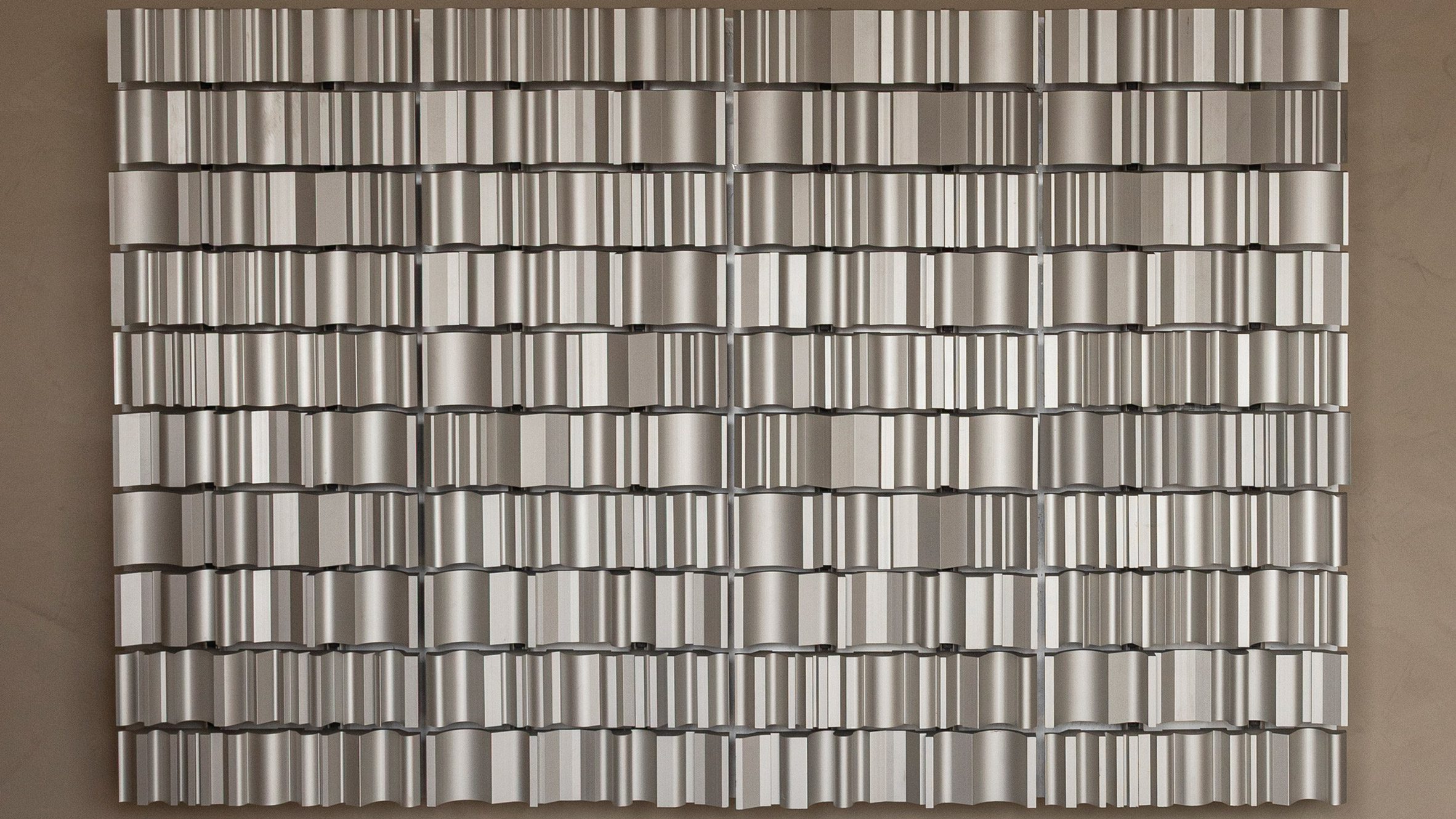
Listen: a brick is a small fired thing you can hold in one hand, and it has been roughly the same small fired thing for about ten thousand years, and the reason it is still here is that it has always been honest about its job. It holds up the brick above it. It carries the weight down to the ground in a long patient line, course by course, until the load is back in the dirt it came from. Masons worked out the rules for this a very long time ago, and the rules are not negotiable, and a wall that breaks them comes down. There is no faking a brick. You stack it or you do not.
Then Meganom goes and clads a Manhattan skyscraper in more than 200,000 of them, and not one of them holds up the brick above it.
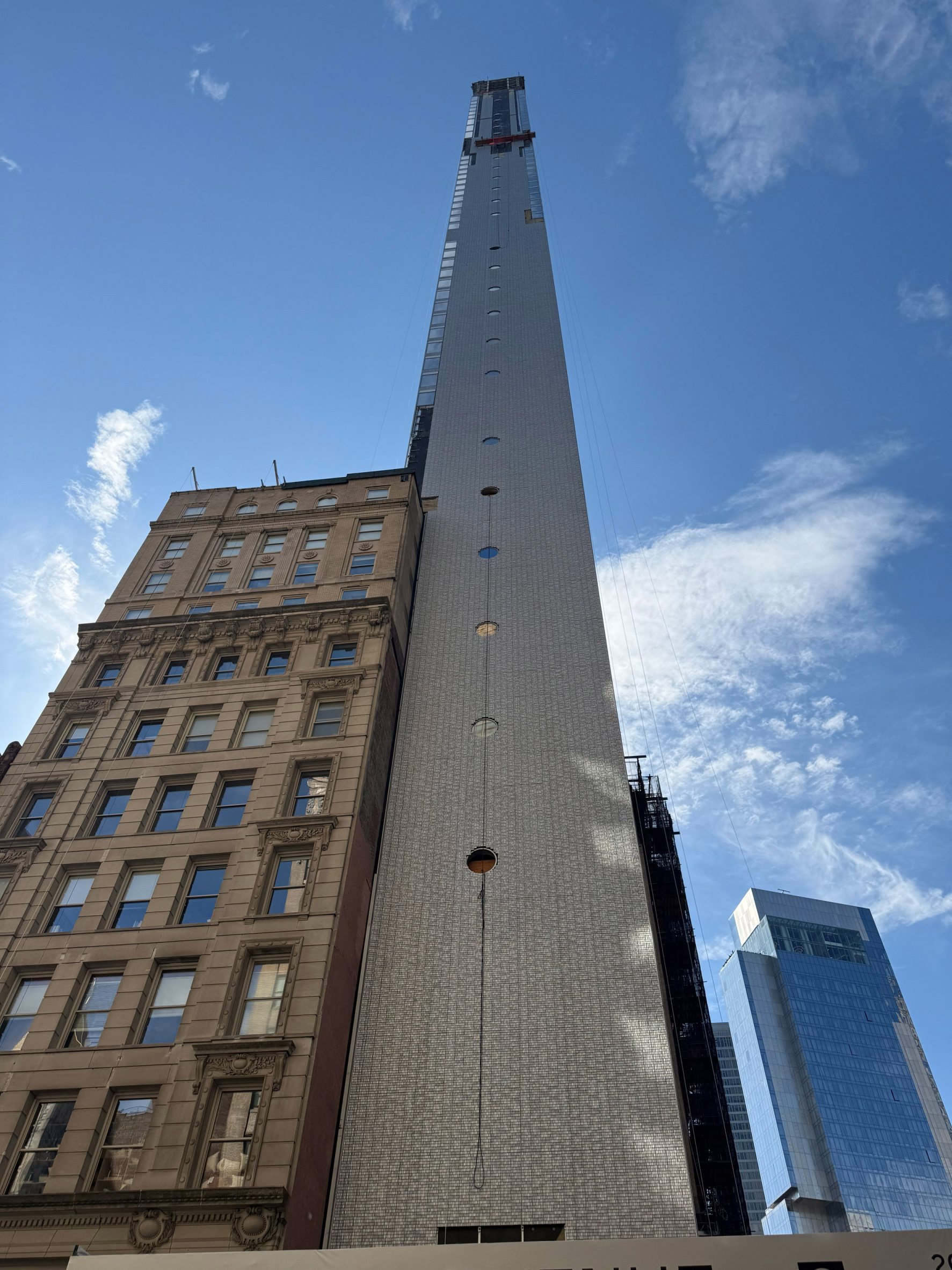
The bricks are aluminium. The Russian studio worked with an Italian manufacturer to make four patterned bricks, then mirrored them to get eight, then arrayed the lot across the facade of 262 Fifth Avenue, an 860-foot tower so skinny its base is only 2,211 square feet. Each piece is anodised so it will not rust, and grooved so the rain has somewhere to go, and angled so that in the sun the whole wall reads like the surface of moving water. It is a genuinely clever piece of work. The glass faces are set to catch the nearby church and the Empire State Building, and part of the core wears photovoltaic skin, and at street level the small units are meant to bring the giant thing back down to a size a person can stand next to.
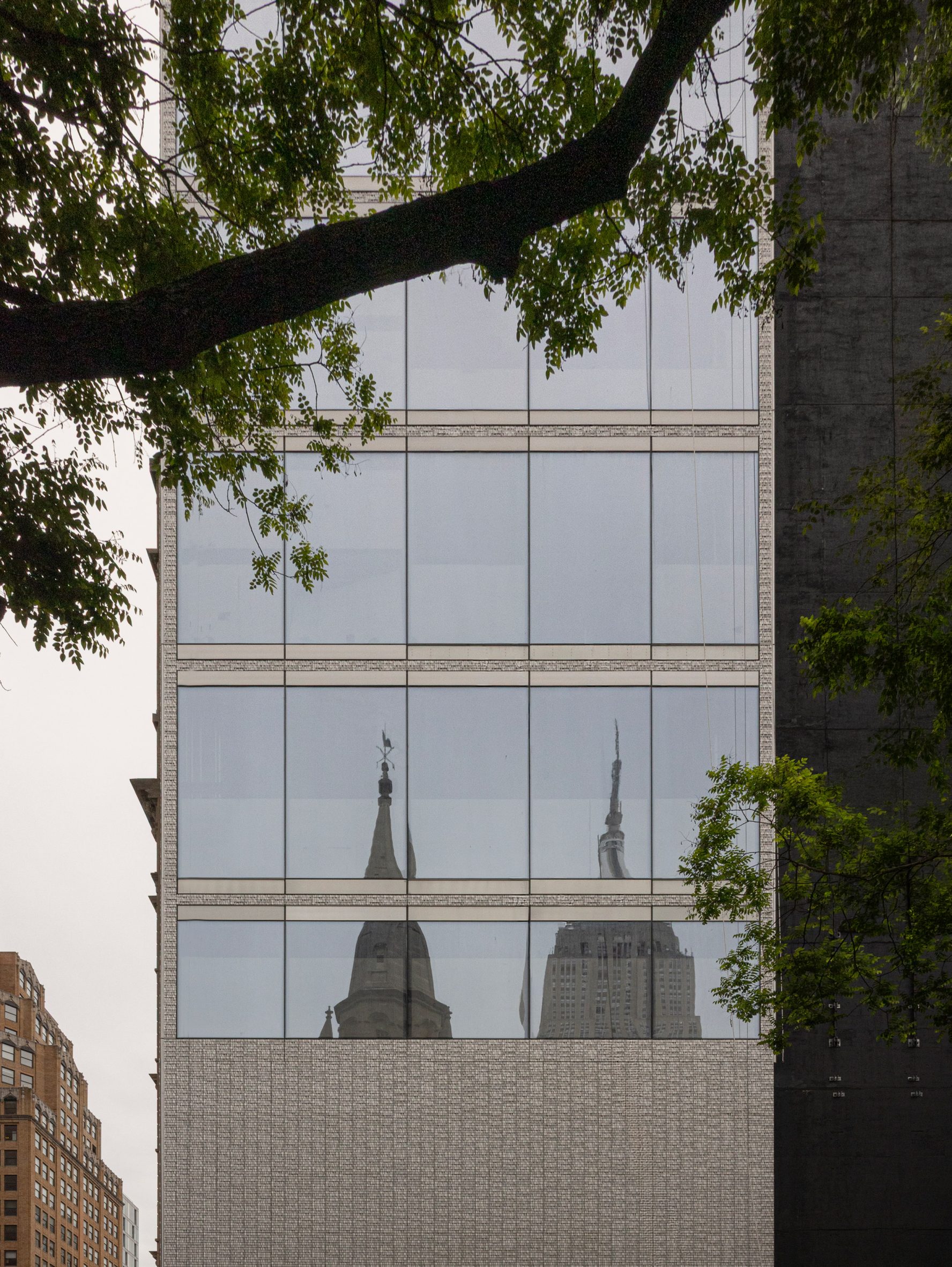
That last part is the part worth taking seriously, because it is the honest motive inside an otherwise dishonest word. Bogdan Peric, chief architect for the developer Five Points, told Dezeen that the small scale was the entire point: "When you get closer to the brick, you see that its scale is very domestic." He is right about the wish. People do want a tower to have a grain you can read from the sidewalk, want it to feel like it was made by hands and not by a spreadsheet, want some part of the enormous thing to be the size of a thing they own.
But call it what it is. It is cladding. It is a rainscreen, a beautiful one, hung on the outside of a structure that is held up by something else entirely, somewhere behind it, out of sight. The word "brick" has been borrowed here for its reputation. Brick means weight, and time, and the wall your grandfather's building was made of, and somebody decided the tower should sound like all of that without having to do any of it. The aluminium carries no load. It carries an association.
We wrote a few days ago about a house in Shropshire built from four materials by a studio with the discipline to stop, and the lesson there was that restraint is the expensive part. This is the opposite move at a hundred times the budget: not four materials understood all the way down, but one ornament repeated 200,000 times and asked to mean something it cannot mean. Marcel Breuer poured concrete that held the building up and looked like what it was while doing it. Paul Rudolph combed his concrete into ridges so the surface told you exactly how it had been made. The showing and the holding were the same act. People called the results ugly. The buildings are still standing, and they are still telling the truth.
None of this makes 262 Fifth Avenue a bad building. It will be a striking thing on the skyline, and the rippling will be lovely at six in the evening in October, and there are worse sins in Manhattan than a pretty wall, including the tower's own habit of blocking the view of the Empire State Building from Madison Square Park. The objection is smaller and more stubborn than that. It is just that the most human thing you can do to a giant building is not to print a domestic scale onto its skin in metal. It is to make some real part of it out of a material that means what it says, and let the meaning be the thing people feel when they come close.
The tower will be beautiful at sunset. It will also be aluminium.
Sources & Credits
- Reporting and quotations: Ben Dreith, "Meganom clads Manhattan skyscraper with thousands of custom aluminium 'bricks'," Dezeen, 25 June 2026. https://www.dezeen.com/2026/06/25/meganom-manhattan-skyscraper-thousands-custom-aluminium-bricks/
- Hero image and "brick" facade photographs: courtesy of Meganom / Five Points, via Dezeen.
- Shear wall photograph: Ben Dreith, via Dezeen.
- Project: 262 Fifth Avenue, Manhattan. Architect: Meganom. Developer: Five Points. Residences: Norm Architects.
- Companion piece: Common Projekts, "Restraint Is the Expensive Part" (House of EM / Skylark).