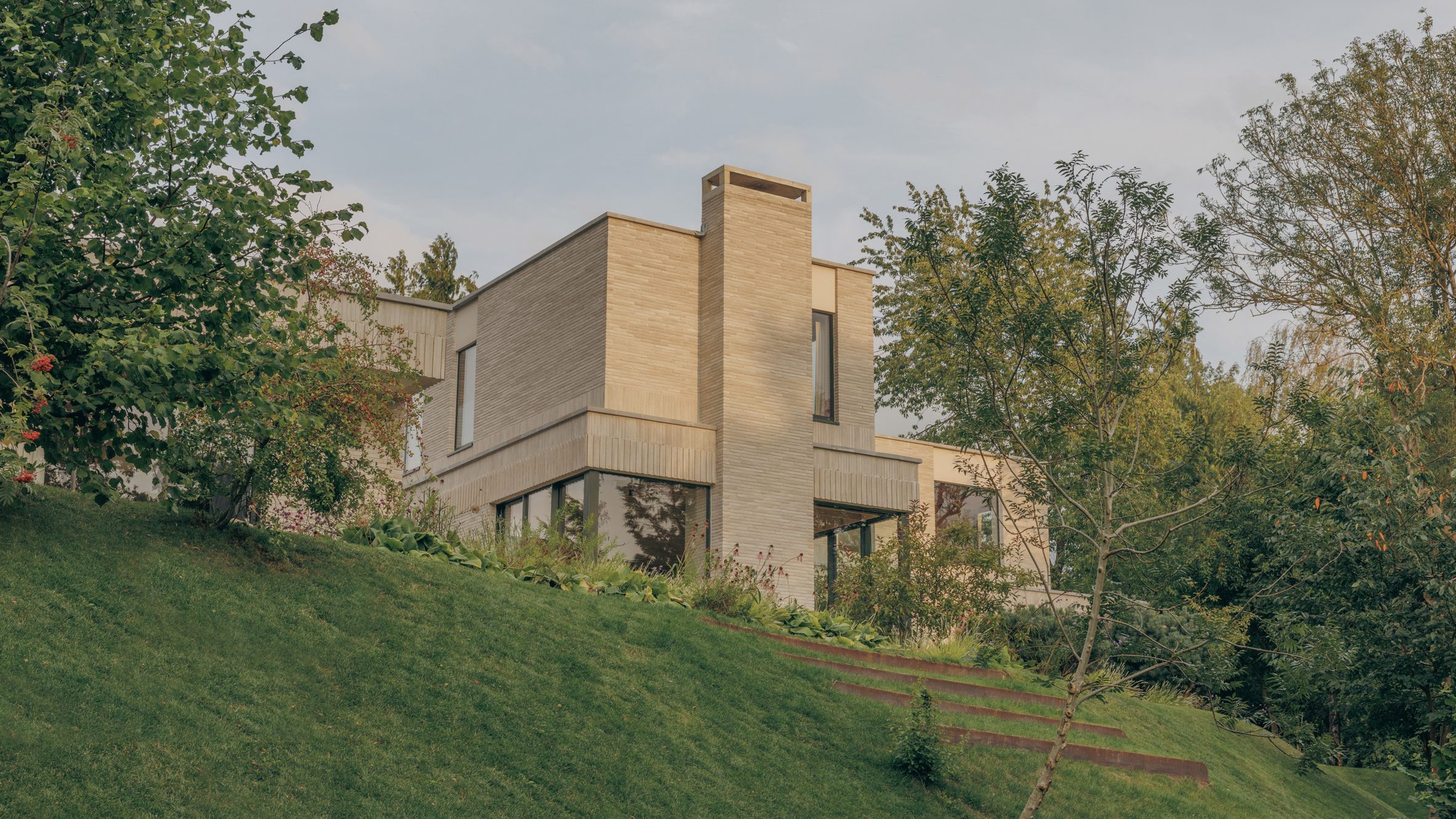
"Mid-century design principles" is a phrase that has been worn down to almost nothing. It gets stapled onto open shelving and walnut veneer and any house with a flat roof and a sunken lounge, and most of the time it names a mood rather than a method. So it is worth stopping to say plainly when a building actually does the thing the phrase is supposed to point at. Skylark, a four-bedroom house that House of EM has set on a plateau above the River Teme in Shropshire, does it. The studio built the entire house out of four materials, and then had the discipline to stop.
Brick, timber, concrete, lime plaster. That is the list. According to Dezeen, Skylark is the London studio's first completed new-build, which makes the restraint more impressive and not less, because the first time someone hands you permission to build anything is exactly the moment the temptation is to build everything.
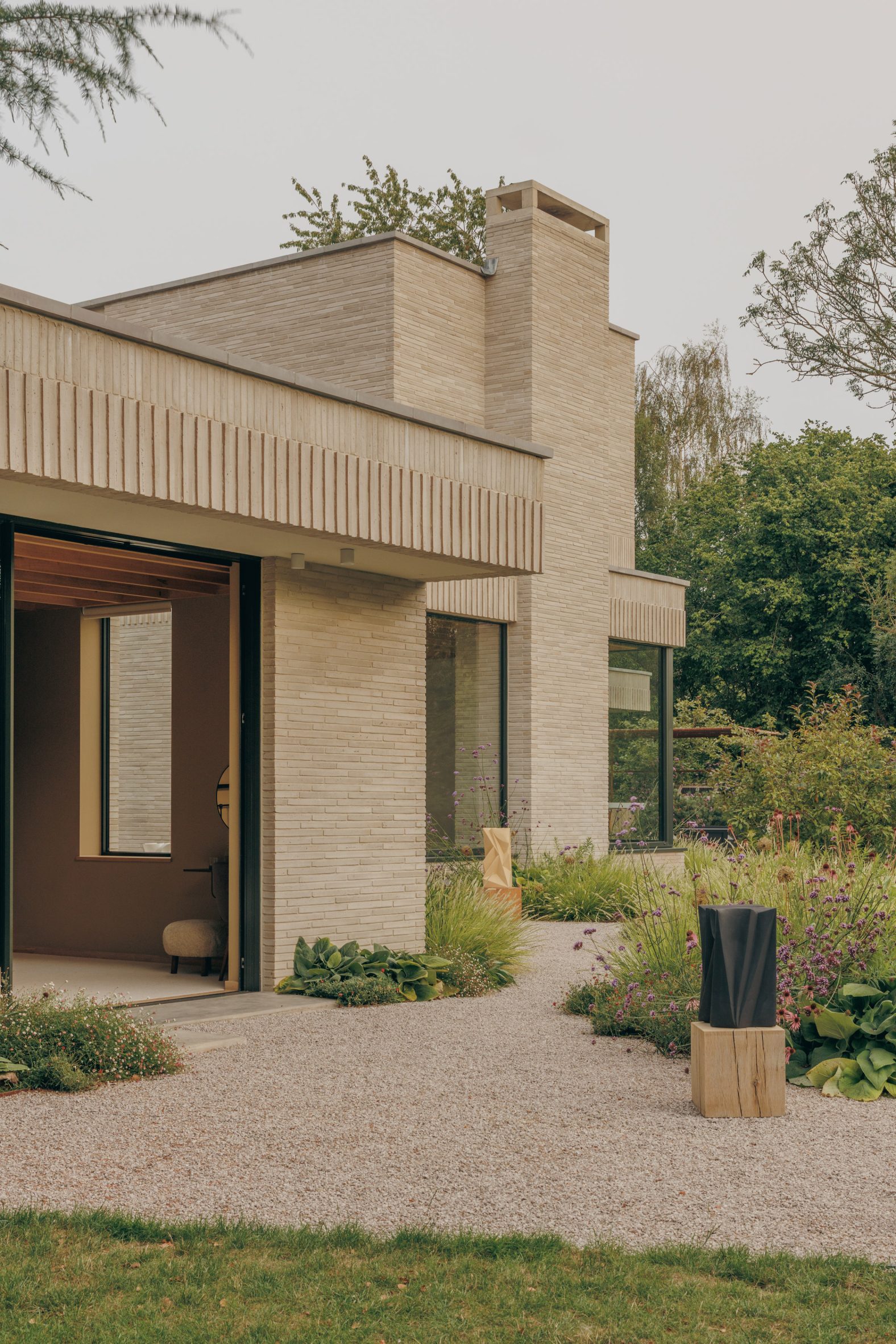
Look at the brick, because the brick is where the argument lives. House of EM chose a warm grey Danish brick and then refused to let it sit still, turning the courses in different directions so the walls band and shadow and shift as the sun moves across them through the day. Co-founder Emma Bodie told Dezeen the studio had been studying the textured brickwork of Herzog and de Meuron's Tate Modern, and "how a relatively restrained material palette can still feel tactile and monumental." That is the whole game in one sentence. You do not arrive at monumentality by piling things on. You arrive at it by taking one ordinary material and paying it an unreasonable amount of attention.
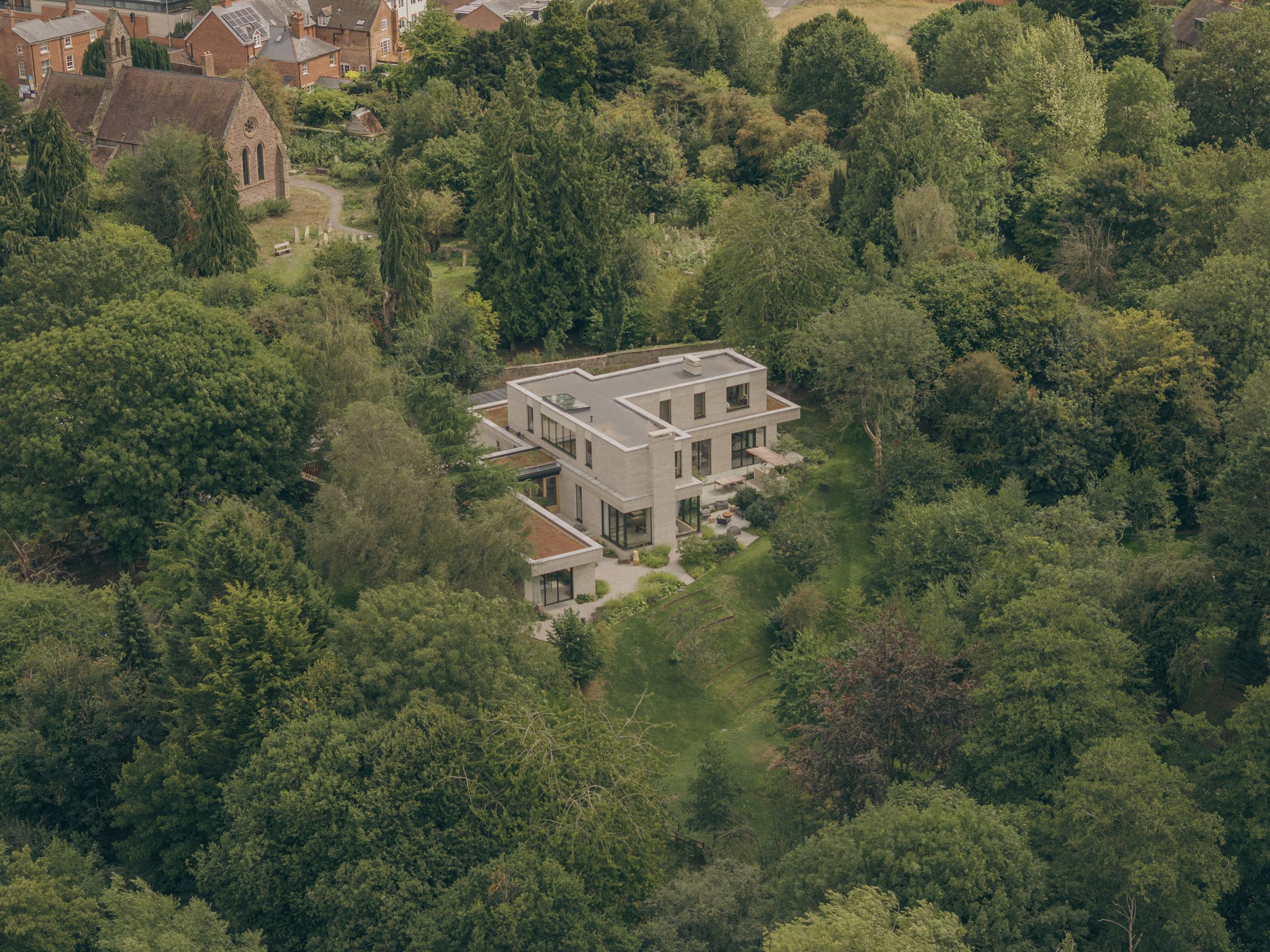
The plan runs the same idea through a different room. It is shaped like the letter F, which sounds like a designer's gimmick right up until you see what the shape is doing, which is breaking the house into wings, opening sheltered courtyards and terraces between them, and aiming each part of the building at a different view. The upper floor is stepped back from the ground floor so the mass never bullies the field it stands in. Bodie's phrase for what they were after was "anchored rather than imposed," and that is a useful thing to want, and a hard thing to get, and most large houses in open country get it exactly backwards.
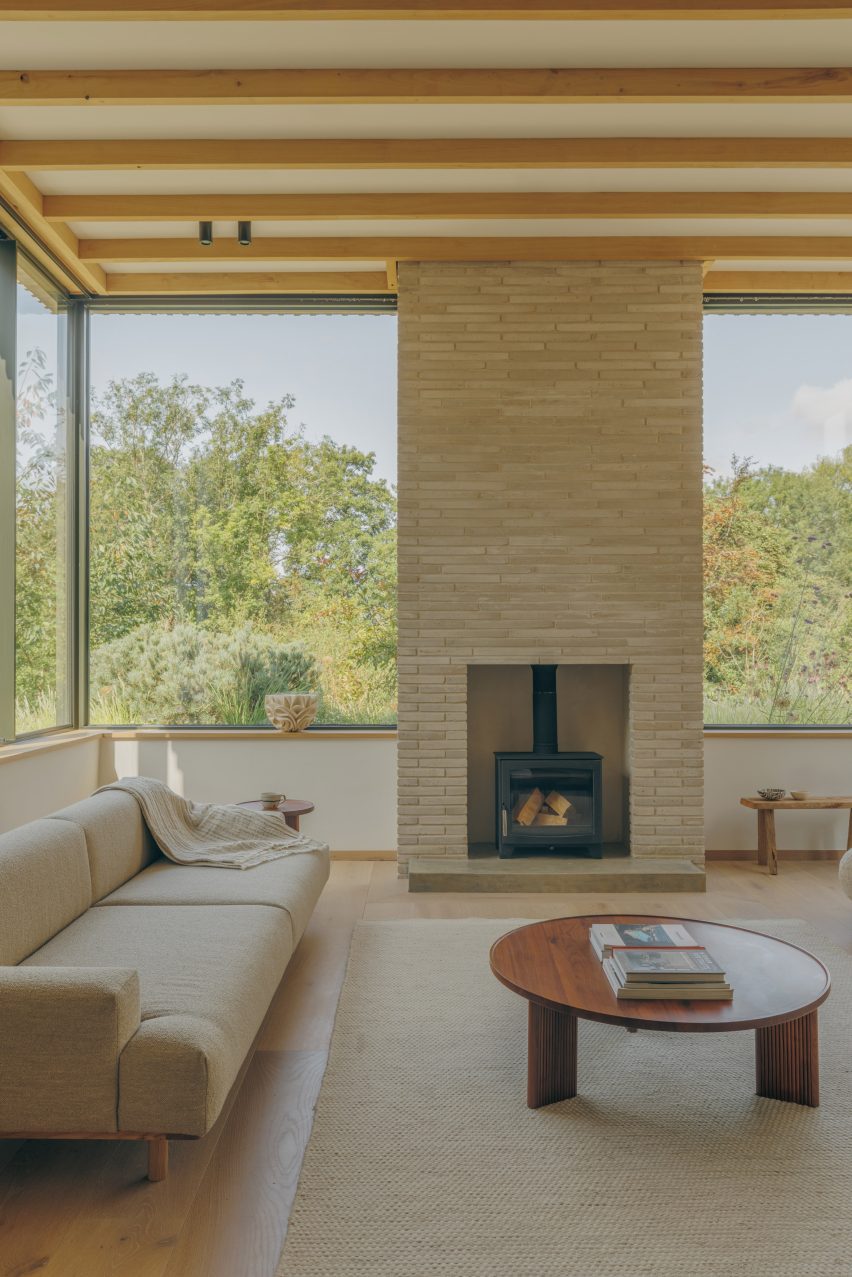
Indoors the palette holds its nerve. Exposed concrete floors, chestnut timber ceilings, walls finished in lime plaster sourced from nearby Herefordshire. Four materials again, doing quietly what a dozen would have done worse. Here is the part nobody prints on the listing: restraint reads as calm to the person standing in the room, but it is not calm to produce. Every material you leave out is a decision you have to defend, and every surface you choose not to cover is a surface that now has to be good enough to look at on its own. A plain room is the least forgiving room there is. It has nowhere to hide a bad joint, a wrong tone, or a lazy proportion.
That is also why this house reads to us as a descendant of the people whose names stay on our wall. Marcel Breuer and Tadao Ando were not spare because spare was a style. They were spare because they had decided that proportion and light and the honest face of a material were enough, and that anything past enough was noise. Bodie put the same creed in plainer clothes: "We approached the palette with restraint so the focus remained on proportion, light and materiality." Swap the names and you could have read that line in 1955, or in a monastery, or off the underside of a Breuer chair.
None of this asks you to canonize one handsome house in the English countryside. Skylark is a single good building, photographed beautifully by Richard Gaston, doing a handful of things with conviction. But it is useful evidence in an argument we keep making. The market sells "mid-century" as a look you can buy by the yard. The discipline underneath it was never a look. It was the willingness to pick four materials, learn them down to the grain, and trust that doing less, done exactly, would be enough. That part is not cheaper. It is the expensive part. It always was.
Sources & Credits
Reporting and quotes: Rheanna Hopkins for Dezeen. Quotes are from House of EM co-founder Emma Bodie, as told to Dezeen.
Photography: Richard Gaston, via Dezeen.
Project: Skylark by House of EM, Shropshire, UK.