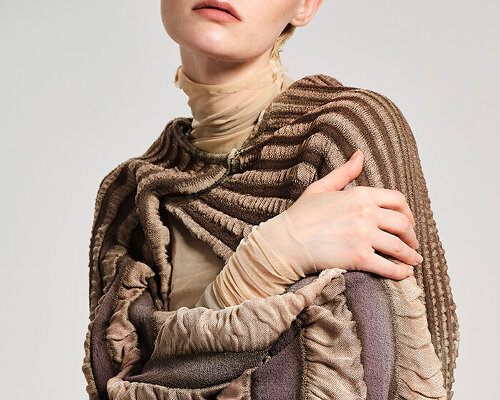
A wall built of bare concrete has no skin and no paint and nothing hung in front of it to make it look like something it is not. The color of that wall is the color of what it is made of. This was the one genuinely shocking thing about the buildings people learned to call brutal, more shocking than the heaviness or the scale: they refused to lie about their own surface. The gray you saw was cement and aggregate and weather. Nobody had come along afterward with a bucket to improve the truth.
We have been thinking about that wall while reading about bacteria.
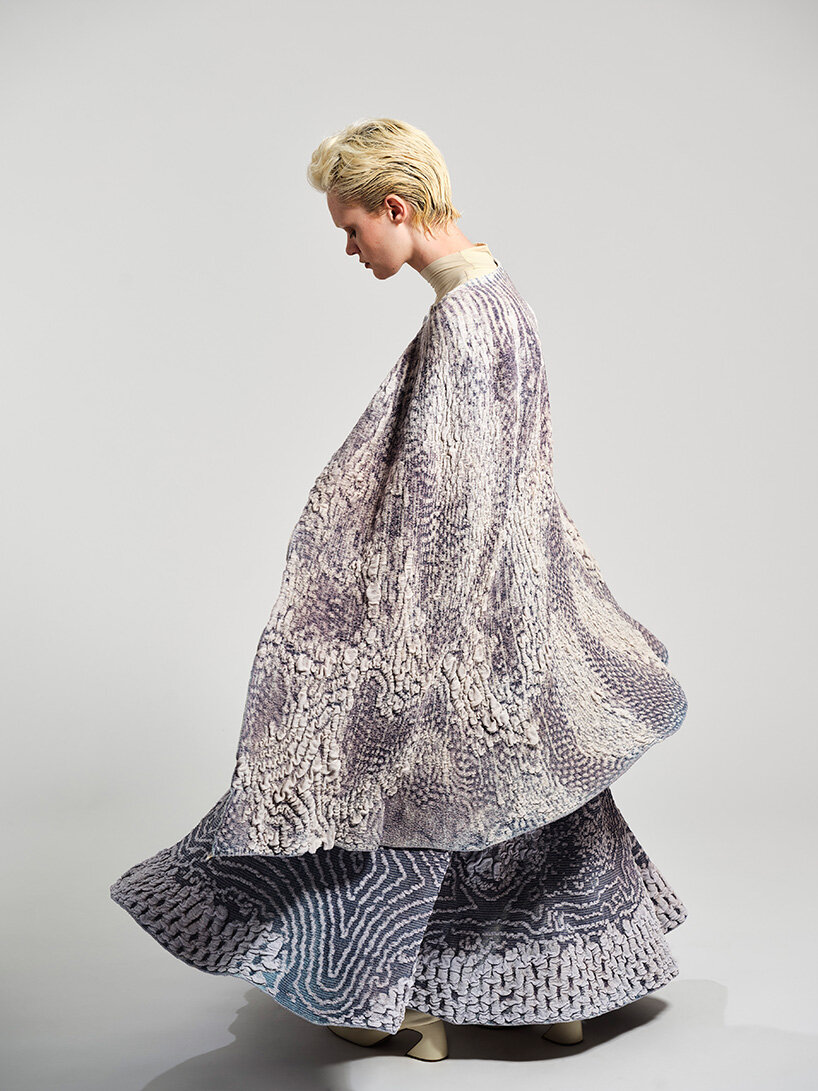
OXMAN, the research studio founded by Neri Oxman, has been working on a project called Vigils that asks, in designboom's words, "whether color can be cultivated rather than applied." Instead of dyeing fabric in a vat of synthetic color at the end of its making, the studio grows pigmented bacteria directly on the textile surface, so the color "emerges through biological activity" and the cloth arrives already colored from the inside out (designboom). The studio points to where this idea comes from, which is everywhere you have ever looked. As designboom lays it out, color in nature "emerges through biological processes," in flower petals and butterfly wings and berry skins and the stripes on a tiger. None of those things were painted. They grew that way.
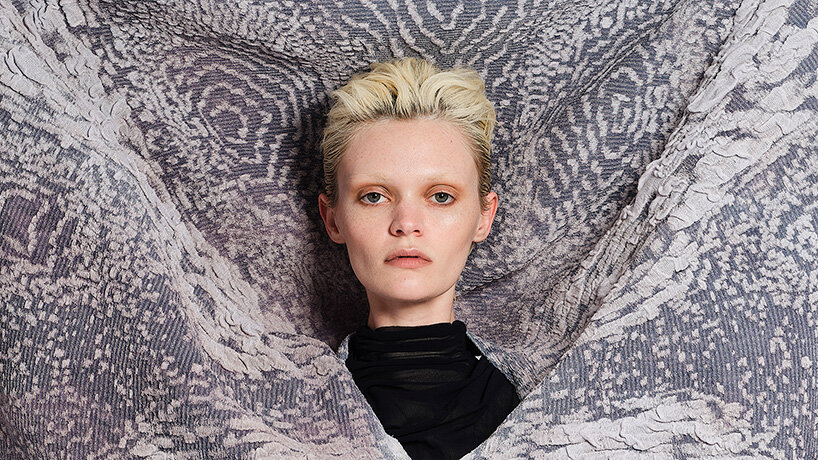
Here is what we noticed: this is the brutalist creed, pushed all the way down past the wall, past the surface, into the pigment itself.
Truth to materials was always a moral position dressed as a technical one. The claim was that a material has a nature, and that an honest building lets you see that nature instead of disguising it. Concrete is heavy and gray and it remembers its formwork, so let it. Wood has grain, so let the grain show. Brick is small and fired and it stacks, so stack it. The dishonest move, in this view, was always the finish, the cladding, the coat of something applied at the end to make the thing read as a thing it was not. Grown color is the end of that argument. There is no finish to distrust, because the color was never added. It is not on the cloth. It is the cloth.
We want to be careful not to oversell a lab experiment as a finished revolution, because that is exactly the kind of thing the design press does on a slow Tuesday, and because Vigils is research and not yet a product on a shelf. Bacteria are alive, which means they are inconsistent, which is the whole point and also the whole problem. A material that grows its own color will not match a swatch, and the entire global apparatus of manufacturing is built on matching the swatch. Whether anyone can scale a living pigment without killing the part that made it interesting is a real and open question. designboom places Vigils inside Oxman's twenty-year search for "alternatives to conventional manufacturing," which is a polite way of saying she has been circling this mountain for a long time and has not summited it yet.
But hold the lab dish next to a building going up right now and the stakes get clear. In Beijing's Sanlitun district, the new Hermes flagship hides a glass volume behind what designboom calls "a rose-pink and terracotta screen," a ceramic veil developed with Mamou-Mani, its curved parts made from "3D-printed positives used to make moulds" (designboom). It is genuinely beautiful, and the terracotta is an honest material, and we are not here to sneer at it. But notice what the veil is doing. It is color and pattern and craft, all hung in front of a glass box, so that the building reads from the street as warm and porous and handmade while the actual structure behind the screen is none of those things. The surface is telling a story the building is not living.
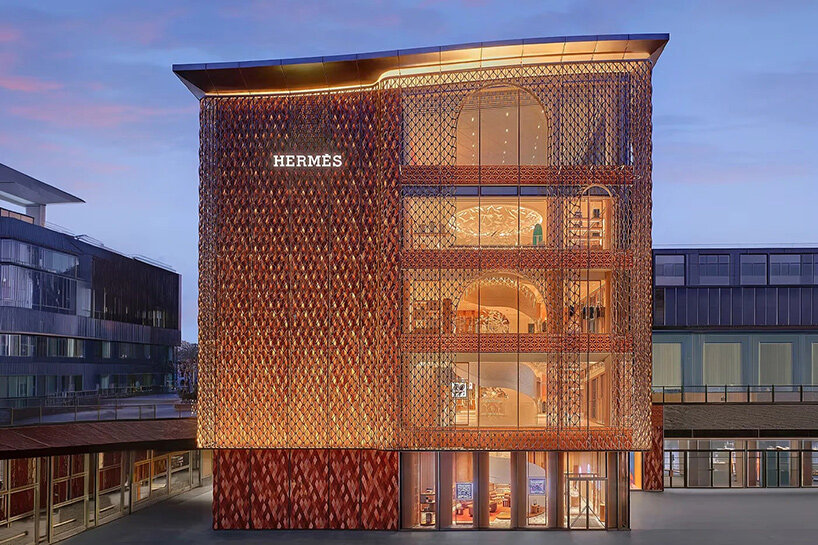
That is the line. One project grows the color into the material so the surface cannot lie. The other hangs a gorgeous surface in front of the material so the surface does the talking. Both are sophisticated. Both use the same 3D-printed moulds and the same computational tools. Only one of them is doing what Rudolph and Ando spent their careers insisting on, which is letting the thing be visibly, stubbornly itself.
We think the bacteria are closer to the right idea, even if they never make it out of the lab. Because the dream underneath Vigils is not really about textiles. It is about ending the long human habit of building something and then lying about it with a coat of paint. A wall that is its own color. A cloth that is its own color. A building, someday, that does not need a veil because it was never ashamed of what it was made of.
The tiger does not get repainted every spring. It grew the stripes once, and it wears them, and it is not apologizing to anyone.
Sources & Credits
- "OXMAN explores growing color through bacterial pigmentation instead of synthetic dyes," Thomai Tsimpou, designboom, 29 June 2026. https://www.designboom.com/technology/oxman-growing-color-bacterial-pigmentation-synthetic-dyes/
- "Hermes beijing flagship wrapped in a rose-pink ceramic veil by mamou-mani," Kat Barandy, designboom, 29 June 2026. Facade by Mamou-Mani; building by RDAI. https://www.designboom.com/architecture/hermes-beijing-flagship-rose-pink-ceramic-veil-mamou-mani-rdai/
Photography (not CP imagery): OXMAN Vigils, Photography Nicholas Calcott, via designboom; Hermes Beijing flagship, courtesy RDAI, via designboom.