Earth Is Brutalism With Better Manners
Listen: a wall made of packed earth remembers everything too. It remembers the soil it was dug from, and the water it was mixed with, and the ramming that drove it down layer by layer until it stood up on its own, and it will keep all of this in its stripes for a very long time, whether or not anyone ever comes to read it. We have spent about a century deciding that walls like this were either too primitive to take seriously or too heavy to be good, and we clad them, and we framed around them, and we hid the structure behind a smooth painted surface so that no one would have to think about how the building was holding itself up. And now, this month, one of the most celebrated firms on earth has put a president's library in North Dakota under a roof of grass, with walls of dirt and timber, and everyone is calling it the future.
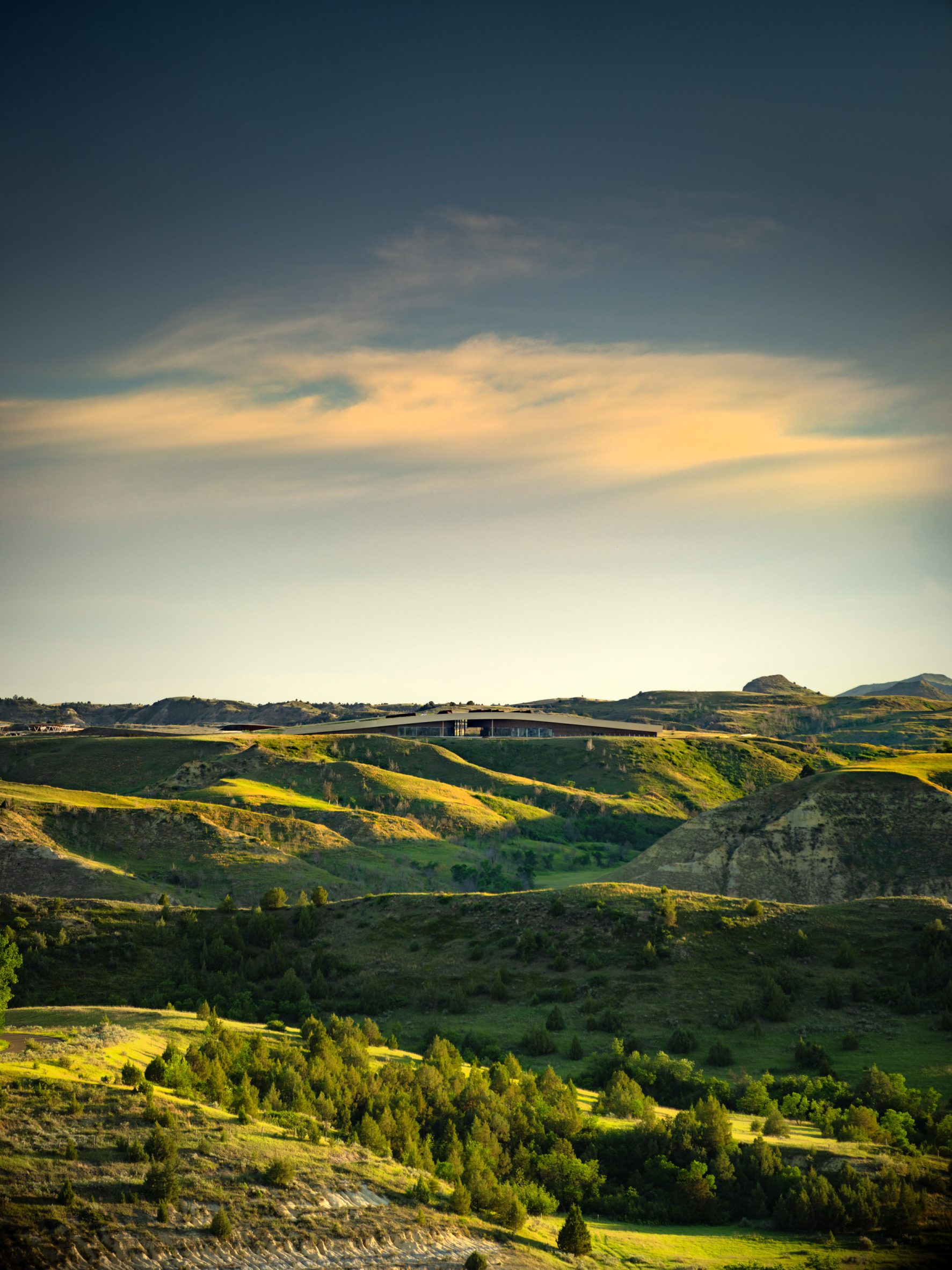
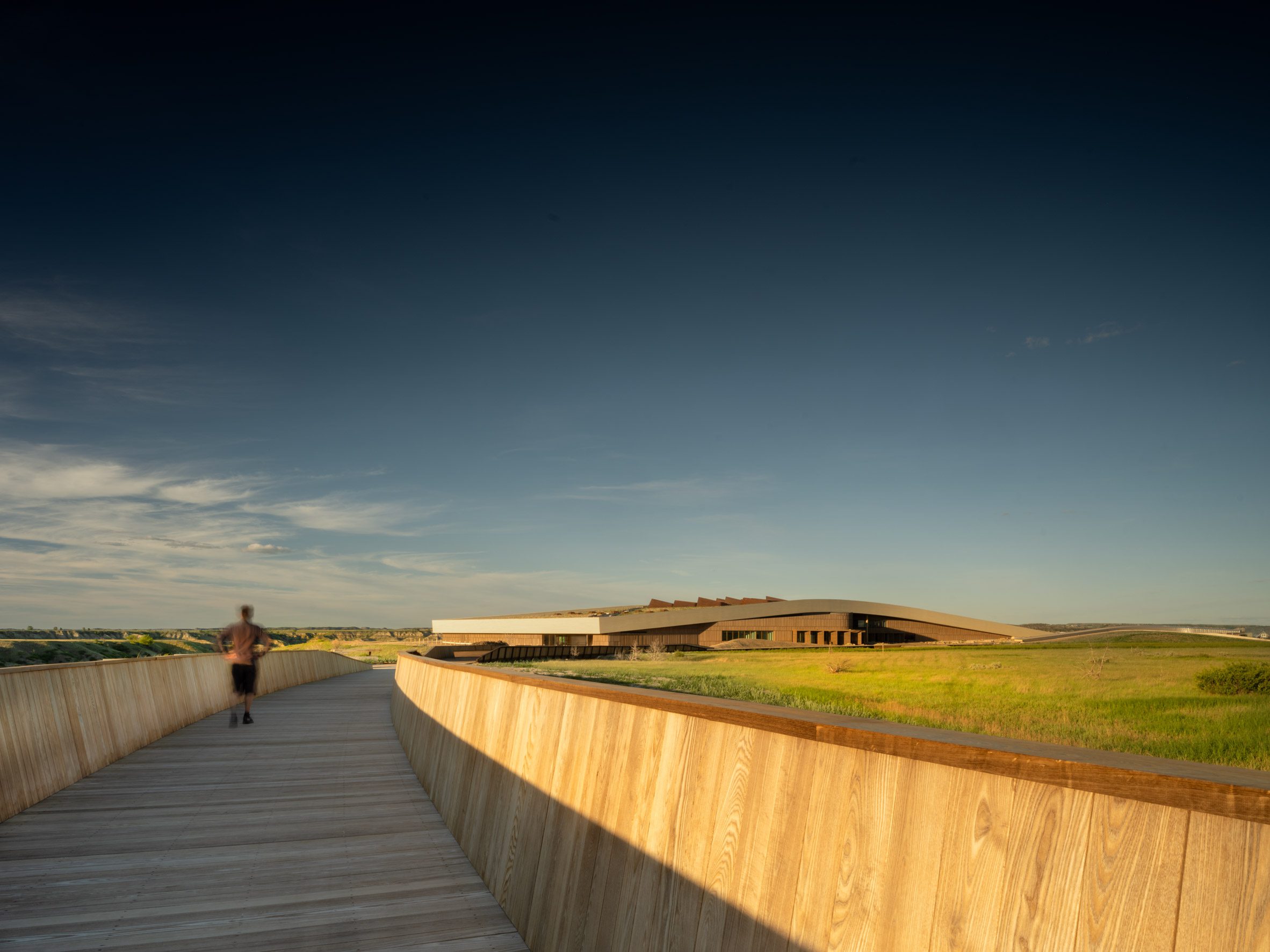
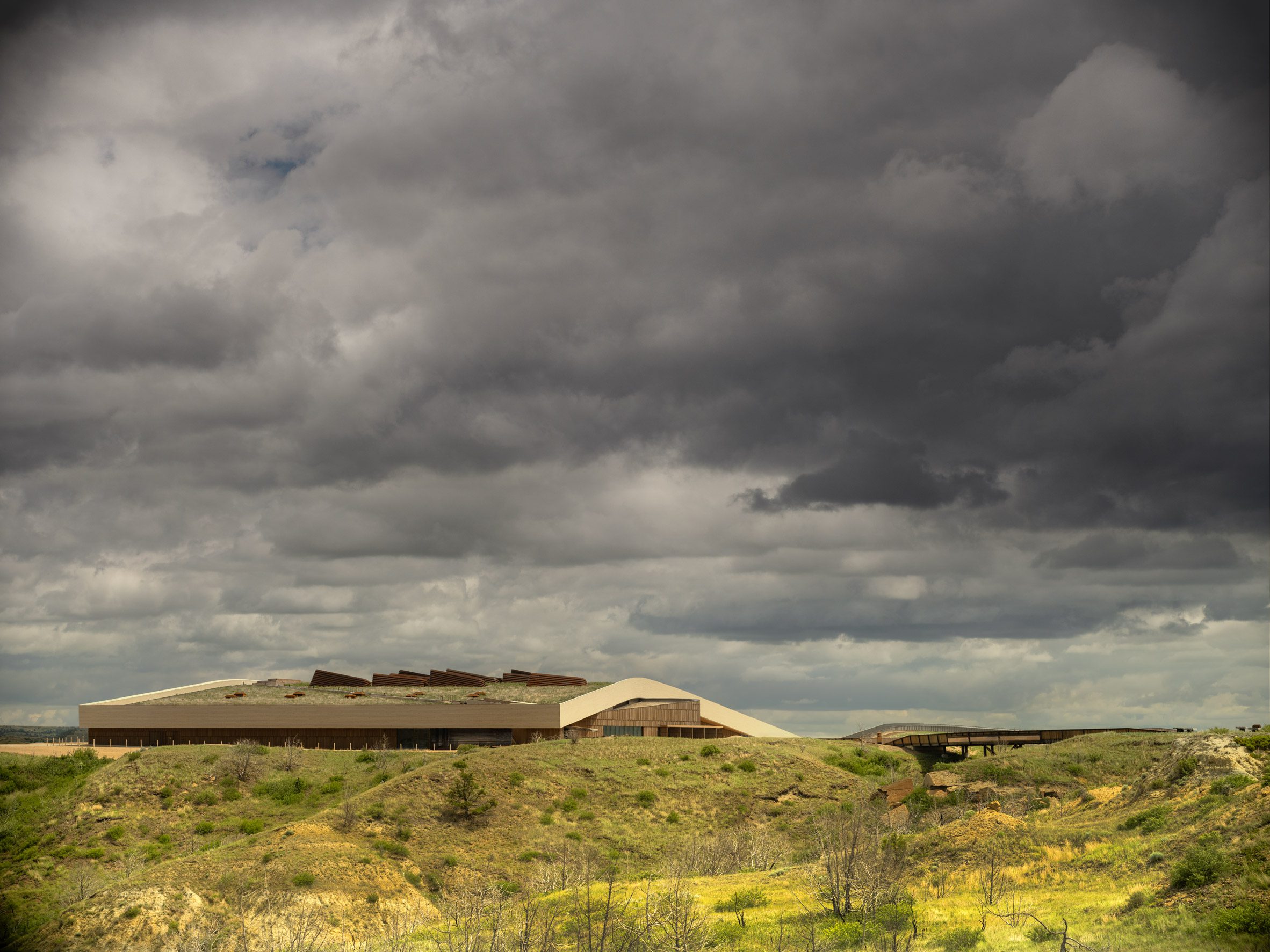
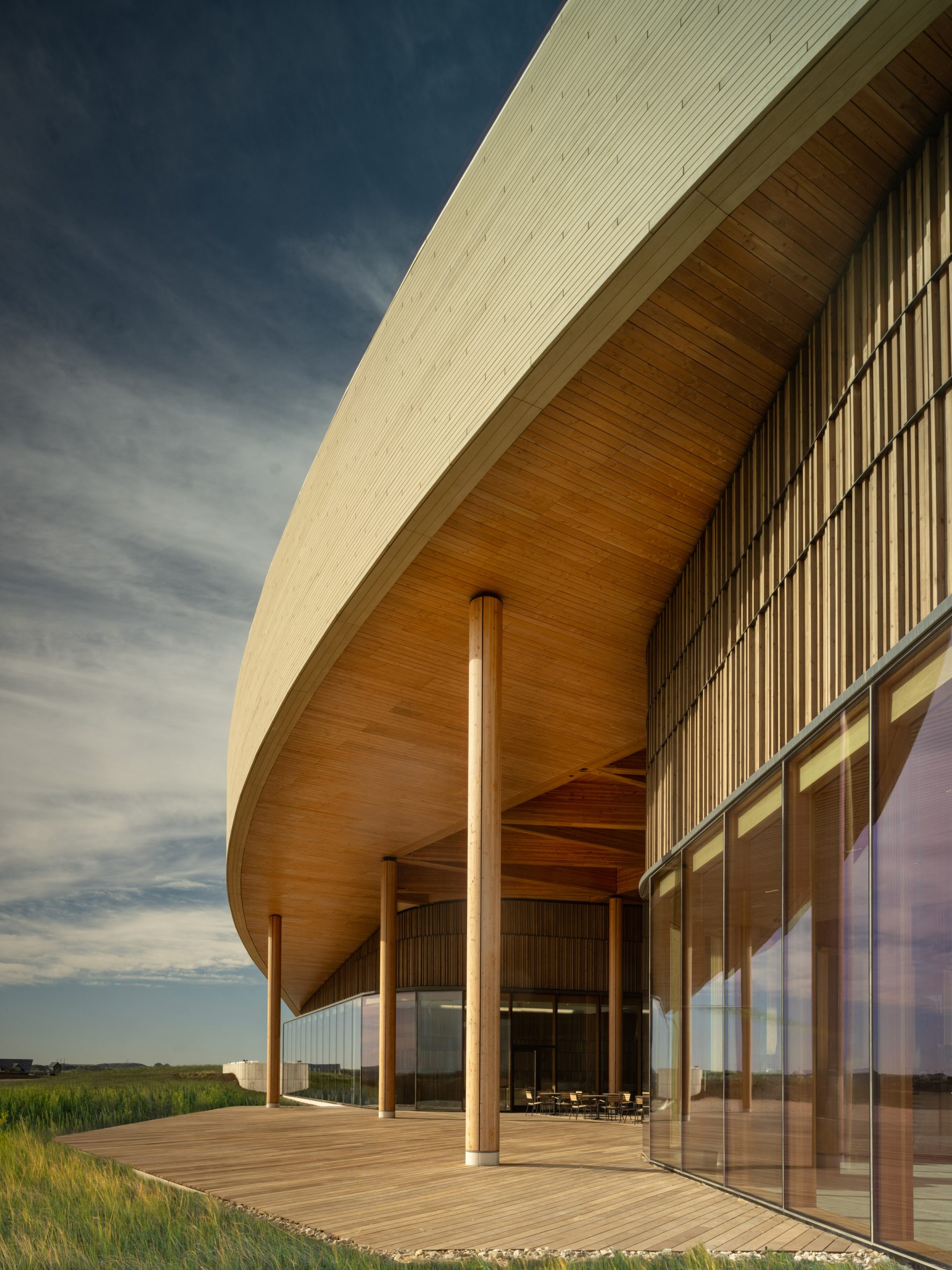
Snøhetta has completed the Theodore Roosevelt Presidential Library on a butte outside Medora, and the description reads like a reversal of everything the last fifty years taught architects to want. The building is 95,000 square feet of mass timber and earthen walls, and it wears a green roof that "crests over the interior volumes," in Dezeen's words, folding back down into the ravines and gulches of the Badlands until it is hard to say where the prairie stops and the library starts. Craig Dykers, Snøhetta's founding partner, told Dezeen the team did not want "an alien creature that seemed as though it had flown in." So they made it out of the ground it sits on. The building is, more or less, a very intelligent hill.
Here is what we noticed, having spent a good deal of time defending heavy materials to people who wanted them softened: this is the brutalist argument. It is the same argument, note for note. Let the material do the structural work. Let it show what it is. Do not apologize for weight, and do not dress up the truth of how the thing was made. Paul Rudolph combed his concrete into corduroy ridges so you could not possibly mistake it for anything but poured stone doing a job. Marcel Breuer trusted a raw concrete surface to carry both the load and the meaning. The béton brut people were called cold and ugly and inhumane, and the movement was eventually beaten half to death in the court of public taste, and the word "brutalist" became an insult you throw at a parking garage.
And then the same idea came back wearing a cardigan. Rammed earth photographs warm. It has those beautiful sedimentary stripes, and it is the color of the landscape, and it stores heat, and it does not frighten anyone at the zoning meeting. Mass timber smells good and looks kind and locks up carbon while it holds up the floor. Nobody is calling the Roosevelt library brutal. They are calling it healing, and contextual, and gentle on the land. But look at what the building actually does. It carries its own weight in its walls. It refuses to hide its structure behind a finish. It tells the truth about what it is made of and where that material came from. That is the whole brutalist creed, restated by people who would be horrified to be called brutalists.
We are not complaining. This is good news. The ethic we happen to believe in has won, and it won by changing its clothes, which is usually the only way an ethic ever wins anything. The material honesty is the same. The manners are better. Earth does not lecture you the way a raw concrete soffit does. It invites you to lean on it.
The profession seems to know this even when it will not say it out loud. On June 30, at a ceremony held inside the Sagrada Família, the International Union of Architects gave its 2026 Gold Medal, its highest honor, to Eduardo Souto de Moura. ArchDaily reported that the award cited his "contextual sensitivity, material precision, and a lasting" body of quiet, exact, stone-and-concrete buildings that never once tried to be spectacular. The top prize in the field, handed the same week Snøhetta's earth-and-timber library made the rounds, went to the architect least interested in being loud. That is not a coincidence. That is a culture admitting what it actually values when the trophies are on the table.
There is a version of this piece that ends by scolding the marketing. It would point out that "natural materials" has become a phrase you can print on anything, and that a green roof does not automatically make a building good, and that some of what is being sold as earthen and honest is a veneer over the same steel frame as always. All of that is true, and worth watching, and we will keep watching it. But it is not the important thing.
The important thing is older than the argument about style. A person needs shelter, and shelter is a pile of material arranged to keep the weather out and hold itself up over your head while you sleep. For most of human history that material was the ground itself, packed and stacked, and the person inside could see exactly what was keeping them alive. Somewhere in the last century we decided it was more sophisticated to hide that. We are, slowly, deciding it was not. Snøhetta built a hill you can walk inside, out of the hill it was standing on. Rudolph would have understood it instantly. He just would not have gotten to put grass on the roof.
The building does not care what we call it. It is holding up a roof of earth and grass and telling the truth about how, and that turns out to be the whole thing.
Sources & Credits
- Snøhetta uses mass timber and earthen walls for Theodore Roosevelt Presidential Library. Ben Dreith, Dezeen, 2 July 2026. https://www.dezeen.com/2026/07/02/theodore-roosevelt-presidential-library-snohetta-north-dakot/
- Eduardo Souto de Moura Receives UIA Gold Medal at Ceremony Held in Sagrada Família, Barcelona. Reyyan Dogan, ArchDaily, 1 July 2026. https://www.archdaily.com/1042925/eduardo-souto-de-moura-receives-uia-gold-medal-at-ceremony-held-in-sagrada-familia-barcelona
- Photography: Dezeen, via Dezeen. Final photographer credit to be confirmed against the source gallery before publication.