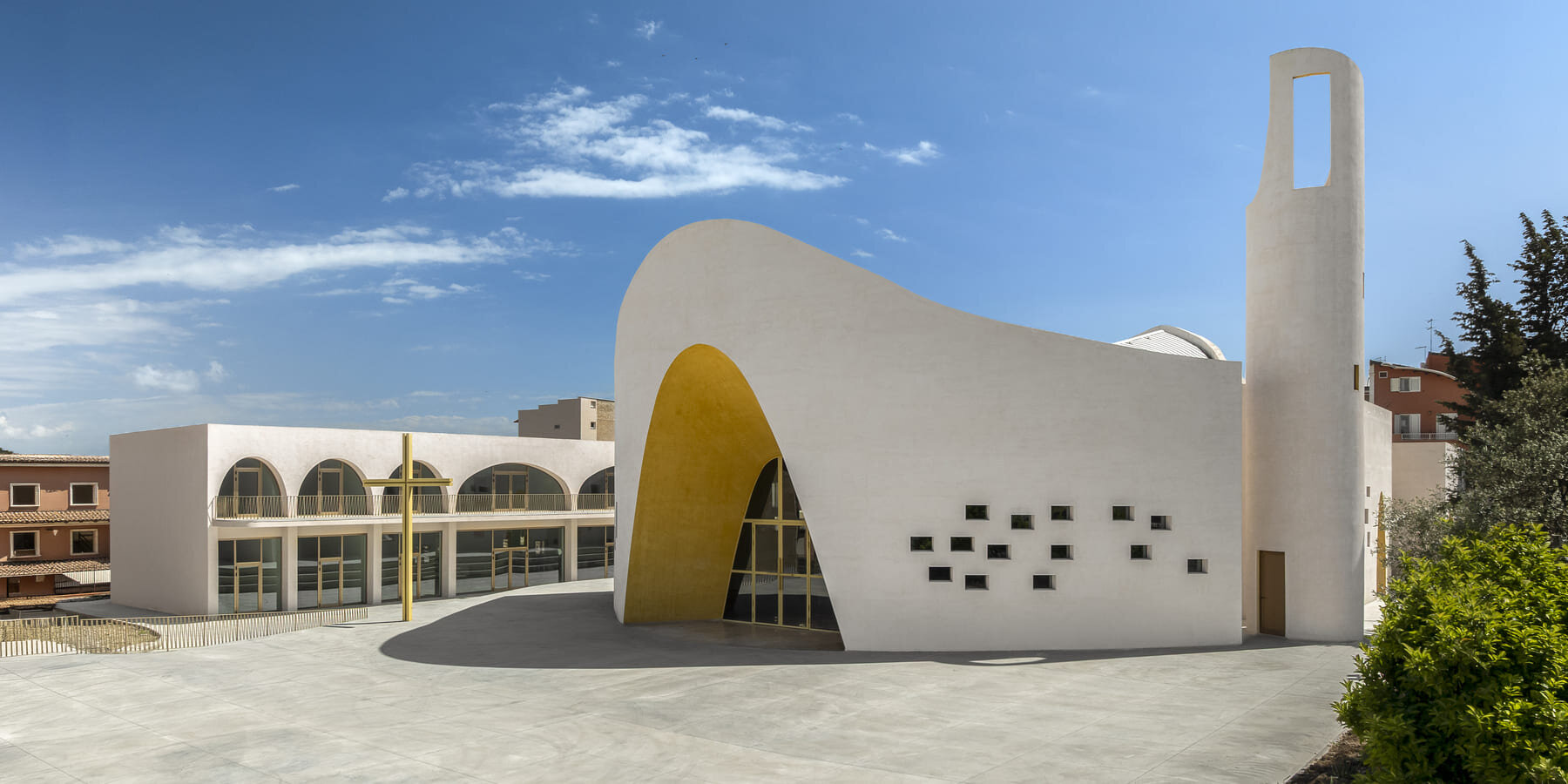
A church is the only building left that cannot shrug.
Everything else we put up has learned to hedge. The office tower is a hedge against the possibility that nobody comes back to the office. The museum is a hedge against the museum being boring. The luxury condominium hedges by calling itself a residence, and the residence hedges by calling itself a sanctuary, and the sanctuary hedges by installing a wellness room with a Himalayan salt wall, and somewhere at the end of all this hedging there is a person standing in a lobby wondering why they feel nothing at all. A church does not get that option. A church has to make a claim about the universe, out loud, in a material, in front of people who will be married there and buried there. It is a hard brief. It is the only brief that still asks a wall to mean something.
In Licata, on the south coast of Sicily, Francesco Lipari, Lillo Giglia and Giuseppe Conti have just built one. The new Santa Barbara Parish Complex came out of a two-stage invited competition promoted by the Archdiocese of Agrigento and the parish itself, funded through the Italian Episcopal Conference, and the architects describe it as a contemporary "campus of faith," which is the sort of phrase that ought to make anyone nervous, and which the building itself mostly earns back. It is not one building. It is a church, a churchyard, a weekday chapel, catechism classrooms, pastoral rooms and a rectory, arranged across roughly 5,700 square meters, with the church itself taking under a thousand of those. (designboom)
Note the proportions. The room where you meet God is the small one. Most of the site is where you park, and wait, and drop off a child, and stand around after the service talking about nothing. This is correct. This is what a parish actually is.
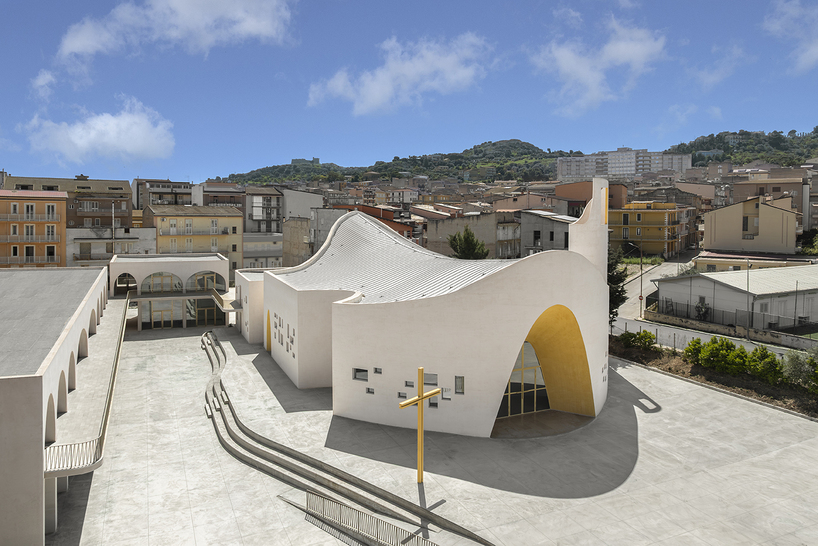
The walls are concrete and they curve. The roof is concrete and it flows, one continuous surface folding over the whole thing like a sheet dropped over furniture. And here is where we have to be careful, because a curved concrete roof in 2026 is a decision that gets made for two completely different reasons and looks identical from the outside.
The first reason is that concrete is a liquid before it is a solid, and a curve is what a liquid actually wants to do, and a building that admits this is telling the truth about its own manufacture. That is the Sicilian reason, honestly, the reason that runs back through the Mediterranean and through Tange's roofs at Yoyogi and through every vault ever thrown across a room by people who had gravity and not much else. The second reason is that curves photograph well. Curves win competitions. Curves are how a building announces on Instagram that it is not a box.
The building does not care which reason you had. It only cares whether the formwork was built right, whether the pour went cold, whether the reinforcement was where the drawings said it was. Concrete keeps the receipt on all of it. You get one shot, and then you have a permanent record of the morning you had.
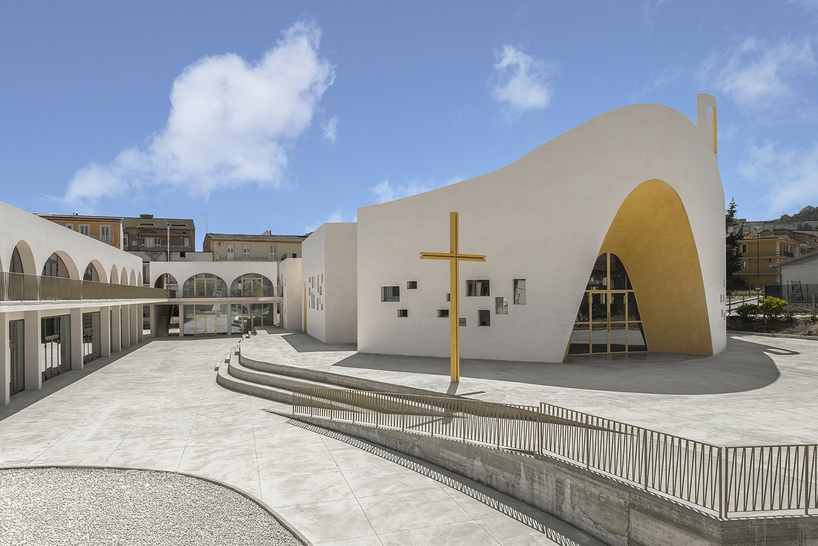
What persuades us here is not the roof. It is the fact that the complex is permeable, that it opens onto the town rather than sitting on it, that the churchyard is treated as a room and not as landscaping left over after the parking. Sicilian sun at midday is not a lighting condition, it is a physical fact with opinions, and a building on that coast either organizes shade or it fails. The plan organizes shade. That is climate engineering, and it is also, if you want it to be, theology. Ando has spent fifty years making the same argument with a slot of light in a concrete wall, and the argument is that a person will pay attention to anything you make them wait for.
There is a failure mode in this building type, and it is worth naming, because a lot of contemporary churches fall straight into it. The failure is spiritual theming. It happens when the architect decides that holiness is an aesthetic, and reaches for the swoop and the light shaft and the raw concrete because those things read as sacred, the way a minor chord reads as sad. The building becomes a stage set for a feeling it did not earn. You can usually spot it at the joints, where the gesture meets the actual construction and something gets fudged, and covered, and never spoken of again.
We have not stood in Licata and we will not pretend otherwise. What we can say from the photographs is that the concrete is doing structural work and not costume work, that the mass is real mass, and that the small chapel for weekday mass, the room for the eleven people who show up on a Tuesday, has been given the same care as the room for Easter. That last one is the tell. Anybody can design for the crowd. The parish is the Tuesday.
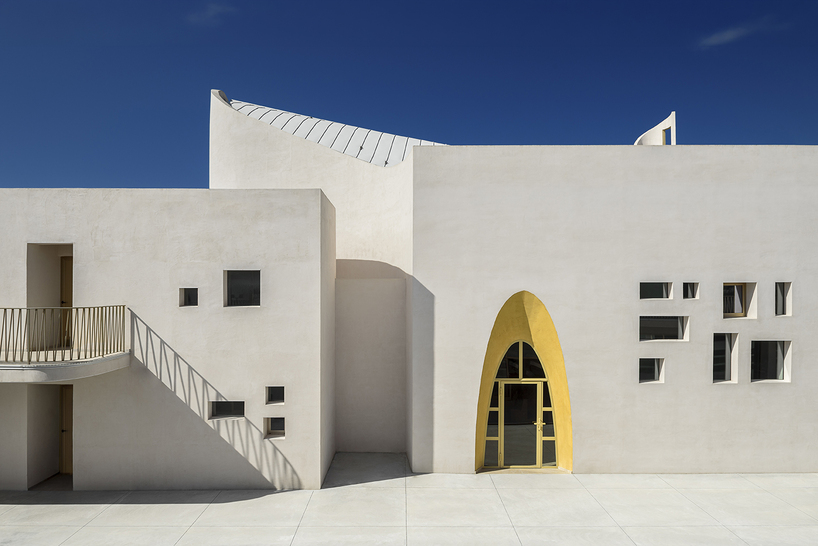
Concrete has spent this century being asked to apologize. It has been asked to be greener, and lighter, and less of itself, and mostly those are fair requests that the industry has been slow and self-serving about answering. But underneath the carbon argument there is an older and quieter one, which is that we stopped trusting the material to say anything. We clad it. We tint it. We pour it and then we hide it behind a rainscreen, as though the building were embarrassed to have a body.
A church cannot hide its body. It has to stand there, heavy, in the heat, and be the thing it says it is, for a hundred years, for people who did not choose it and were simply born in that town. Rudolph understood this and got hated for it. Breuer understood it at Saint John's, where the concrete bell banner stands out front like a wall that came loose from the building and decided to keep going.
Licata now has one too. It will outlive the competition boards, and the renders, and the phrase "campus of faith," and the architects, and us.
And still it stands.
Sources & Credits
- Reporting and project details: Giuseppe Conti, "a flowing roof and fluid concrete walls frame the new santa barbara parish complex in sicily", designboom, 10 July 2026.
- Architects: Francesco Lipari, Lillo Giglia, Giuseppe Conti. Client: Archdiocese of Agrigento and the Santa Barbara Parish. Funding: Italian Episcopal Conference.
- Photography: via designboom, https://www.designboom.com/architecture/flowing-roof-fluid-concrete-walls-new-santa-barbara-parish-complex-sicily-francesco-lipari-lillo-giglia-giuseppe-conti/
- No Common Projekts imagery appears in this post.