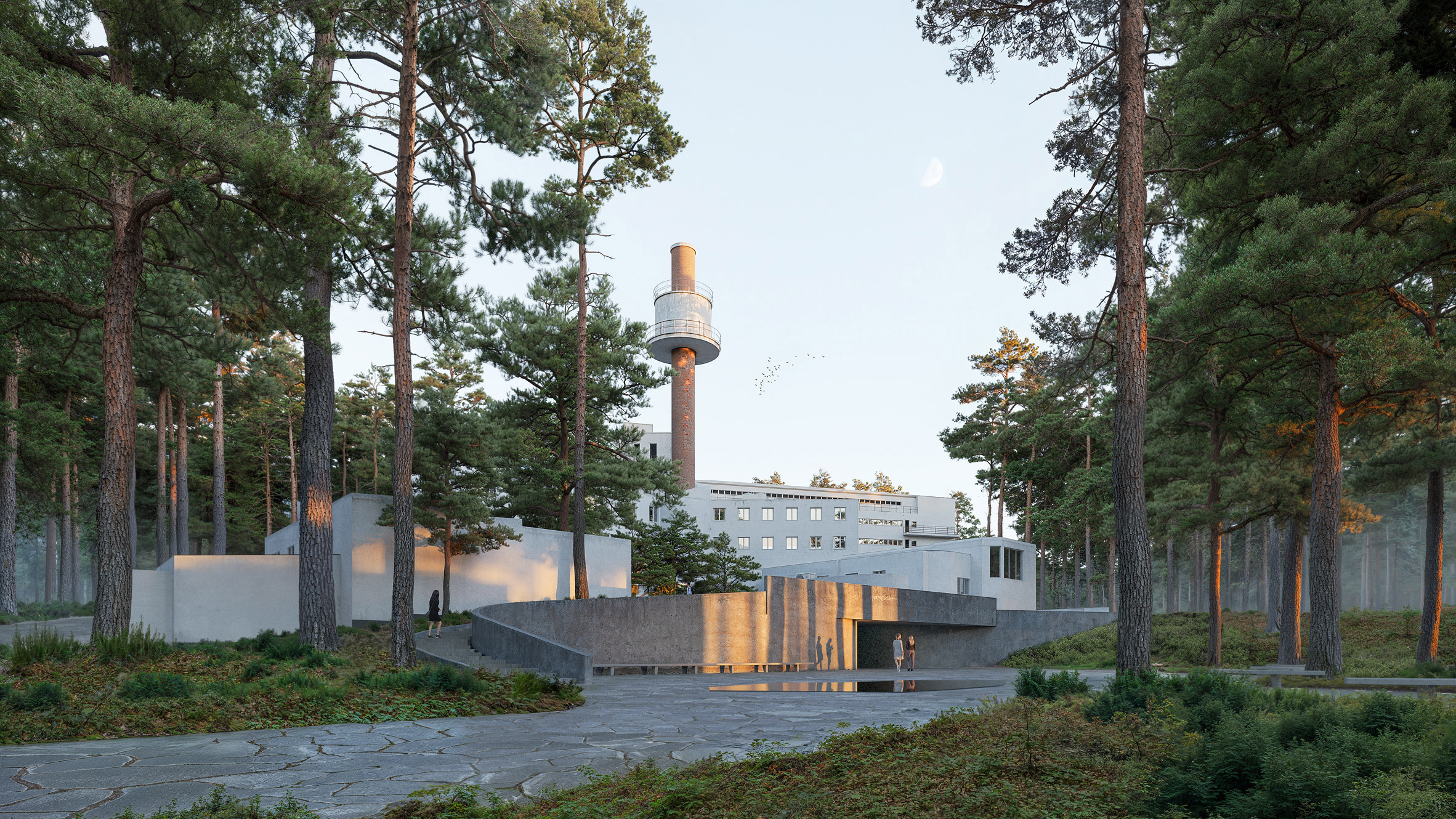
In 1933, Alvar and Aino Aalto finished a building in the Finnish woods for people who were dying of tuberculosis, and they designed it down to the parts you would never think to design. They tinted the ceiling of each patient room a dark, restful colour, because a person lying flat on their back all day looks at the ceiling and should not be looking at glare. They shaped the washbasin so the water ran down the porcelain in silence and did not wake the patient in the next bed. They ran the heating along the ceiling so the warmth came from above and not across the body. They built a chair, the one everyone now puts in lobbies, at an angle that opened a weak chest so a sick person could breathe a little easier sitting up. And they hung long balconies off the south face and rolled the patients out into the sun, because in 1933 light and air and rest were close to the only medicine anyone had, and the building was expected to deliver them.
Healing was not a theme at Paimio. It was the brief. The brief was life and death, and Aalto answered it with a thermometer's precision, and the result is one of the few buildings everyone agrees is both a masterpiece and a kindness.
Now Snøhetta is going to turn it into a hotel.
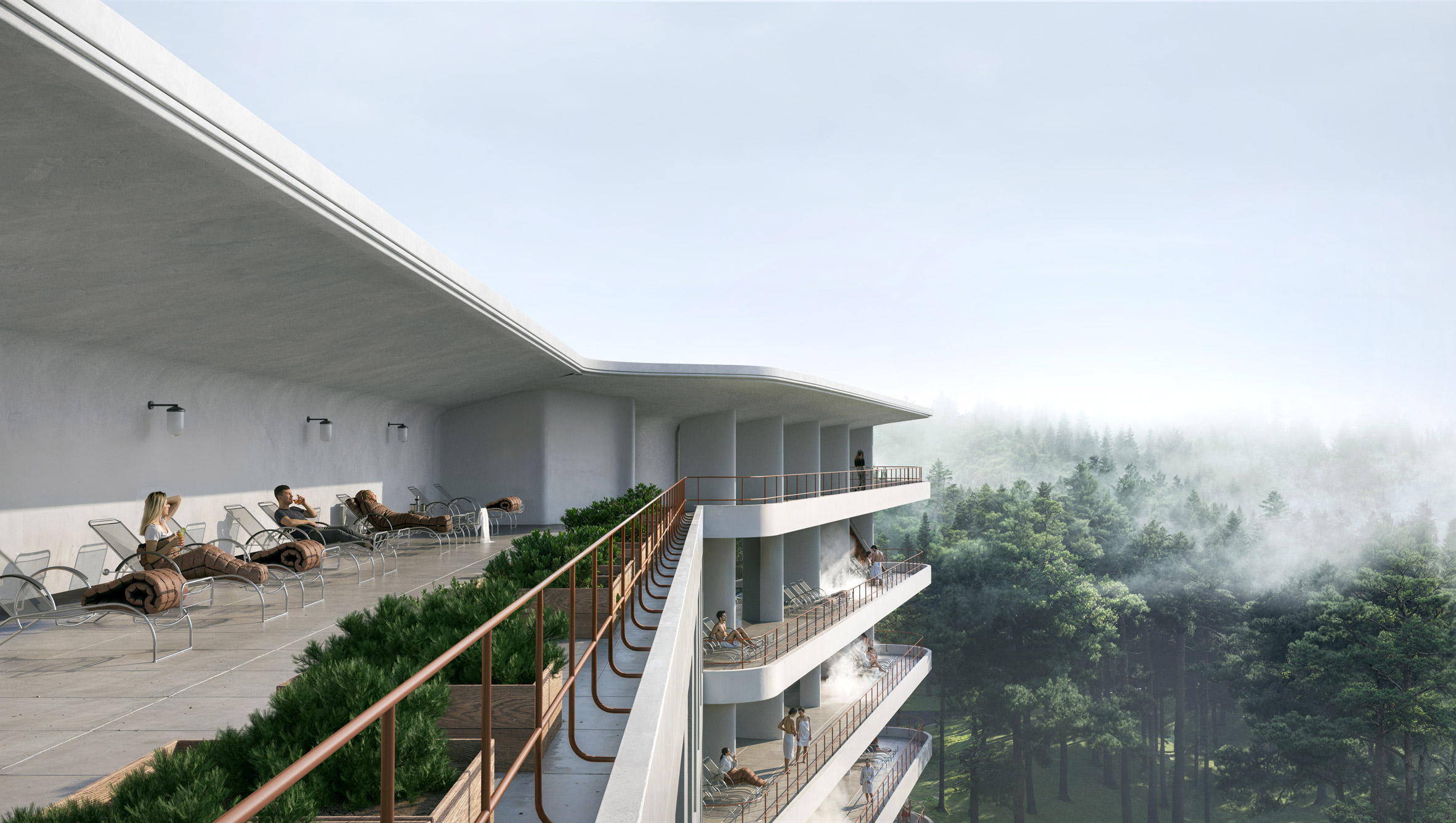
The patient wing becomes what the studio calls a "calm and understated" hospitality area, with the old patient rooms turned into bedrooms, some knocked together into suites. The surgery wing becomes a two-storey auditorium for 200 people. A spa goes in on the lower level with a door straight out to the forest. The famous sun balconies, glassed in at some later, more nervous moment, get opened back up to the air. Snøhetta's founding partner Kjetil Trædal Thorsen described the work as "preserving the building's integrity while allowing it to evolve," and the foundation's chair Mirkku Kullberg praised its "balance between conservation and restorative architecture." The building, used as a general hospital until 2010, may be on the UNESCO World Heritage List by the time you read this, with a decision expected in July 2026.
Here is the word in the brochure that is worth stopping on: wellness. It is a soft word and it has eaten a lot of buildings. And the thing it quietly does is collapse a distinction the Aaltos spent their whole careers holding open. Healing is what you do for the sick. Wellness is what you sell to the well. A sanatorium was a place you were sent because your body was failing and there was nowhere else to go. A wellness hotel is a place you book because your body is fine and you would like to feel attended to for a weekend. The first is a need. The second is a mood. Putting the second inside the building that perfected the first is the kind of irony that does not announce itself, which is the only kind worth noticing.
And then, because honesty cuts both ways, look at what Snøhetta is actually doing, and most of it is good. Reopening the sun balconies is not a flourish. It is the restoration of the original medical idea, that light and air do something to a body, which happens to be the one piece of 1933 medicine that turned out to be permanently true. Putting the spa where it can reach the forest is Aalto's own logic, that the cure was partly just the woods. This is not a gut renovation. It is careful reuse by people who read the building first, and reuse is the thing that keeps a masterpiece warm and slept-in and walked-through instead of roped off and admired from a distance. A building nobody is allowed to use is a building slowly turning into a photograph. Better a hotel you can actually lie down in.
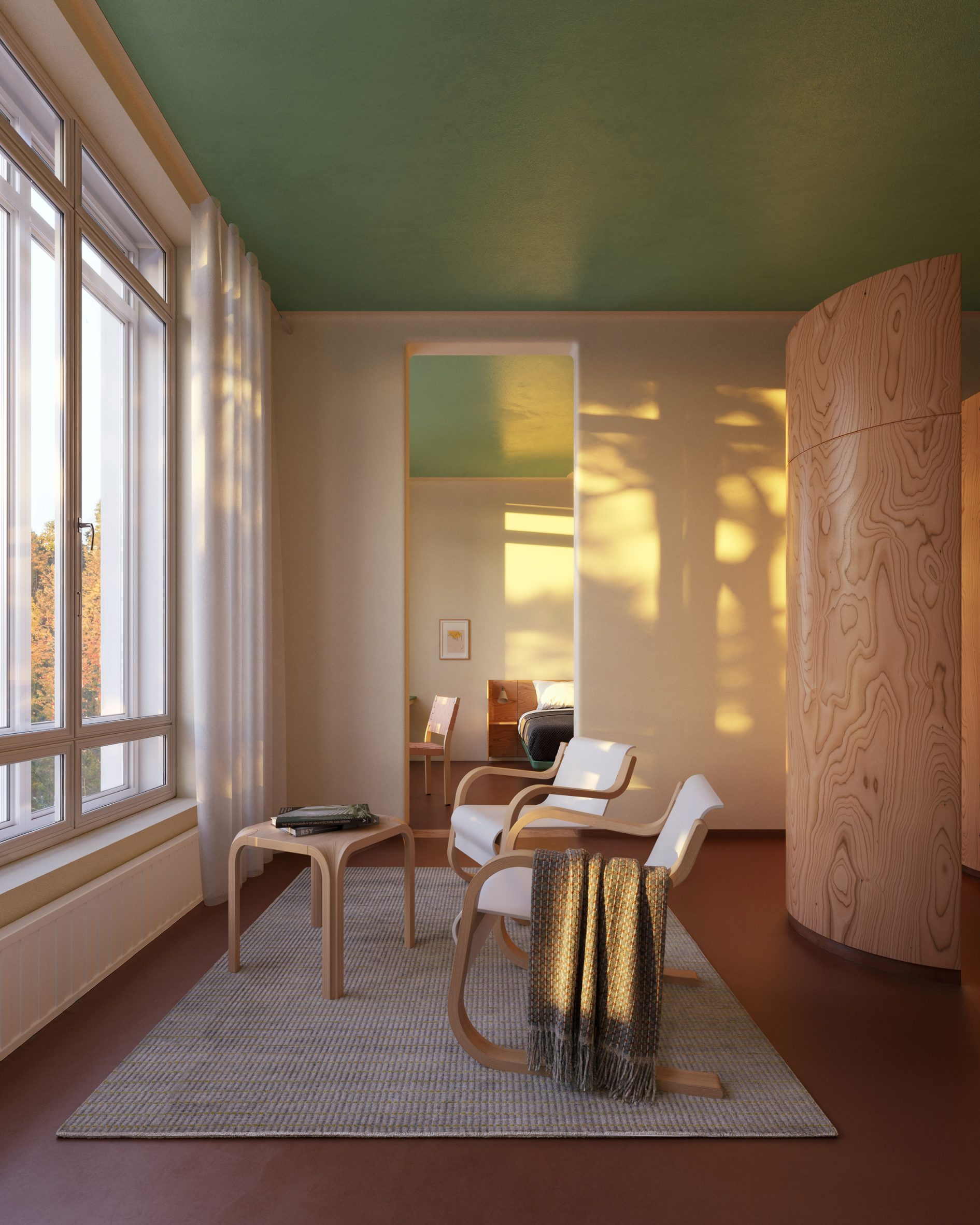
So the question is not whether the building should change. Buildings that do not change die, and this one already outlived the disease it was built to fight, which is the happiest reason a hospital ever closes. The question is whether the new rooms remember what the old rooms knew. Aalto believed, and built as though he believed, that where you put a suffering person is part of whether they get better, that a ceiling and a basin and an angle of light are not decoration but care. That belief is the actual treasure here, more than the white walls everyone photographs.
If the people who lie in those rooms feel any of it, the quiet ceiling, the soft light, the woods at the door, then it does not much matter what the marketing calls them. Aalto built the place to help people get better. That it might still do a gentler version of that, for people who only think they need it, is the most hopeful thing about the whole plan.
Call it wellness if you want. Aalto called it a hospital, and built it like one, and it worked.
Sources & Credits
- Reporting and quotations: Cajsa Carlson, "Aaltos' Paimio Sanatorium set to be turned into 'future-oriented' hotel by Snøhetta," Dezeen, 23 June 2026. https://www.dezeen.com/2026/06/23/aaltos-paimio-sanatorium-set-to-be-turned-into-future-oriented-hotel-by-snohetta/
- Additional coverage: "Snøhetta Reimagines Aino and Alvar Aalto's Paimio Sanatorium as a Wellness and Cultural Destination," ArchDaily. https://www.archdaily.com/1042779/snohetta-reimagines-aino-and-alvar-aaltos-paimio-sanatorium-as-a-wellness-and-cultural-destination
- Hero image and interior visuals: Proloog / Snøhetta, via Dezeen.
- Project: Paimio Sanatorium (1933), Paimio, Finland. Original architects: Aino and Alvar Aalto. Conversion: Snøhetta, with masterplan phase one by ALA Architects and Mustonen Architects. Client: Paimio Sanatorium Foundation.
- Note: images released by Snøhetta are renderings (visuals), not photographs of completed work.