The Brick Outlived the Sentence
Listen: a building does not know what it is for.
We know. The people who commissioned it know, and the people who drew it know, and above all the people who had to live inside it know, in their bodies, for as long as they were made to. But the building itself just stands there holding up its own weight and keeping the rain out, which is the only job any building has ever really understood, and it will keep doing that job for whoever walks in next, guard or guest, warden or tourist, without changing a single brick to suit the occasion.
The former Nara Prison has just become a hotel. It opened this summer as HOSHINOYA Nara Prison, run by Hoshino Resorts, and if that sentence makes you flinch a little, hold onto the flinch, because it is the most honest reaction in the room and we are going to need it.
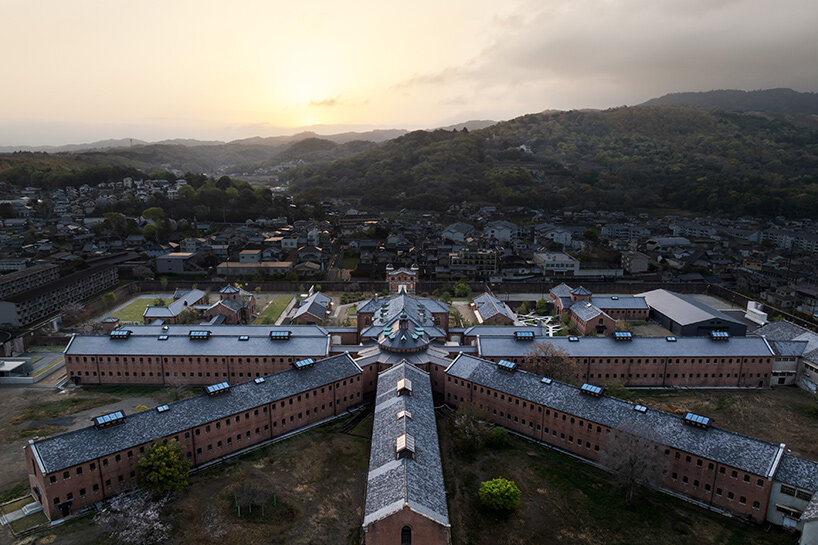
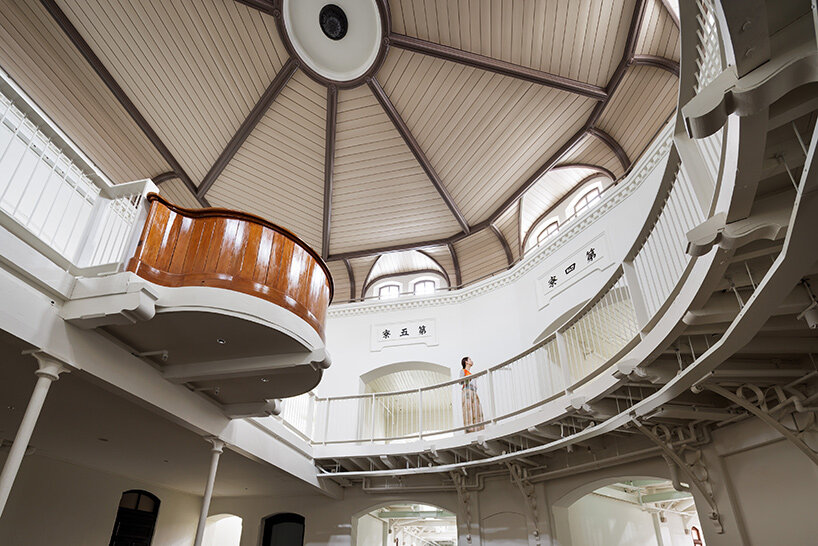
Here is the building. It was designed by Keijiro Yamashita, a functionary of the Ministry of Justice who spent his career drawing prisons and courthouses, and it opened in 1908, in the forty-first year of Meiji, when Japan was building institutions the way a young country builds them, quickly and in brick and with an eye on the West. It became one of the Meiji Five Great Prisons. Of those five it is the only one still standing in something like its original form, the others demolished or altered past recognition, which is its own small comment on how we treat the buildings we are ashamed of. It is a radial plan. A single point of oversight, and cellblocks fanning out from it like spokes, so that one person could stand in the center and see down every wing at once. This is the panopticon, the architecture of being watched, drawn in hand-laid red brick and roofed in vaults, and it is, by every account including the photographs designboom ran this week, beautiful.
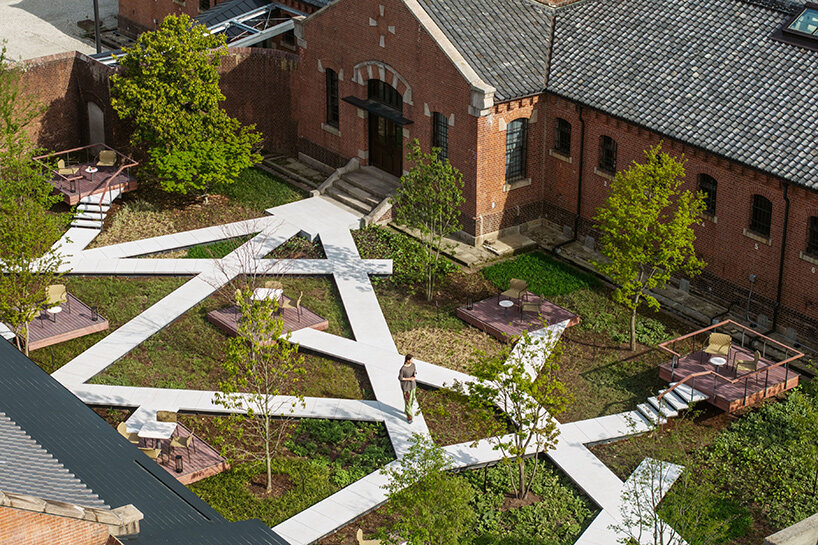
That is the uncomfortable part, and we should not rush past it. The building is beautiful. The brick was laid with care by people who were good at laying brick, and the vaults were turned by people who knew how to turn a vault, and the light comes down those long radiating wings the way light comes down the nave of a church, and none of the craft cared in the slightest what the rooms were for. The masons built a good wall. The state used the good wall to hold human beings against their will. Both of these are true, and the wall carries both of them, and it will go on carrying both of them long after everyone who remembers the second one is gone.
We talk about adaptive reuse now mostly in the language of carbon. Keep the old building and you keep the embodied energy, the concrete already poured, the brick already fired, the emissions already spent, and you do not go make more. This is correct. We say it all the time and we mean it. But it is not the deepest thing that is happening at Nara, and pretending it is lets us off too easy.
The deepest thing is that the building outlived its purpose. It was built to do something to people, and it did it, for the better part of a century, and then the purpose ended and the building simply remained, indifferent and intact, available for a completely different life. There is a mercy in that, and also a warning. The mercy is that nothing we build is doomed to mean forever what it meant when we built it. The warning is the same fact wearing its other face: the wall you raise for a good reason will hold up just as faithfully for a bad one, and it will not warn you, and it will not resist. A building is a loyal thing with no conscience. It is on us to supply the conscience.
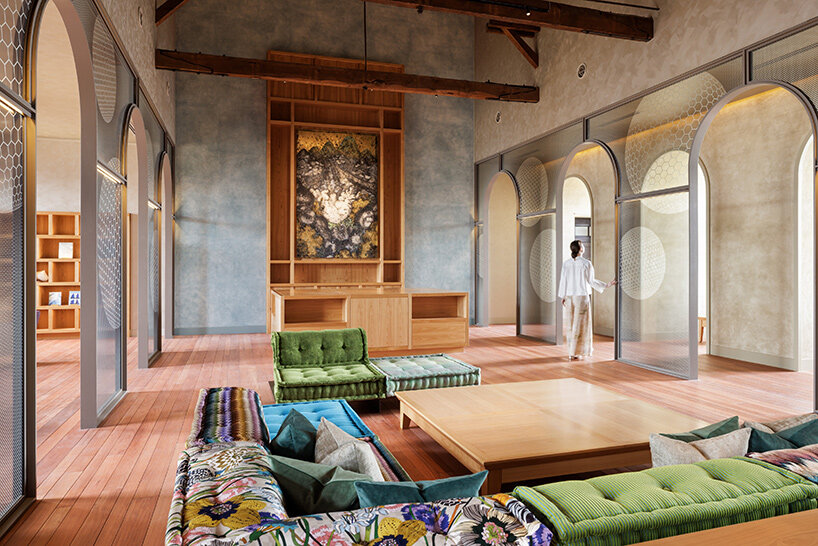
So here is the honest reading of HOSHINOYA Nara. To turn a prison into a hotel is not to launder it. The radial plan is still legible. The cells are still cells, more or less, whatever the bedding. You will sleep inside the geometry of confinement and you will know it, and if the project has any integrity at all it wants you to know it, because the alternative, smoothing it into a themed novelty, would be the actual crime. Kept honest, the reuse becomes a form of memory. The building is allowed to keep telling the truth about what it was, while doing something gentler with its days.
Paul Rudolph combed his concrete into ridges so you could never forget how it was made. Tadao Ando leaves the form-tie holes in the wall like a signature, small dark points where the pour was held together, because the making is part of the meaning. The instinct is the same one Nara asks of us. Do not hide how the thing came to be. Let the surface remember.
The brick at Nara remembers everything. It remembers the kiln and the mortar and the hands, and it remembers the men who were kept behind it, and now it will remember the strangers who came to rest where those men were kept, and it holds all of this at once without preference, because that is what brick does. We are the ones who have to decide what to do with the memory. The building has already done its part.
It is still standing. That was never in question.
Sources & Credits
- Reporting on the hotel opening: designboom, "hoshino hotel opens within the historic, radiating structure of japan's former nara prison." https://www.designboom.com/architecture/hoshino-hotel-openshistoric-radiating-japan-former-nara-prison/
- Historical detail on the former Nara Prison (architect Keijiro Yamashita, 1908 / Meiji 41, one of the Meiji Five Great Prisons, radial plan, the only one surviving in original form) and the opening under Hoshino Resorts as HOSHINOYA Nara Prison: designboom coverage and contemporaneous reporting, including designboom, "japan's oldest prison building set to reopen in 2026 as luxury hotel with adjoining museum," https://www.designboom.com/architecture/former-nara-prison-japan-hoshinoya-red-brick-hotel-hoshino-resorts-09-19-2023/
- Hero image (layout reference only, not CP imagery): designboom. Photography via designboom.
All facts about the project belong to the sources above. The reading of them is Common Projekts.