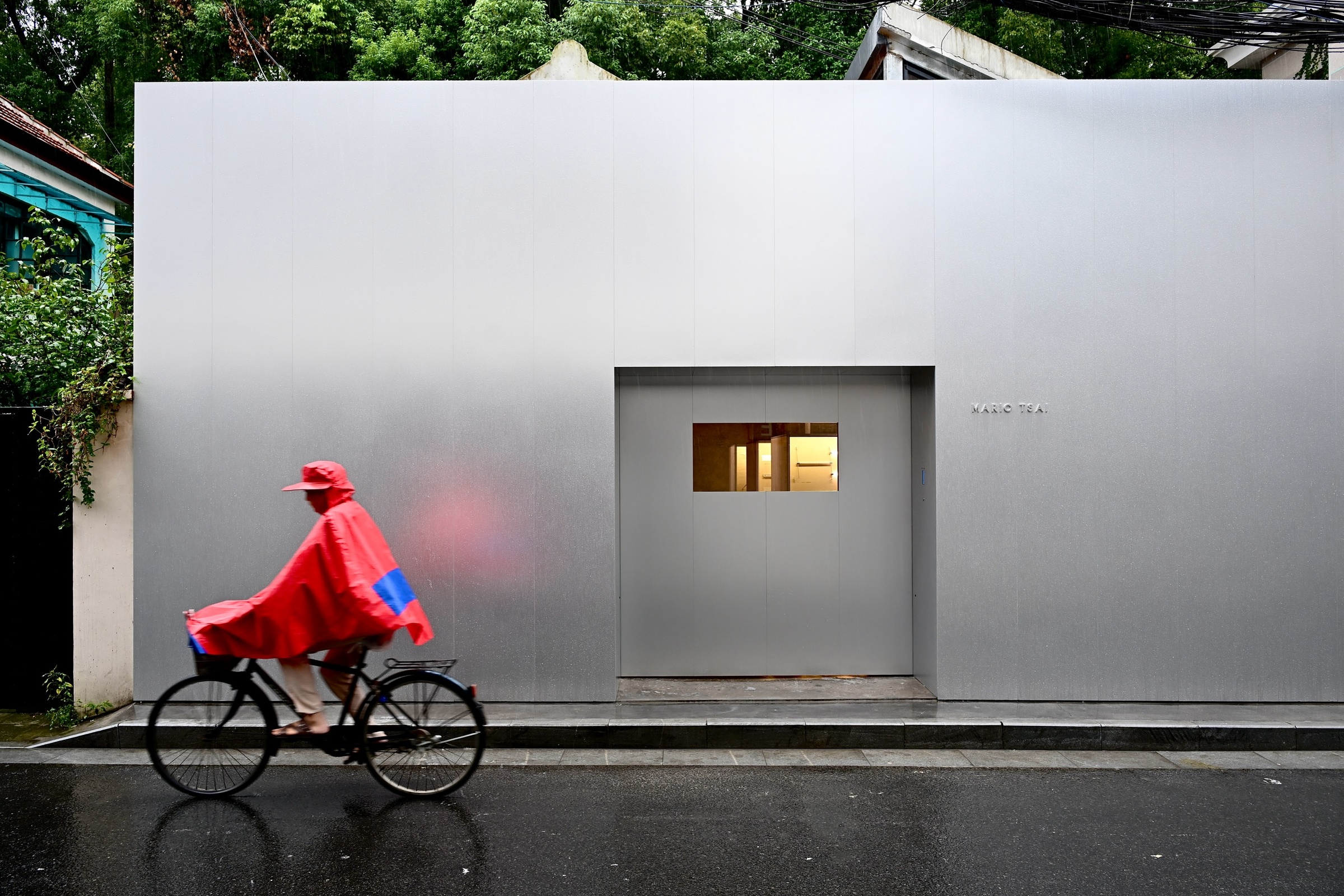
A showroom is the only building a product designer ever gets to finish. There is no client with a brother-in-law in the trades, no planning officer with a view about the parapet, no value engineering exercise in month seven that quietly removes the thing the whole scheme was about. Whatever goes up is what was drawn. So when a designer builds one, it is worth reading not as marketing but as evidence, because for once we are looking at somebody's actual convictions with nothing in the way of them.
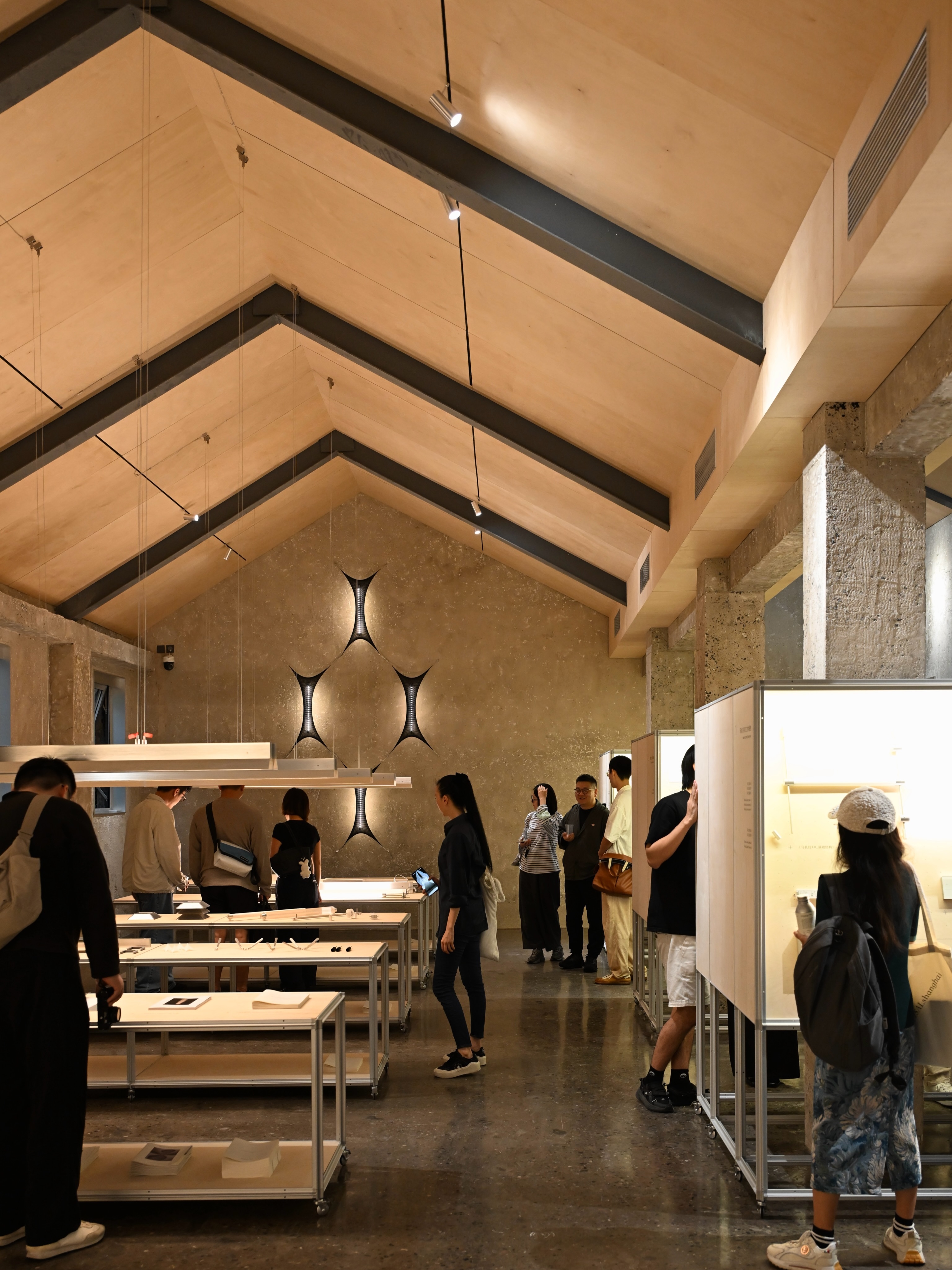
Mario Tsai Studio has built one in Shanghai, and Minimalissimo describes it as bringing the studio's approach "into a shared physical experience, connecting objects, materials and the structures that support them." The studio, Minimalissimo says, works across product design, research and production, and is interested in how "material properties, construction methods and modular systems can shape the way things are made and used."
That last sentence is the one to sit with, because it is doing a lot of work and almost all of it is vocabulary. Material properties, construction methods, modular systems. Every catalogue in the industry says a version of this. The useful question is never whether a designer is interested in structure. It is whether anything in the box changes what an architect has to commit to on the first day.
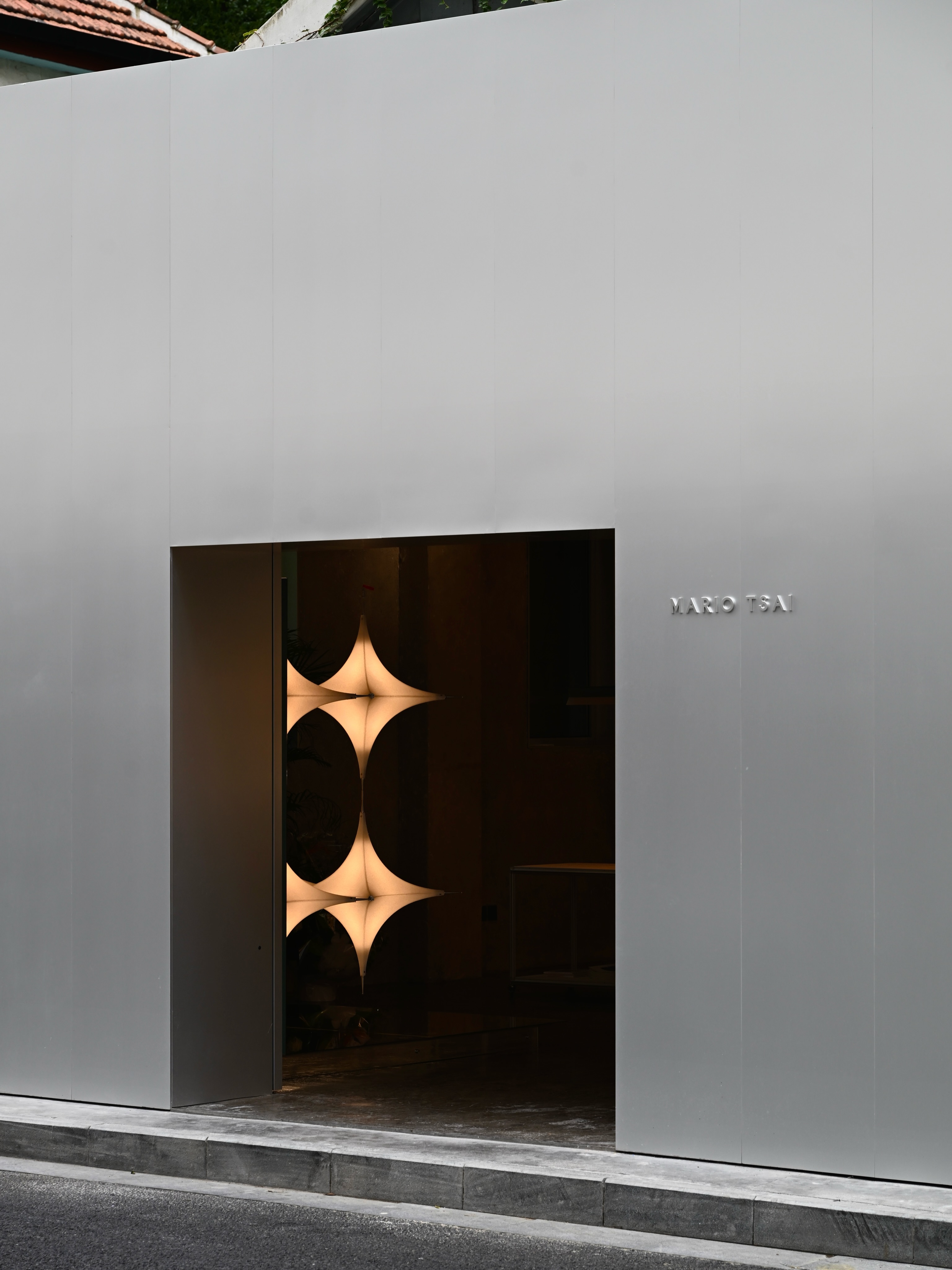
In Tsai's case, something does, and it has been sitting in plain sight since 2019.
His Milan show that year was called From The Structures, which is an unusually honest title for a furniture exhibition. Dezeen reported from it that the Mazha lighting system is made of modular elements that can be extended indefinitely, suspended from thin wires carrying twelve volt current to tubular fittings, and that the geometry comes from the cross-shaped structure of the traditional Chinese mazha seat, the folding stool your grandfather carried to the park. The tables in the same show were hollow aluminium profiles with legs like small I-beams and interlocking panels that let the top come out at different widths. One set of tables stands on three bent sheets of stainless steel, with the top held to a central ring by suction cups that work because the bent sheet wants to spring back.
All of that is good. Only one of them matters to us, and it is the wire.
Think about what a lighting layout actually is on a building. It is a set of holes. You decide, very early, before anybody has chosen a chair or hung a door, where the conduit runs, where the junction boxes sit, where the ceiling gets broken. Then the slab gets poured or the ceiling gets closed, and that decision is finished forever, or near enough that the difference stops mattering. Everything downstream is negotiable. The rough-in is not. We have all had the conversation where a client stands in a nearly complete room and asks whether the pendants could move eighteen inches, and the answer is yes, for a number, and the number is upsetting.
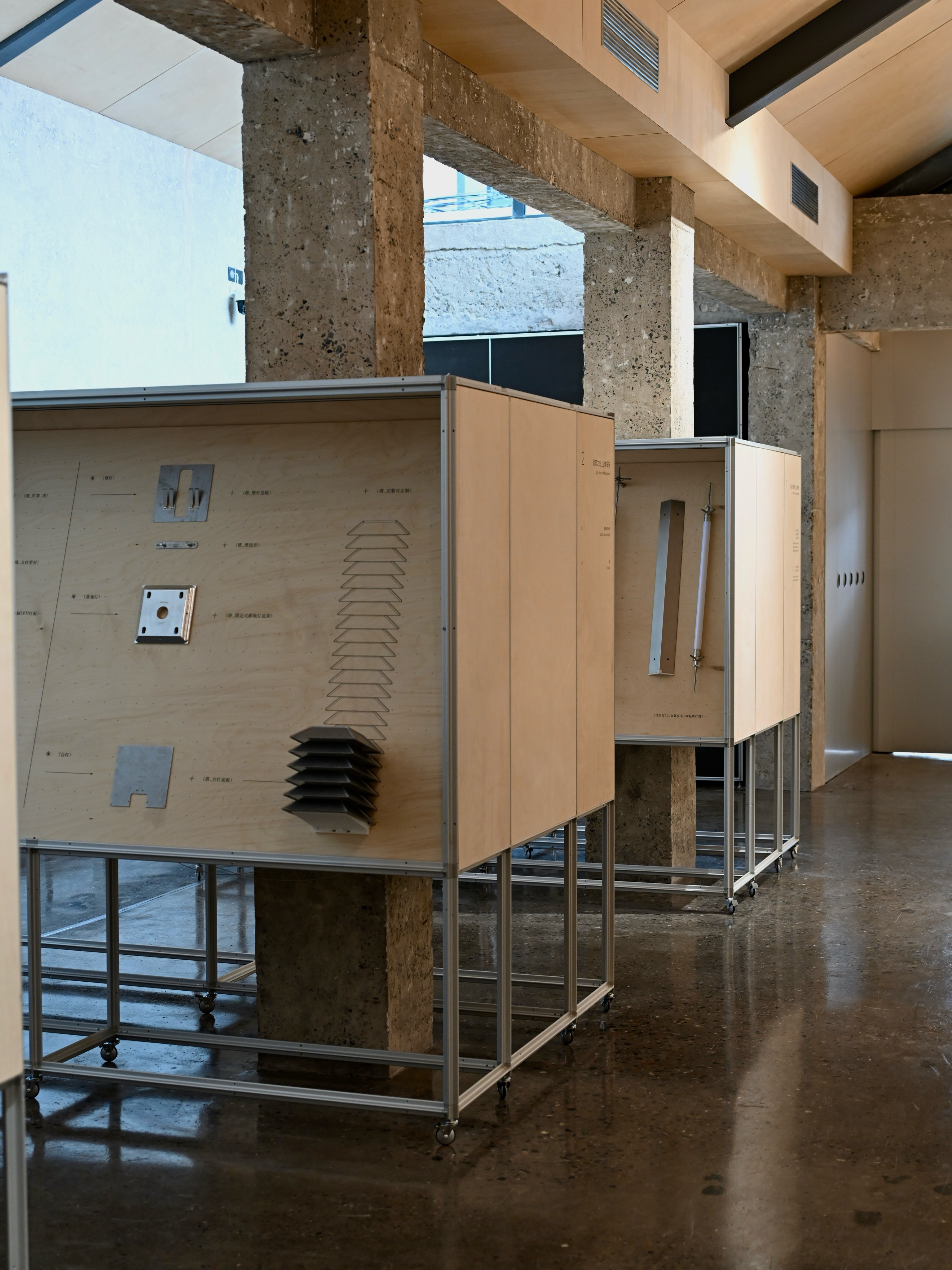
A low voltage system hung on its own suspension, where the thing holding the fitting up is also the thing feeding it, inverts that. The wire does two jobs. The structure is the circuit. Which means the lighting stops being a first-fix decision and becomes a piece of furniture, and the room gets to change its mind later, which is the only honest thing anybody can say about how rooms get used.
This is not a new trick, and we are not going to pretend it is. Track lighting has been doing a cruder version of it for sixty years, and twelve volt tensioned-cable systems have sat in the back of specification binders for decades. What Tsai has done is stop treating it as a lighting product and start treating it as the structural idea, which is the difference between a solution and a position.
It also puts him, whether he would claim the company or not, on a line that runs through our own influences. Breuer's tubular steel was never about looking industrial. It was one material doing the job of a frame and a spring and a silhouette at the same time, in a chair light enough for one person to move. Ando goes at it from the other side: if a wall has nothing inside it, there is nothing to coordinate, nothing to open up later, nothing to argue about on site. Both are the same economy. Make the element do more than one thing, and you have to hide less, and the building stops needing to be clever about its own concealment.
Tsai has called his own aesthetic "soft minimalism," which we would gently push back on, because there is nothing soft about a twelve volt cable in tension. It is just arithmetic that happens to look calm.
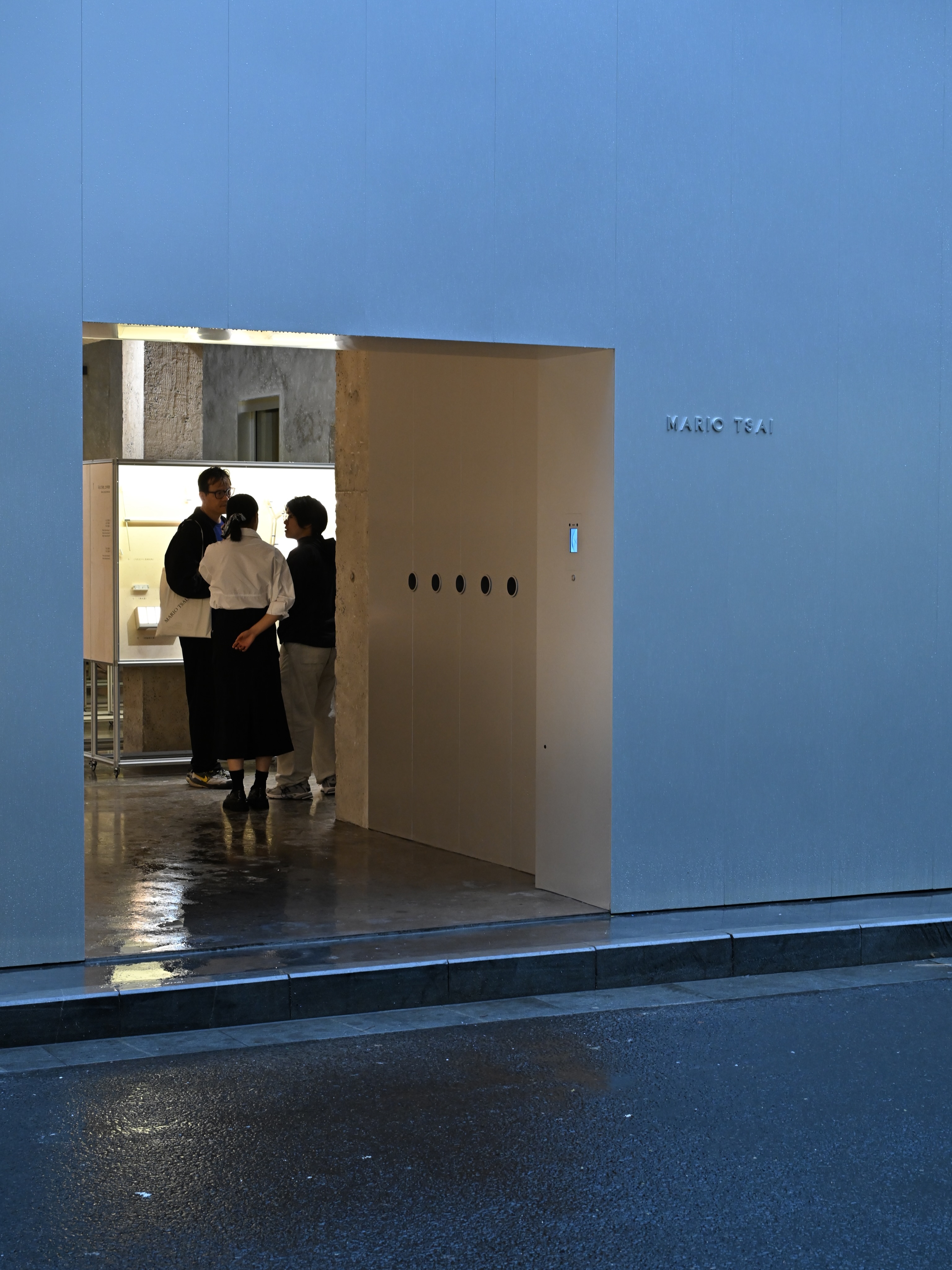
Minimalissimo prints no material schedule for the Shanghai room and names no photographer, so we will not pretend to know what is holding the ceiling up in there. What we can say is that a designer who built his reputation on the idea that the structure is the product has now built a room, which is the first object in his catalogue that somebody has to stand inside on a Tuesday.
The lamp will outlive the showroom. Most of them do.
Sources & Credits
- "Mario Tsai Shanghai Exhibition Space", Minimalissimo, 17 October 2026. <https://minimalissimo.com/articles/mario-tsai-shanghai-exhibition-space>
- "Mario Tsai suspends modular lighting from thin wires at From The Structures exhibition", Dezeen, 11 April 2019 (source of the Mazha twelve volt detail, the mazha seat geometry, the Gongzheng and Press table construction, and the "soft minimalism" quotation). <https://www.dezeen.com/2019/04/11/mario-tsai-furniture-milan-2019/>
- "Five 'unconventional' projects by Dezeen Awards China judge Mario Tsai", Dezeen, 21 August 2024 (background on the studio's research projects). <https://www.dezeen.com/2024/08/21/mario-tsai-key-projects/>
- Photography: not individually credited by the publisher. Images via Minimalissimo, <https://minimalissimo.com/articles/mario-tsai-shanghai-exhibition-space>
No Common Projekts imagery appears in this post.