There is a simple test for whether a style of building was any good, and it is not administered by critics, and it does not happen at the ribbon cutting, and no one who designed the thing is usually alive to see the results. The test is this: fifty years on, when the original owner is gone and the roof needs money and the land under the building is worth more than the building, does somebody fix it, or does somebody clear it? Everything else is opinion. This is the exam.
This week, three concrete buildings on three continents passed.
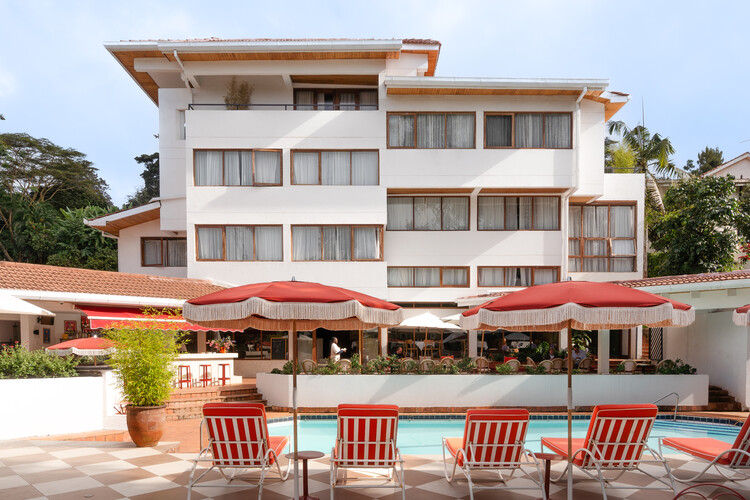
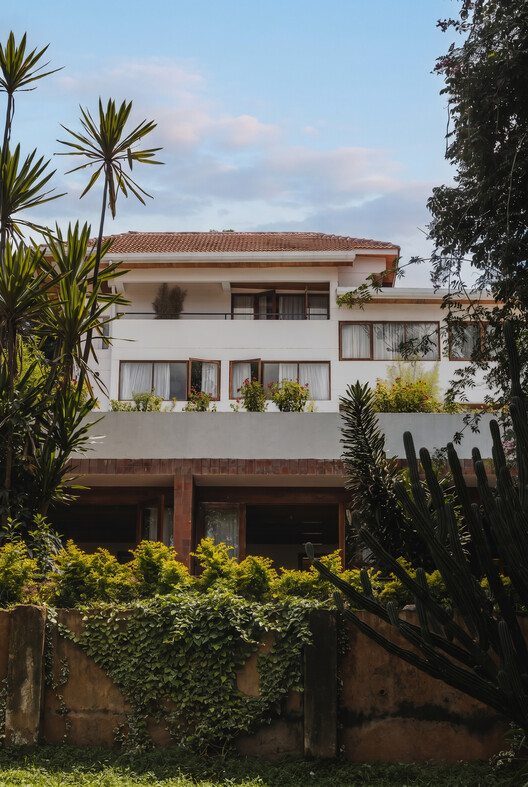
In Nairobi, Powerhouse Company converted a 1970s brutalist villa in the Lavington neighborhood into a 24-room hotel called Céline & Lolo. The architects' stated logic, as published by ArchDaily, was "to uncover what was already there, retain what could be preserved, and allow the new hotel to build on the existing character." Read that twice. Not to correct what was there. Not to soften it, or apologize for it, or wrap it in something friendlier. To uncover it. The villa's deep canopies and flat roofs were treated the way you treat a good site: as the given, the thing you would be a fool to waste.
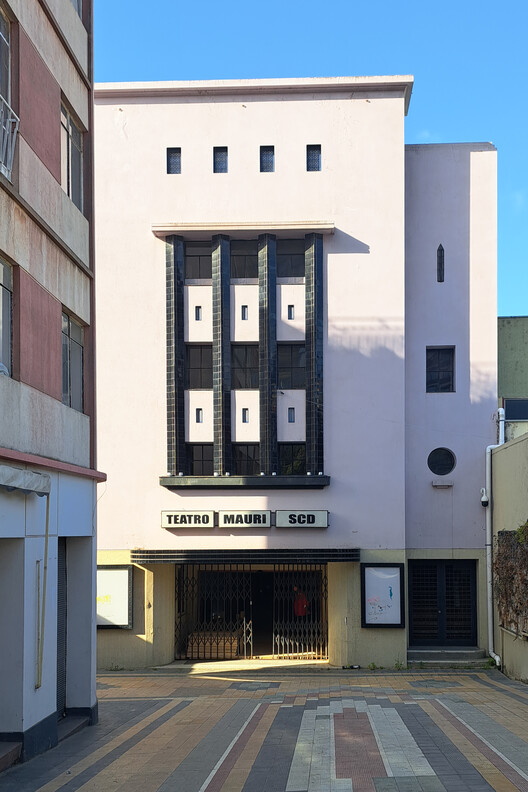
In Valparaíso, the Teatro Mauri reopened in June. ArchDaily reports that the theater was designed by Alfredo Vargas Stoller and opened in 1951, that it burned in the early 1990s, that it spent decades hosting the occasional party in its own ruins, and that it came within one transaction of becoming a supermarket warehouse before Chile's society of authors and performers bought it in 2015 and hired architects Laura Garrido and Gregorio Garretón to bring it back. Here is the detail worth the price of admission: after seventy years, a fire, and a generation of neglect, the structural assessment found the concrete-block and reinforced-concrete frame had only superficial damage. The people argued about the building for thirty years. The building held up its end the entire time.
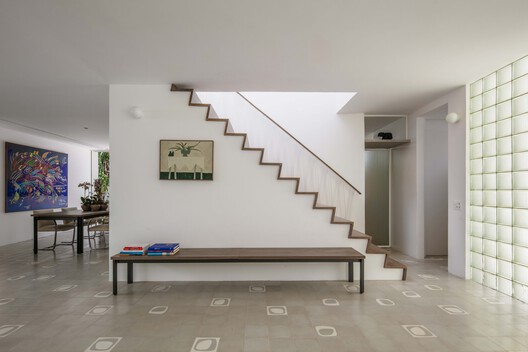
And in São Paulo, Ana Sawaia Arquitetura completed the renovation of the Muxarabi House, which Vilanova Artigas designed in 1956: a white rectangular volume lifted on pilotis, ordered by a regular reinforced-concrete grid, its upper veranda screened with muxarabis that still meter the light and heat exactly as they were drawn to do seventy years ago. Nelson Kon photographed it, and in his pictures the house does not look preserved. It looks used. That distinction matters more than any award. A preserved house is an argument that ended. A used house is an argument that keeps winning.
We should be honest about what brutalism and its modernist cousins were accused of, because the accusations were not all wrong. Some of those buildings bullied their streets. Some of them leaked. Some were built as manifestos first and shelter second, and a manifesto makes a poor roof. Fine. But notice what happens to the ones built with conviction and a competent structural engineer: they refuse to become landfill. A house in a hot climate with a screened veranda, a theater with walls that shrug off a fire, a villa with canopies deep enough to matter near the equator. These were not styling decisions. They were promises about performance, poured at full scale, and the promises are still being kept by people who never met the architects and owe them nothing.
Marcel Breuer liked to say that a building should be sure of itself, and Paul Rudolph combed his concrete into ridges and got called ugly for it, and both men understood something the render-first era keeps forgetting: the client of record is temporary. The real client is whoever is standing in the building in 2076, deciding whether it deserves another roof. You cannot charm that person. You can only have built well enough that fixing you is the obvious move.
Three buildings this week made repair the obvious move. The hotel guests in Lavington will not know the villa's whole story, and the crowd at the Teatro Mauri will mostly look at the stage, and the family in the Artigas house will complain about ordinary things, the way families do. The buildings will not mind. A building does not need to be thanked.
And still it stands.
Sources & Credits
- "Céline & Lolo Hotel / Powerhouse Company," ArchDaily, July 14, 2026. https://www.archdaily.com/1092337/celine-and-lolo-hotel-powerhouse-company
- Antonia Piñeiro, "Teatro Mauri Restoration Preserves a 1951 Modernist Landmark in Valparaíso, Chile," ArchDaily, July 13, 2026. https://www.archdaily.com/1148542/teatro-mauri-restoration-revives-a-1951-modernist-landmark-in-valparaiso-chile
- "Muxarabi House / Ana Sawaia Arquitetura," ArchDaily, July 11, 2026. https://www.archdaily.com/1042712/muxarabi-house-ana-sawaia-arquitetura
- Photography: Amy May Roux, via ArchDaily, https://www.archdaily.com/1092337/celine-and-lolo-hotel-powerhouse-company
- Photography: Carlos Figueroa Rojas, via Wikimedia Commons / ArchDaily (CC BY-SA 4.0), https://www.archdaily.com/1148542/teatro-mauri-restoration-revives-a-1951-modernist-landmark-in-valparaiso-chile
- Photography: Nelson Kon, via ArchDaily, https://www.archdaily.com/1042712/muxarabi-house-ana-sawaia-arquitetura