Sustainable material stories usually arrive in the same costume. There is a slab of something the color of oatmeal, photographed on a plinth in a white room, and a caption explaining that it is grown from mushroom, or algae, or the byproduct of a brewery, and a designer standing beside it with the expression of a person who has just been told they are a good person. The material is beautiful. The material is expressive. The material is going to change everything. Then the article ends and the material goes back into the vitrine and nobody ever builds anything out of it, because it cannot hold a screw.
So here is a story that runs the other way, and we think it is the most interesting material story of the month, and it is almost completely invisible.
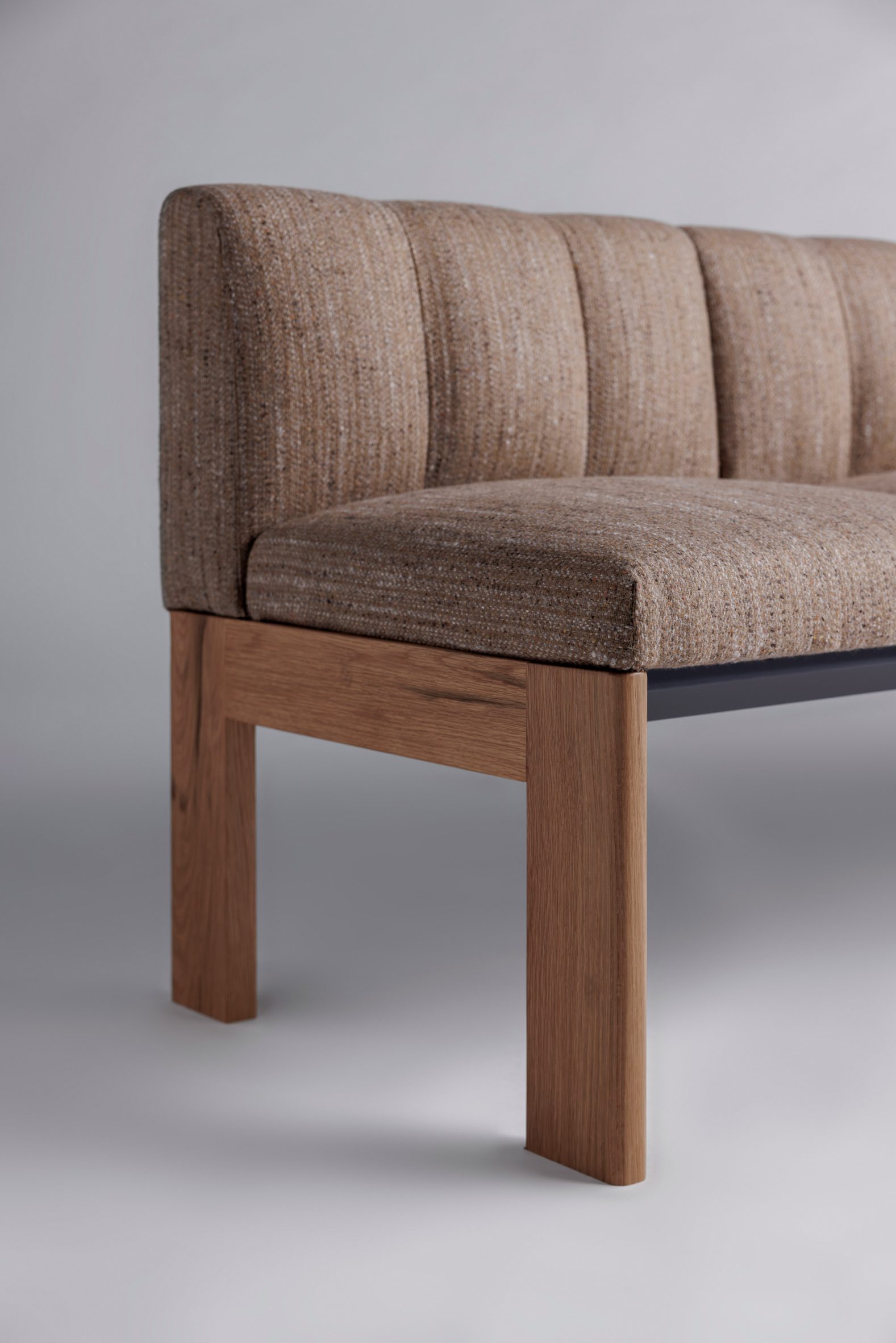
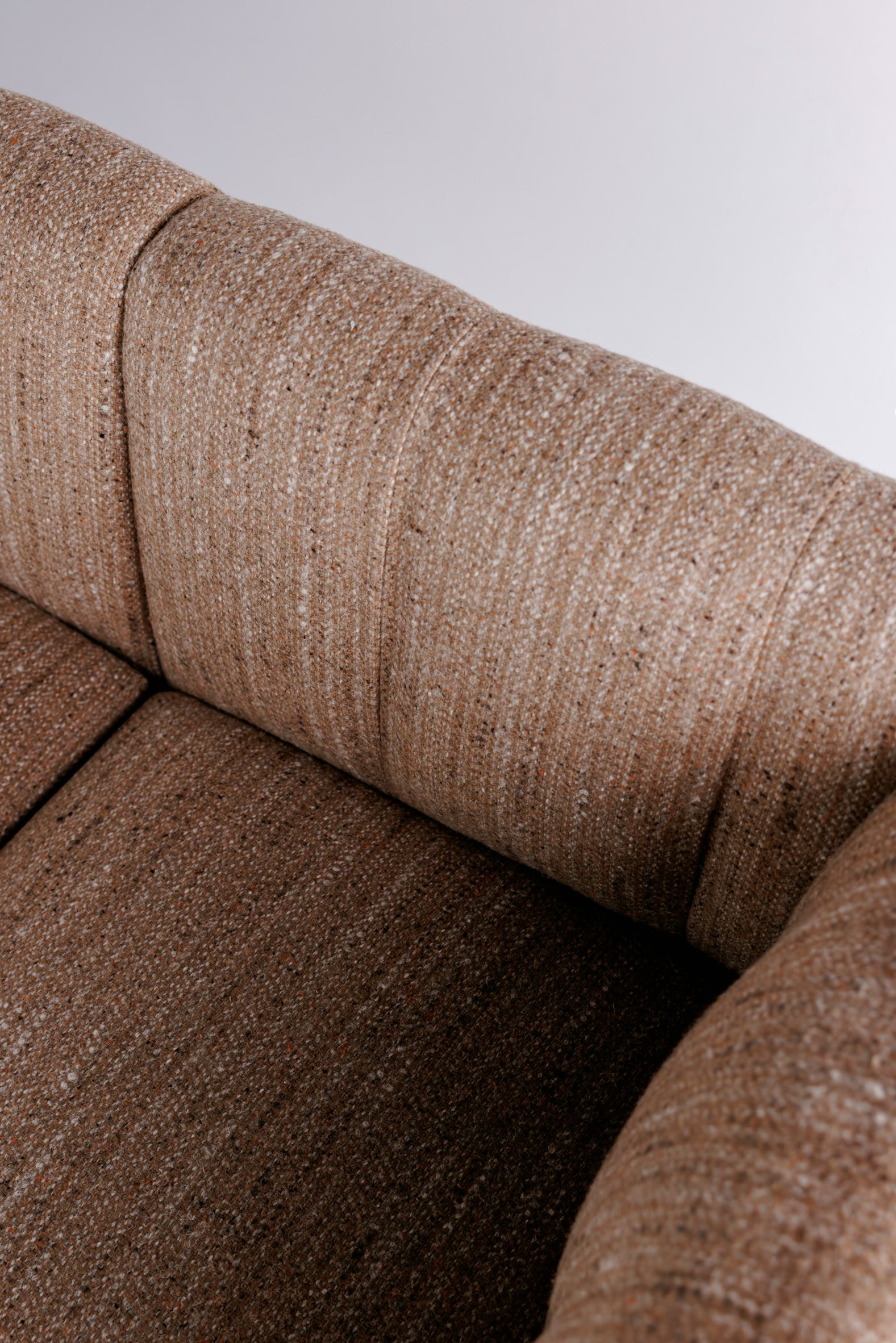
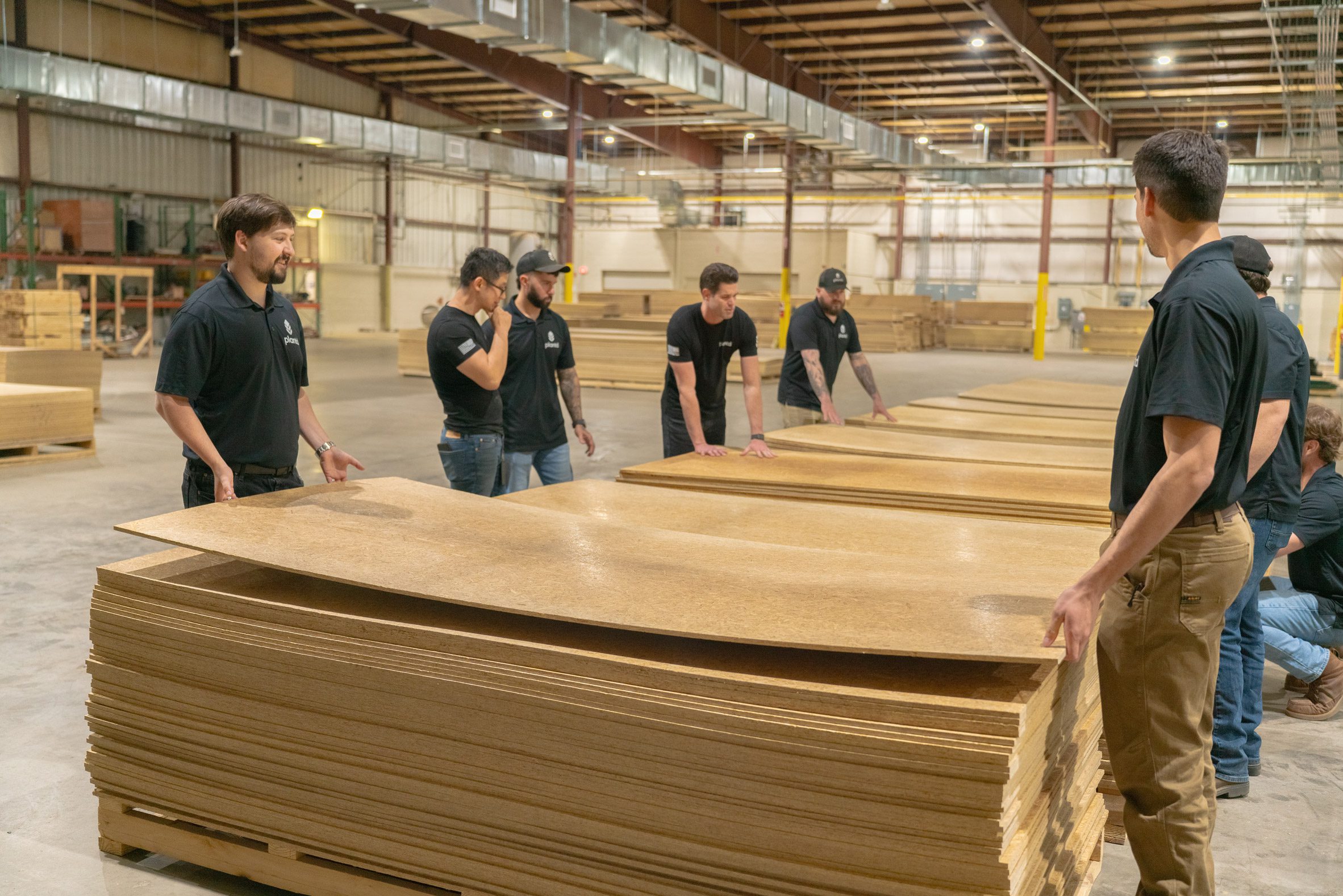
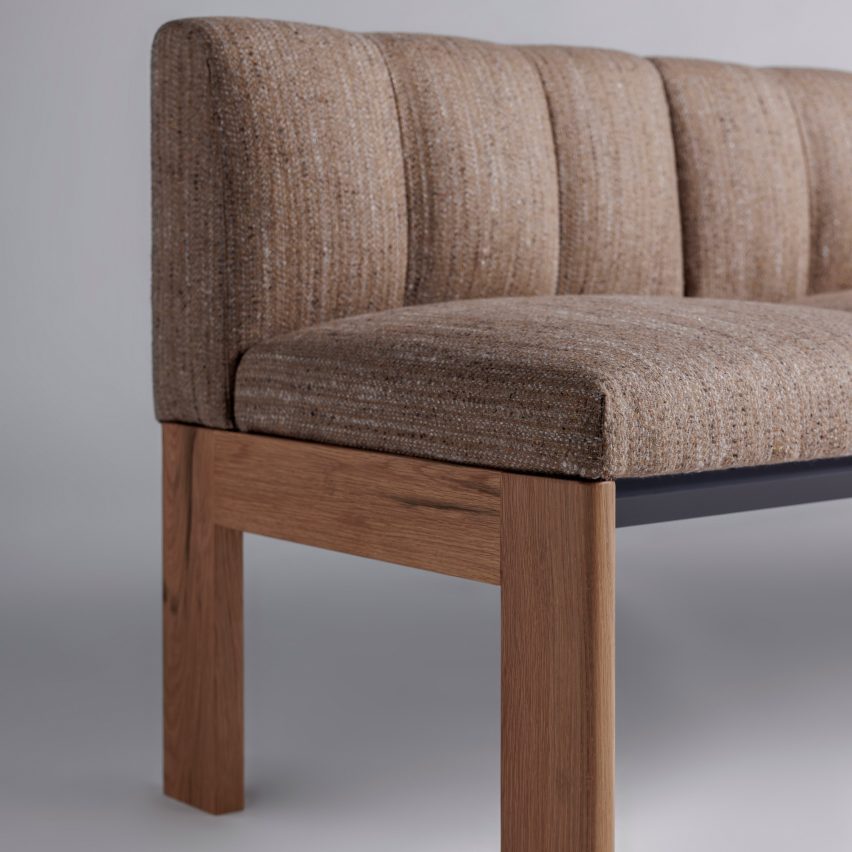
The North Carolina furniture company Studio TK has released a modular line called Clique Luxe, and inside it, where you will never see it, are panels pressed from perennial grasses by a company called Plantd. They are not the finish. They are not the statement. They are the core: the structural guts, standing in for oriented strand board, the humble shredded-timber sheet that holds up a very large share of the built world without ever being invited to the photograph. Studio TK told Dezeen the panel was "a carbon-negative, drop-in substitution for standard OSB," and that it "cuts effortlessly on our CNC machine and holds face staples, nails, and screws exceptionally well." (Dezeen)
Read that again, because it contains the entire thesis, and it is written in the flattest possible language. It cuts on the machine we already own. It holds the fasteners we already use. It needed no changes to how we work.
Nobody is going to make a documentary about a drop-in substitution. There is no drama in a material that behaves exactly like the material it replaced. And that is precisely why it might actually get used, at volume, in the real economy, by people who are not thinking about carbon at all on the morning they place the order. This is how materials really win. Not by being loved. By being unremarkable, available, and slightly better.
We have watched the other kind fail up close. Every firm that has specified a heroic new bio-material has had the same three phone calls. The lead time is eleven weeks. The fabricator has never cut it and wants a mockup paid for. The code official has a question about flame spread and the manufacturer's answer is a PDF from a university. Meanwhile the drawings are due, and the GC has priced plywood, and the beautiful mushroom panel quietly becomes a paragraph in the design narrative and nothing in the building. The intent survives. The material does not.
Plantd's co-founder Nathan Silvernail put the ambition to Dezeen in one line that we like more than we expected to: "We're not solving for capitalism like most startups. We're solving for carbon." He also described what the company wants to be, and the phrase is worth holding onto: "the supporting structure that you don't see."
That is a strange thing for a company to want, and an unfashionable thing, and it happens to be exactly what a building is mostly made of. Strip the finish off any room you have ever loved and you find the unseen structure: studs, sheathing, blocking, fasteners, the stuff that never gets credited and never gets photographed and is the only reason the credited, photographed part is still upright. Breuer was clear about this and so was Rudolph. The honest building is the one where the structure is either shown or, if it is buried, at least not lied about.
There is a version of the last twenty years of green design that we have very little patience for, in which the sustainable choice must also be a visible virtue, must be seen, must be a texture, must appear in the render as a warm fibrous thing that says to the client: we are the good ones. It turns the ethics into decor. It also, quietly, makes the ethics optional, because as soon as the budget tightens, decor is the first thing cut.
Bury the ethics in the structure and they cannot be cut. They are load-bearing.
To be fair to everyone, including the material, this is not solved. Studio TK said the harder problem is replacing plywood, where "the two have some inherently different performance factors." Plantd farms 400 acres. The world sheathes millions of houses. A grass panel in a modular sofa is not a carbon policy, and anyone who tells you otherwise is selling something, probably a sofa.
But the posture is right, and the posture is what we are actually arguing about. A material that asks for no applause, does the job of the thing it replaced, runs through the tooling you already own, and locks carbon into the guts of a chair for as long as somebody sits in it: that is a building product. The oatmeal slab on the plinth is a promise. This is a part number.
We would specify a part number.
Somewhere in a warehouse in North Carolina there is a stack of grey panels that used to be grass in a field, and they will go inside a sofa, and the sofa will go inside a room, and a person will sit down on it and think about their day and never once think about the panel. That is the best possible outcome. The material has no need to be admired. It only has to hold.
Sources & Credits
- Reporting, quotations and project details: Ben Dreith, "Studio TK uses Plantd's pressed-grass panels for furniture line", Dezeen, 10 July 2026. All quotations from Studio TK and from Plantd co-founder Nathan Silvernail are as reported by Dezeen.
- Background on the panel: "Plantd Materials creates OSB board alternative from processed grass", Dezeen, 26 January 2023.
- Photography: via Dezeen, https://www.dezeen.com/2026/07/10/studio-tk-plantds-pressed-grass-panels-furniture/
- No Common Projekts imagery appears in this post.