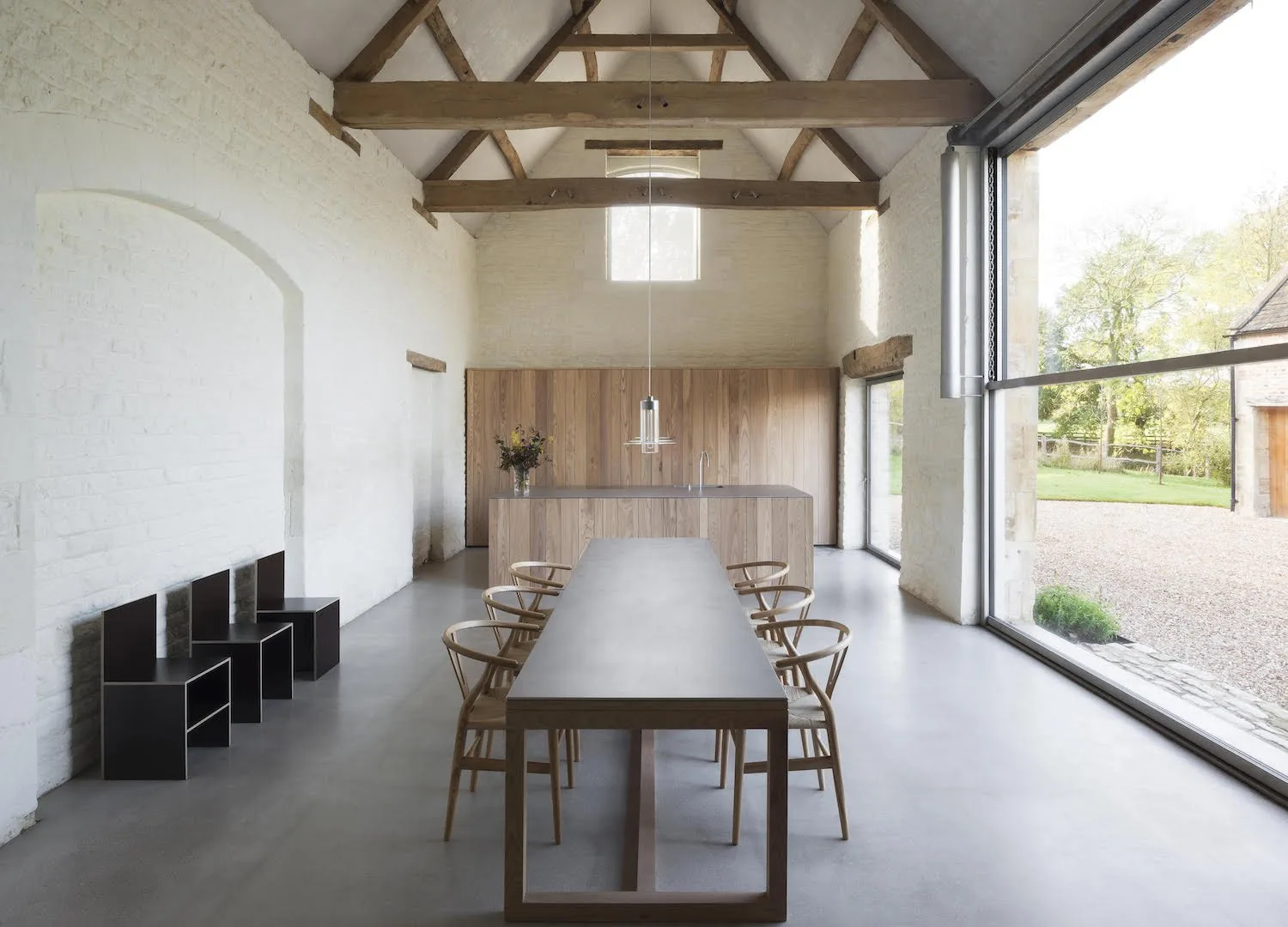
A fork is a small thing to ask a large question of. It has a handle and a few tines and exactly one job, which is to move food from a plate to a person, and it has done that job more or less unchanged for centuries, and no one has ever stood in a museum and wept in front of one. John Pawson would like a word about that.
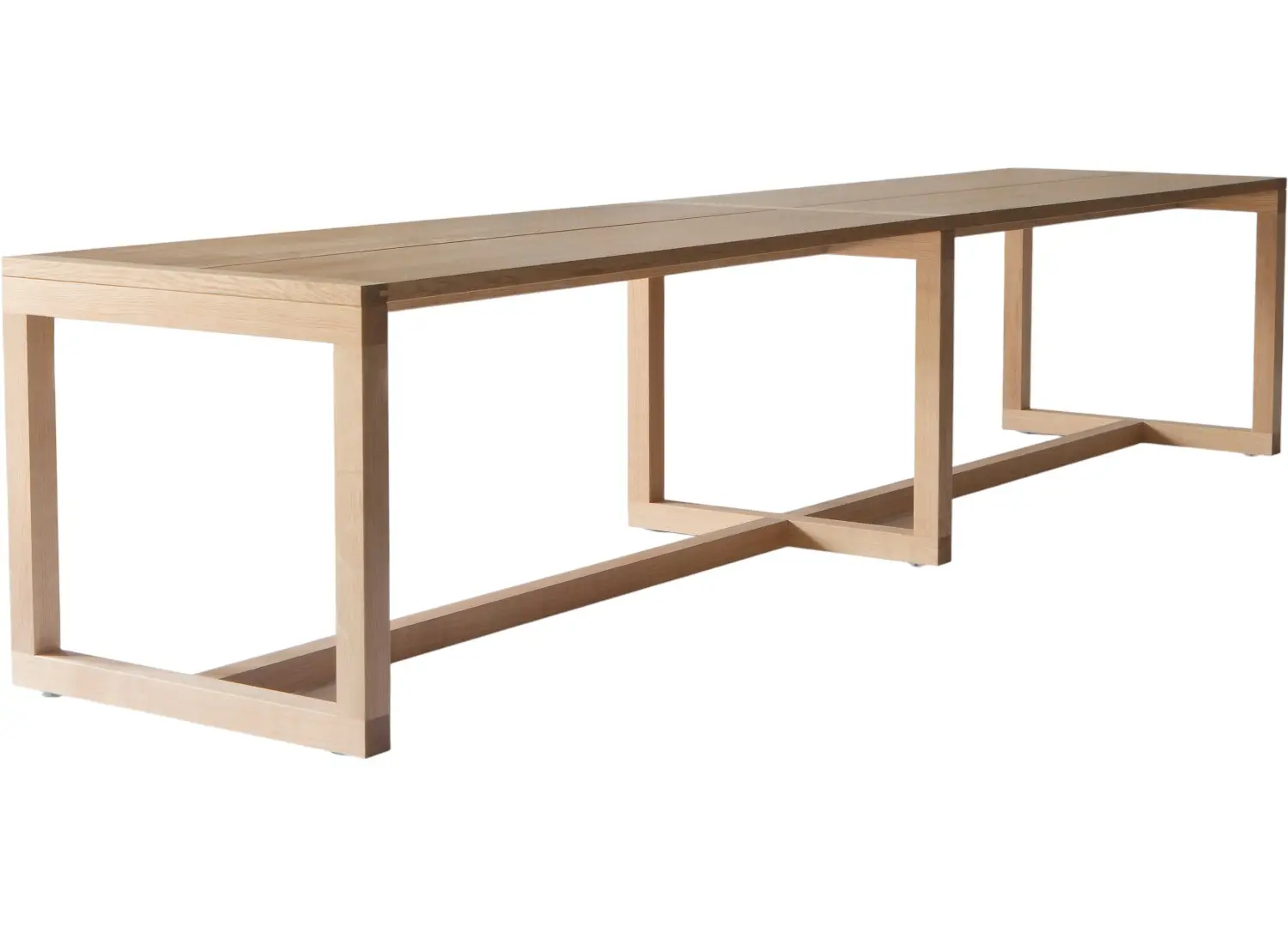
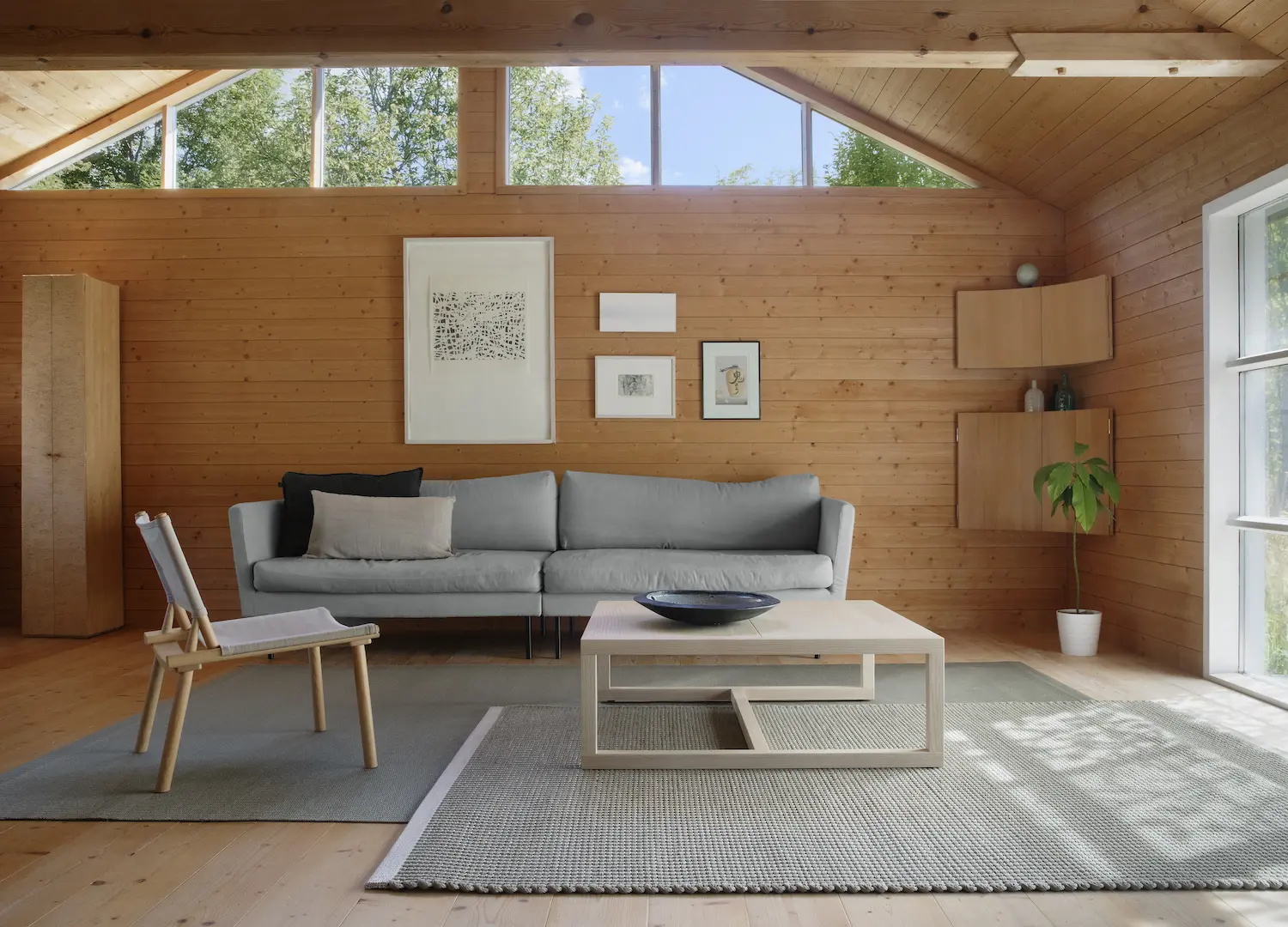
The British architect has spent more than three decades taking things away from things until what is left stops apologizing for itself, and his newest work is small. It is a set of furniture called the Frame Collection, designed for the Finnish maker Nikari in partnership with K5 Furniture. Solid ash and solid oak. Joinery left exposed, so you can read how the piece is held together without turning it over. A natural oil worked into the wood to raise the grain and to let the thing be repaired rather than replaced when the years get to it. That is the whole collection. There is nothing on it to admire except the care, and the care turns out to be the entire argument.
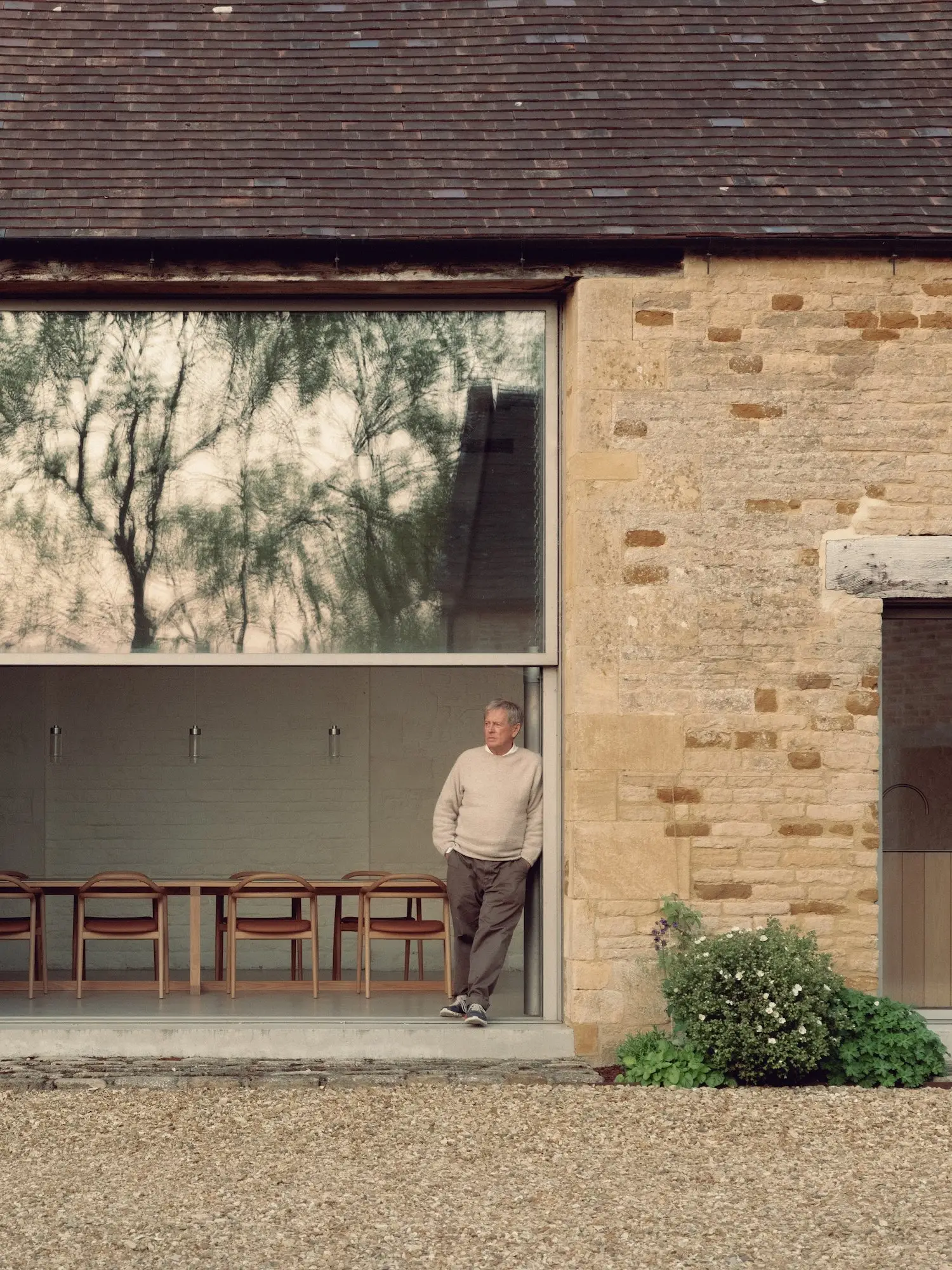
Pawson calls the idea behind his work "absolute clarity." Talking to Est Living, he described what it reaches across: "Whether at the scale of a monastery, a house, a saucepan or a ballet, everything is traceable back to a consistent set of preoccupations with mass, volume, surface, proportion, junction, geometry, repetition, light and ritual." And then the line that does the real work: "In this way, even something as modest as a fork can become a vehicle for much broader ideas about how we live and what we value."
Read that again. He has just told you the hierarchy is fake. We rank the building above the room, and the room above the chair, and the chair above the fork, as though seriousness were a function of size. Pawson does not believe it. To him the monastery and the fork are the same problem handed over at two different scales, and he brings the same discipline to both, which is the discipline of leaving things out.
We keep a chair in mind, in this office, that made the same claim a hundred years ago. Marcel Breuer bent tubular steel into the Wassily chair when he was in his early twenties, and then he built buildings for the rest of his life, and he never once behaved as though the chair had been the lesser act. The furniture and the architecture were one practice at two sizes. Pawson is standing in that lineage whether he names it or not, and so is anyone who has ever cared as much about a table edge as about a roofline.
Here is where the honest part gets uncomfortable. "Clarity" is now a word in every furniture catalog on earth, sitting next to "curated" and "elevated" and "timeless," doing no work at all. Minimalism got sold as a look: white walls, one plant, a price tag. What Pawson means is harder and less photogenic. Clarity for him is subtraction that costs something, the slow removal of everything a piece does not need until what remains has to be exactly right, because there is nothing left to hide behind. Tadao Ando builds rooms out of bare concrete and one long rectangle of light that feel like the safest places on earth, and he is not decorating. He is paying attention. So is this.
A table like this is meant to be eaten at every day for a long time, oiled when it dries out, sanded when it gets scratched, handed to someone younger when you are done with it. It will outlast the trend that ignored it and the trend that rediscovers it. It asks for maintenance instead of replacement, which in 2026 is close to a moral position. Pawson made a table you have to keep, not a table you get to forget.
And a fork, if you build it right, can carry all of that. So it goes.
Sources & Credits
- Reporting and quotation: Nicole Toma, "The Pursuit of Clarity with John Pawson and Nikari," Est Living, 1 July 2026. https://estliving.com/the-pursuit-of-clarity-john-pawson-and-nikari/
- Quotations from John Pawson as reported by Est Living.
- Photography via Est Living. Pawson Cotswolds home photograph credited to Dan Preston, via Est Living. https://estliving.com/the-pursuit-of-clarity-john-pawson-and-nikari/