Paul Rudolph spent a career being called ugly, and his buildings are still standing, so in the end he got the last word. He came to mind reading about a place in Belgium that its own magazine coverage introduced by asking, in print, whether it is ugly.
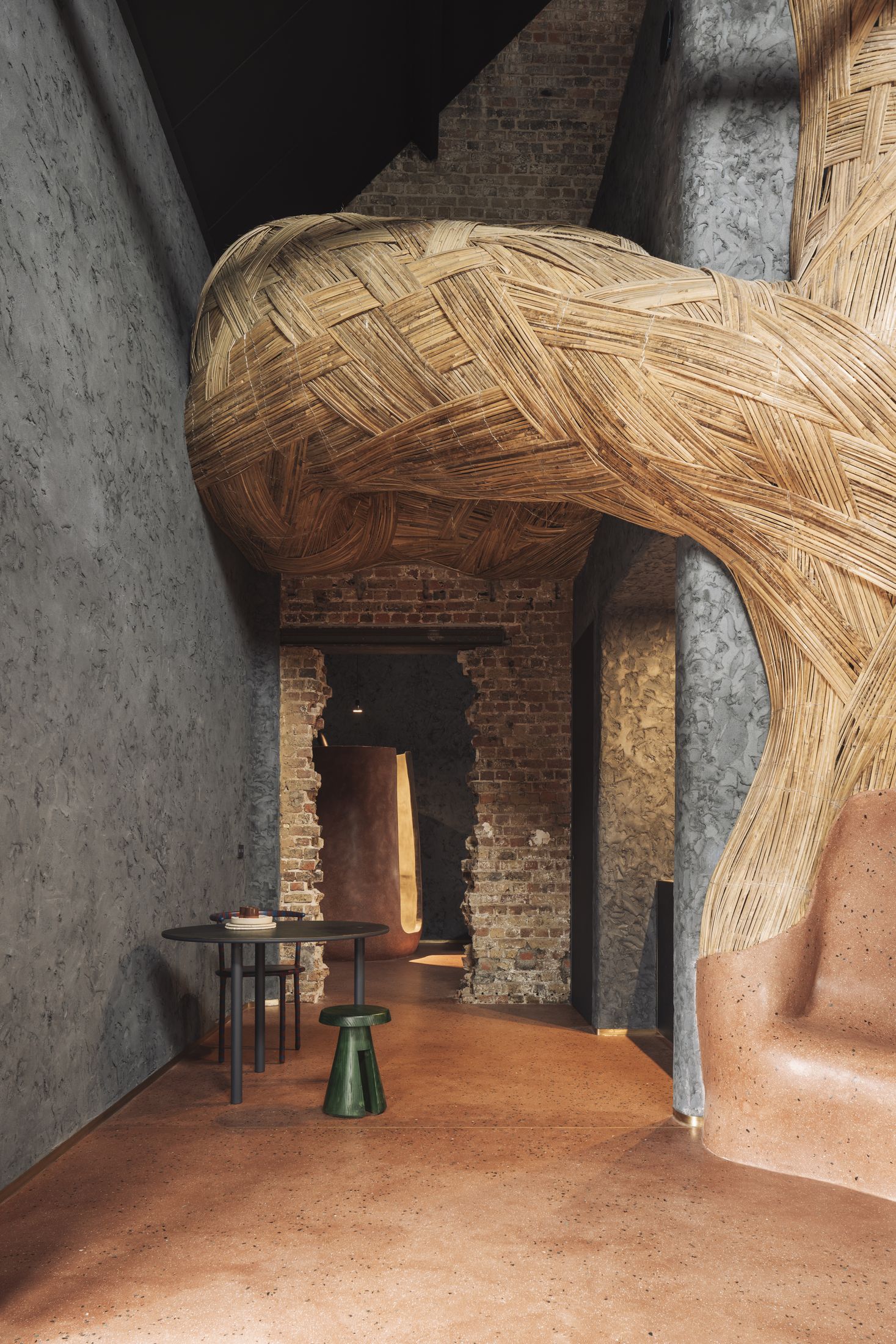
The place is called Jonojé. It sits inside a former brush factory on the edge of Bruges, it is the work of a Belgian practice called Studio Loho, and calling it a hotel gets it wrong in a way worth slowing down for. On paper it is a six-suite bed and breakfast. In fact it is a showroom and a gallery and a photo studio and the place the studio itself lives, folded into a listed building of more than a thousand square metres with a director's residence and a garden of more than a thousand square metres beside it. Yellowtrace opened its report with the only honest first question: "Is it beautiful? Is it ugly?" Its own answer was "It's definitely not ugly," followed at once by the admission that the place pushes you out of your comfort zone anyway, and that the push feels thrilling.
That discomfort is one of the most interesting things a building can offer, and almost nothing offers it anymore. Most of what gets built now is engineered to be liked on contact, frictionless, the architectural version of a song that tests well and is forgotten by the second chorus. Rudolph combed his concrete into ridges that stood up like corduroy and let people recoil from it. Breuer and Ando and Tange all made things that asked something of you before they gave anything back. Ease arrives fast and leaves the same way. The buildings we keep are usually the ones we argued with first.
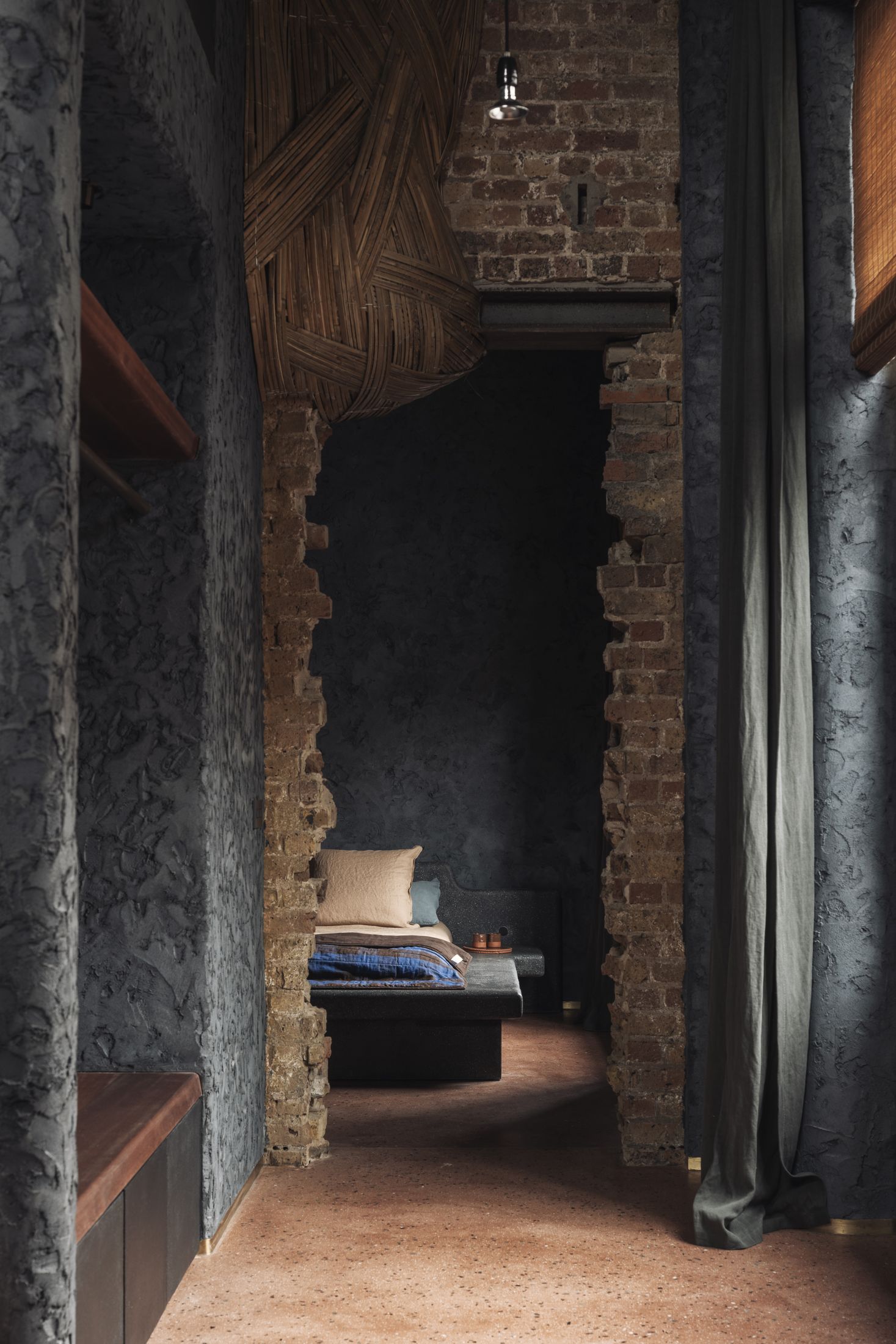
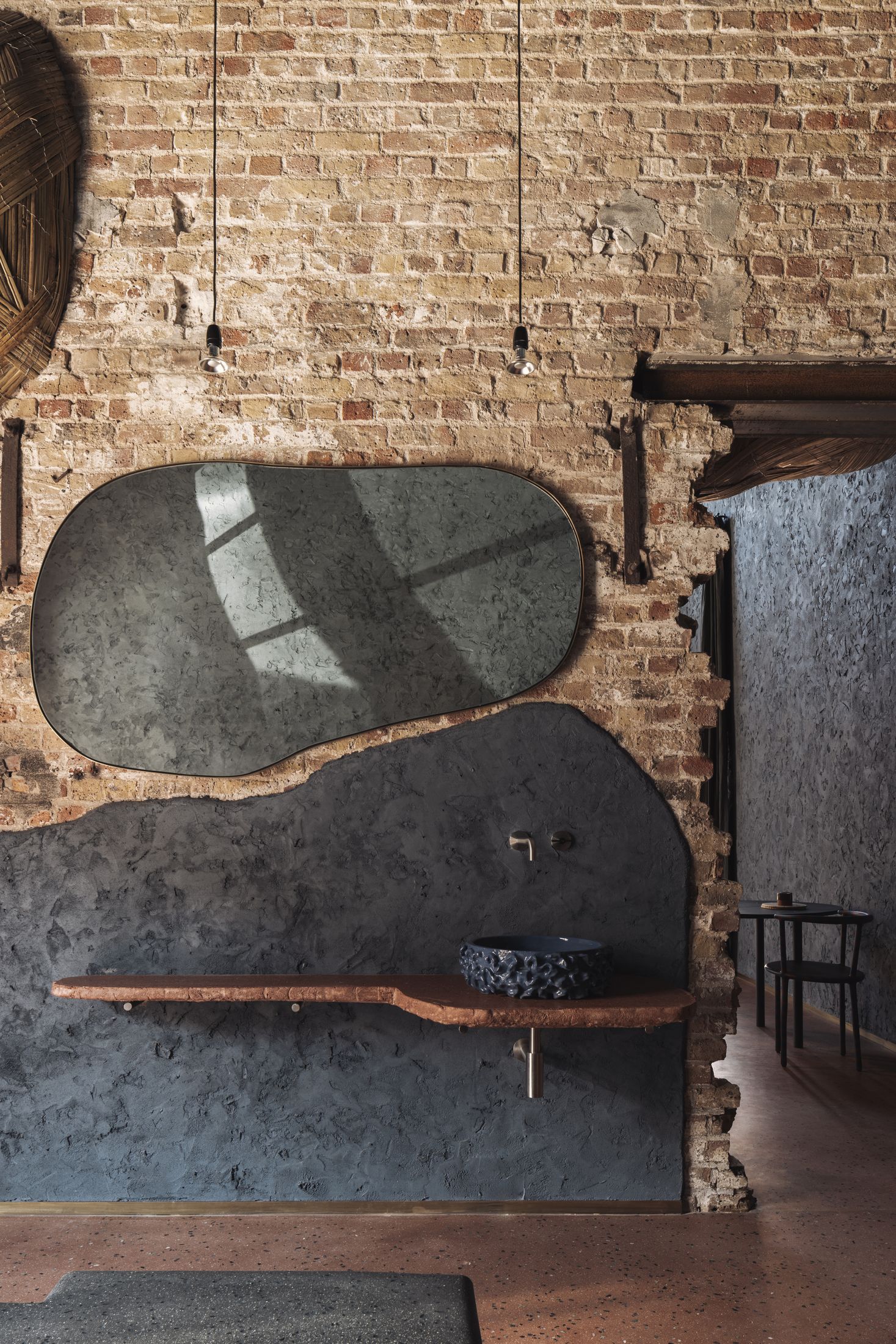
The suites are where the argument turns physical. Each of the six rooms runs to seventy-five square metres and carries its own weather, built from a catalog of materials and techniques the studio developed in-house instead of ordering from a supplier. The walls are plastered by hand so they read as organic rather than flat. The shower cubicles are freestanding ceramic. The washbasins are clay. Even the light switches are ceramic, designed for the project by Maison Kallis, which is the sort of detail most budgets cut first and never miss. One suite, called Roku, is built around structures of bamboo slats.
And then the floors. Some of them are cast and then decorated with graphic patterns made from clay residue, the leftover material from all that ceramic work, the stuff a normal site pays a truck to haul away. Studio Loho pressed it into the floor as ornament. Waste, promoted. There is a whole worldview folded into that one decision, and it is a worldview we happen to share: that a material does not stop being honest when it becomes a scrap, and that the discarded thing is often the truest thing in the room.
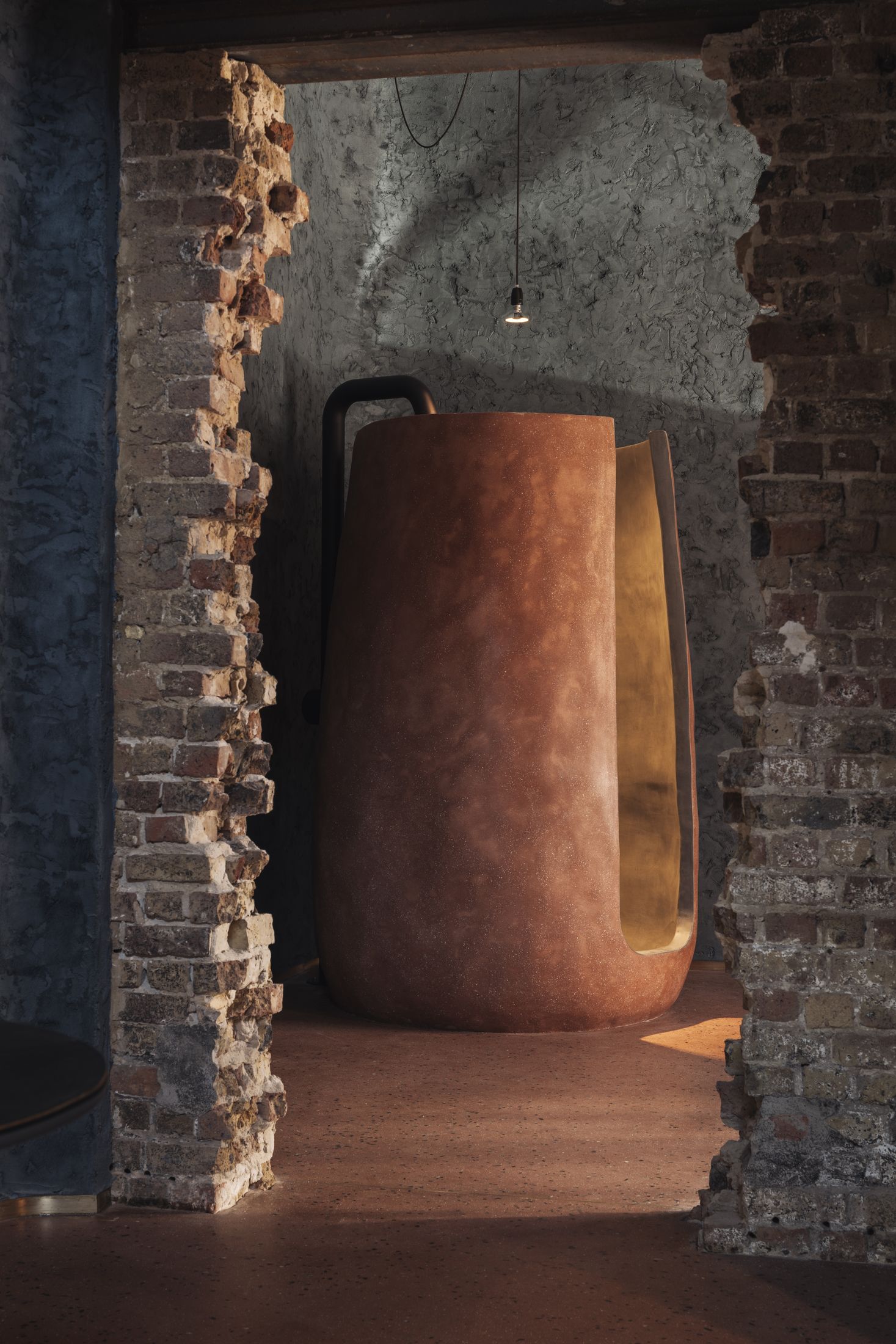
The showstopper, by the magazine's account, is a bathtub moulded and fired from a single piece of clay, which is the kind of object that sounds simple and is very nearly impossible, since clay that size wants to crack at every step from the mould to the kiln. It is the piece that made the studio's name. It is also, tellingly, a thing you climb into to get warm and clean, which is to say the most advanced object in the whole building exists to do the oldest and plainest job a room can do for a body.
This is where the ugliness question answers itself. A building that unsettles you and then holds you, that looks strange and works tenderly, is doing exactly what Rudolph's concrete did when people flinched at it and then never left. Beauty that lands instantly leaves the same way. The other kind, the kind you argue with in the doorway and then cannot stop thinking about, is the kind that stays. Jonojé is betting the entire factory on the second kind.
Is it ugly? No. Was that ever the question? Also no. The building does not care what you call it. It was made by hand, out of its own waste, to keep six strangers warm in Bruges, and it will go on doing that long after the word we reached for has caught up.
Sources & Credits
- Reporting and quotation: Team Yellowtrace, "Studio Loho's Jonojé is Strange, Sculptural & Impossible to Forget," Yellowtrace, 8 July 2026. https://www.yellowtrace.com.au/studio-loho-jonoje-bruges-boutique-hotel-gallery-showroom/
- Descriptions and quoted phrases as reported by Yellowtrace.
- Photography: Tijs Vervecken, via Yellowtrace. https://www.yellowtrace.com.au/studio-loho-jonoje-bruges-boutique-hotel-gallery-showroom/