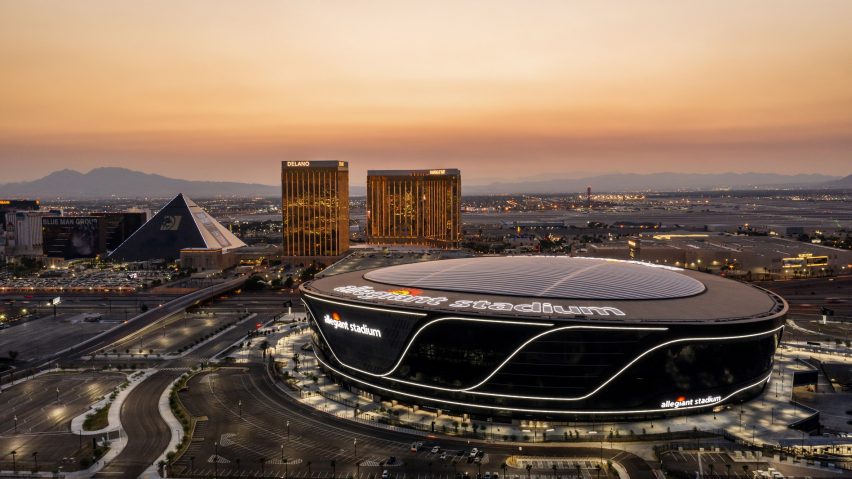
Think of the biggest building in your city. Not the tallest, the biggest, the one that swallows the most sky and the most money. A hundred years ago it would have been a cathedral or a capitol or a railway station, some structure built by an institution that expected to be believed. Today it is almost certainly a stadium.
This is the argument the academic Benjamin Flowers makes in Dezeen's Future Stadium series, and it is correct, and it is worth sitting with before we start swinging. In most cities now the largest and most expensive building a visitor meets is a ballpark or an arena. SoFi Stadium in Los Angeles cost around two billion dollars and sits inside a five-billion-dollar development. Real Madrid spent roughly the same reworking the Bernabeu. Money likes architecture, Flowers notes, and architects like money, so the same names that built the museums and the towers now build the bowls: Herzog & de Meuron, Zaha Hadid's office, Kengo Kuma, Bjarke Ingels, all of them have a sport studio now.
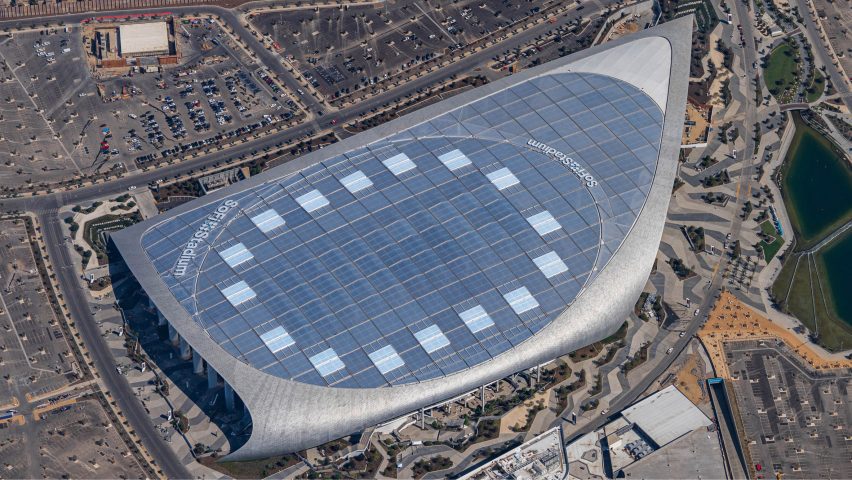
Flowers's sharpest point is not about the money. It is about affection. Trust in the old clients of monumental architecture, the church, the state, the blue-chip corporation, has been draining out for a generation, and you cannot build a monument that people love on behalf of an institution they have stopped loving. The bank tower is tolerated. The stadium is adored. People love a stadium the way they love the team, sometimes more than they love the team, sometimes while actively hating the family that owns it. Flowers calls them "secular cathedrals," and the phrase lands because it is nearly true.
Here is where we would push, gently, because the man is right about the feeling and we think he is a little easy on the buildings. There is a difference between size and meaning, and the stadium has quietly stopped earning the second with the first.
Consider Kenzo Tange, who built the Yoyogi National Gymnasium for the Tokyo Olympics in 1964. It is one of the great buildings of the century. Its roof hangs from steel cables slung between two masts, a suspension structure pulled taut into a shape that looks like a wave deciding whether to break, and the reason it moves you is that you can read exactly how it stands up. The monumentality is not applied. It is the structure, made visible, made sublime. Tange did not put a grand face on a shed. He let the way the thing carries its own weight become the whole emotional event. That is monumentality earned.
Now look at what monumentality is being asked to do lately. Flowers himself points to HKS's design for the Washington Commanders, a stripped classical colonnade wrapped around a symmetrical bowl, and notes, correctly and bravely, that it bears an unnerving resemblance to the Berlin Olympic Stadium built for the 1936 Games in Nazi Germany. When a stadium reaches for gravity now, it does not reach for structure. It reaches for a costume, and sometimes the costume it grabs off the rack is a very ugly one. The building buys the size and rents the meaning, and the meaning it rents is often just a flag for whoever is paying.
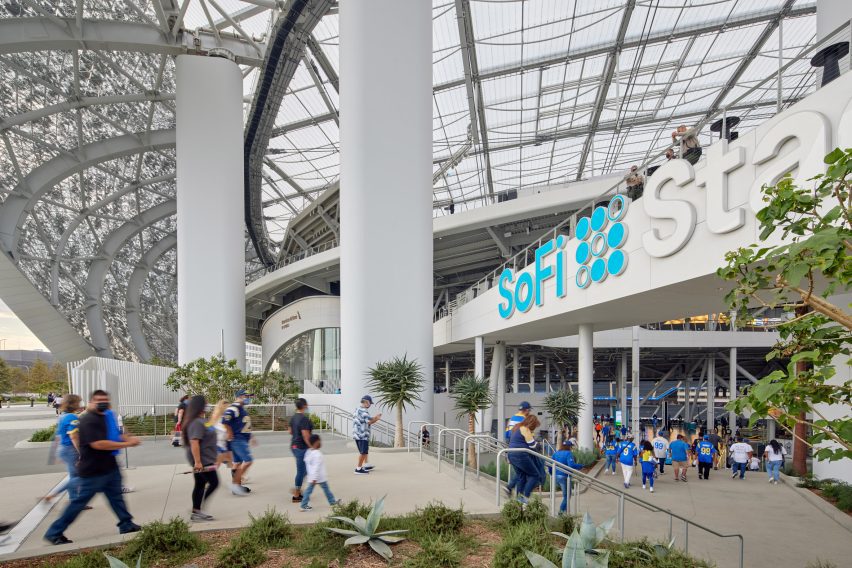
The stadium has become endlessly variable, Flowers writes, and this is the quiet tell. It is a concert hall and a members' club and a conference centre and a mall and, at Arrowhead, a chapel where people actually get married. All of that program is bolted onto the one honest thing a stadium is, which is a field with seats around it so a crowd can watch a game together in the rain. The monument is real. The affection is real. What has gone soft is the connection between how the building stands up and what it is trying to say, the connection Tange treated as the entire job.
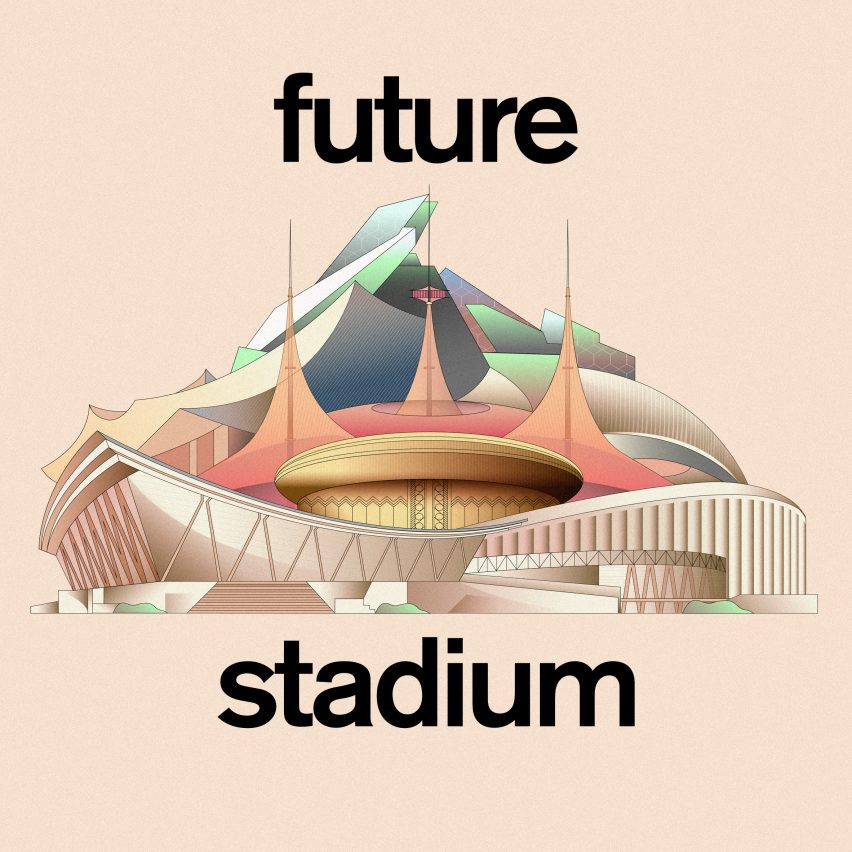
We are not nostalgic for the cathedral. We spend our days pouring concrete and detailing steel, and we would rather people pour their feeling into a building where seventy thousand strangers sing at once than into a bank. The stadium being the last monument we still love is not the sad part of the story. It might be the good part.
The sad part is smaller and more technical. It is that a building type with more money, more talent, and more public love than any other right now mostly declines to let its structure mean anything. It hangs a face on the shed. Flowers ends by saying the tension in all those competing obligations is exactly what confirms the stadium as the monument of our time, and he is right, and we would only add one line to it. The tension is the material. A stadium that let you read how it holds up the roof, the way Yoyogi did sixty years ago, would not have to argue for its own significance. It would just stand there and carry the load and mean it.
The crowd does not need the colonnade. It never did.
Sources & Credits
- Argument, quotation and the Berlin 1936 comparison: Benjamin Flowers, "Stadiums are the most significant expression of monumentality in our time," Dezeen, Future Stadium series, 16 July 2026. https://www.dezeen.com/2026/07/16/benjamin-flowers-opinion-stadiums-monumentality/
- SoFi Stadium figures and imagery: "SoFi Stadium in California set the standard for integrated stadium technology," Dezeen, 15 July 2026. https://www.dezeen.com/2026/07/15/sofi-stadium-los-angeles-integrated-technology-case-study/
- Photograph of Allegiant Stadium, Las Vegas: Jason O'Rear, via Dezeen.
- SoFi Stadium photography: Nic Lehoux and Bruce Damonte, via Dezeen.
- Future Stadium series illustration: Jack Bedford, via Dezeen.
- Kenzo Tange and the Yoyogi National Gymnasium (1964) referenced from the architectural record as CP context.