The Ratchet Strap Is the Argument
A ratchet strap costs about eleven dollars and comes from the freight business, where the job is to hold a pallet still across four states and then let go of it in under a minute, in the rain, by a person who is not a tradesman and does not own a torque wrench. You pull the webbing through, you crank the handle until it bites, and when you are finished you flip the release and the whole thing falls slack in your hand. There is no proprietary fitting. There is nothing to strip. You can see the tension, because the strap is either tight or it is not.
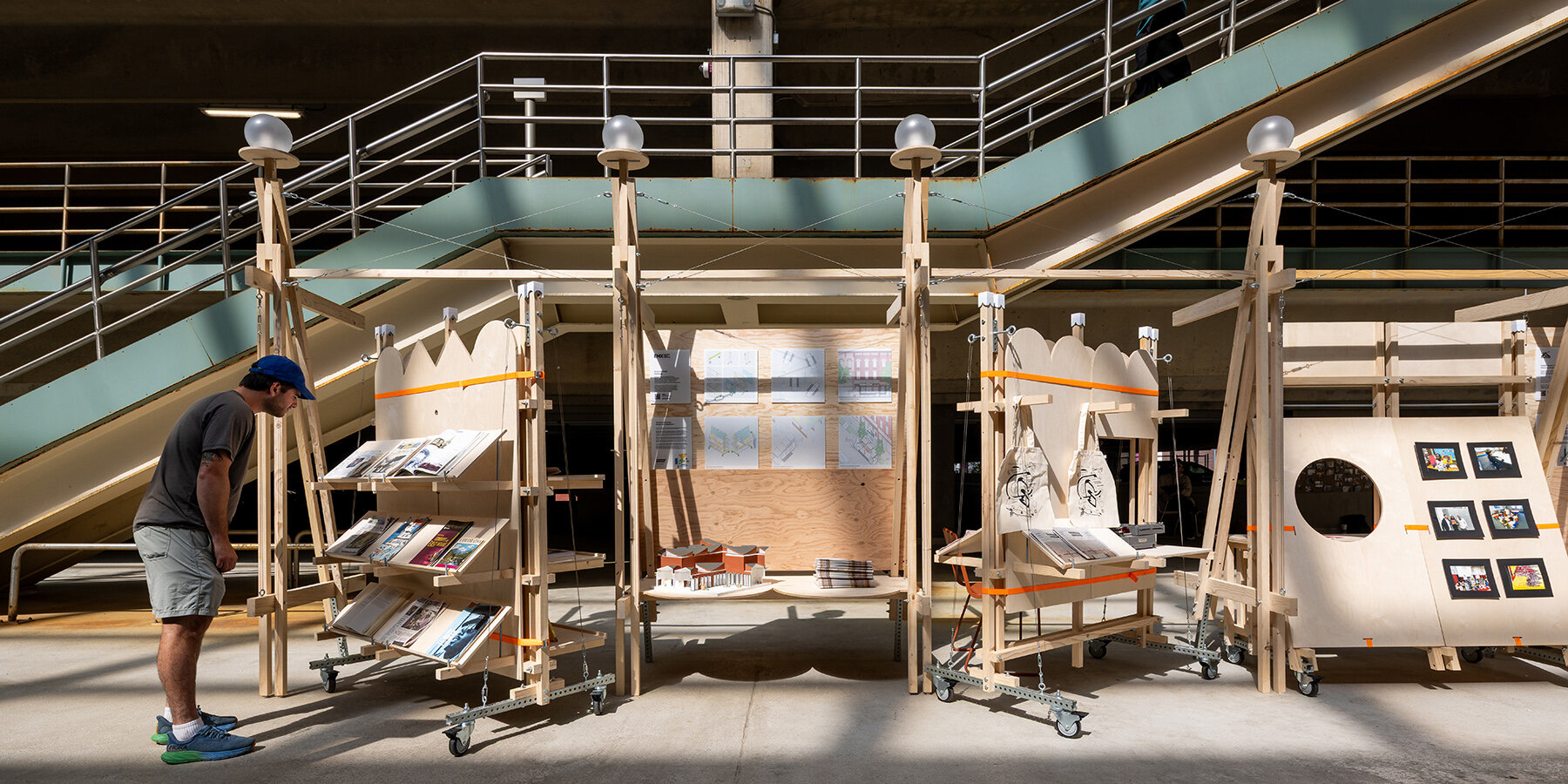
Five installations at the Denver Performing Arts Complex are held together with them.
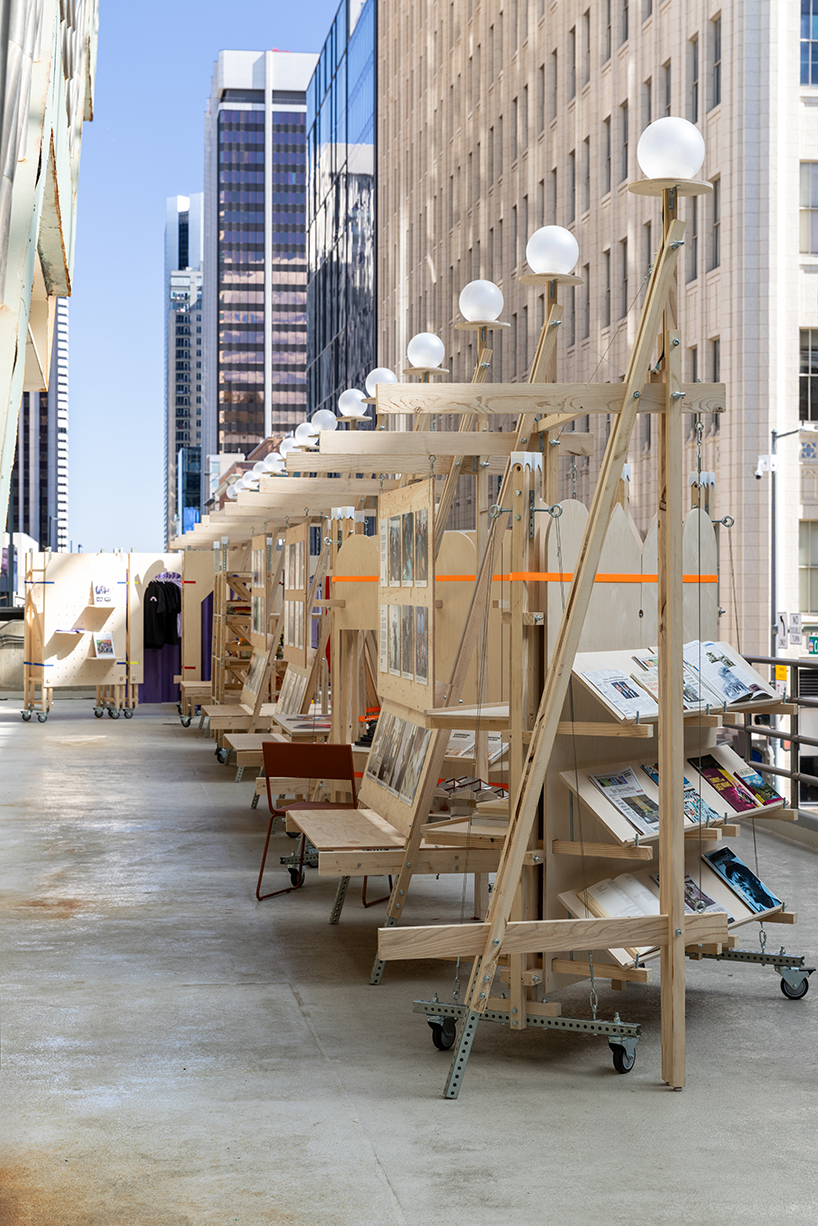
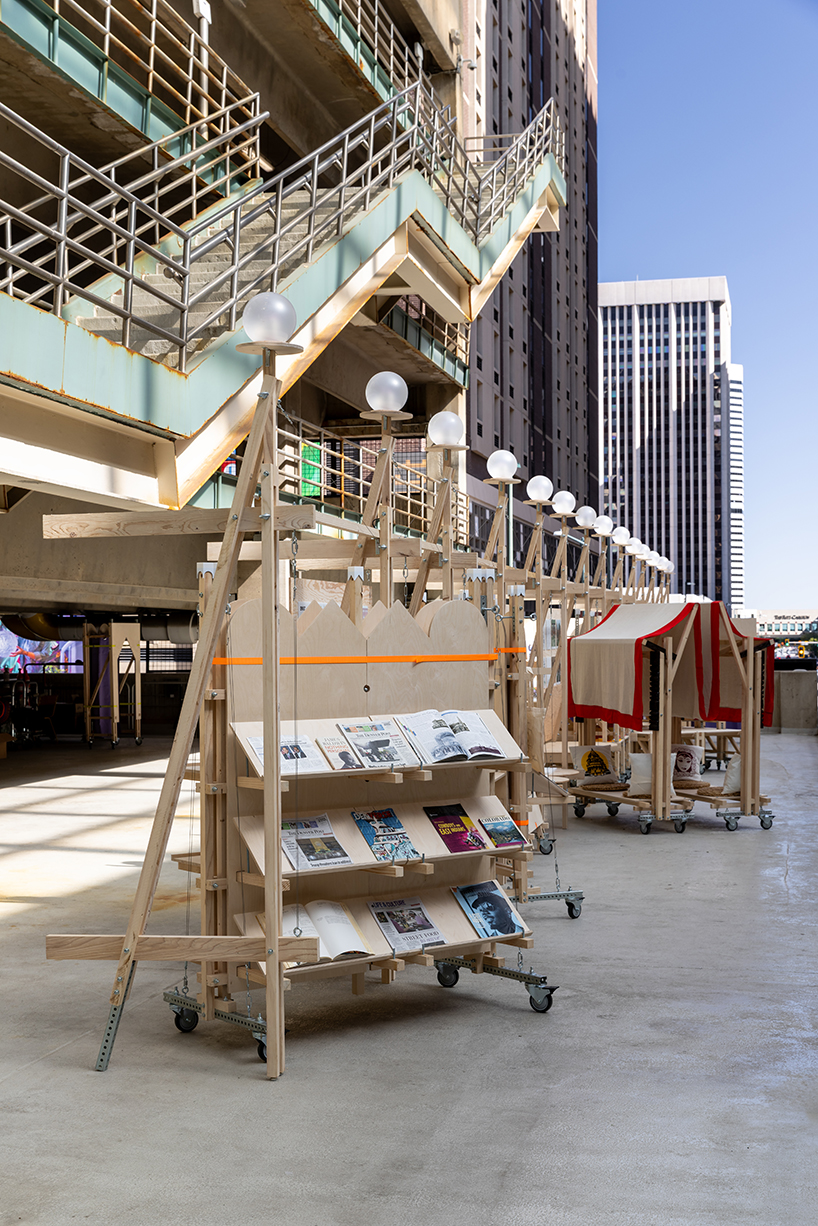
The inaugural Denver Community Design Festival, titled Common Ground, ran from 24 September to 7 October and was co-developed by Leyuan Li and the Denver Mayor's Office of Community Outreach, with Office for Roundtable leading design and students from CU Denver building. Five structures were made with five community organisations, among them the Colorado Immigrant Rights Coalition, the Colorado Nepalese Community and Empower Media Exchange, and they take the form of a performance stage, a storytelling kiosk and a mobile bookstand, among others. The assembly system, in designboom's description, is "a flexible assembly system of wood, ratchet straps, and metal joints," designed for easy dismantling and reassembly (designboom).
Set aside the sentence at the end of the write-up about architecture as a tool for public exchange. That sentence gets written last, after the thing is already standing, and designboom ran this one through its reader submissions channel, so the copy is the designers' own. Everybody writes that sentence. Almost nobody details their way to it.
These people detailed their way to it, and the detail is the ratchet strap.
Here is what we mean. The word temporary, applied to a structure, is usually a statement about paperwork. The permit is temporary. The lease is temporary. The connections are screws and construction adhesive and a few hundred deck fasteners driven by somebody who was running late, and when the run ends a crew arrives with reciprocating saws and the temporary building goes into a skip. It was never demountable. It was disposable, and demountable was the word used for the planning application.
A strap is a different promise. Taking it apart requires the same equipment as putting it together, which is to say two hands, and it requires no more skill the second time than the first, which is the only test of reusability that means anything. Wood, a metal joint and a tension strap also happen to be three materials with three separate end-of-life paths, none of them glued to each other. Nothing in that assembly has to be destroyed to be separated.
We have been here before, and the last time it went badly, and it is worth saying why.
Kisho Kurokawa finished the Nakagin Capsule Tower in Tokyo in 1972 with a hundred and forty prefabricated capsules bolted to two concrete cores, and the entire argument of the building was that the capsules would be unbolted and swapped out roughly every twenty-five years while the cores stayed. That was the Metabolist position in physical form: the frame is slow, the cells are fast, and the building metabolises. Not one capsule was ever replaced. The tower came down in 2022, whole, because the capsules had been stacked and connected in a way that made removing any single one a structural event rather than a maintenance one. The replaceability lived in the manifesto. It never made it into the connection.
That is the failure mode, and it is not a failure of ambition. Kurokawa meant it. The capsules simply were not detailed for the second operation, only the first, and a joint that is only designed to be closed is not a joint, it is a weld with extra steps.
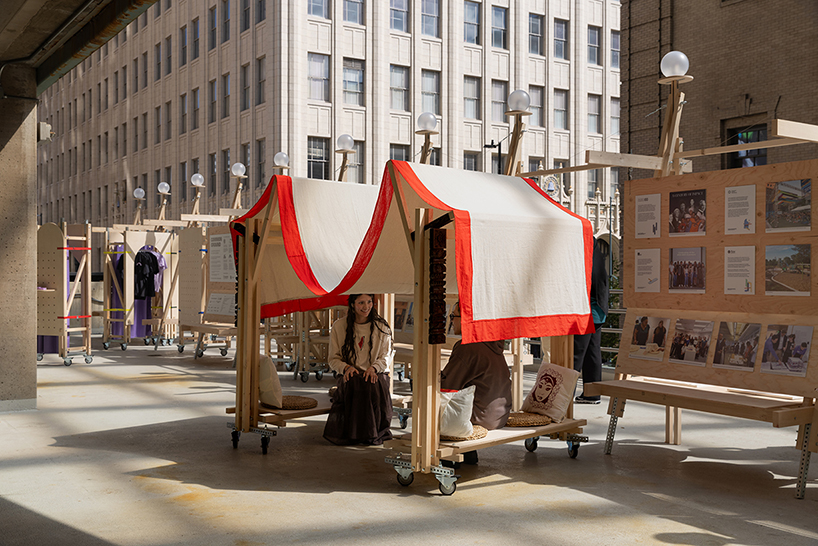
So the Denver structures get a harder test than the festival gave them, and the test is coming. designboom reports that after the event the installations move out to the neighbourhoods of their partner organisations, to keep working as places where people gather. Good. That means each one has to go up a second time, in a different place, on different ground, probably in front of a different set of hands, and quite possibly without the student who built it the first time, because students graduate.
Which turns the real deliverable into paper. A demountable structure is only as reusable as its instructions: the labelled members, the numbered joints, the one laminated sheet that says which strap goes where and how tight is tight. We would want to see that sheet. It is the least glamorous part of the project and the part that decides whether these things get re-erected in a parking lot next spring or quietly stacked behind a maintenance building until somebody needs the space.
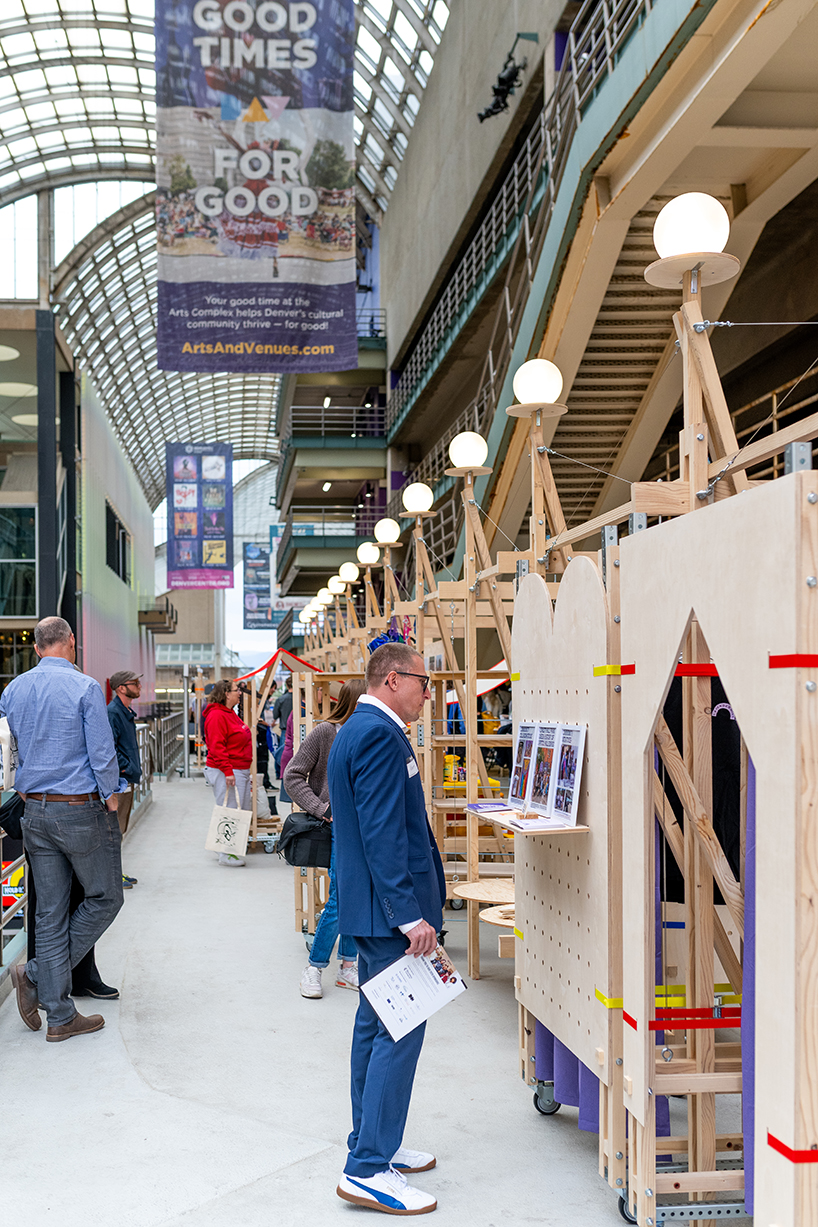
We are not sentimental about festival work. Most of it is a pavilion that photographs well for eleven days and is then paid for twice, once to build and once to remove. But a group of students and a city office and five organisations with no capital budget between them have built something whose central idea you can check with your hands, in about forty seconds, by releasing a strap and seeing whether the thing comes apart as easily as it was promised to.
Nakagin could not pass that test. A strap can. The second erection is the one that counts.
Sources & Credits
- "wood, ratchet straps, and metal joints shape mobile installations for design festival in denver," Leyuan Li, edited by Christina Vergopoulou, designboom, 8 October 2026: https://www.designboom.com/design/wood-ratchet-straps-metal-joints-mobile-installations-community-design-festival-denver/ (published through designboom's reader submissions feature)
- Quotation: "a flexible assembly system of wood, ratchet straps, and metal joints," designboom, same article.
- Project: Denver Community Design Festival. Designer: Office for Roundtable. Lead designers: Leyuan Li and Danny Wills. Organising team: Leyuan Li, Elaine Minjy Limmer, Zach Kotel, Meg Touborg. Community partners: Colorado Nepalese Community, Greater Denver CARES Mentoring Movement, Colorado Immigrant Rights Coalition, Empower Media Exchange, Lavender Hill Cultural District. Location: Denver, US.
- Photography: Mickkail Cain, via designboom, https://www.designboom.com/design/wood-ratchet-straps-metal-joints-mobile-installations-community-design-festival-denver/
- Photography: The Unfound Door, via designboom, same article.
No Common Projekts imagery appears in this post.