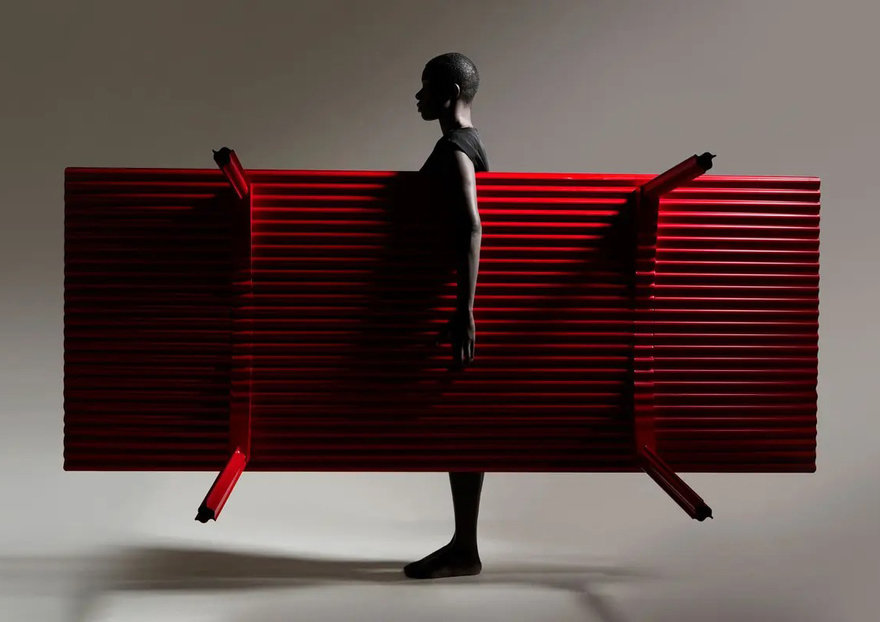
A table arrived this month that you can pick up with one hand, and the reason you can pick it up with one hand is that somebody folded it.
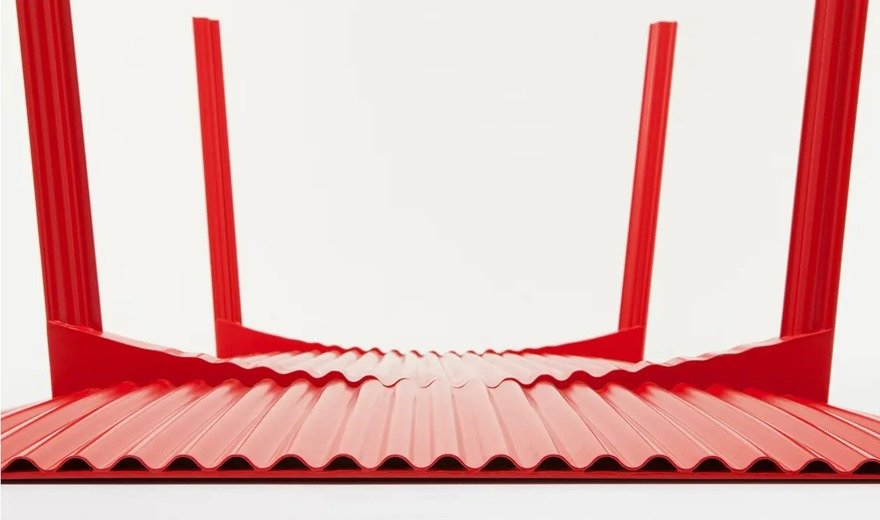
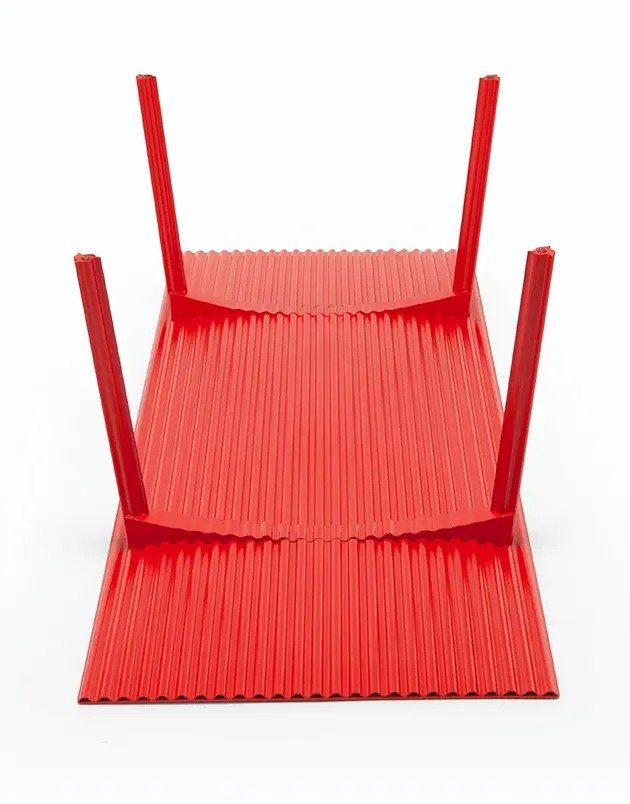
The table is called Ripple, it is by the British design and engineering firm Layer, and Core77 reports that its top is 3mm plywood run through a corrugating process Layer developed with the Canadian manufacturer Corelam, using pressure lamination. Three millimetres. That is thinner than most kitchen cutting boards, thinner than a lot of door skins, thin enough that flat it would be a floppy nuisance you could bend over your knee. Corrugated, it holds a table.
None of this is new, and that is the interesting part.
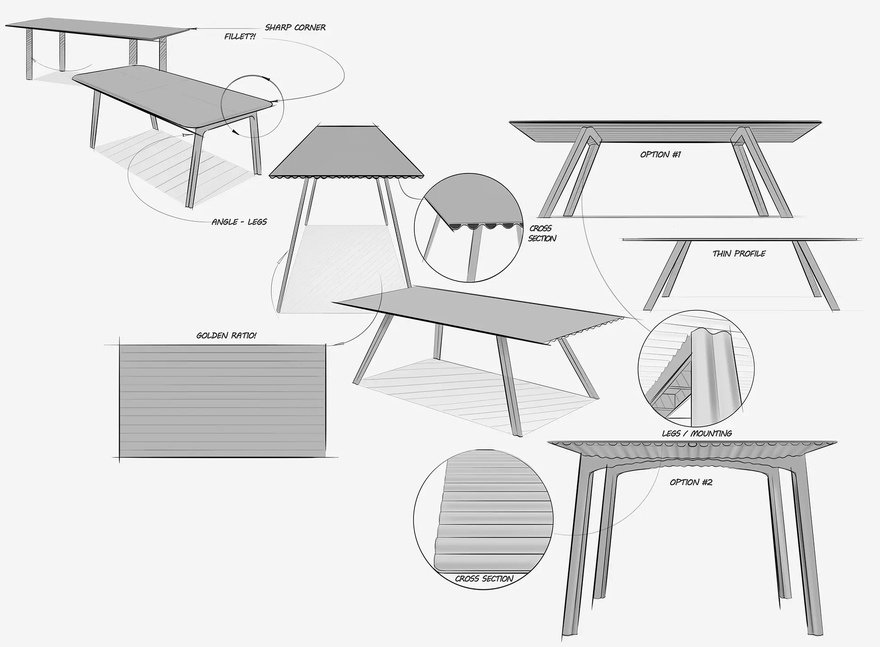
Corrugation is close to the oldest trick in the building trades. Corrugated iron is pushing two hundred years old and it is still the cheapest way on earth to make a roof out of a sheet that has no business spanning anything. Trapezoidal steel deck carries the floors of most buildings you have ever worked in, under a topping of concrete that gets all the credit. Folded plate concrete roofs did the same thing in the 1950s and looked spectacular doing it. Your garage door is ribbed. Your corner shop's parcel box is corrugated board, which is three sheets of paper that can hold a brick. Every single time somebody needs a thin sheet to be stiff and cannot afford to make it thick, they stop arguing with the material and they bend it.
So what Layer and Corelam have actually done is bring plywood into a club that iron, steel, concrete and paper joined a long time ago. That is a real piece of work and the strength-to-weight number is the news. The marketing is another matter. Layer's own copy, quoted by Core77, says the table "responds to the dynamic living trends shaping the future," which translates roughly to people move apartments a lot and own less furniture than their parents did. The better line in the same paragraph is the plain one: "Easily maneuverable by a single person." That is a specification. Write that on a drawing and somebody can check it.
Plywood has form here. Marcel Breuer spent the 1920s proving what you could do with bent tubular steel and then went to England in the 1930s and did it again in laminated plywood, and the long chair he drew for Isokon is still the thing people photograph when they want to say the word modern. Donald Judd built boxes out of plywood because plywood came in sheets and sheets have edges and he wanted edges. Plywood keeps getting picked up as the substitute material and keeps outliving the shortage that produced it. There is a lesson in there about specifying the cheap thing well.
But we have to be honest about what the fold costs, because this is the part no press release covers.
Mass forgives. A thick slab of anything is stiff everywhere, and if you drop a chisel on it you have a dent and you still have a table. You can run a screw into it anywhere. You can trim it on site when the wall turns out not to be square. A corrugated 3mm sheet has none of that generosity. Its stiffness lives in its geometry, which means the stiffness is only there while the geometry is, and the first real dent in a flute is a local collapse, not a scratch. Where does a fastener go, and what does it bear on. What happens at the edge, where the flutes end and the sheet needs to look like it meant to stop there. What does a point load do, a stiletto heel or a dropped speaker or a person who sits on the corner because people always sit on the corner. What does the glue line do after ten summers of a humid apartment. Plywood moves. Corrugated plywood moves in a direction it was pressed into, which is a more interesting problem.
We ask because we have to. Our whole canon runs on mass. Concrete, brick, stone: materials that are stiff because there is a lot of them, that take a knock and record it instead of failing, that are forgiving precisely because they are stupid. Brutalism, whatever else people want to say about it, was an argument for buildings with slack in them. Geometry is the opposite proposition. It is clever, it is efficient, it uses a tenth of the material, and it has no slack at all. One of these approaches survives a careless tenant and one of them does not.
So we are not going to pretend this is a small thing or that it is an easy sell. It is a good piece of engineering and we would like to specify it, once somebody can tell us how it takes a screw.
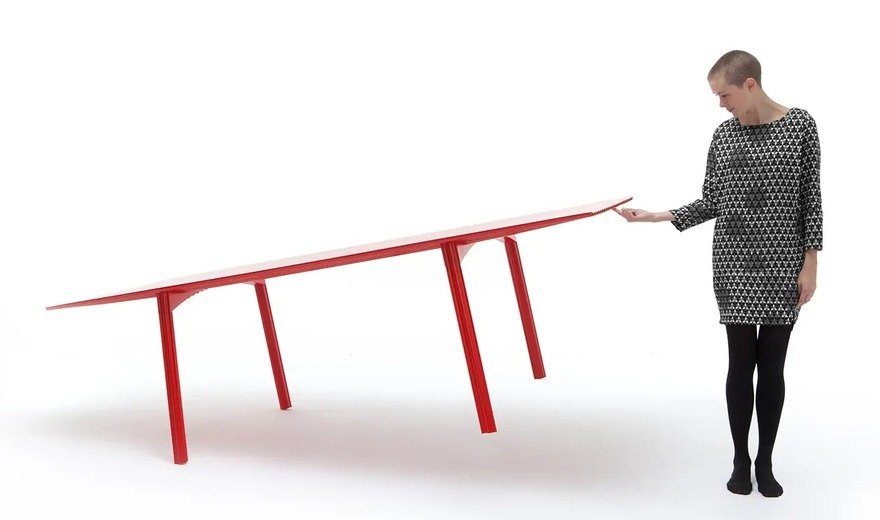
The table weighs almost nothing and holds up anyway. Three millimetres of wood, bent into a shape that knows what it is doing. The building does not care how clever you were. But the shape carried it.
Sources & Credits
- Rain Noe, "ID Firm Layer Develops Corrugated Plywood: Strong, Lightweight," Core77, 13 October. https://www.core77.com/posts/145637/ID-Firm-Layer-Develops-Corrugated-Plywood-Strong-Lightweight
- Product: Ripple table by Layer, developed as an internal studio research project into lightweight constructions. Corrugated plywood process developed by Layer with Corelam. All quotations are Layer's own copy as published by Core77.
- Photography: Layer, via Core77, https://www.core77.com/posts/145637/ID-Firm-Layer-Develops-Corrugated-Plywood-Strong-Lightweight