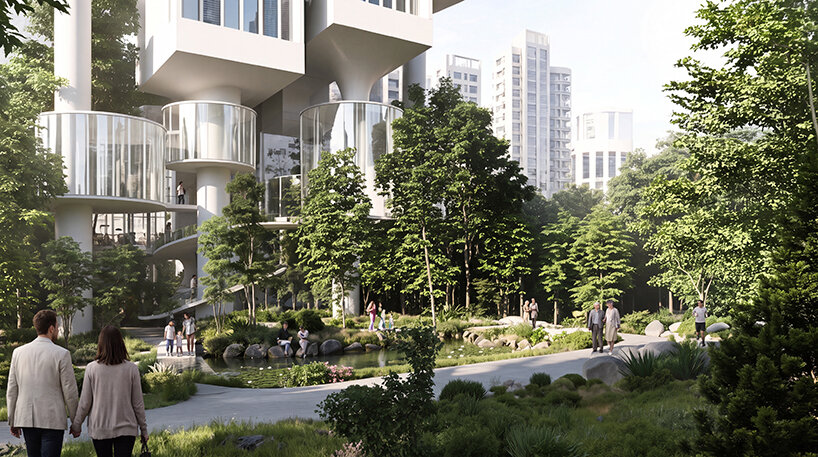
Give a project a cute name and you invite everyone to stop thinking. The name here is "A High Rise on High Heels," which is what CRA-Carlo Ratti Associati and the Korean builder GS E&C are calling their proposal for a 140-meter residential tower in Seoul, and the shoe joke will do most of the work in most of the coverage, and that is a shame, because underneath the joke is one of the oldest and most honest questions in the whole discipline. What does a big building owe the ground it lands on?
The usual answer is: nothing. The usual tall building meets the earth with a podium, a fat plinth of parking and lobby and mechanical rooms and retail nobody visits, and the podium seals the ground the way a coin seals a drain. Water cannot get in. Roots cannot get down. A person on the sidewalk gets a blank wall and a service door and the vague sense that the building begins somewhere far above them and has nothing to say at street level. We have built this a hundred thousand times. We stopped noticing we were doing it.
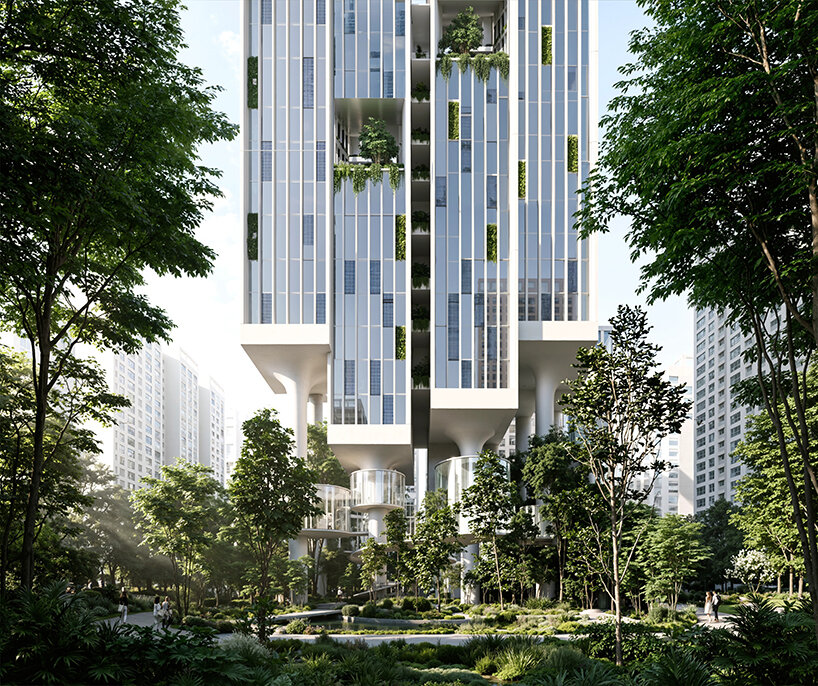
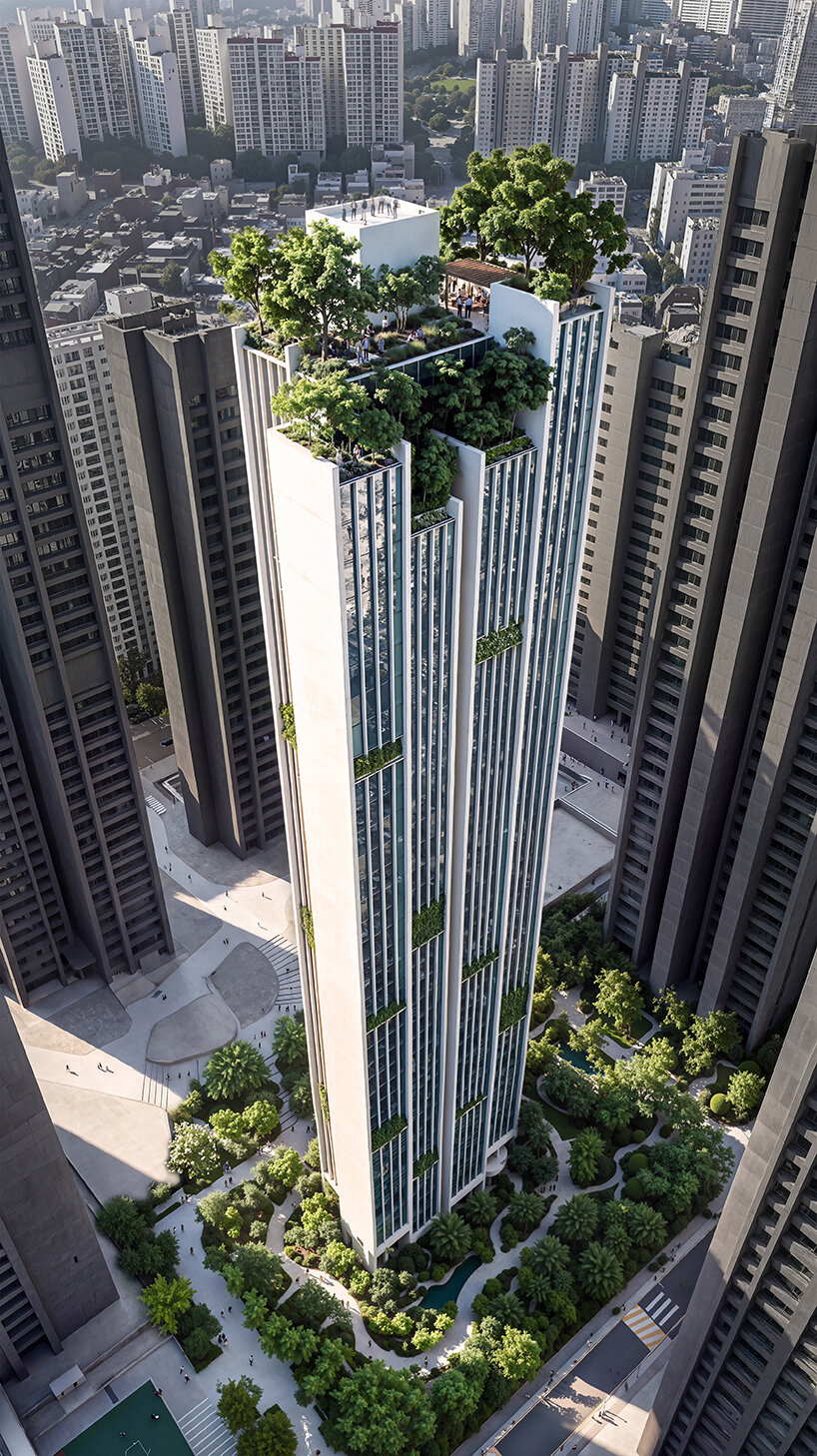
Ratti's move is to refuse the podium. As designboom reported, the tower "lifts its inhabited volume onto slender structural columns," concentrating the whole load of the building into a handful of oversized legs so that water, plants, and people can move freely underneath. Where the plinth would have been, there is instead a permeable landscape, and the landscape has a job. It is built on what planners now call the "sponge city" idea, which means the ground is designed to slow and soak up stormwater on site, before it ever reaches the city's drains, so that the tower stops being one more hard surface shedding its rain onto an overwhelmed system and starts being a piece of the city's flood defense.
That is the part to admire, and it is worth saying plainly: this is a tower doing a public work with its own footprint. Seoul floods. A building that hands its ground back to the water instead of paving it over is a building taking the weather seriously, and taking its neighbors seriously, which most towers never bother to do.
The instinct to lift the mass and free the ground is not new, and Ratti would be the first to say so. Le Corbusier put his buildings up on pilotis and let the garden run under them the better part of a century ago. Kenzo Tange spent the 1960s imagining whole cities carried up into the air on great structural legs, the megastructure holding the messy business of living well above a ground left open for movement and water and life. The dream was always the same: stop treating the earth as the thing you stand your building on top of, and start treating it as the thing your building owes something to. What is different now is the reason. Corbusier lifted his houses for light and air and a clean idea of hygiene. Tange lifted his cities for growth. Ratti is lifting this tower because it rains harder than it used to and the drains cannot keep up. The old form has found a new and more urgent argument.
Under the raised building the drawings show gardens, and in the gardens, dining rooms and tea houses and plots for urban farming, all sitting in the cool shade the tower throws down. Whether all of that survives a real budget and a real construction schedule is the honest open question, because renderings are generous and pro formas are not, and the shaded tea house is exactly the sort of thing that gets value-engineered out first. We have watched it happen. Anyone who has taken a set of drawings to bid has watched it happen.
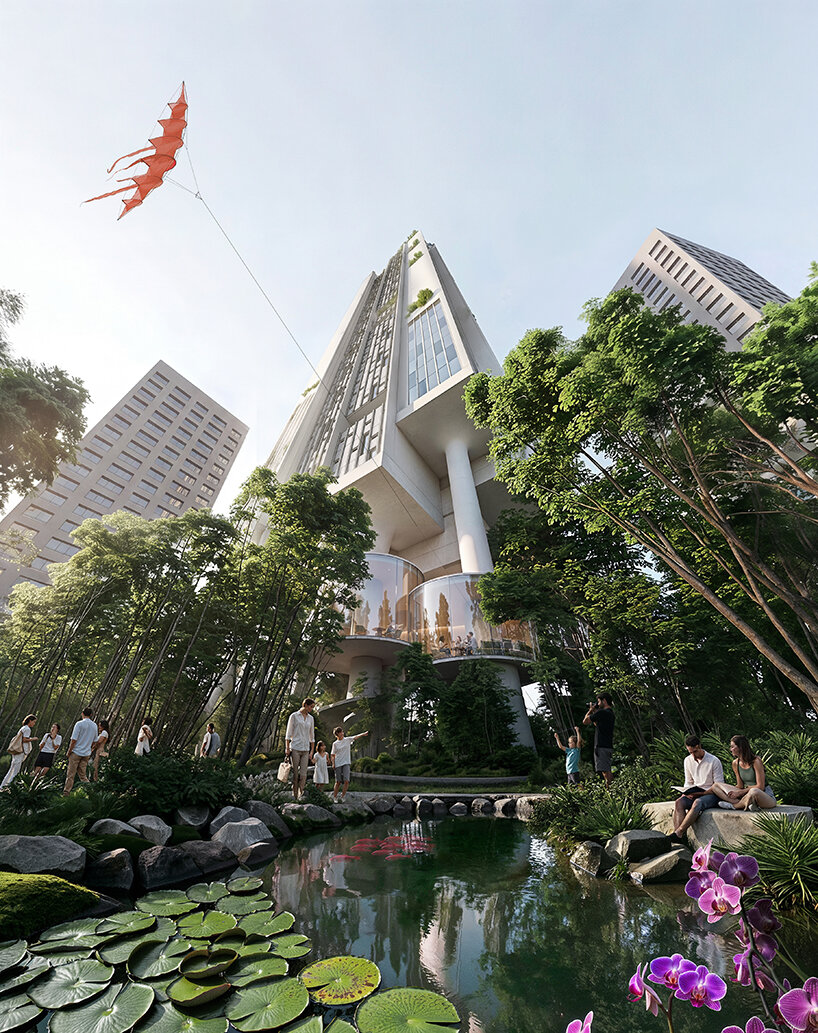
So hold the enthusiasm at the right temperature. This is a proposal, not a finished building, and the render is doing what renders do. But the core of it is not a render trick and it is not a shoe. It is a structural decision with a moral shape: put the weight on a few honest columns, and give everything else back. Give back the water its path. Give back the trees their roots. Give back the person on the sidewalk a ground they can actually walk across, planted and open and theirs.
A tower is going to take up the sky no matter what. The only real question is what it does with the small square of earth it stands on. Most of them answer by sealing it. This one, at least on paper, answers by opening it, and that answer is worth more than the name they hung on it.
Sources & Credits
- Reporting and project details: "carlo ratti lifts seoul tower on 'high heels' to make room for water, trees and public life," Thomai Tsimpou, designboom. https://www.designboom.com/architecture/carlorattiassociati-cra-seoul-tower-high-heels-room-water-trees-public-life-gsenc/
- Quoted phrase ("lifts its inhabited volume onto slender structural columns") and the "sponge city" and "A High Rise on High Heels" references as published by designboom, above.
- Project: CRA-Carlo Ratti Associati with GS E&C, Seoul. All images by CRA-Carlo Ratti Associati, via designboom.
- References to Le Corbusier and Kenzo Tange are CP editorial context, not reporting on this project.