The weather got there first. In the hinterland of Galicia, where the rain comes off the Atlantic sideways and the wind has opinions about everything you build, houses learned a long time ago to keep their backs to the north, and to thicken their walls where the trouble comes from, and to save their openings for wherever the low winter sun could be talked into visiting. Nobody called this design. It was just what you did if you wanted to be warm.
Cecebre House, a new residence near A Coruña by sinaldaba, the practice of Susana Vazquez Perez and Ignacio Reigada Cordido, does all of it again, on purpose, without the costume. Leibal, which published the project, puts it exactly right: the house has "the structural intelligence of centuries of rural building without any of the costume." No borrowed granite. No slate worn like a regional badge. A single pitched-roof volume, rendered white, wrapped around a central courtyard, closed to the road and the north, glazed to the south and west. That is the whole scheme. It took centuries to get this simple.
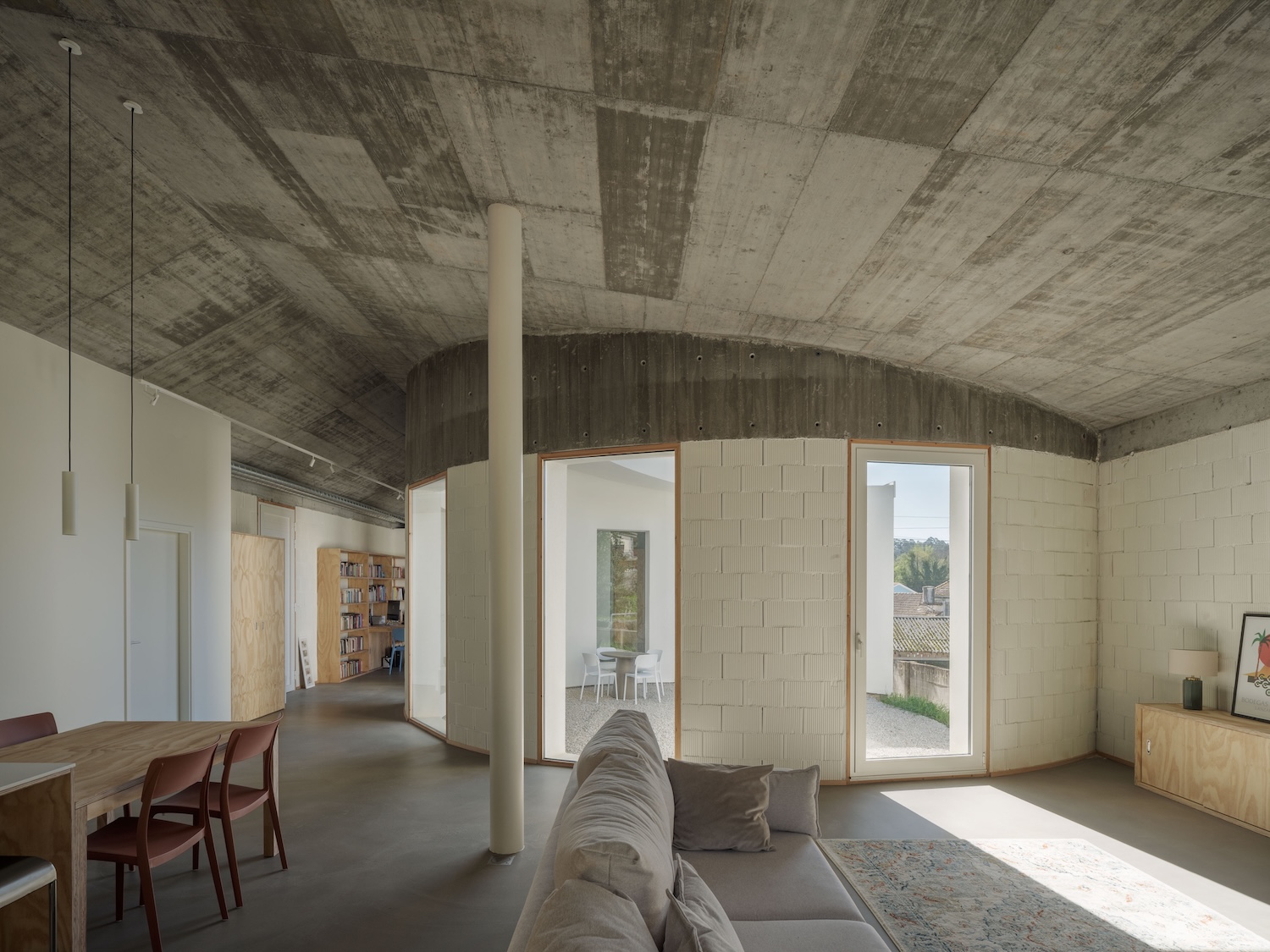
The courtyard is the move worth sitting with. Leibal compares the introverted plan to the walled court houses Mies van der Rohe drew in the early 1930s, and the comparison holds, because both understand the same thing: that a void can be the most important room in the house. The courtyard here is a protected emptiness, the hole the rest of the plan is arranged around, and every interior room borrows its light and its calm from that hole. A window to open country asks you to admire the view. A window to your own courtyard asks nothing. It just lets the weather in on your terms instead of the Atlantic's.
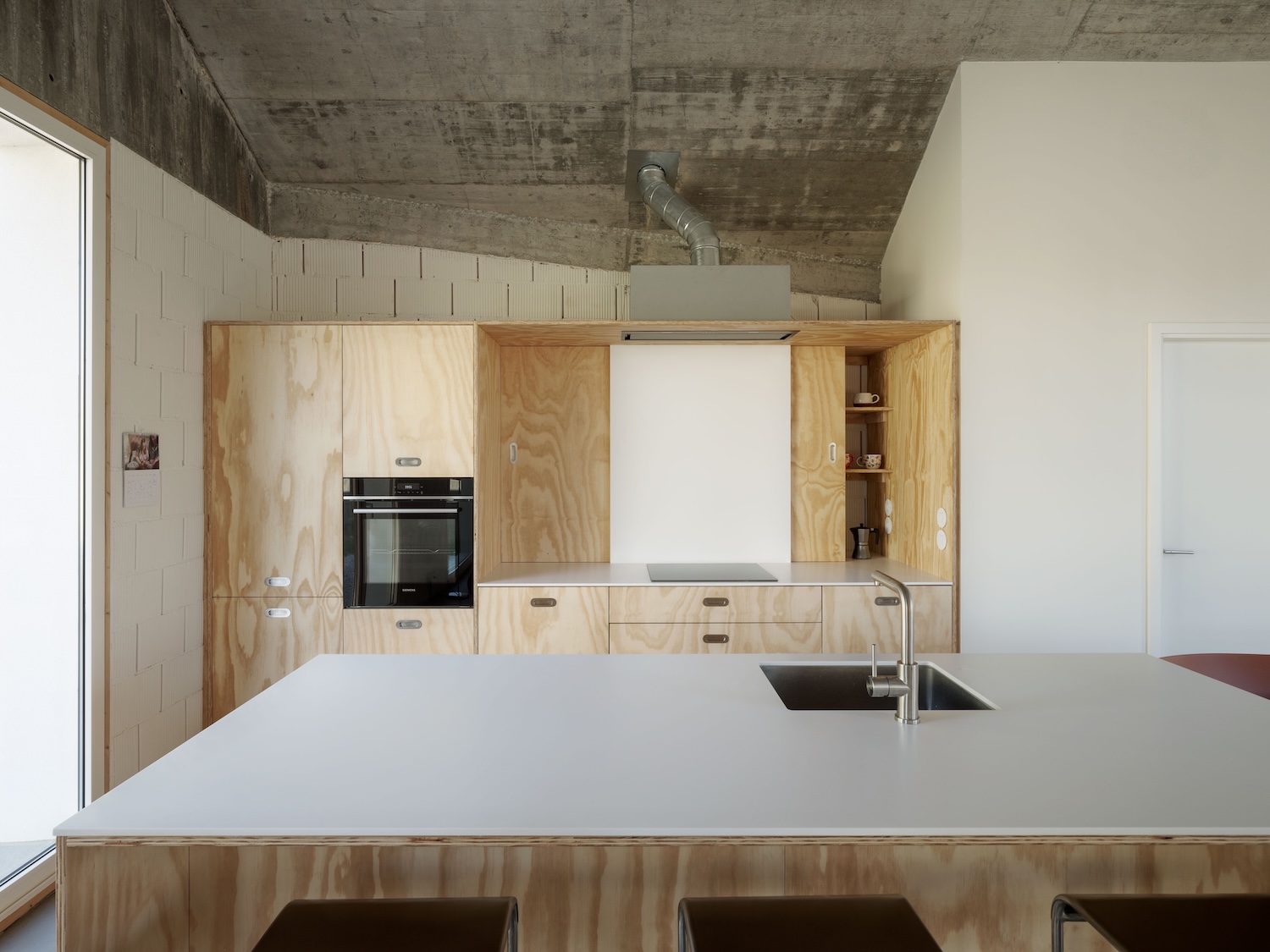
The section is a farmhouse wearing new clothes, and it knows it. Per Leibal, the main floor carries daily life while a lower level takes the storage and the machinery, the way the Galician longhouse once kept animals and tools and stores on the ground story with the family living overhead. The animals are gone. The diagram survives. There is something honest about inheriting a plan instead of inventing one, because the inherited plan has already been tested by a few hundred winters, and the invented one has been tested by a rendering.
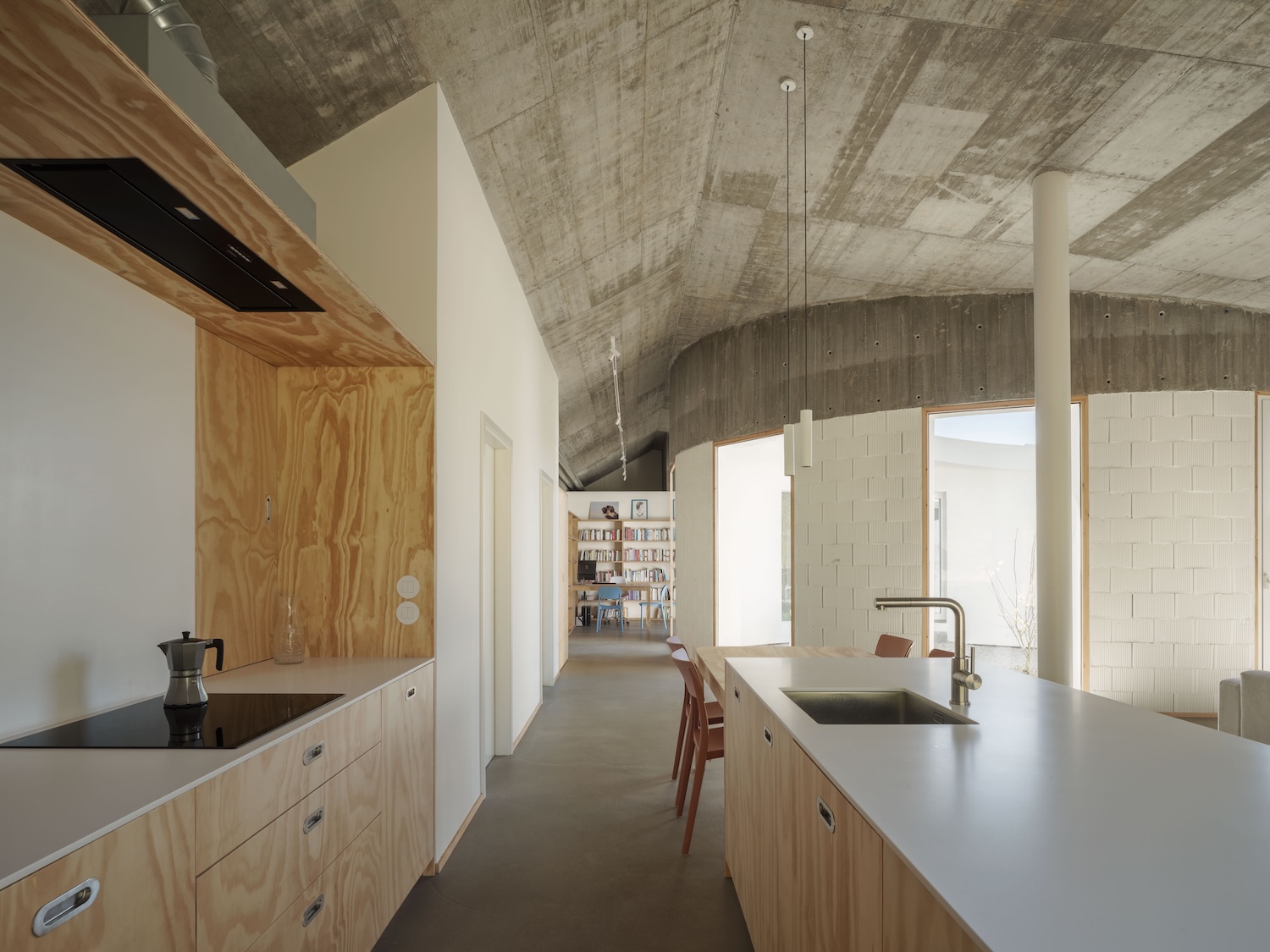
This is the kind of building that gets filed under bioclimatic design, which is a word that costs more than the thing it describes. Orienting a house against the wind and toward the sun is a farmer's calculus. It predates the software that now confirms it and the consultants who now invoice for it. Leibal frames the project through Kenneth Frampton's critical regionalism, an architecture that resists placelessness by attending to light, topography, and climate rather than to imagery, and that is the right frame, but you could also just say the house pays attention to where it is. Most buildings do not. Most buildings are designed from the inside of a screen for the inside of a screen, and then heated and cooled into submission wherever they happen to land.
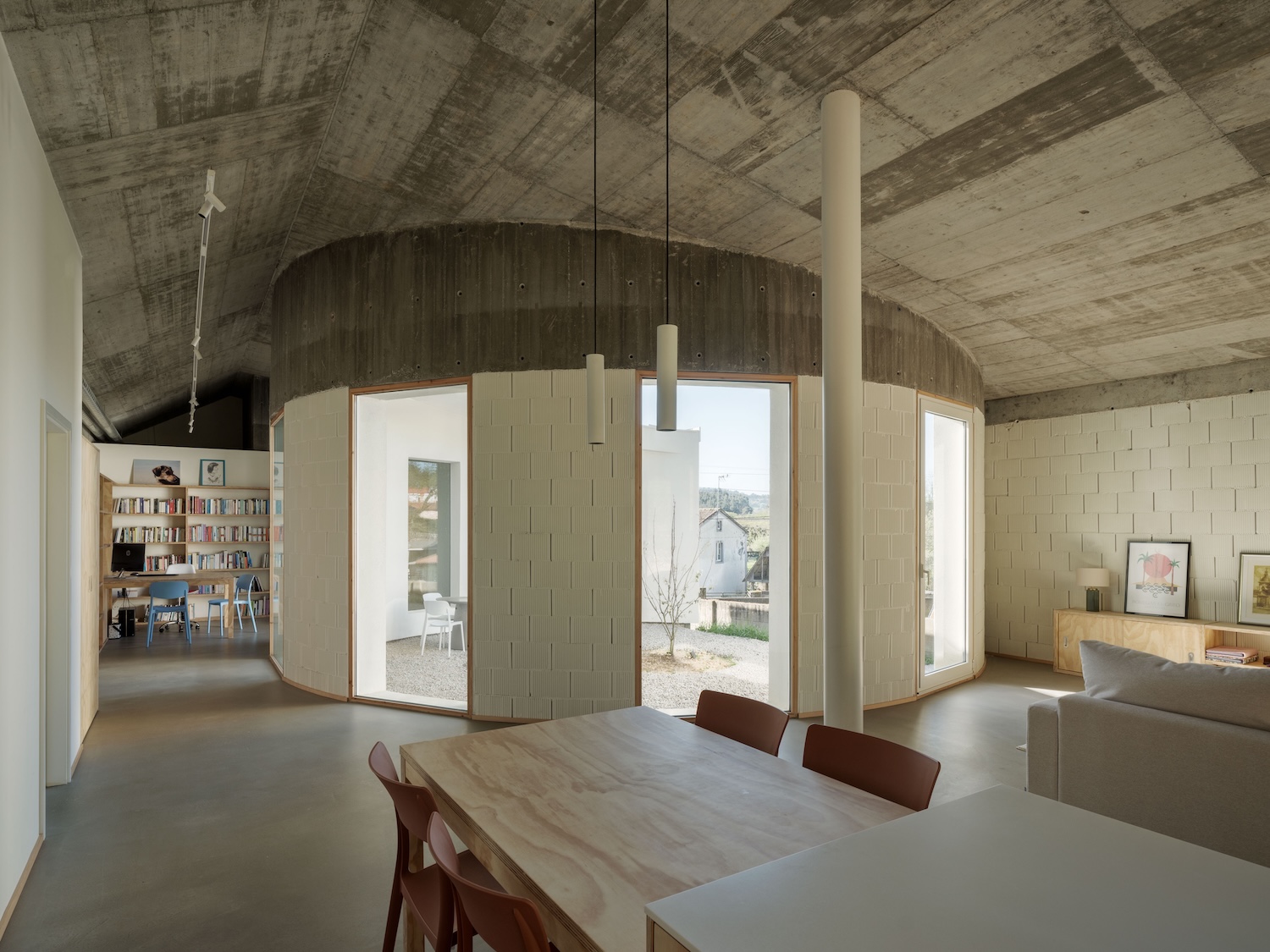
Here is what we take from Cecebre, standing as we do in a city where the weather is mostly someone else's problem until the utility bill arrives. Minimalism applied as taste is a diet. Minimalism earned from climate is a constitution. The first kind needs defending every time the owner sees something new in a magazine. The second kind defends itself, every November, when the wind comes off the water and the house turns its back and the courtyard holds its little square of calm and the person inside puts their back to a thick wall and feels, without knowing why, that the building is on their side.
The house will outlast the term for what it is. The weather will keep testing it. That was always the arrangement.
Sources & Credits
- Article: "Cecebre House," Leo Lei, Leibal, https://leibal.com/interiors/cecebre-house/
- Photography: Luís Díaz Díaz, via Leibal, https://leibal.com/interiors/cecebre-house/