A Number With No Unit on It
Service Projects says its Caféteria Mug is fired at 1230 degrees for lasting durability. The same website says the collection it belongs to fires between 1280 and 1440 degrees Celsius. Both can't be right.
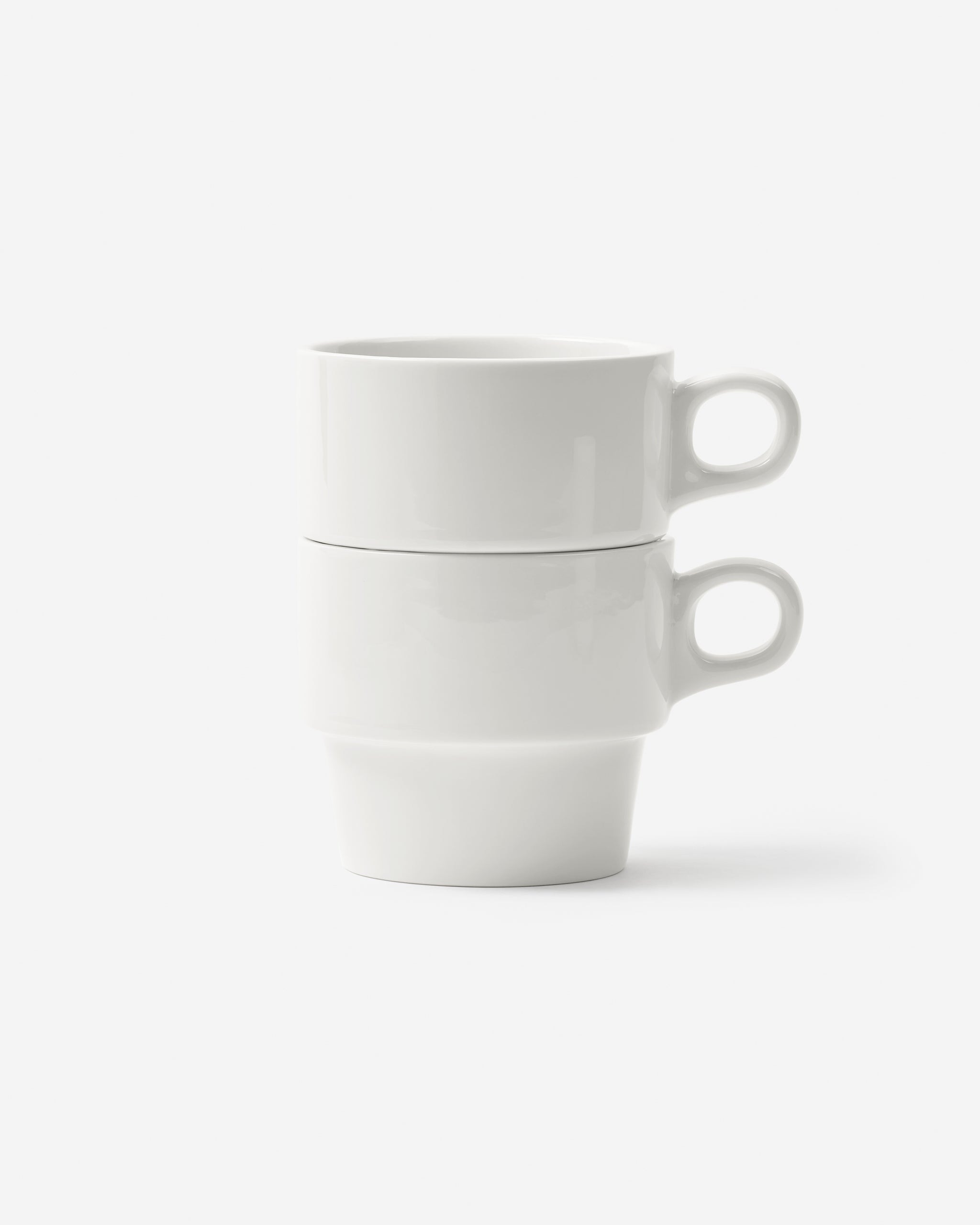
Minimalissimo ran the Caféteria Mug on 21 November, and it's a good little object. Straight-sided, a stepped foot, a small round handle sized for one finger and a thumb, 230 millilitres, 175 kroner. It's by Service Projects, a tableware brand that, by its own account, started in New York at the end of 2022 and has since moved to Copenhagen, beginning with the idea of putting industrial tableware within reach of people who don't run restaurants. The maker calls it "Our Office Coffee Cup" and says it's "Reminiscent of classic cafetière cups and bustling office spaces filled with coffee" (Service Projects). Note the spelling of that reference. It's cafetière, the press pot, not the canteen, whatever the name on the box suggests.
So far so ordinary, and we'd have left it there except for one sentence that both the magazine and the maker print: the cup is "fired at 1230 degrees for lasting durability."
That number is doing a job. It's the only hard figure in the entire description, and it's placed directly against the word durability, which means it isn't decoration. It's the evidence. A buyer reading it is meant to come away believing the cup has been tested by heat and will therefore survive a sink.
Two things about it. The first is that neither page states a unit. 1230 of something. Anyone in the trade will read Celsius and be right, almost certainly, but a specification that leaves off its unit is a specification you're being asked to complete on the seller's behalf. The second is more awkward. On the same website, the care notes for the range this cup sits in say the Porcelain Collection "is kiln-fired at varying temperatures between 1280°C and 1440°C, depending on the specific product." That range starts fifty degrees above the number on the product page. One of those two figures is describing something other than this cup, and the shopper has no way of knowing which.
We aren't calling anyone a liar. Shopify care copy gets written once for a whole collection and then never read again, and this is the most forgivable error a small brand makes. But it's worth naming what happened, because it happens on every project we run. A number got copied into a sentence because numbers are persuasive, and then nobody checked it against the number three clicks away, and the result reads like a specification while behaving like an adjective.
A specification is a promise somebody can check later.
The habit is easy and it's the whole job. When a submittal says a sealant lasts twenty years, ask twenty years of what: adhesion, elasticity, colour. When a tile is rated for commercial traffic, ask which rating and who issued it. When a cup is fired at 1230 degrees, ask whether the page over there agrees.
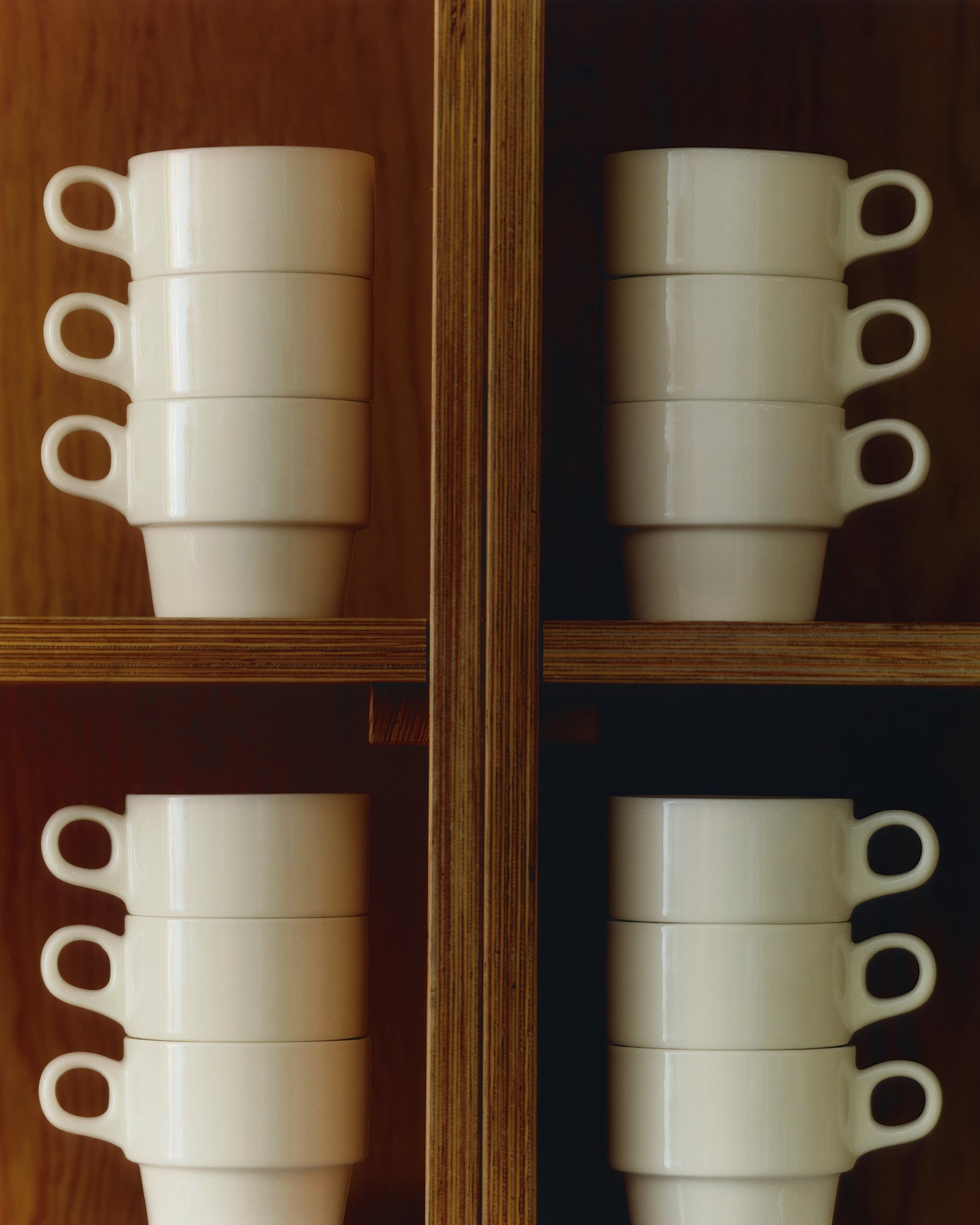
Here's what nobody in the copy brags about, and it's the genuinely difficult part. Clay shrinks in the kiln, substantially and not always evenly, and a stacking cup has to come out the other side of that with the foot of one sitting cleanly into the rim of the next, four or five high, without rocking and without wedging. Get the tolerance wrong in one direction and the stack wobbles on a shelf. Get it wrong in the other and two cups lock together and somebody breaks one freeing the other. That step at the bottom of the wall isn't a styling move. It's the register, and it's the reason the thing works.
You can see the claim being made good in the photograph of the cabinet, which is the best picture in the set: four stacks, several cups high, sitting square behind glass. That's the durability argument, and it's visual, and it needed no number at all.
The brand says it wants "functional and long-lasting products that prioritize timelessness and enduring quality," and on the evidence of the object it means it. The cup is microwave and dishwasher safe. It stacks. It costs less than a sandwich and comes in fours and eights. That is a well-resolved piece of everyday equipment and we'd put it in a studio kitchen tomorrow.
The soft number doesn't make it a soft object. It just means the strongest thing the brand could say about the cup is the one thing it didn't bother to say plainly, which is that somebody worked out the shrinkage and the stack holds.
Specify the cup. Then go and check the other number on the page.