Foam Is Why You Threw the Last One Out
John Pawson's Drift collection for Herman Miller puts natural latex on cotton decking over webbing, inside a solid hardwood box. The quiet news is not the minimalism. It's the repair.
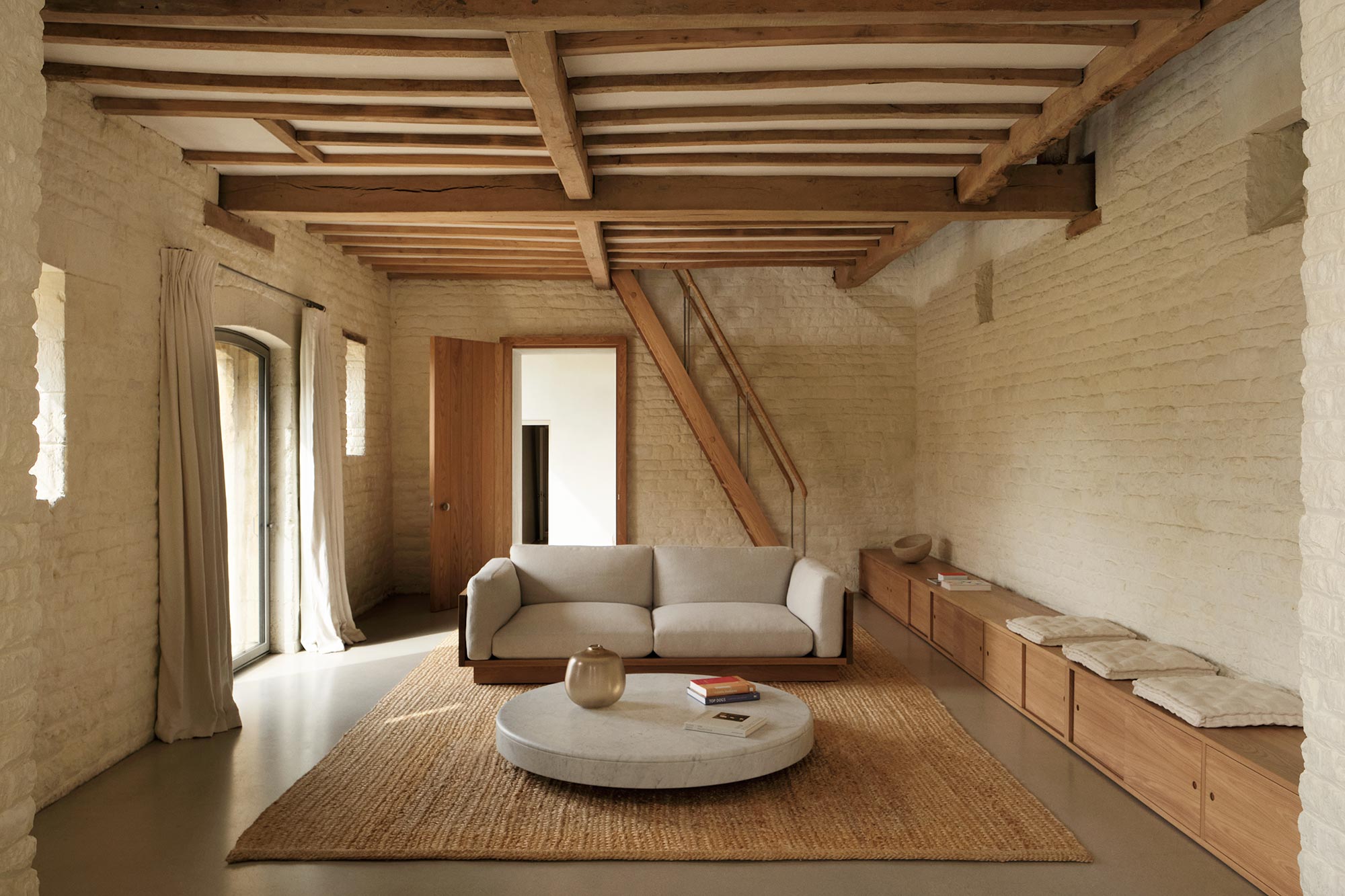
John Pawson has designed a sofa for Herman Miller, which he is calling Drift, and it comes in an 80 inch version, a 93 inch version and a chaise sectional. The base is a recessed hardwood frame in white oak or walnut. The back is drawn as carefully as the front, on the theory that a sofa in a room is a thing you walk around rather than a thing you look at from one chair. The plinth is tucked in underneath so a rug can run cleanly up to it, and the arm height and the seat height have been set level with each other, which sounds like nothing until you have stood in a showroom looking at a hundred sofas where they are not (Gessato, 19 August 2025).
All of which the trade press will file under minimalism, because Pawson has spent forty years being filed under minimalism, and because the photographs do look like that.
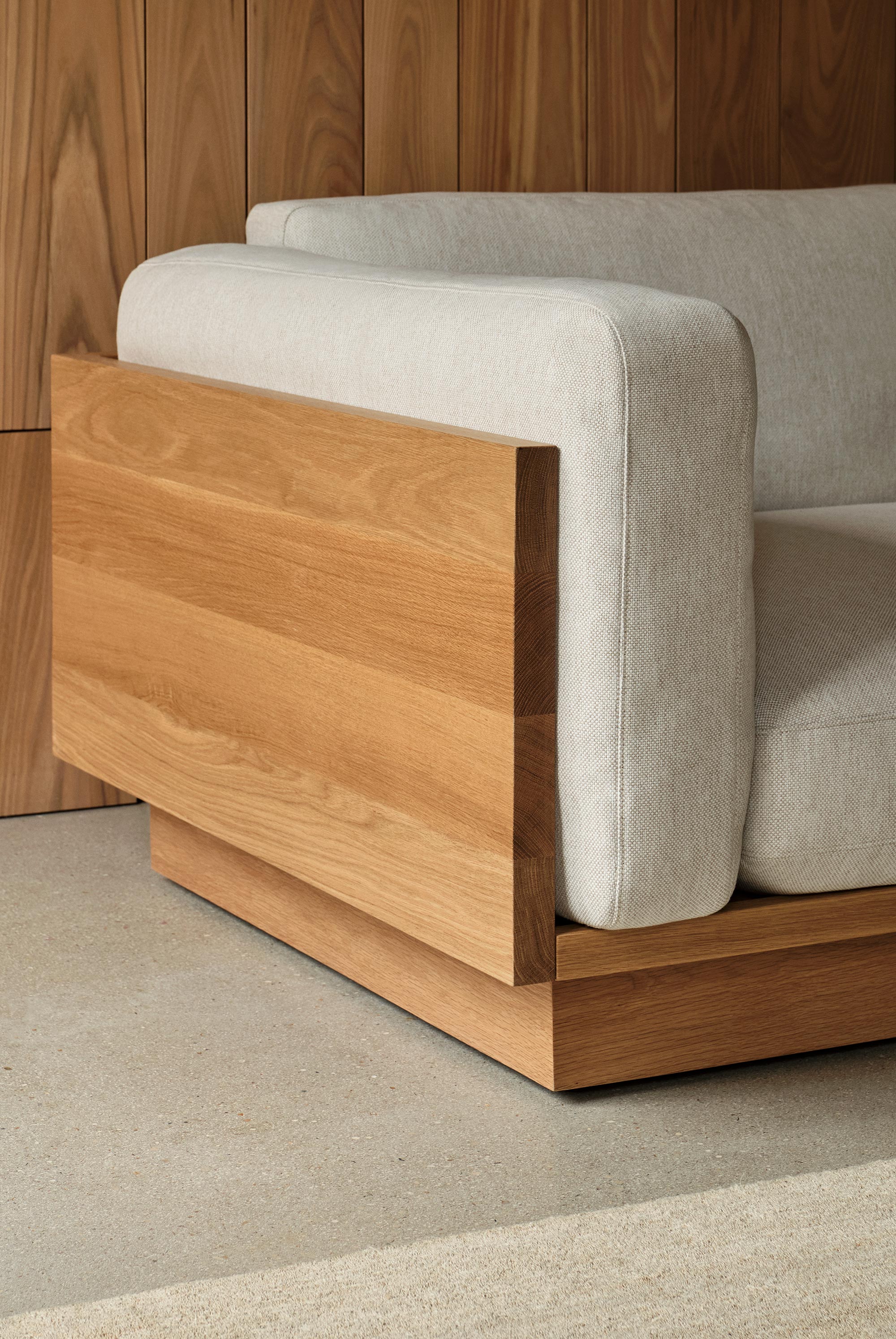
The interesting part is underneath, and it is a specification, not a style. The cushions are natural latex, tapped from rubber trees, instead of the petroleum foam that sits inside essentially every sofa sold in this country. The latex rests on cotton decking, and the decking is carried on a hidden web of textile straps. The fabrics carry a GREENGUARD Gold certification.
Take those one at a time, because they are doing different jobs. The webbing and the cotton deck are old furniture-making and they are repairable by any upholsterer with a stretcher and an afternoon. GREENGUARD Gold is about what the textile gives off into the room, which is a real thing to care about and is not a claim about how long any of it lasts.
The latex is the one we would argue in a meeting. Polyurethane foam is cheap and light and it is the single best explanation for why a sofa that was fine goes to the kerb. It does not break. It sags, slowly, in the two spots where the people in the house actually sit, and one day somebody says the sofa is tired, and out it goes, frame and all, eight feet of hardwood and glue and labour, because the part that failed was the part nobody could buy again.
A sofa dies at the cushion, not at the frame.
Latex is heavier, costs more, and keeps its shape for a long time, and when it finally goes, it is a block of material in a cover with a zip. That is not a lifestyle claim. That is a parts list.
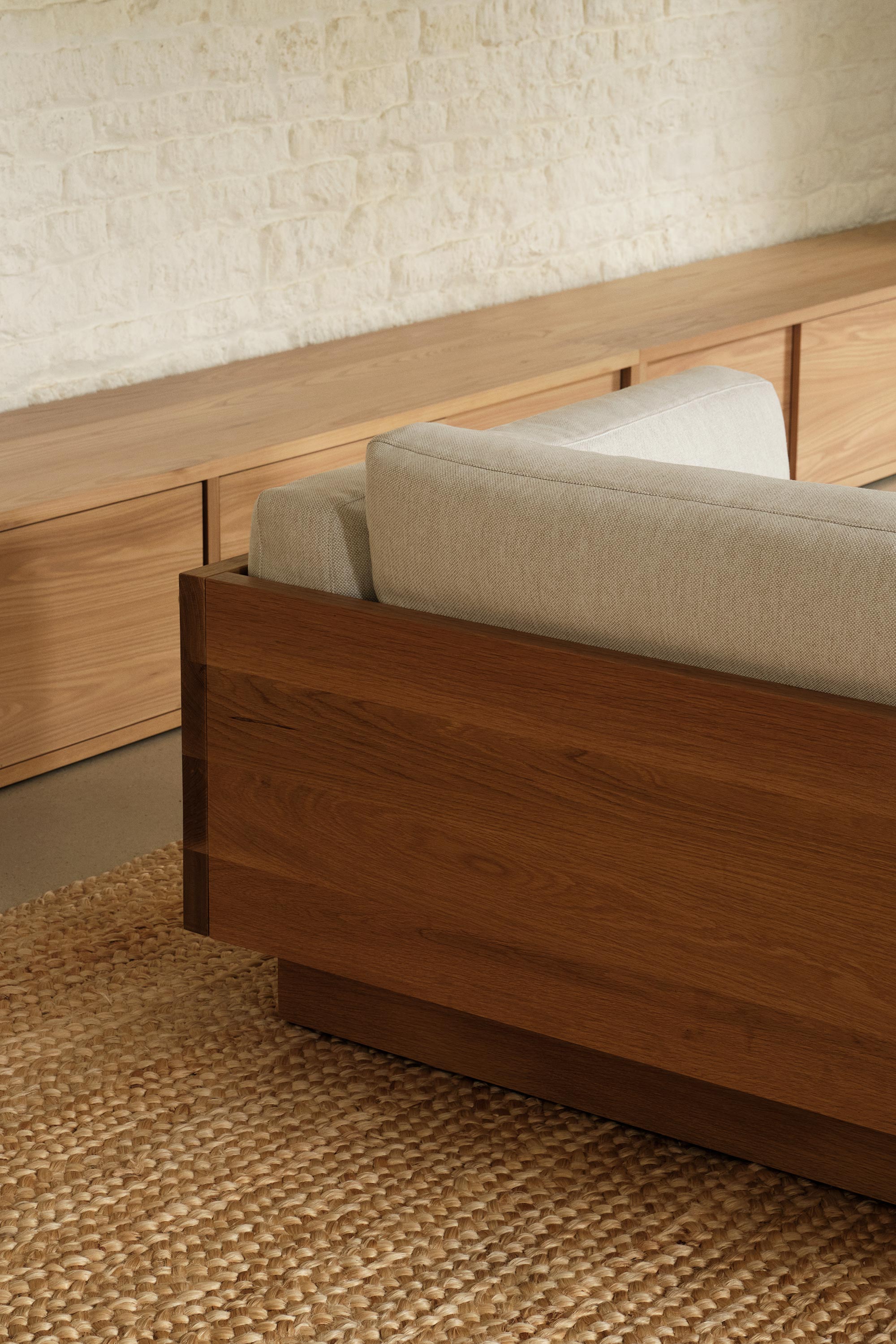
The frame makes the same argument out loud. It is a solid hardwood box with the end grain showing at the corner, and the cushions sit down inside it rather than being wrapped around it. You can see what the sofa is made of while you are sitting on it. There is no skirt, no hidden ply carcass under stretched fabric, nothing that has to be cut open to be understood.
We like this for a reason that has nothing to do with how it looks. A visible frame is an honest declaration of what will still be here in thirty years. Everything soft on this piece is a consumable. Everything hard is the building. Draw that line clearly enough and the client can maintain the thing instead of replacing it, which is the only sustainability argument in furniture that survives contact with a spreadsheet.
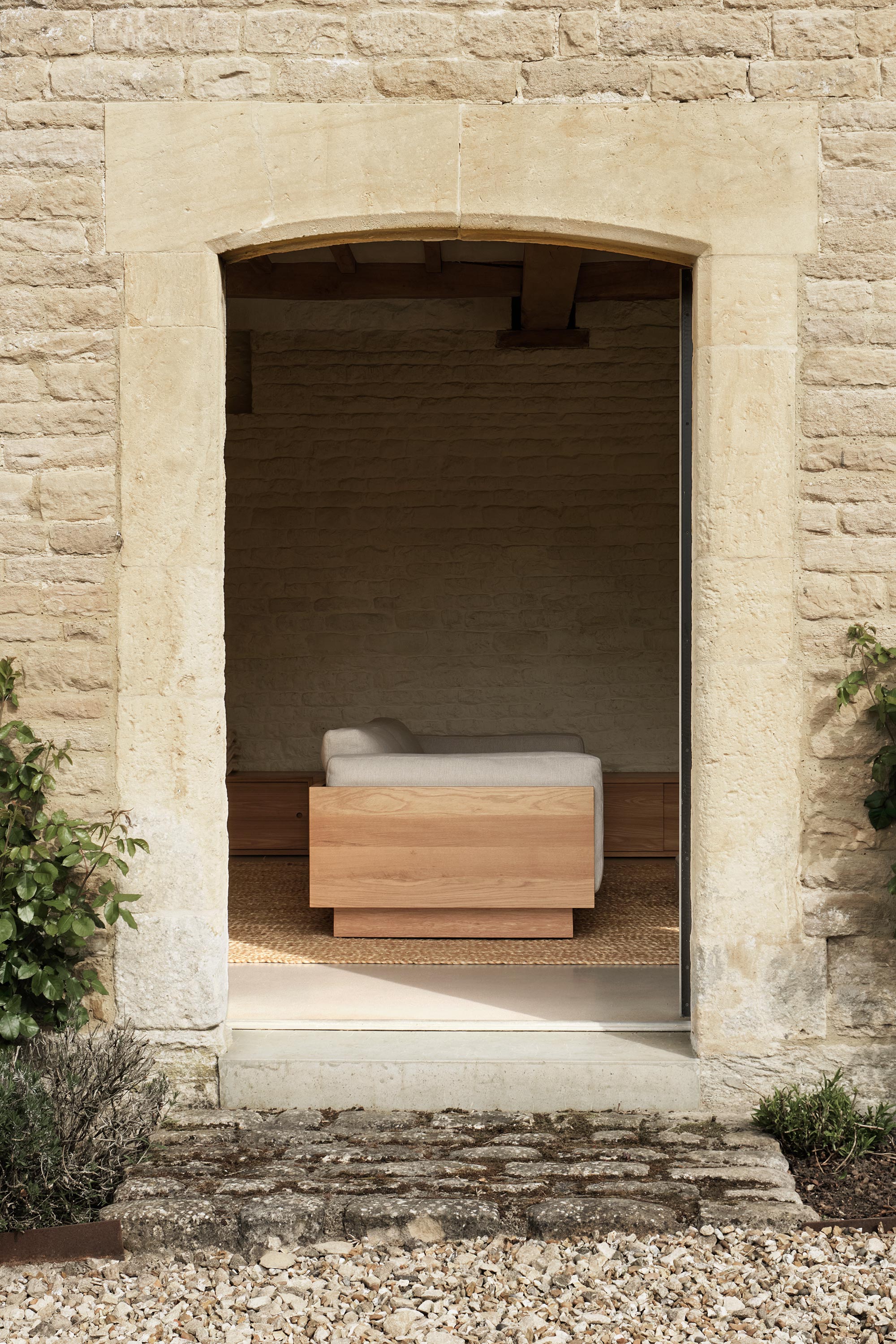
Now, an oak plank is an oak plank. The arm on this sofa is a flat board at a fixed height, and it will not take your elbow kindly at the end of a long day, and it is not the thing you throw a leg over while you watch something stupid on a Tuesday. Pawson's reduction always asks the person in the room to meet it halfway. Most published minimal furniture is photographed in houses where somebody else does the tidying, and the honest thing to say to a client looking at this sofa is that it is firm, it is upright, it rewards sitting properly, and a soft deep sofa is not a moral failure.
Say that out loud, early, in front of the drawing. Then the client chooses it with both eyes open, and if they want the deep one instead, specify the deep one and check what is inside the cushion.
The thing we would actually take from Drift into a project is not the silhouette. It is the question it answers on the cutsheet: when this wears out, what exactly wears out, and can somebody buy that part on its own. Ask it about a sofa, ask it about a floor finish, ask it about a kitchen. The answer tells you whether you have specified a piece of furniture or a slow appointment with a skip.
Buy the one that comes apart.