Transparent's Brutalist Speaker Wants the Corner
The Transparent Brutalist Speaker is an aluminium sculpture of a concrete building, made by a Stockholm brand famous for speakers you can see through. The best thing about it isn't the look. It's where it asks to be put.
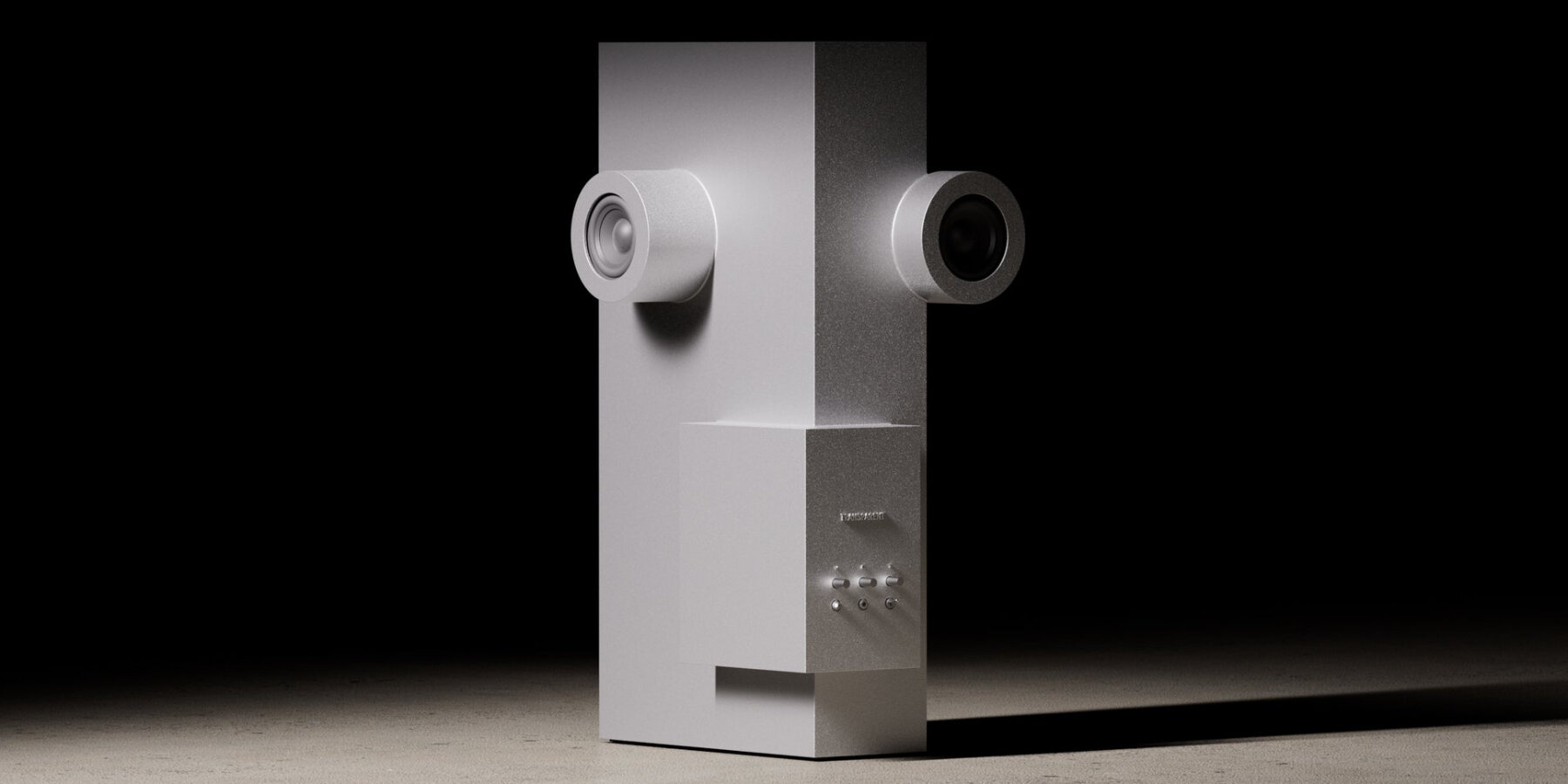
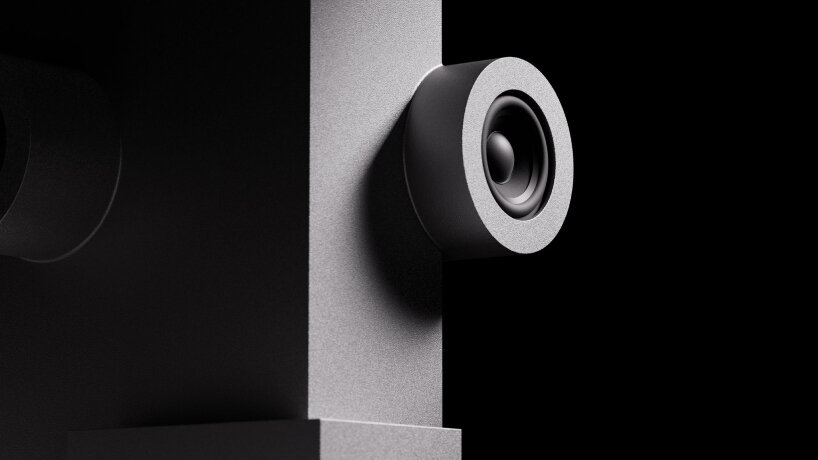
Transparent is a Stockholm audio brand founded in 2012 by Per Brickstad, Martin Willers and Magnus Wiberg, and for most of its life it has been the company that makes speakers you can see into. Glass fronts, the guts on display, a modular build so the parts can be swapped and upgraded instead of the whole thing thrown away. Then, at the end of 2024, it made the opposite. The Brutalist Speaker is a closed, heavy-looking block of stacked geometric forms, with two tweeters pushed out of the mass in cylinders, and it's named after the most opaque architecture of the twentieth century.
It's made of aluminium, 70 percent of it recycled. So it's a sculpture of concrete that contains no concrete. We'll come back to that.
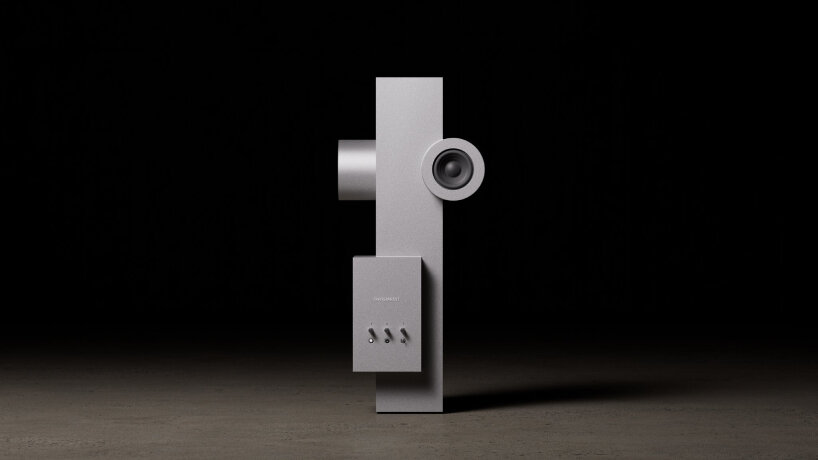
The obvious complaint writes itself, and it's a fair one. Brutalism was about the truth of the material. You poured the concrete, you struck the forms, and the building wore the record of how it was made on its face, board marks and all. A speaker cast and machined in aluminium to look like poured concrete is the exact opposite of that idea. It's brutalism as a costume.
We'd say that and mean it. And then we'd look at it again.
Because the shape is doing something. Transparent says the speaker is best placed in a corner, so it can use the reflections off the two walls to fill the room, and the two tweeters are set at 90 degrees to each other to throw sound both ways. The big closed mass gives the bass a large volume of air inside to move, with a bass reflex construction behind it. It took the company about three years to develop.
That's the part we like, and it's the most architectural thing about it. Most speakers are designed as if they'll live in an anechoic chamber, perfectly placed on a stand at an equilateral triangle from your ears, and then they spend their lives shoved against a bookcase. This one admits the room exists. It asks for a corner, which is the place in any room nobody knows what to do with, and it turns the walls into part of the instrument. That's the same thing a good building does with a site.
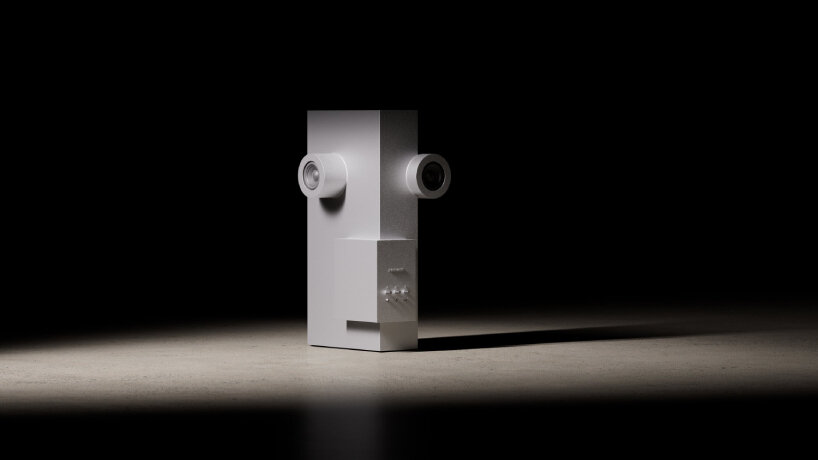
It costs $4,000 in the US, €3,800 in Europe and £3,200 in the UK. It comes with a WiiM Mini streamer already fitted, which is a sensible admission that nobody wants a monument with a cable dangling off it. Brickstad says the company believes audio objects can be striking and technically advanced and still simple to use. That's a reasonable creed, and the corner placement is the proof of it more than the facade is.
Is it brutalist? No. It's an aluminium object that loves brutalism, which is a different and smaller thing. But it's a good speaker shape for a real room, and the brutalism gave the designers permission to make something big and closed and unapologetic in a category that usually apologizes for taking up space. The look is the costume. The corner is the idea.
Put it in the corner. Let the walls do some of the work. The building would approve.