Light Has to Come From Somewhere
For decades Cologne Cathedral was lit from the buildings across the plaza. The fix says more about light as a building material than any project description that uses the phrase.
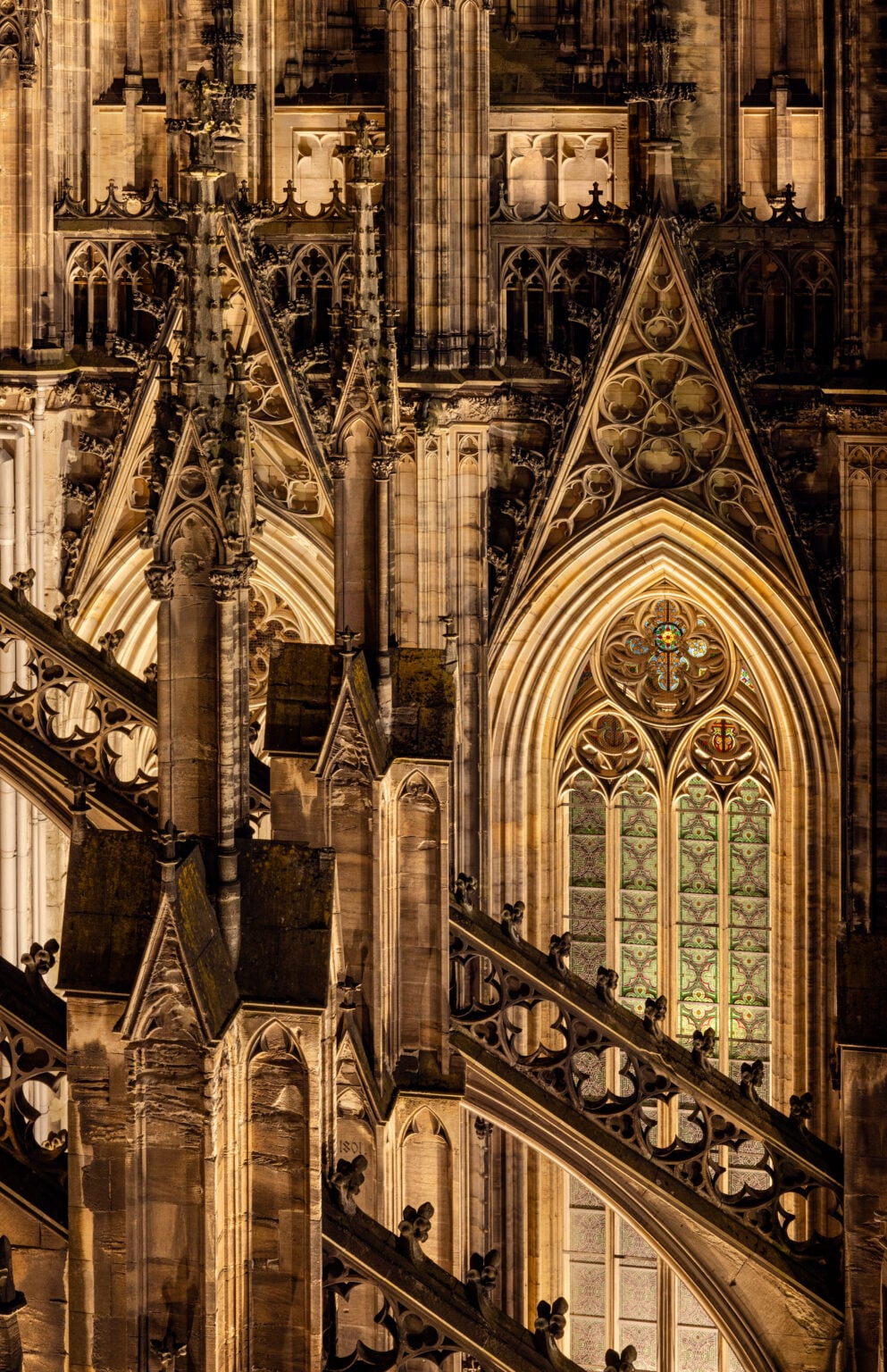
Listen: light is the cheapest material on any job, and the one most often specified by nobody. The concrete gets a mix design and a test cylinder and a man from the testing lab who drives out in the rain to break it. The steel gets a mill certificate. The oak gets a grade and a moisture reading and a week in the room to settle down. And the light, which is the thing that decides whether any of those materials will ever be seen properly again, usually gets a reflected ceiling plan with a grid of little circles on it, evenly spaced, the way a child draws rain.
So it is worth looking closely when someone treats light as if it had properties. Because it does. It has a direction. It has a temperature. It has a source, and the source has to live somewhere and be paid for and be maintained by someone on a ladder. And like every other material it can be used honestly or it can be used to cover something up.
For years, Cologne Cathedral was lit the way most monuments are lit, which is from somewhere else. Floodlights stood on top of the neighbouring buildings, 1,000-watt metal halide lamps that, according to the lighting designers who replaced them, poured a flat neutral white over the whole front of the building (Dezeen, 12 November 2026). Eighty per cent of the light came from fixtures standing away from the cathedral. A floodlight from across the plaza treats a building as a surface. It is paint, applied at the speed of light. And it does to a Gothic facade what a coat of paint does to carved stone, which is make it legible from far away and dead up close.
Licht Kunst Licht's answer was more than 700 small LED fixtures mounted on the cathedral itself, clamped on rather than drilled in, so that not a single hole went into the stone and the whole system can come off again without a trace. Now only ten per cent of the light comes from a distance. The rest comes from close in and low down, grazing up the vertical lines and backlighting the tracery, so the depth that the masons carved into the building is the thing the light reports. The studio calls the idea "light follows architecture." Energy use fell by eighty per cent. And the part that should make any architect sit up is how they got there: the drawings did not exist and the computer simulations were not good enough, so they spent years standing in front of the building at night, trying angles.
That is what it looks like when light is treated as a material. You cannot spec it from the desk. You have to go and stand in it.
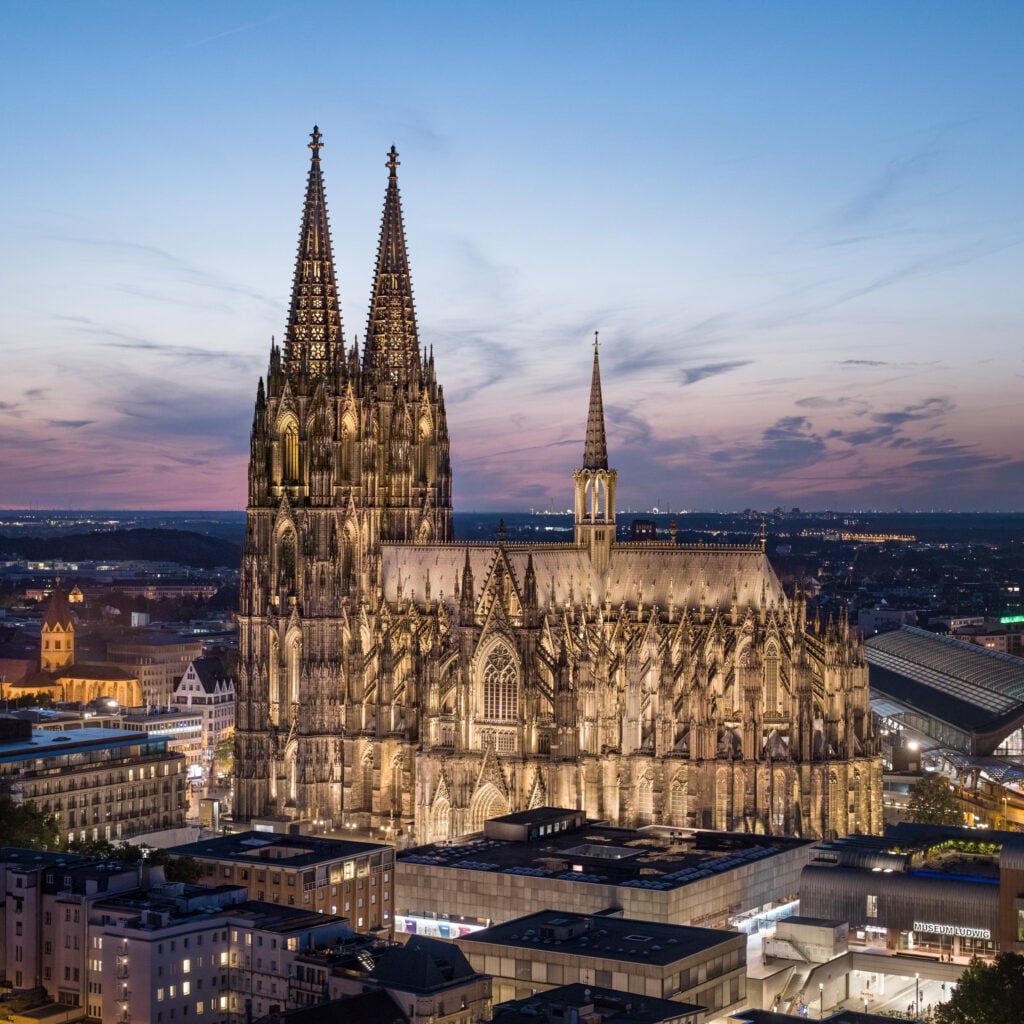
You cannot spec it from the desk. You have to go and stand in it.
The second thing light has, which gets mentioned even less, is an opposite. Light is only ever measured against the dark in front of it, and the dark has to be designed too.
In Melbourne, the practice SSdH turned an old warehouse called Tucker into a home and exhibition space, and it put the front door in the loading bay, under the faded sign painted there by the last owners (Dezeen, 17 November 2026). Behind it is a low Galvabond-clad entry that the architects describe as "deliberately compressed," a place where you stand for a moment in relative gloom before the plan opens into a double-height glass atrium. "We liked the idea of being held for a moment," they told Dezeen, "making the shift in scale and light feel more surprising." That entry is the most honest square metre in the building. Every client on earth wants the bright room. Almost none of them want to pay for the dim one in front of it, and without the dim one the bright room is merely bright, which is what an office is.
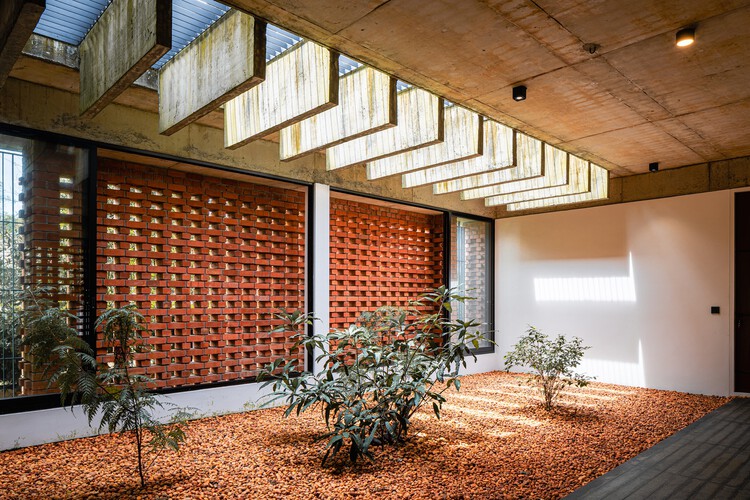
And the third thing is the most radical, because it takes the fixture away altogether. ArchDaily has been collecting houses across India built behind brick jali, the old perforated or latticed screen wall, reworked by a new generation of architects (ArchDaily, 25 September 2026). In these houses the light source is the wall. The same bricks cut the sun down to a moving pattern on the floor, keep the heat out, let the air through and decide how much of the street can see in. One material, four jobs, no wiring. Nobody will ever have to change a lamp in it. When people say light is a material, this is the version that is not a metaphor. The brick is the lamp.
None of which stops the word from being abused, and it is abused constantly. Light has become the free word. It costs nothing to say, it photographs beautifully, and nobody can check it on a drawing. A hole in a roof is described as "light." A double-height void is described as "light." Read enough project descriptions and you start to suspect that "light as a material" mostly means the architect made a hole and would like credit for the weather. The photographs are taken in the best ten minutes of the best day of the year, from the one position where the sun comes through the opening and lands on the one object that was styled to receive it. That is not light as a material. That is light as a model, booked for the afternoon.
The honest test is dull and repeatable. Stand in the room at four o'clock on a wet Tuesday in February, on the north side, with every fixture switched off, and ask whether it still knows what it is for. Then switch the fixtures on and ask whether they are following the room or flattening it. We have stood in a good number of finished rooms at night with every downlight in the ceiling burning, each one doing exactly what the drawing told it to do, and the room looking like a car park that someone had furnished. Nothing was wrong with any single fixture. The light simply had no idea where the building was.
Le Corbusier wrote in 1923 that architecture is the masterly, correct and magnificent play of masses brought together in light. People quote the masses. The interesting word is "brought." Somebody has to bring it, from a direction, at a cost, and decide where it stops.
Cologne spent years working that out on a building that has had eight centuries to wait. The light finally follows the stone. It took a long time to notice the stone had been waiting for it.