Ponti Could Tell You the Number
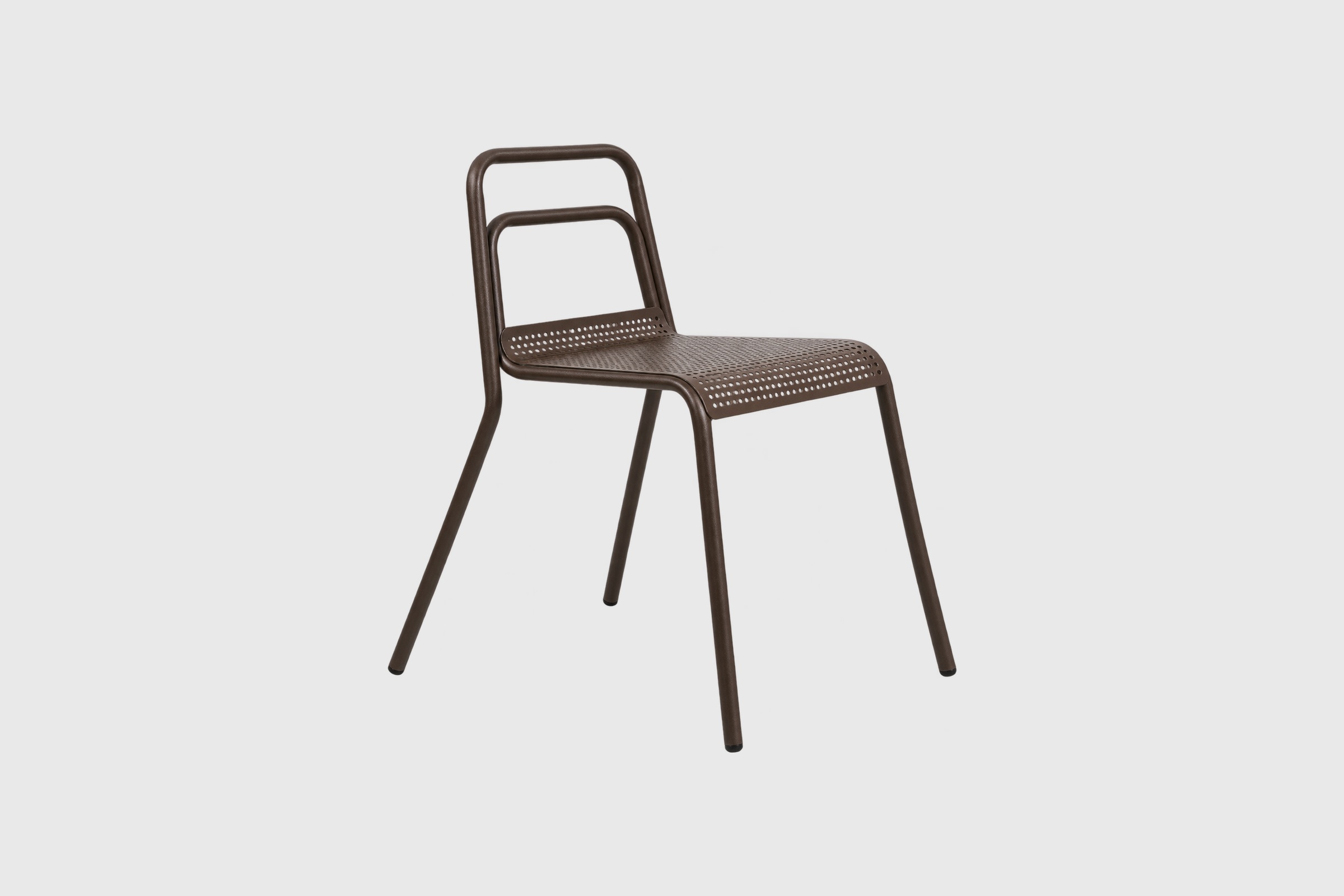
Leonardo Liendo's Settecento takes the silhouette of the 699 Superleggera and drops the one thing that made it an argument. What it picks up instead is a brief the original could never have passed.
One point seven kilograms.
That is the figure everybody repeats about Gio Ponti's 699 Superleggera, the ash chair Cassina put into production in 1957, and it is the reason the chair is famous rather than merely handsome. Ponti took the Chiavari fishermen's chair, a cheap vernacular thing made light because light was cheaper to ship, and he kept shaving at it: a triangular section on the leg so the eye sees an edge instead of a face, a caned seat, joints worked down until there was nothing left to remove without the chair becoming a story about a chair. Then he had people lift it with one finger. The one-finger photograph has been reproduced for seventy years, and people usually read it as a stunt about elegance. It is not. It is a measurement, performed in public, by a man who was willing to be held to it.
A number is the only part of a design that can be specified. Everything else is a preference.
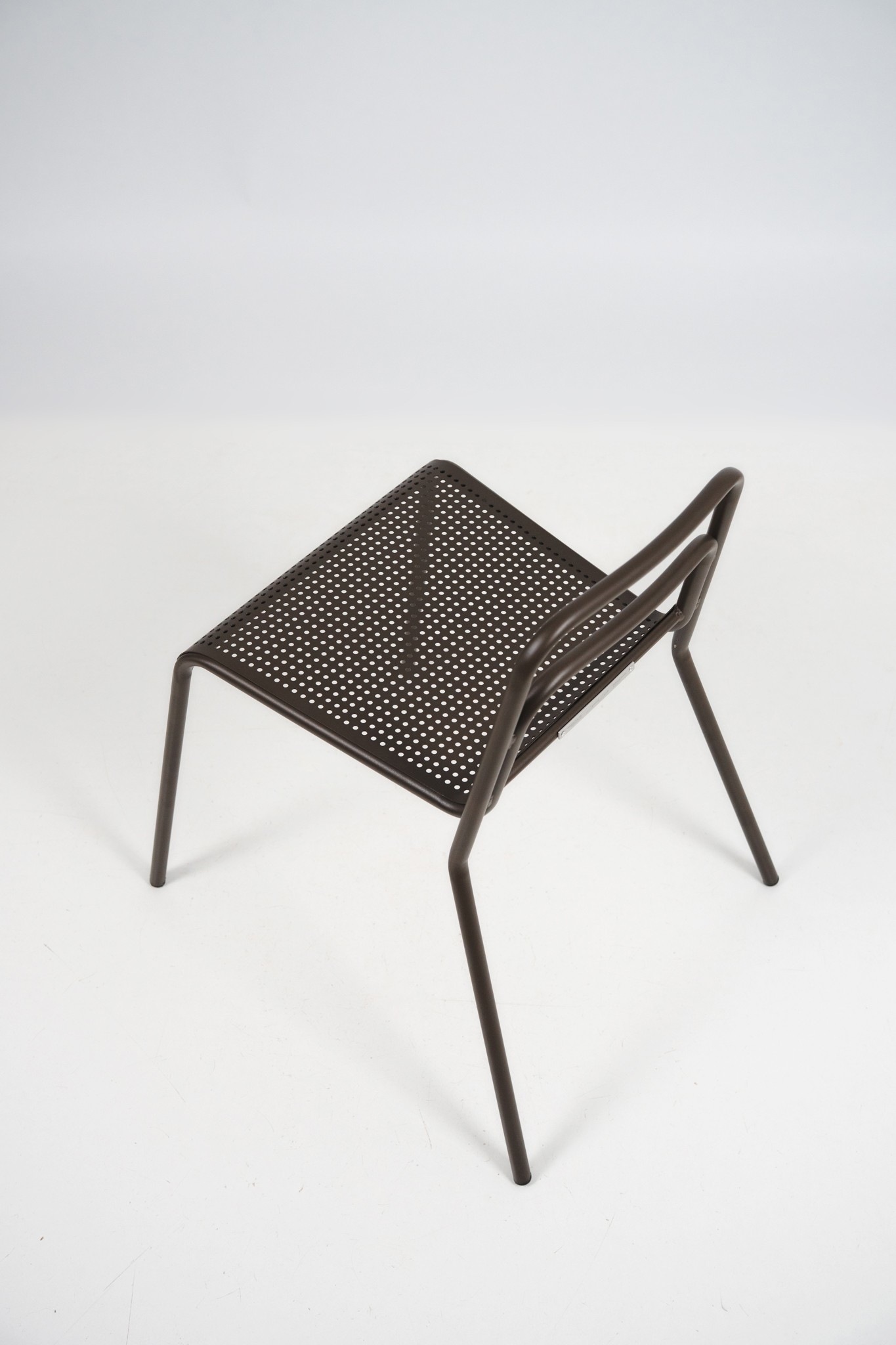
Which is what makes the Settecento interesting, and what makes it frustrating, in the same breath. Leonardo Liendo's chair, published this week by Minimalissimo, is openly a reinterpretation of the Superleggera: stackable, built for cafes and trattorias, its frame made from two continuous curved steel tubes that run the legs and the backrest in one gesture, its seat CNC laser-cut and perforated. The language around it says the chair "balances visual lightness with structural strength." Visual lightness. Neither Minimalissimo's piece nor the designer's own page gives a weight.
So the homage keeps the silhouette and quietly mislays the argument. A perforated steel pan is heavier than a caned ash frame and photographs lighter, and if the reference is the one chair in the twentieth century that turned lightness into a verifiable claim, then a press line about appearing light is a strange way to honour it.
Now the part where we give the object its due, because the object deserves it.
Ponti was designing for a dining room. Liendo is designing for a trattoria, and those are not the same problem wearing different upholstery. A caned ash chair cannot survive two hundred covers a day, a mop handle, a bus tub, a drunk leaning back on two legs, and eleven years of that. Hospitality seating is not specified on grams. It is specified on cycles to failure, on whether the finish survives sanitiser, on how many stack, on whether a nineteen-year-old can carry four of them in one hand across a wet floor. Measured against that brief, steel is not a compromise. It is the correct answer, and the two-tube frame is the correct way to get there, because every joint in a chair is a place where the chair will eventually come apart and a continuous bend is not a joint at all. The perforation earns its keep twice: it takes out mass that can be metered, and it lets spilled wine go through the seat instead of sitting in it.
That is Superleggera logic. Fewest parts, no decoration doing structural work, material asked to perform two jobs at once. It arrives by way of a different canon than the one the chair names.
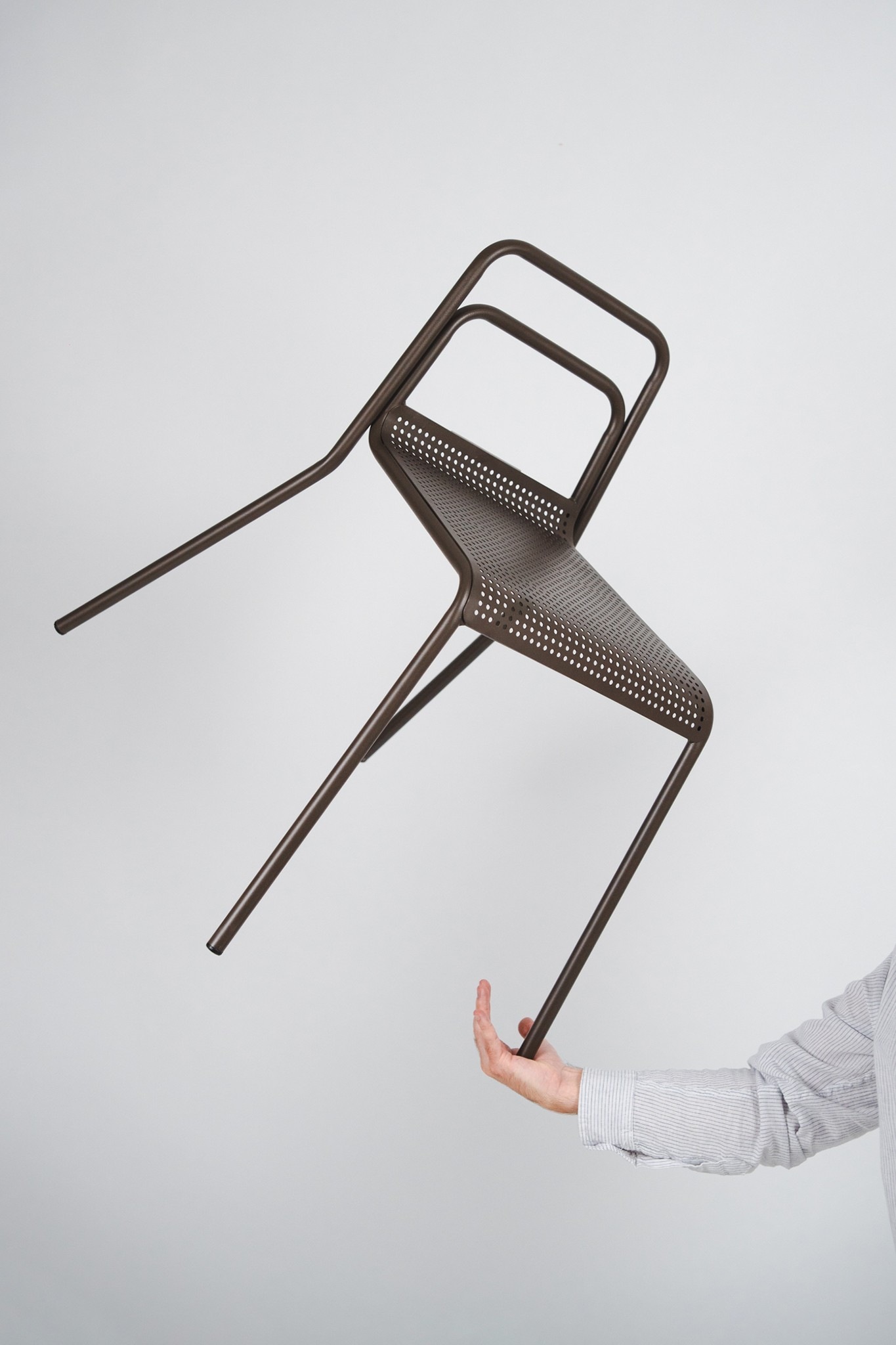
Because the method here is not Italian. It is Marcel Breuer's. Breuer worked out in the 1920s that a single continuous steel tube could do the leg and the arm and the back in one run, and by the time of the chair the world later renamed Cesca he was pairing that bent tube with a caned seat and a wood frame, which is very nearly the parts list the Settecento is working from. Ponti subtracted until wood could go no further. Breuer changed material so that subtraction was no longer the method. The Settecento wears Ponti's profile over Breuer's thinking, and that combination is more interesting than the homage it advertises, so somebody should say so out loud.
Here is the number we actually want, and nobody ever prints it. How high does it stack.
Stack height is an architectural dimension and the trade treats it as a purchasing footnote. Eight chairs high or five chairs high decides the depth of the store cupboard, and the store cupboard decides whether the wall behind the bar moves, and that wall decides the seat count, and the seat count is the business. We have moved a partition over 200 millimetres because of a chair, and we have watched operators lose a table forever because nobody asked for the figure before the order went in. A chair that nests cleanly, without scraping the finish off the one beneath it, and stands up stable at full height on a sloping cellar floor, is doing more for the plan than the plan usually admits.
None of which photographs well, which is the whole trouble. The pictures get made for the people who choose the chair and never once carry it. Somewhere in this chair's future there is a closing shift, half past one in the morning, floor still wet, and somebody is lifting these four at a time and has formed an opinion about the designer that the designer will never hear.
Ponti would have given us the weight. He gave it to us in 1957 and he gave it to us because he knew the figure was the point, and the chair has outlived him and the company has outlived him and the number is still right there, repeatable by anybody with a scale.
Publish the number. The object can take it.