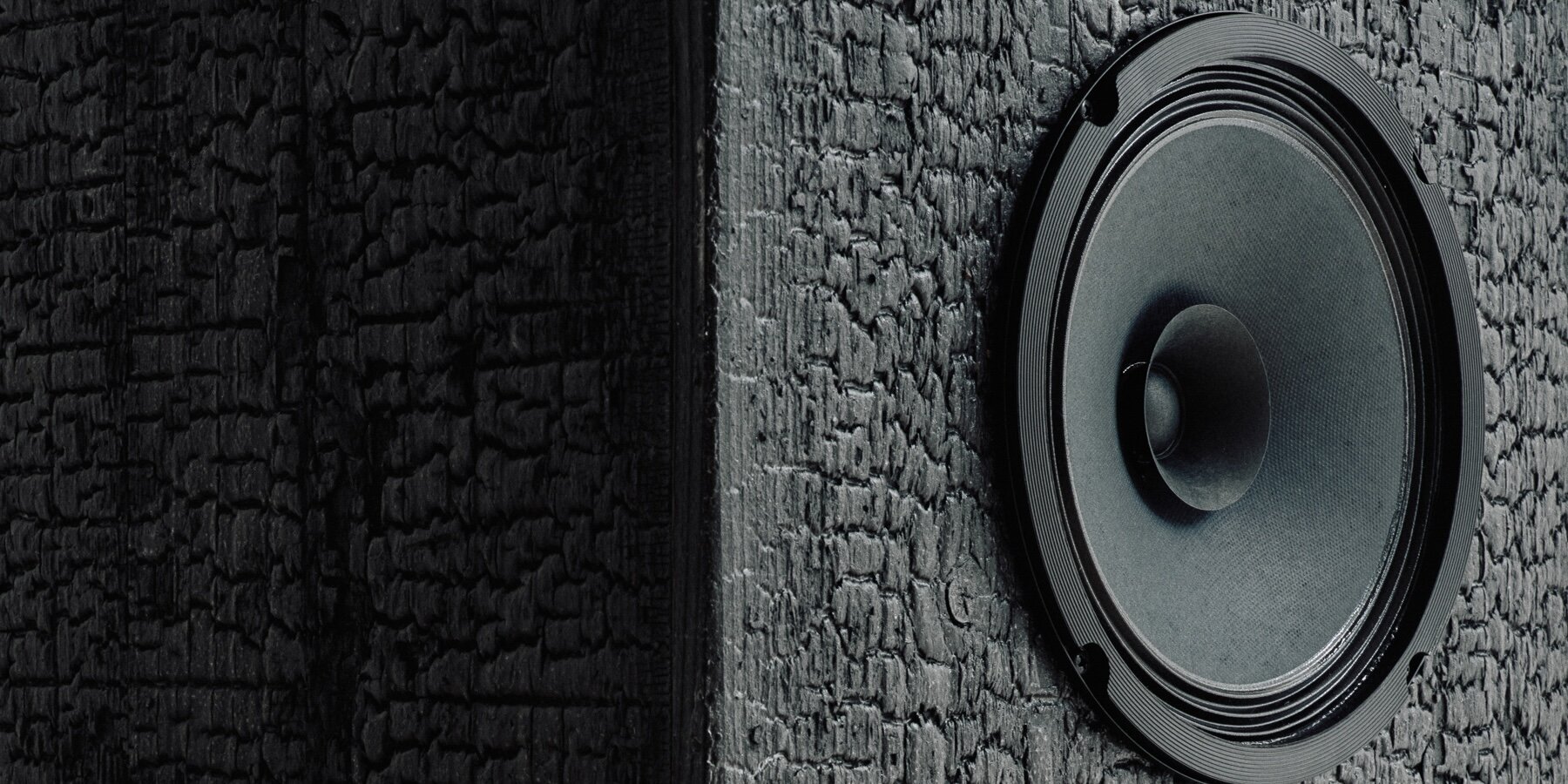
Yakisugi is a way of keeping a cedar board alive. You char the face of it, which is to say you burn off the part of the wood that rot and insects want, and you leave behind a hard carbon skin that sheds water and resists fire. Japanese builders worked this out because they were building timber houses in a country that burned down regularly, and they needed the exterior of a wall to last longer than the person who nailed it up. It was not a mood. It was a wall assembly.
VOID Inc., in Tokyo, has just put it on a loudspeaker.
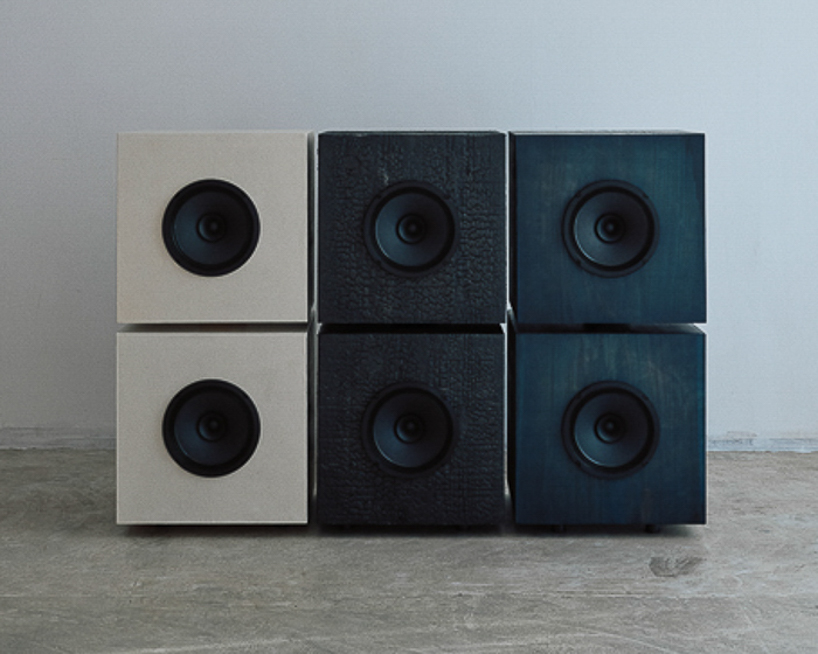
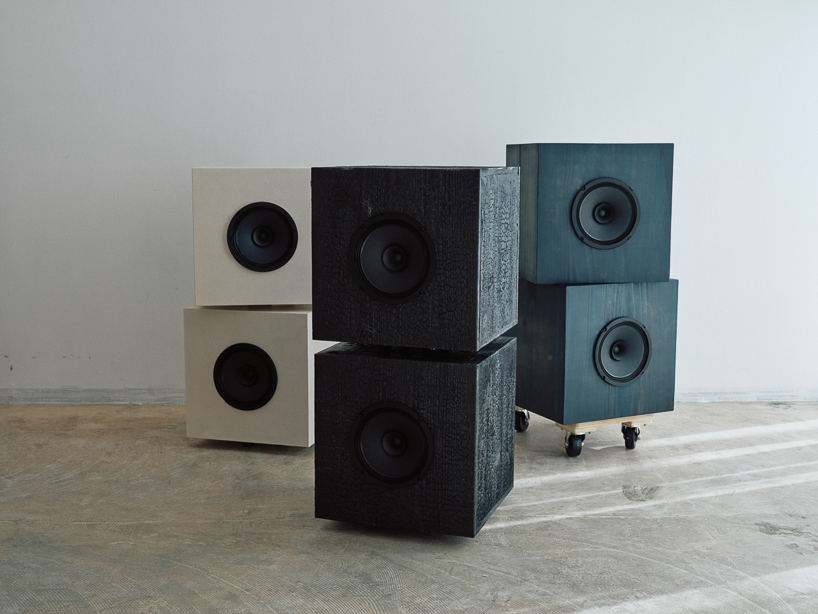
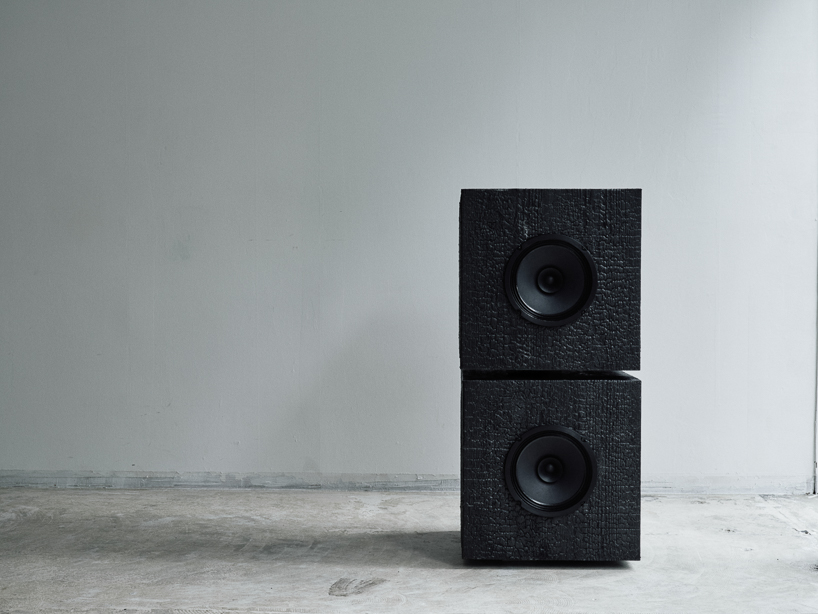
The label is called Animism Objects, and it is being shown during London Design Festival. According to designboom, it draws on the San'in region, where, as the piece puts it, "Japan's creation myths have been passed down for more than a millennium," and it uses three techniques from there: washi, made by hand from natural plant fibres; aizome, traditional indigo dyeing; and yakisugi, which designboom correctly describes as charring the surface of cedar boards "to increase durability and fire resistance." designboom notes that the finished surfaces keep "visible traces of their making," which is true, and is the whole appeal, and is also the part we want to argue with slightly.
Because here is the awkward fact sitting underneath a very handsome object: a loudspeaker cabinet's job is to do nothing.
That is not a slight. It is the brief. A cabinet is a box whose entire purpose is to have no opinion. It should be stiff enough not to flex when the driver pushes against it, heavy enough not to walk across the floor, and dead enough that its own panels do not sing along with the music. Every decision in a speaker enclosure is either serving mass, stiffness or damping, or it is finish. There is no third category. A charred cedar face is not making the box stiffer. It is not stopping a panel resonance. It is beautiful, and it is a skin, and it is being asked to weather a storm that will never arrive because the object lives on a shelf in a living room.
So that is the puncture. Now the admiration, which is larger.
What is actually interesting here is not that three crafts got applied to an audio product. It is that all three of them were engineering before anybody called them culture. Washi was not made to look handmade. It was made from long plant fibres because long fibres produce a sheet that will hold together for centuries, which is what you need when the sheet is carrying a document, or a window, or a wall that people slide. The char on a cedar board was a durability spec and a fire spec, both of which a modern product data sheet would express as a number. These were answers to questions, and the questions were about weather, and vermin, and time, and money.
Then the questions got answered other ways. Cement board arrived. Vinyl arrived. Intumescent coatings arrived, and they came with test data and a warranty, and they cost less. The old answers did not stop working. They just stopped being the cheapest correct answer, and a technique that is no longer the cheapest correct answer gets moved, quietly, into a different department. It becomes heritage. It gets a paragraph about ritual and memory instead of a line about fire resistance.
We do this ourselves, and we should be honest about it. We have specified charred timber. It goes on rain screens. The spec sheet talks about durability and reduced maintenance and a surface that will not need a coating in ten years, and all of that is real and defensible and we can put our name on it. It is also, in most cases, not why the client said yes. The client said yes because the wall is black and matte and has a texture like the inside of a chimney, and it makes everything you put in front of it look considered. Two things are true at once. The failure is not wanting the look. The failure is writing the look into a drawing as if it were the performance, and then acting surprised when somebody values the alternate.
Here is the part that makes us want this speaker to sell well.
A craft is not preserved by being admired. It is preserved by being ordered. The papermaker and the dyer and the man with the torch do not stay in business on reverence, they stay in business on invoices, and a museum vitrine has never once generated an invoice. If a Tokyo audio company wants to put a London Design Festival launch behind a regional cedar-charring trade, that is a better outcome for that trade than another documentary. The knowledge lives in hands. Hands need work.
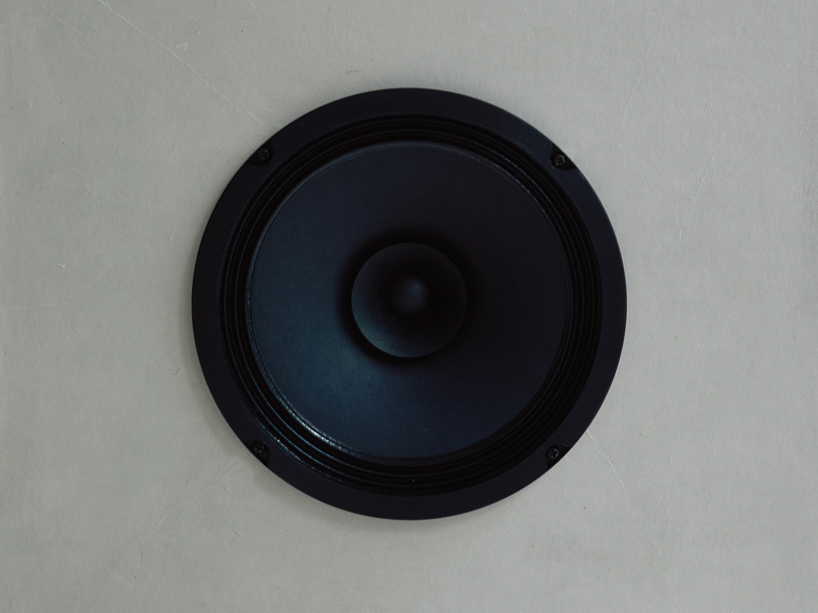
There is also a quiet joke in the pairing that we suspect is intentional. Animism is the idea that objects have something in them, a character, a presence, a life. A loudspeaker is the one object in your house that actually does speak, and the entire discipline of designing one is devoted to making sure the box itself contributes absolutely nothing to what you hear. You spend the money to silence the enclosure. Then you wrap the silent thing in surfaces that will not shut up about where they came from.
We would take it. A box that has to keep quiet, finished by three trades that spent a thousand years learning how to make a surface survive the weather, sitting indoors on a shelf, out of the rain, doing none of that work, and looking like it could.
Sources & Credits
- Wataru Kiruta, "three centuries-old japanese craft traditions converge in loudspeaker collection", designboom, 14 September 2026. https://www.designboom.com/technology/three-centuries-old-japanese-craft-traditions-loudspeaker-collection-animism-objects/
- Animism Objects is a loudspeaker label by VOID Inc., Tokyo, presented during London Design Festival 2026. All quoted phrases are from the designboom article above.
- Photography courtesy Animism Objects, via designboom.