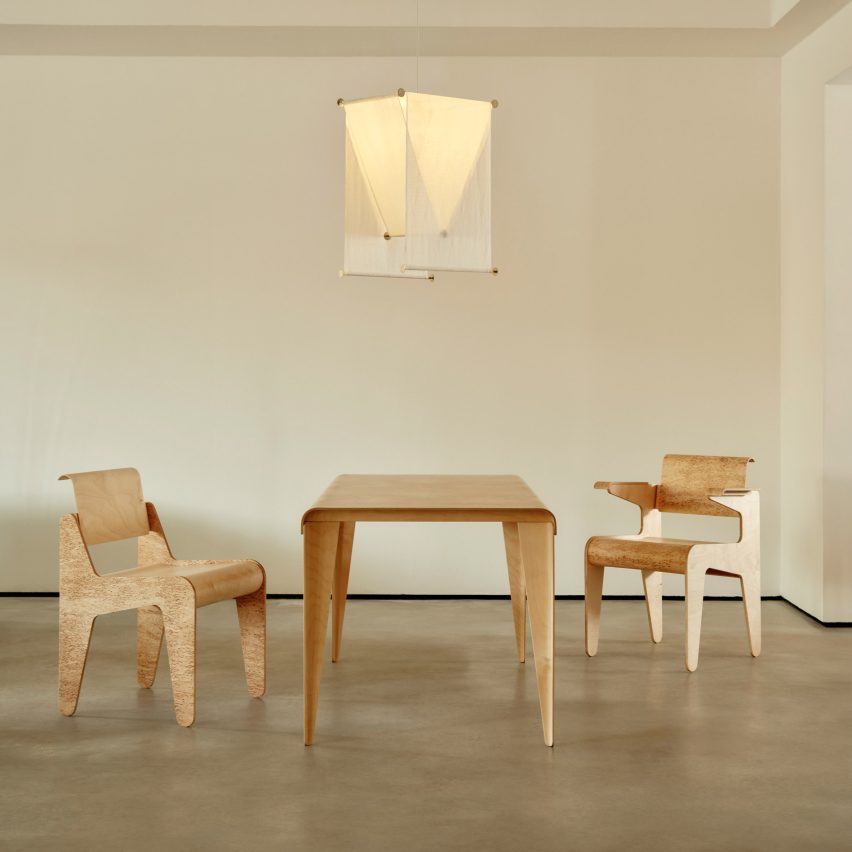
Masur birch is figured because something went wrong in the tree. The swirls and the small dark knots that make the veneer worth having are, according to the timber trade, the result of fungal or bacterial activity working through the growing wood. It is a pathology that happens to photograph well. You cannot plant it on purpose, and you cannot order much of it, and the people who sell it will tell you plainly that it arrives when it arrives.
Béton Brut and Isokon have just wrapped four Marcel Breuer designs in it.
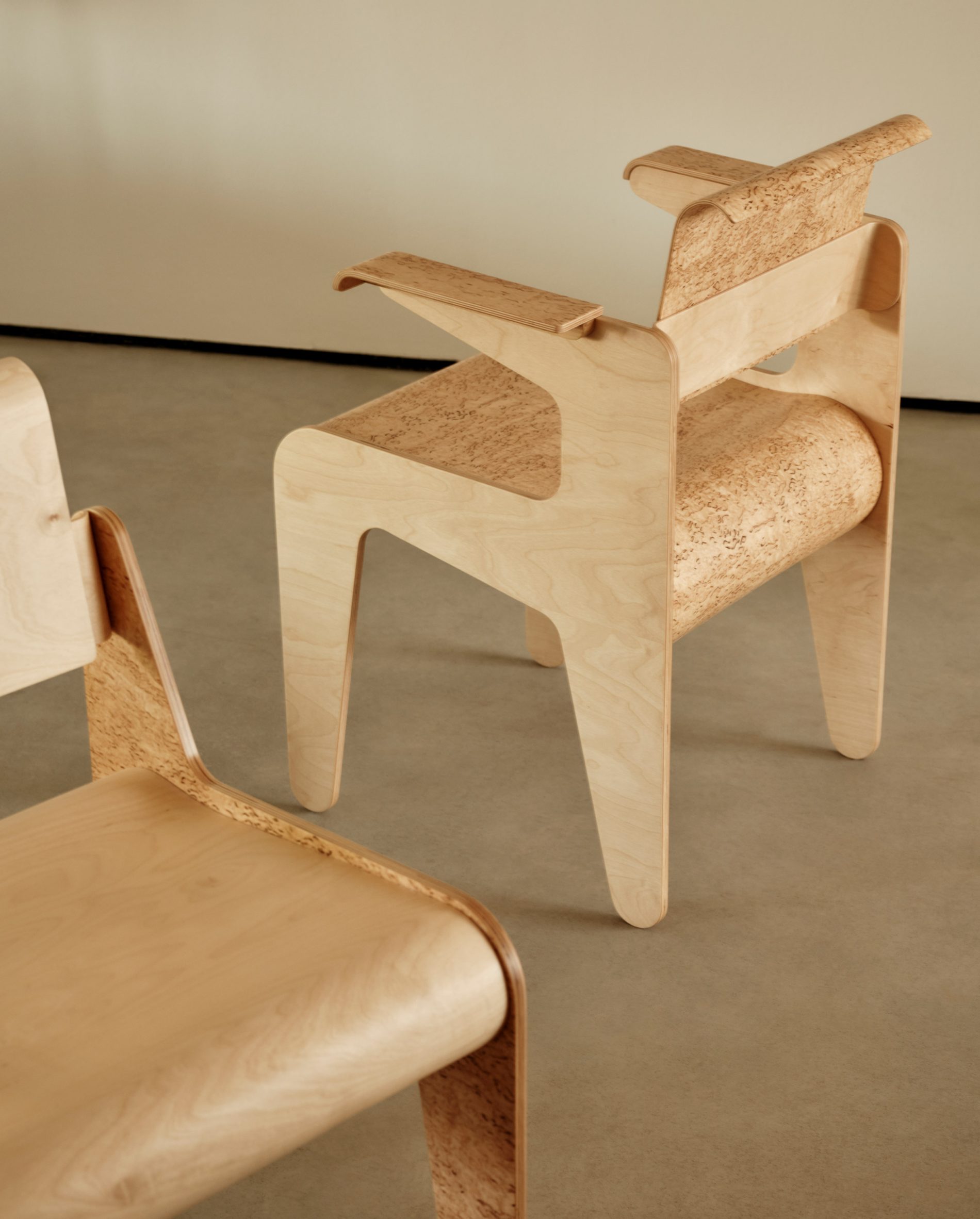
The collection is called Masur Edition, and it launches at London Design Festival this month at the gallery's showroom in east London. Dezeen reports that it comprises four pieces, all drawn in 1936: the Cut-Out Armchair, the Cut-Out Chair, the Isokon Nesting Tables and the Isokon Dining Table. Ninety years, near enough, since Breuer put them on paper as chief designer for a plywood company. Prices start at £1,300. There is no set edition number. Everything is made to order, with a lead time of ten to twelve weeks, because as Béton Brut founder Sophie Pearce told Dezeen, "masur veneer is scarce and difficult to source in high volume."
The obvious objection writes itself, and we are not going to make it, because it is wrong.
The objection goes: Breuer's Isokon work was an argument for the honest, unadorned, engineered sheet, and dressing it in a rare decorative veneer is a betrayal of the whole point. Pearce has already answered this, and her answer is better than the objection. "Historical examples produced during his time as chief designer at Isokon featured a range of finishes," she said, "demonstrating plywood's capacity for material variation and expression." The record backs her. Breuer's pieces for Isokon were built in plywood and also finished in sycamore, in zebrano, in mahogany, in Australian walnut. The unadorned version is not the original. It is the version that later taste sanded down to, and then went back and called authorial intent.
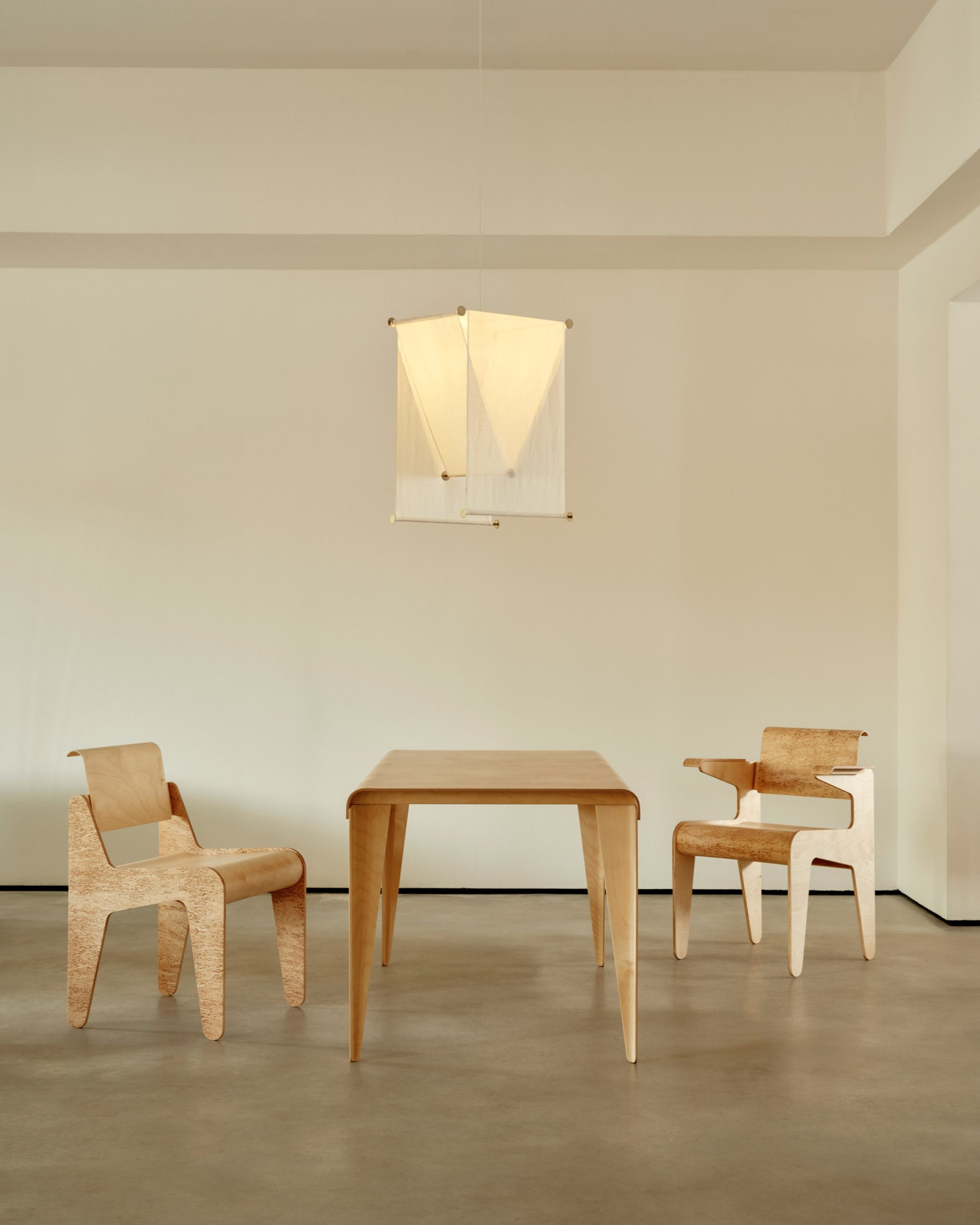
There is a deeper reason the purity argument fails, which is that these designs were already a substitution when they were new. Breuer had spent the previous decade bending metal. The Isokon pieces are what happened when that vocabulary landed in a country with a plywood industry, a furniture company run by a man who had made his living selling plywood, and a set of economic conditions that did not favour chromed tube. The forms moved from one material to another because the material was there. That is not a fall from grace. That is how anything gets built. Ninety years later somebody has moved them again, into a veneer, and the operation is identical. It is just running at a different price.
What actually changes is not the honesty. It is the arithmetic.
Plywood is a material that exists to average out accident. You peel a log into sheets, you cross the grain of each layer against the last, you glue the stack, and what comes out the other side is a panel that moves the same amount in every direction and behaves the same way in every unit you make. Defects get distributed. Variation gets cancelled. That predictability is not a side effect of plywood. It is the product. It is what let a company in the 1930s imagine making a good chair many times, for people who were not rich, out of a tree that was not special.
Masur birch is the exact inverse of that proposition. It is scarce, it cannot be specified by the sheet, it will not repeat, and it is worth money precisely because it did something no other log did. Pearce is candid about what it does to the work: "Chosen for its elusive, graphic character, masur birch introduces a psychedelic quality to Breuer's precise modernist forms." She also says the figuring "creates a striking contrast with the clarity and restraint of the designs." That is an accurate description of an object, and we would rather have it than a press release claiming continuity.
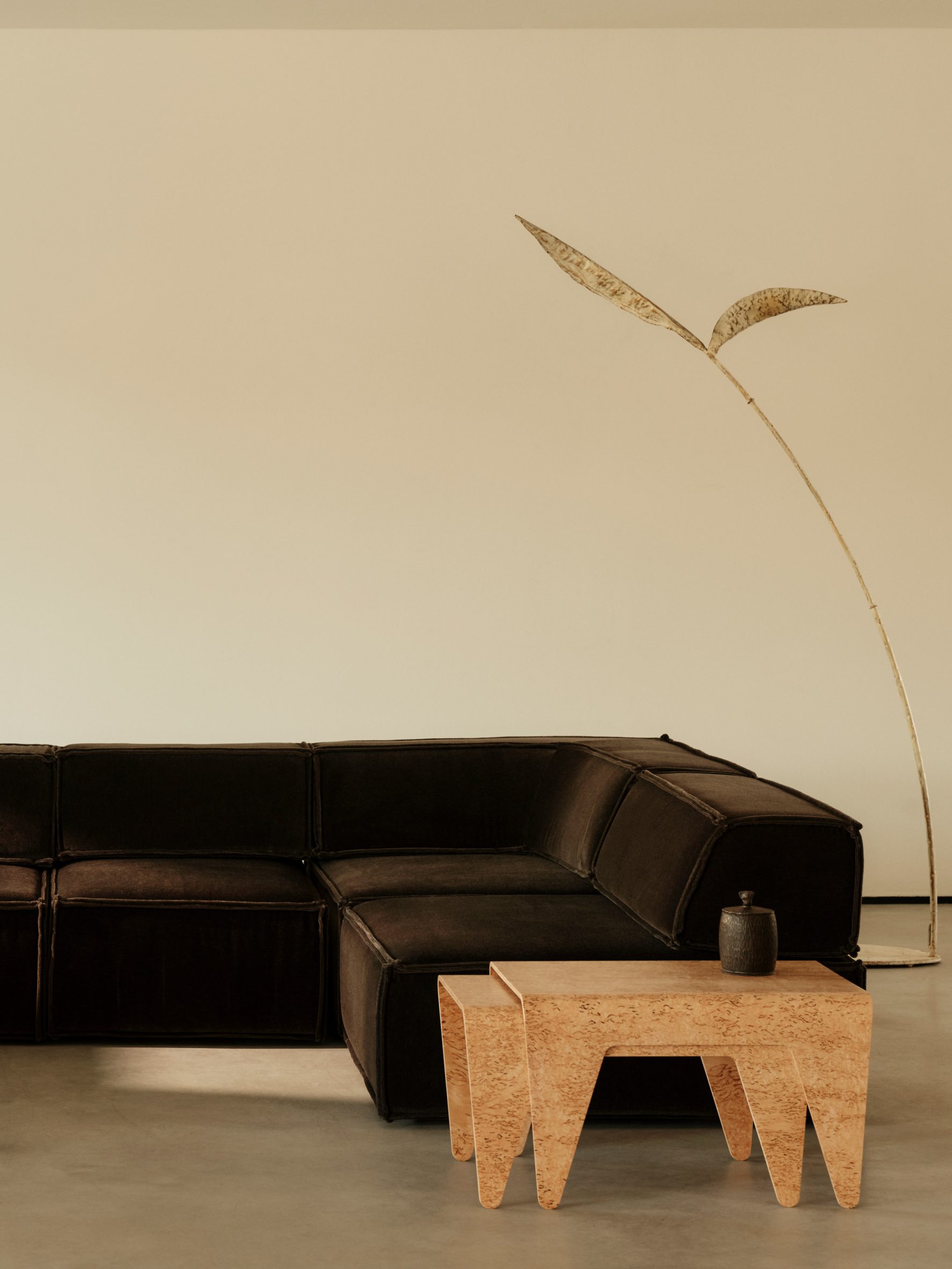
So here is the thing worth saying out loud. A 1936 chair aimed at the ordinary buyer is now a ten-to-twelve-week made-to-order gallery piece in a veneer that arrives when a fungus decides it will. Nobody did anything dishonest to get here. The market did it, slowly, the way it does it to every good cheap thing that survives long enough to become a good expensive thing. Eames chairs went the same way. So did the Navy chair. So will something being drawn this afternoon by somebody trying to make it affordable.
We specify veneers constantly, and we tell clients the same sentence every time: a figured veneer is a photograph of a problem the tree had, and you cannot get it twice, and if you want the run to match you buy the whole flitch now and store it. That is not romance. That is a purchase order. The sequence matters, the lead time matters, and the day the veneer shows up is the day the millworker finds out what the job actually looks like.
None of which is an argument against the Masur Edition. We would like to see it. Four pieces that have been in continuous production long enough to outlive the century they were drawn in, put back into a finish they wore before the story got tidy, made slowly because the material will not permit speed.
Breuer drew a chair for a company that sold engineered sheet. The chair has now outlasted the argument for it, and it is standing in a gallery wearing a skin made by an infection, and it still looks like a chair you would want.
Sources & Credits
- Cajsa Carlson, "Béton Brut and Isokon reimagine Marcel Breuer furniture in masur birch", Dezeen, 9 September 2026. https://www.dezeen.com/2026/09/09/beton-brut-isokon-marcel-breuer-furniture-masur-birch/
- All quotations are Sophie Pearce, founder of Béton Brut, speaking to Dezeen in the article above.
- Masur Edition is on show at Béton Brut, Unit 2, 30 Felstead Street, London, 12 to 20 September 2026, as part of London Design Festival.
- Photography: Ben Anders, via Dezeen.