Eighteen Towers and a Wrong Turn
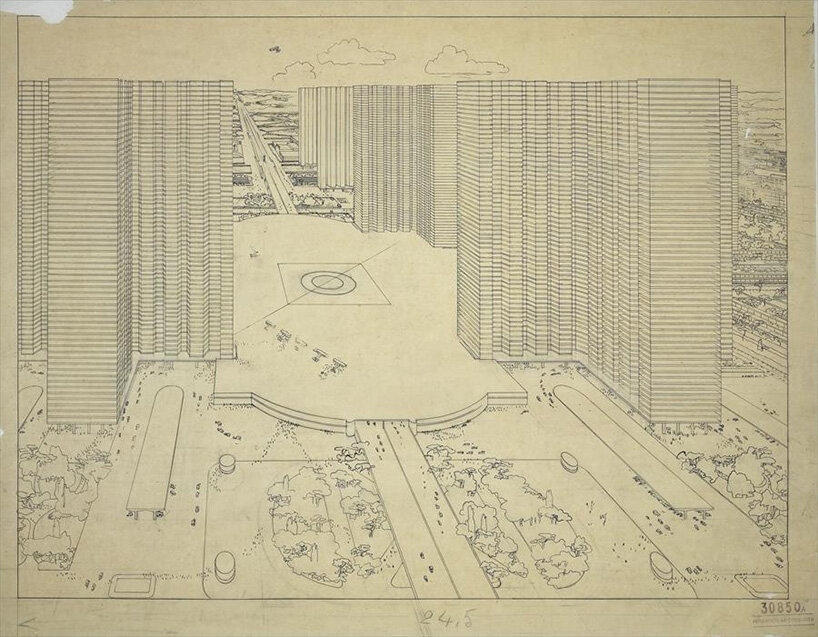
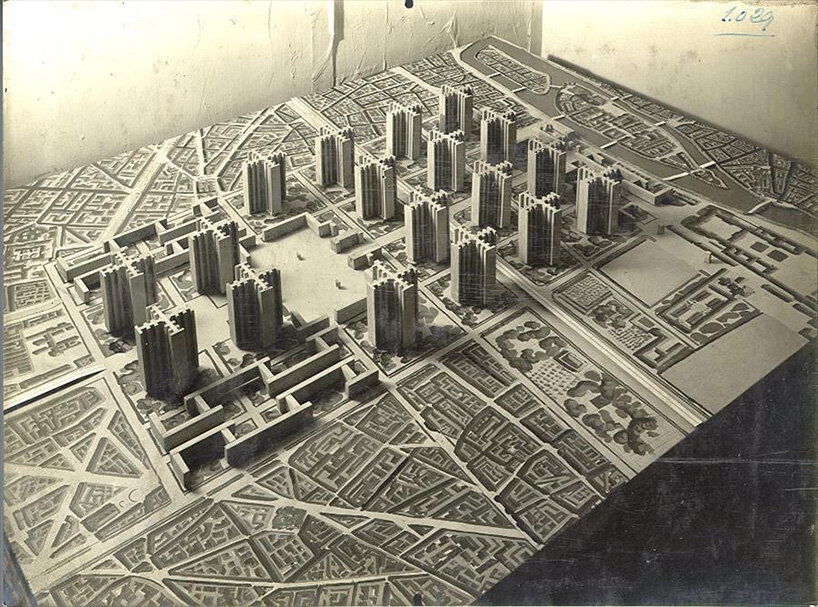
Eighteen cruciform office towers, standing in open landscape, with the housing kept somewhere else and the roads sorted into a hierarchy so that nobody in a car ever has to meet anybody on foot. That was Plan Voisin, drawn in 1925, and it would have taken out most of the Marais to do it. The Louvre was to be spared. Palais-Royal and Place Vendome were to be spared. The rest of it, the part made of ordinary buildings where ordinary people were living at the time, was arithmetic.
It never got built. It got everywhere anyway. designboom, running the scheme alongside its opposite number this week, puts the inheritance plainly: the separation of functions, the stacking of buildings vertically and the priority given to circulation and open space "continued to shape architectural thinking through the development of the Ville Radieuse and the Athens Charter" (designboom). Plan Voisin lost Paris and won the century.
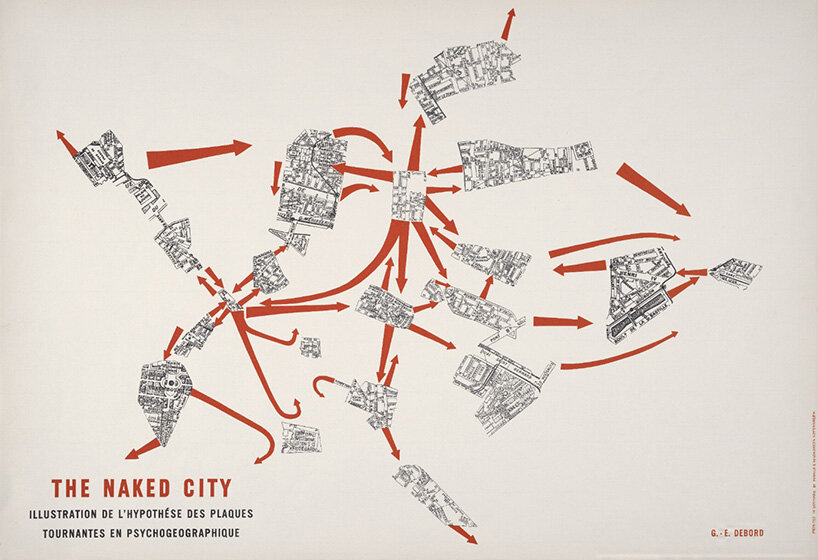
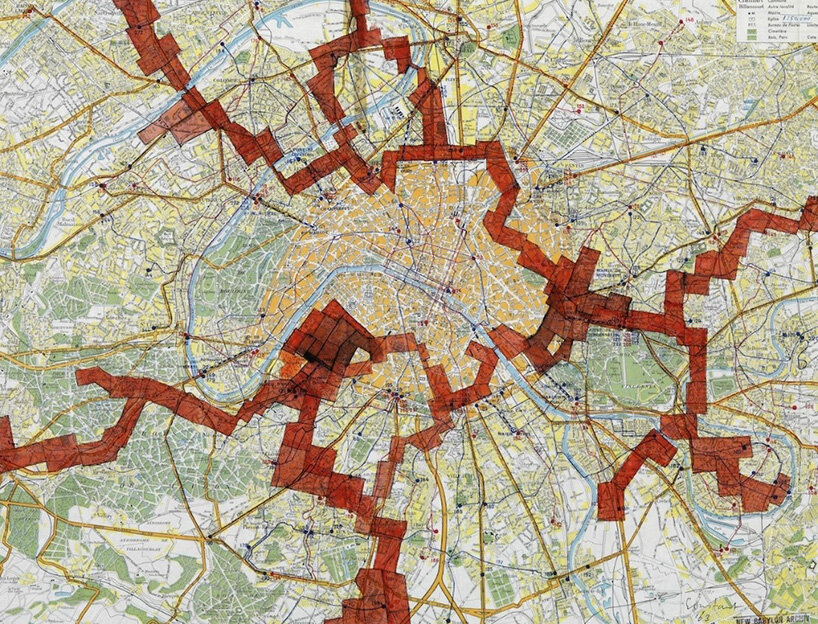
Twenty-eight years later a nineteen-year-old called Ivan Chtcheglov wrote the rebuttal under a false name, Gilles Ivain, and he was not polite about it. He said Corbusier's architecture suited "factories and hospitals" and he wanted "new, changeable decors" instead, cities that could be rearranged by the people inside them. His prescription was drifting. "The main activity of the inhabitants will be CONTINUOUS DRIFTING," he wrote, and the capitals are his, and what he expected from it was "total disorientation" (designboom).
So that is the usual story. The planner against the wanderer, the grid against the detour, cold rationality against warm human mess, and everybody picks the side they were always going to pick.
We think the usual story has it backwards.
Chtcheglov drew a plan too
Read what he actually proposed. A city divided into quarters by feeling: a Bizarre Quarter, a Happy Quarter, a Noble and Tragic Quarter, a Sinister Quarter that would unsettle you without ever being dangerous. Houses that move with the sun. Walls that slide back to let the plants in. Rooms set aside for dreaming.
That is not the absence of a plan. That is a programme, and a tighter one than Corbusier's, because Corbusier only told you where to work and where to sleep and Chtcheglov is telling you how to feel while you do it. One man zoned the day. The other man zoned the mood. Both of them sat down with a sheet of paper and decided in advance what would happen to a stranger walking through.
Which puts the real question somewhere less flattering to both of them. Not order against freedom. Just this: of all the things that can be settled before anyone moves in, which ones do you settle, and which ones do you leave alone on purpose.
The drift was a planning output
Here is the part the romance of the derive tends to skip. You cannot wander around a tower in a field. There is one way in. You can wander in the Marais because the Marais is made of small blocks and short frontages and odd corners and a great many decisions about where to turn, and all of those are planning decisions, made centuries ago by people subdividing land for money.
Drifting is not the opposite of planning. Drifting is a thing a plan either supplies or withholds, and the variable is block size. Chtcheglov's great quarrel with Corbusier was conducted in the language of mood, but the argument underneath it was about the length of a street before you get a choice. Corbusier proposed to make that length very long. Everything else followed.
Which is our problem, at a smaller scale
We build plain rooms. The accusation that comes with that, and it is a fair one to make, is that a plain room is Plan Voisin shrunk down: everything resolved, nothing left loose, the occupant handed a finished object and asked not to touch it.
The defence is a distinction about what gets decided. Settle the permanent things, the ones a person cannot change later anyway. Where the structure lands. Where the light comes from and at what hour. How heavy the door is. Then stop, and leave undecided everything that moves, which is most of a life: what goes in the room, where the chair ends up, which corner somebody claims, what the room is for in five years.
By that measure a Sinister Quarter is the more controlling proposal. It has decided your mood before you arrive. A bare wall and one long rectangle of sun has decided almost nothing except that you will be able to see, which is why Tadao Ando's rooms feel like permission rather than instruction.
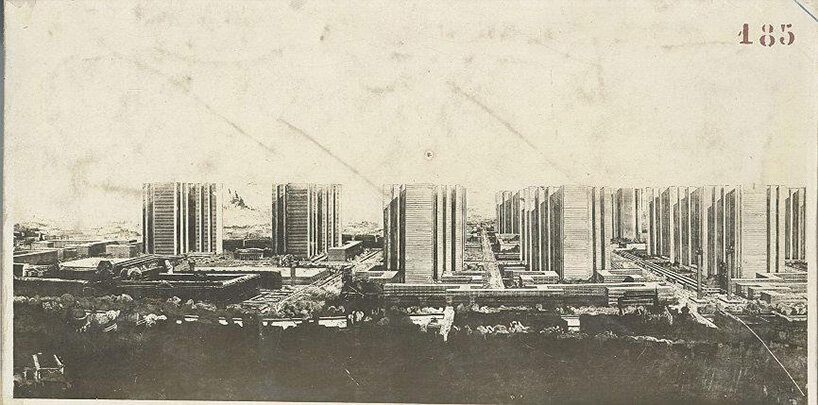
Corbusier decided the circulation and assumed the feeling would sort itself out. Chtcheglov decided the feeling and assumed the circulation would sort itself out. Both assumptions were wrong in the same way, and both men were doing the same job, and the difference between them is a question of where they stopped drawing.
Every drawing stops somewhere. That is the whole discipline. Everything past the edge of the line belongs to whoever shows up.
Sources & Credits
- "where le corbusier's plan voisin sought to organize paris, chtcheglov chose to drift," thomai tsimpou for designboom, 30 September 2026. https://www.designboom.com/architecture/le-corbusier-plan-voisin-paris-ivan-chtcheglov-ville-radieuse-formulary-new-urbanism/
- Quotations from Ivan Chtcheglov's "Formulary for a New Urbanism" (written 1953 under the pseudonym Gilles Ivain) are quoted as printed by designboom at the link above.
- Photography and images: Plan Voisin, Paris, FLC/ADAGP, via designboom, https://www.designboom.com/architecture/le-corbusier-plan-voisin-paris-ivan-chtcheglov-ville-radieuse-formulary-new-urbanism/
- Photography and images: Asger Jorn and Guy Debord, The Naked City, 1957, published in Guide psychogeographique de Paris, via designboom, same link.
- Photography and images: New Babylon-Paris, 1963, Constant Nieuwenhuys, image via constant.101, via designboom, same link.
No images in this post are Common Projekts photography.