The Mesh Was Dipped in Paper
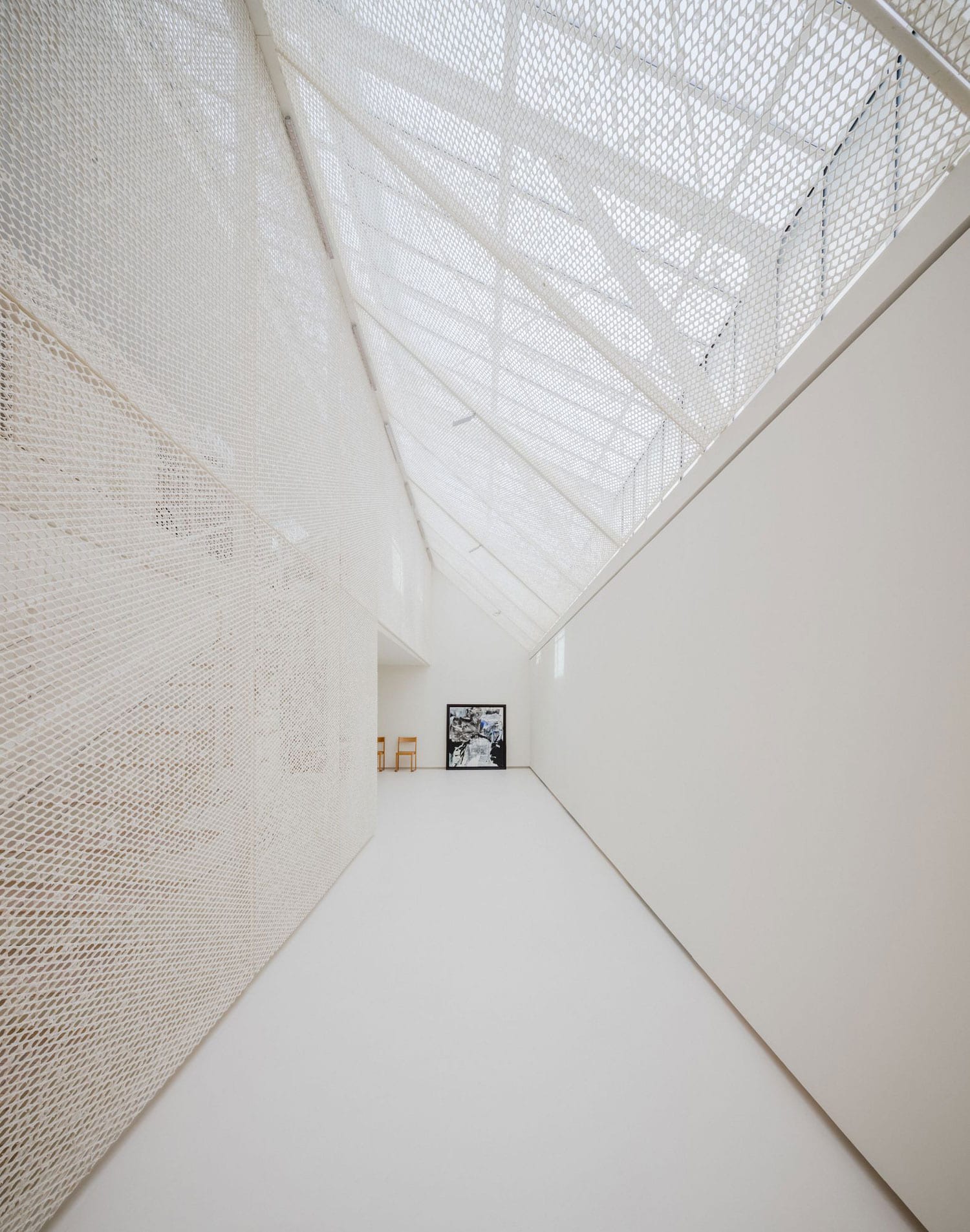
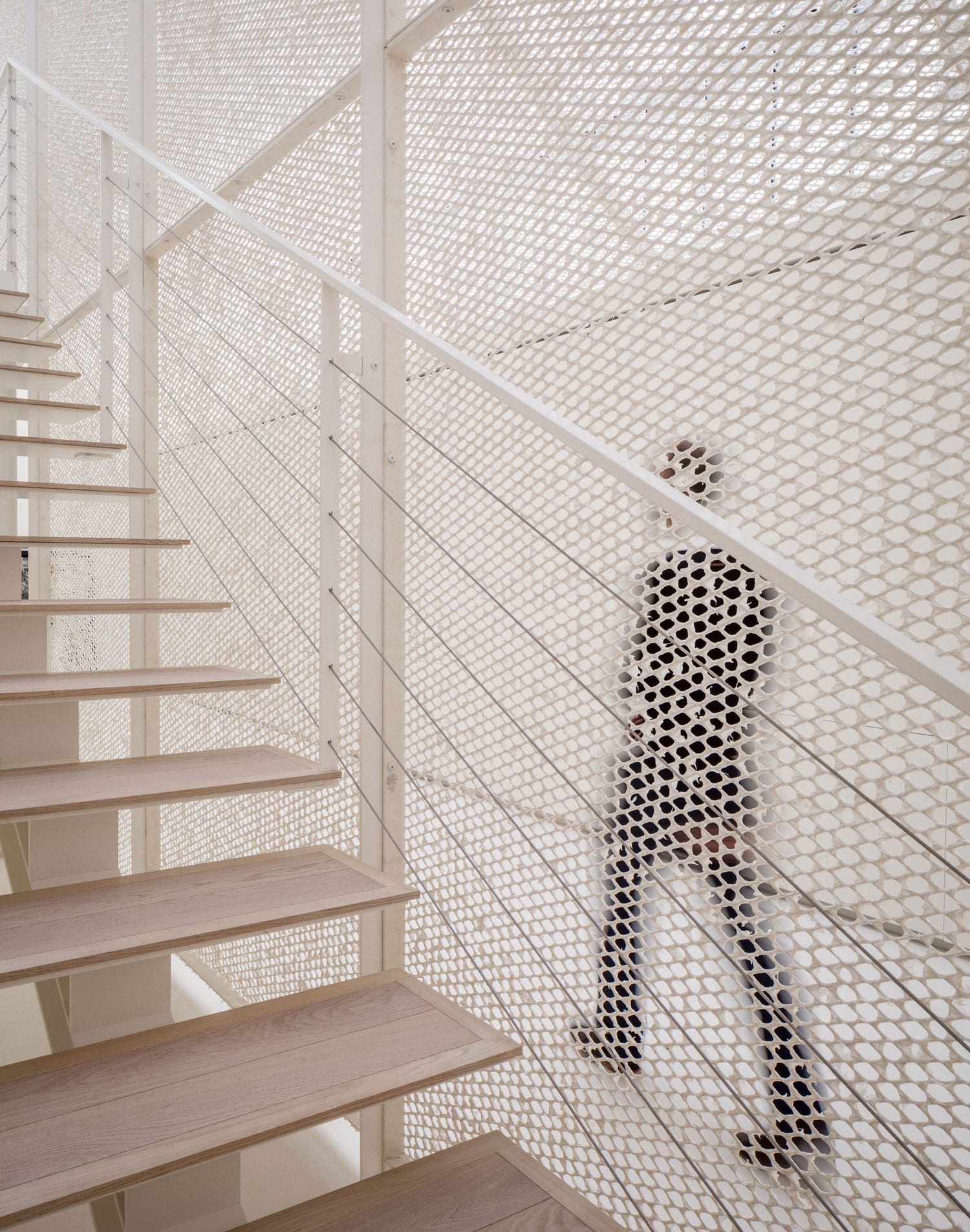
Two hundred and forty square metres in the fourteenth arrondissement, a gallery with a small mezzanine office above it, built to hold the archives of the Catalan painter Antoni Clave, who died in 2005 and left behind the usual inheritance of a long career, which is paper. Kengo Kuma and Associates finished it in December 2017. The thing everybody notices is the screen around the stair, and the screen is made of paper.
Yellowtrace, which covered the project, leads on exactly that collision: "Paper is perhaps the very last material one would think of when approaching a project of architecture" (Yellowtrace). It is a good line and it is the wrong way round. Paper is the first material a conservator thinks of. Japanese tissue is what you reach for when a torn drawing or a lifting paint layer needs holding together, because the fibres are long and strong and they age without turning on the thing they are stuck to. Of everything in that building, the screen may well outlast the collection.
How it was actually made
This is the part worth copying out, because it is a fabrication method and not a finish.
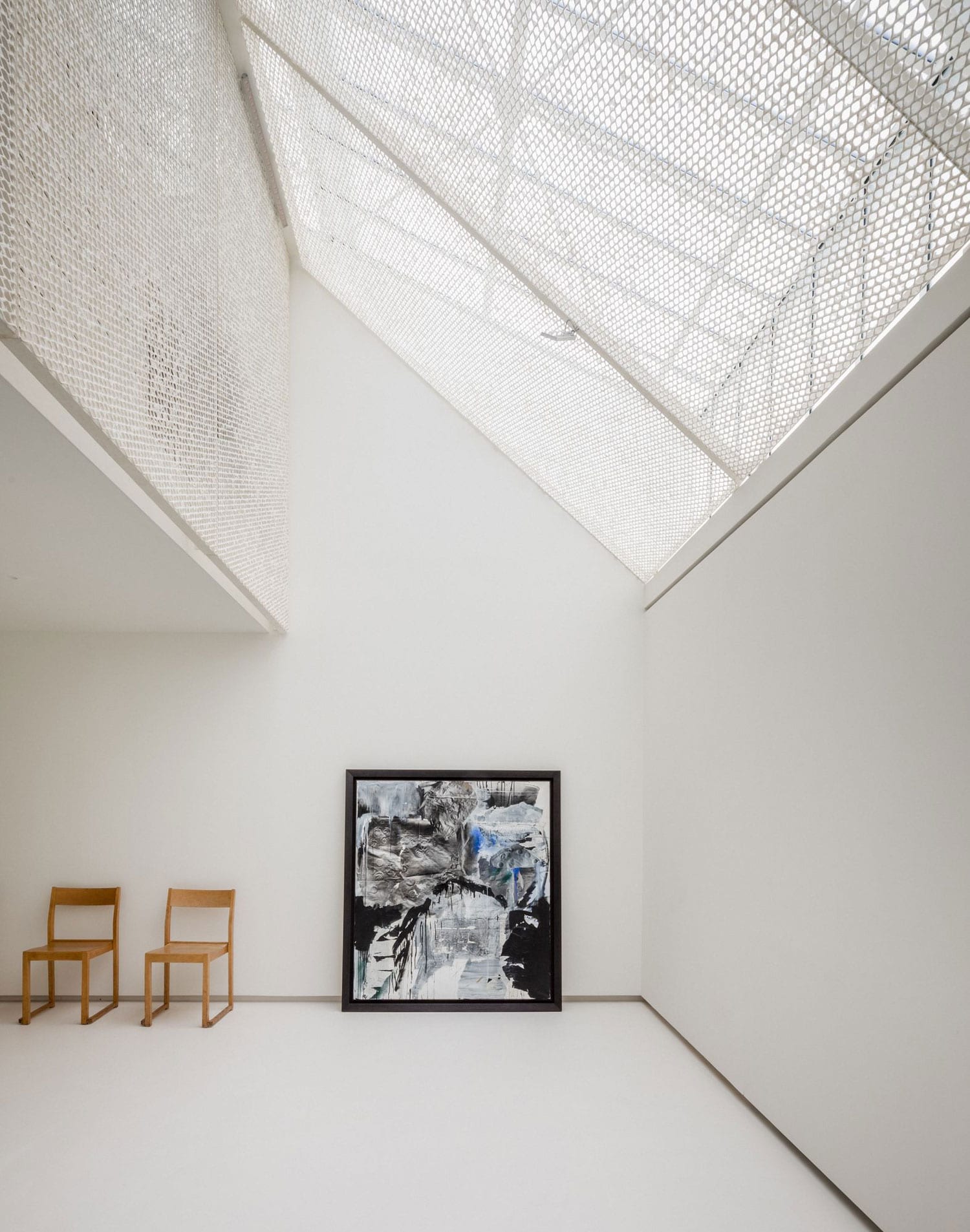
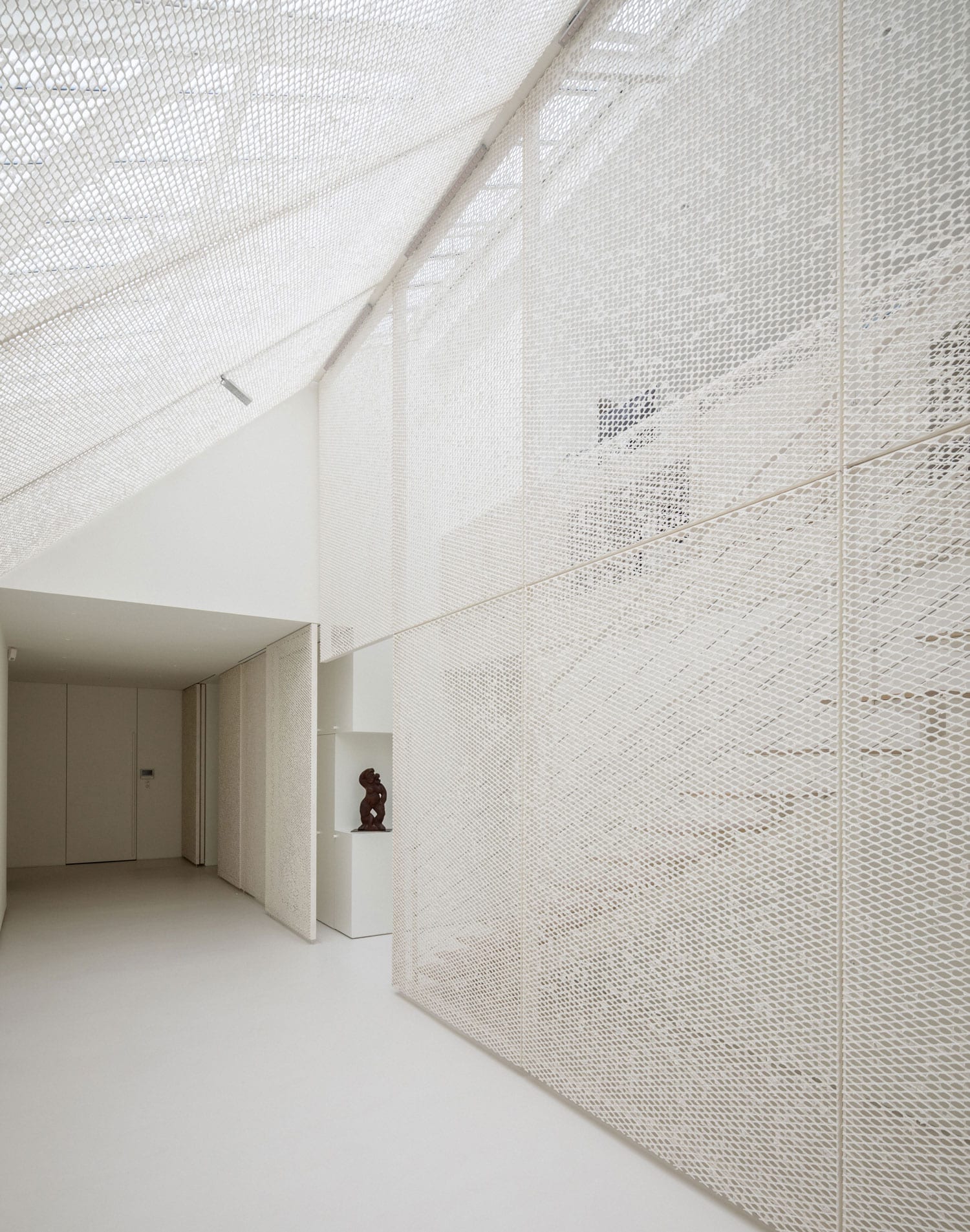
The screen is a wire mesh. The mesh was soaked in a starchy liquid made from paper mulberry and sunset hibiscus, and the washi formed on it as it dried. Transparency was controlled by changing the thickness of the solution, which gave the finished screen a three-dimensional quality rather than a flat sheet of light (Yellowtrace). The work was done by Yasuo Kobayashi, a washi manufacturer whose studio is in Niigata, and the panels were made in western France.
Sit with what that means on a drawing. The opacity of the screen is not a number you can call out. It is the outcome of how thick the liquor was on the day, and how fast it dried, and the judgement of a man standing over it deciding when a given panel has enough on it. You can draw the frame. You can draw the mesh gauge. You cannot draw the thing the room is actually made of.
Two ways to write a specification
There is a kind of specification that names a product. A tube of a given diameter in a given alloy, a profile from a catalogue, a code that any supplier in any country can quote against. Marcel Breuer's whole argument at Dessau ran on that, and it was a moral argument as much as a technical one: a chair made of bicycle tube could be made anywhere, by anyone, cheaply, forever. The specification was the democracy.
There is another kind that names a person. Kuma's screen is specified as Yasuo Kobayashi, in Niigata, working in this solution, to this range. If Kobayashi retires, the specification retires with him. Nobody can quote against it. There is no substitution clause that means anything.
Both are honest. They buy different things. The product spec buys you repeatability and a second price and a replacement in eleven years when somebody puts an elbow through a panel. The person spec buys you something that cannot be value-engineered, because there is no equivalent to swap in, and a contractor who has nothing to offer in its place will usually stop trying.
We spend a lot of our time on the first kind. The second kind is what Ando is doing with concrete, whatever the photographs imply about serenity: a wet material, poured by a particular crew, on a particular morning, at a temperature, against formwork somebody made, and the face you get is the face you get. The smooth grey wall people call minimal is a record of a day's labour that cannot be repeated. Kuma's screen is the same transaction in a lighter material. The washi remembers the drying the way concrete remembers the pour.
The quiet part
Clave worked in collage and in texture, in surfaces built up and scraped back, and the screen is doing a passable impression of his paint, which is the sort of move that reads as a compliment in a press release and as a risk in person. A building that performs the artist's technique can end up competing with the work on the walls.
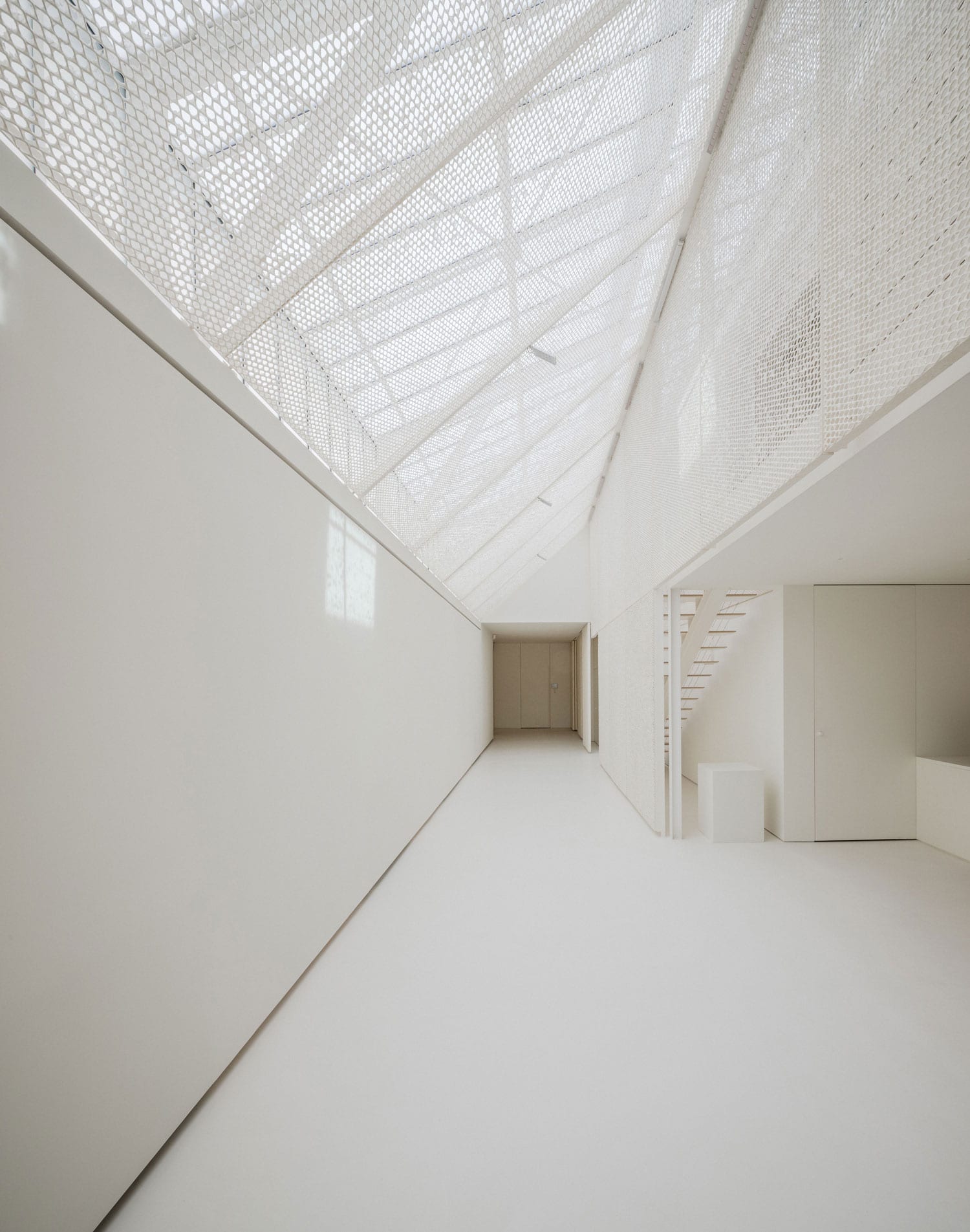
It gets away with it here for a structural reason rather than a tasteful one. The screen is wrapped around the stair, which is the one part of an archive where nothing is hanging. It takes the daylight from the skylight, breaks it up, and hands the galleries a softer version. It is doing a job that a blind or a baffle would otherwise do badly, and it is doing it with the material the collection is made of.
Put the fragile thing in the middle of the building and let it be the thing that lasts.
Sources & Credits
- "Antoni Clave Archives in Paris by Kengo Kuma," Dana Tomic Hughes for Yellowtrace, 29 July 2018. https://www.yellowtrace.com.au/antoni-clave-archives-paris-kengo-kuma/
- Architect: Kengo Kuma and Associates. Washi fabrication: Yasuo Kobayashi, Niigata.
- Photography: 11h45, via Yellowtrace, https://www.yellowtrace.com.au/antoni-clave-archives-paris-kengo-kuma/
No images in this post are Common Projekts photography.