Nobody Carved Anything
Three hundred years ago a man named Matthias Bernard Braun cut twenty four allegorical figures out of sandstone, the Virtues and the Vices, one chisel stroke at a time, and every single one of those strokes was final. You cannot put stone back. A carver who goes three millimetres too deep has not made an error, he has made a decision, and the figure now has that decision in its face forever.
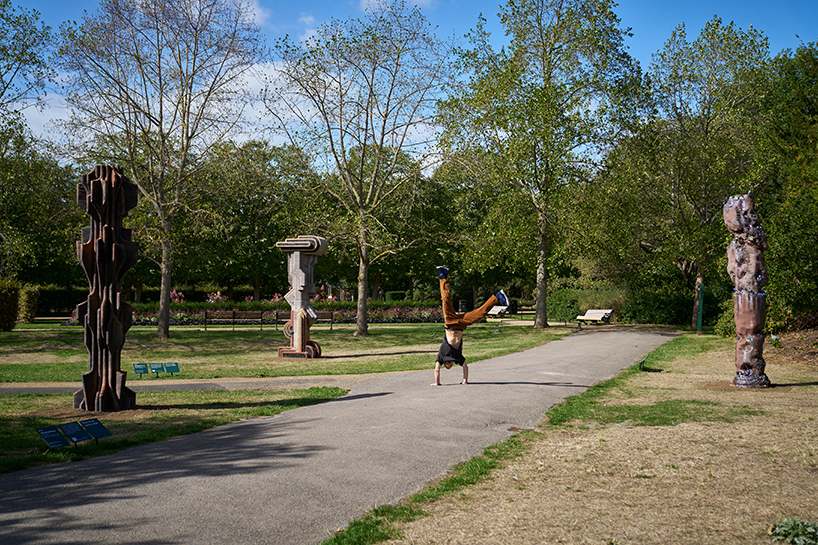
This autumn in Regent's Park there are three concrete figures standing on the grass answering him, and not one of them was carved.
What is actually on the grass
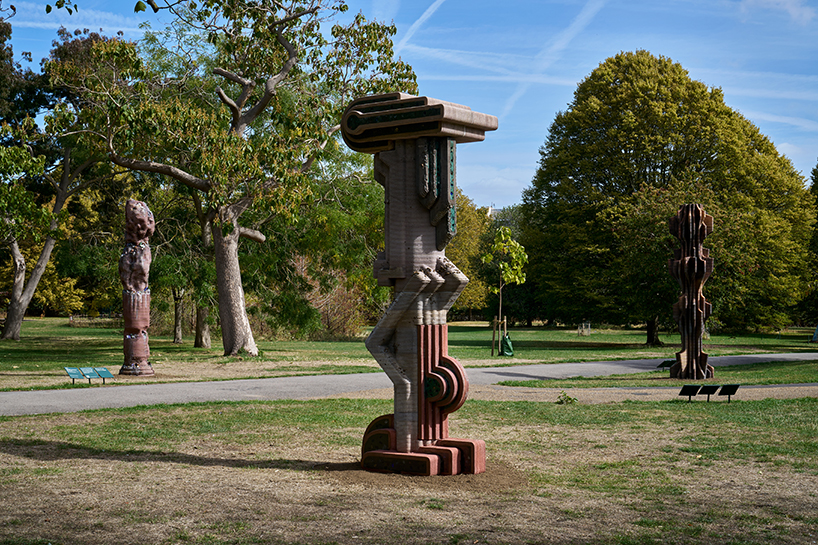
The Czech artist Matyáš Chochola is showing three 3D printed concrete sculptures at Frieze Sculpture 2026, called BRUTALIST, METEOR and MACE II, on view until 1 November. designboom reports that they stand roughly three to four metres tall, weigh around a tonne each, and combine "digital modeling, robotic fabrication, and handwork," developed with the Czech company Voxell. They belong to a twelve-piece series, Virtues and Vices of Our Time: 300 Years Later, which answers Braun's Baroque originals through Antiquity, Cubism, Brutalism, mythology and science fiction (designboom).
So the method ran backwards. Braun took material away and could never put it back. Chochola adds material in horizontal rings, from the bottom, out of a nozzle, and if it goes wrong the file gets resliced and the machine runs again on Tuesday. Carving punishes the hand. Printing forgives it.
That is not a complaint. It is the thing the work is about, and the work knows it.
The layer line is the new board mark
Look closely at what the printing left behind, because this is where the piece earns its keep.
Concrete has always told you how it was made, and for a century the telling has happened in the formwork. Paul Rudolph had his concrete hammered after the pour so it stood up in ridges like corduroy, and the surface was something done to the building afterwards, by men with hammers, at considerable expense. Tadao Ando decided his surface before the pour instead, in the plywood and the tie holes and the exact grid of the panels, so that by the time the truck arrived every question had already been answered.
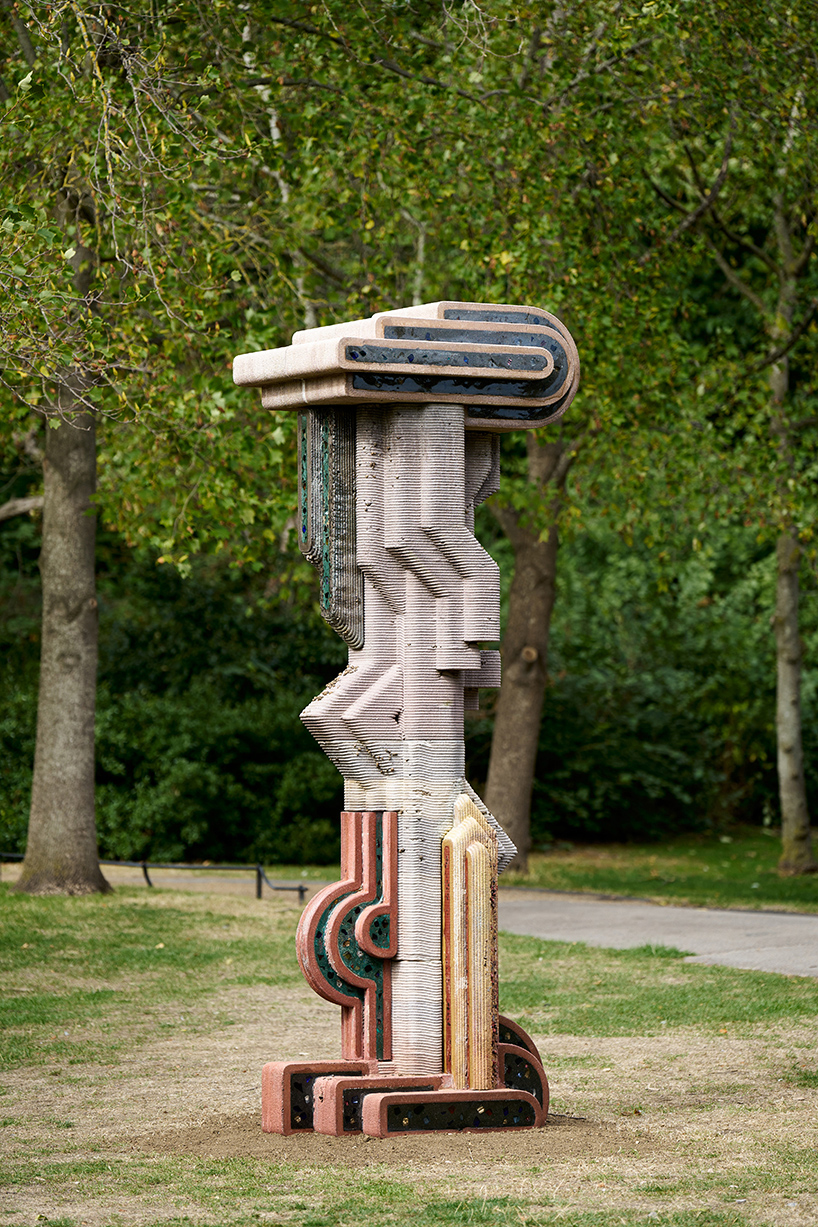
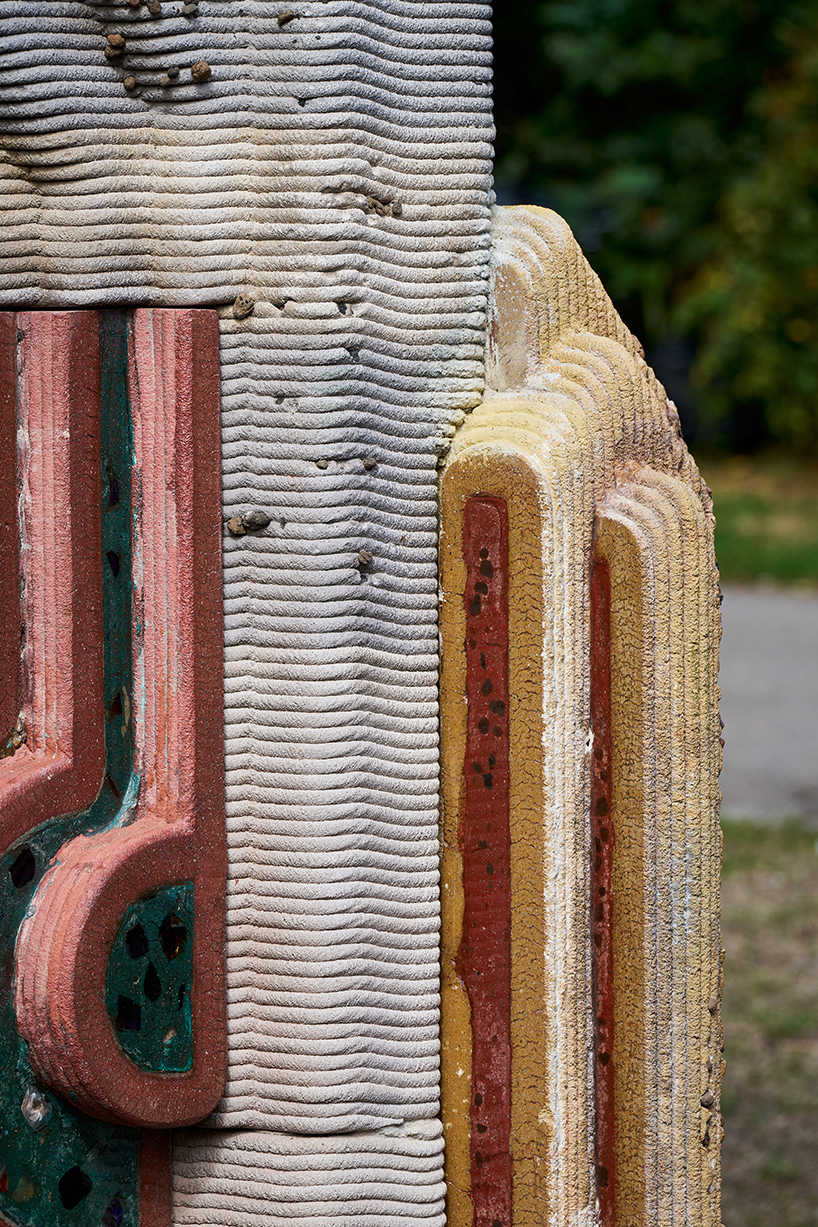
A printed wall has no formwork at all. This sounds like a saving, and it is, right up until you notice that formwork is where every surface decision used to live. Take the mould away and the surface stops being a thing anyone chose. What you get instead is the record of a machine path: the ring, the layer height, the overhang the nozzle could manage before it fell over, the soft rounded return at every corner because a nozzle cannot turn a sharp corner at speed.
Chochola has turned that into the subject rather than apologising for it. In Reece Straw's photographs the rings run clean and unhidden up the whole height, and the pigment changes as the print climbs, so the figures read in bands of pink and cream and ochre and a dirty teal, like strata, like a core sample stood on end. Nobody sanded that off. Somebody sequenced it.
That is the move a specifier should take away. The toolpath is now a finish, and a finish that nobody specifies is a finish the machine picks for you.
Where the hand went
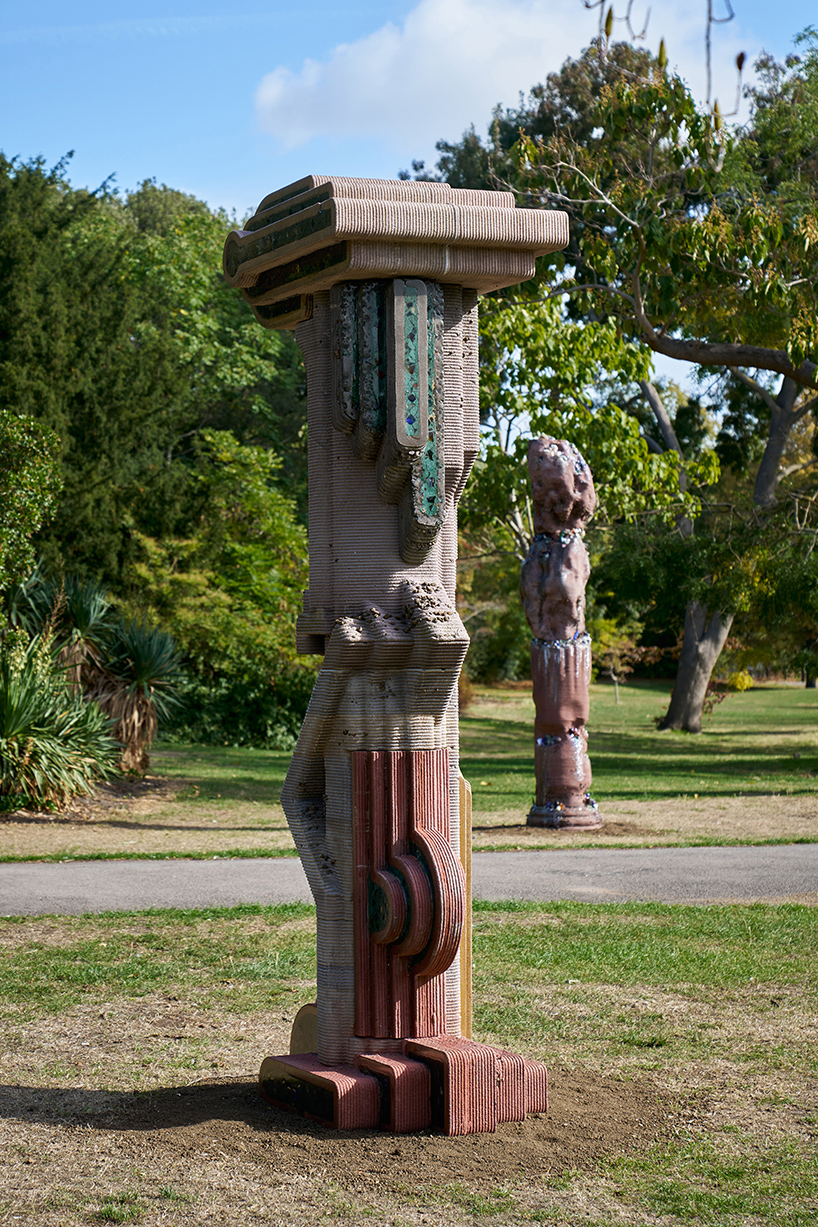
The word in designboom's account that most of the industry leaves out is "handwork."
Every additive process has a place the nozzle will not reach, a start and a stop that leaves a seam, an overhang that slumped, a join between two printed parts that has to be made good. Somebody goes and sorts that out with a hand tool, and almost no printed-concrete press release will tell you so, because the pitch is that the robot did it. The pitch is never the whole job. If this ever arrives in a drawing set as a facade element or a stair or a bench, the lines that will matter are the dull ones: who finishes it, with what, to what tolerance, and what happens where two prints meet.
Name the hand in the specification. It is going to be there whether you name it or not.
The honest size of the claim
These are three to four metres tall and they stand on grass. Nothing here spans anything, carries a floor, resists wind load or has to keep water out of a bedroom for fifty years. It is sculpture, and treating it as a proof of concept for building would be exactly the sort of enthusiasm that gets a material a bad decade.
The number worth keeping is the tonne. A printed piece is not light just because nobody built a mould for it, and weight decides the lorry, the crane, the base and the ground slab under it. Removing the formwork from the process does not remove the mass from the object.
Braun's sandstone saints have been standing outside for three hundred years in Bohemian weather, slowly losing their faces, which is the one thing nobody designed and everybody gets. These will go the same way. The pigment will flatten, the rings will fill with grime and moss, and the teal band will end up a sort of grey, and by then the question of whether a robot or a man made the shape will interest precisely nobody.
In one of Straw's photographs a person is doing a handstand on the path in front of them. Entire careers have been spent trying to get that reaction out of stone.
Concrete does not care how it was made. It only records it.
Sources & Credits
- "3D printed concrete sculptures blend classical fragments with sci-fi forms at frieze sculpture," designboom, 3 October 2026. https://www.designboom.com/art/3d-printed-concrete-sculptures-classical-fragments-sci-fi-forms-frieze-sculpture-matyas-chochola/
- Quoted phrase ("digital modeling, robotic fabrication, and handwork") and all factual details of the works (titles BRUTALIST, METEOR and MACE II; approximately three to four metres tall; around one tonne each; produced with Voxell; part of the twelve-work series Virtues and Vices of Our Time: 300 Years Later, answering Matthias Bernard Braun's twenty four sandstone figures; Frieze Sculpture 2026 in The Regent's Park until 1 November 2026) are as reported by designboom at the link above.
- Descriptions of the printed surface, the pigment banding and the park setting are our own reading of the photographs published with that article.
- Paul Rudolph's hammered corduroy concrete and Tadao Ando's formwork practice are drawn from the general record, not from the source article.
- Photography: Reece Straw, via designboom, https://www.designboom.com/art/3d-printed-concrete-sculptures-classical-fragments-sci-fi-forms-frieze-sculpture-matyas-chochola/
No images in this post are Common Projekts photography.