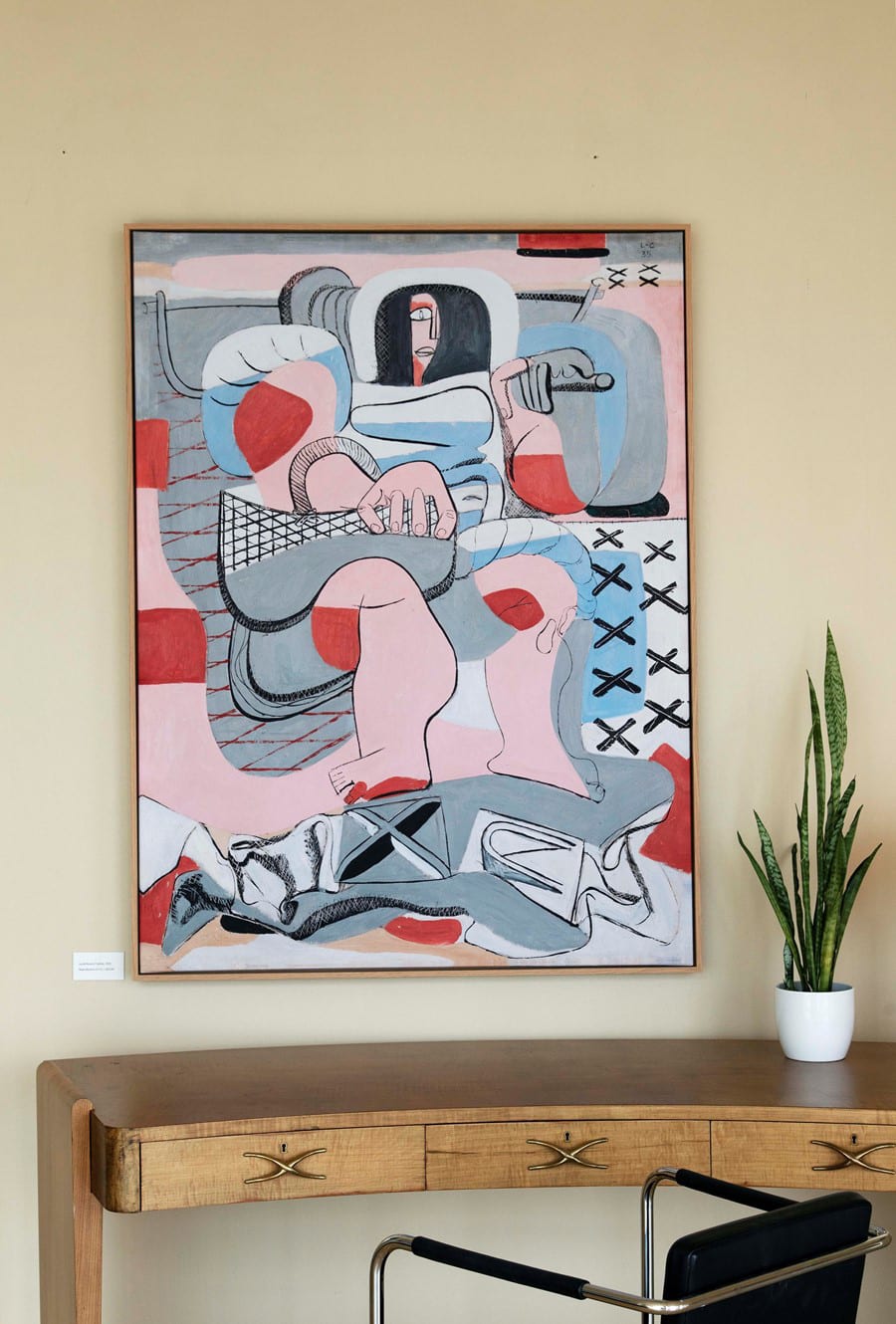
He Only Built It Once
In 1932 the man who had already informed the world that a house is a machine for living wrote a letter home to his mother about a fishing village, and what he said in it was this: "I am drawn to places where people live naturally." He went on. "Le Piquey is full of life that is healthy, calm and to scale: to a human scale... This is what civilisations destroy, plunging people into artifice and misfortune" (Yellowtrace).
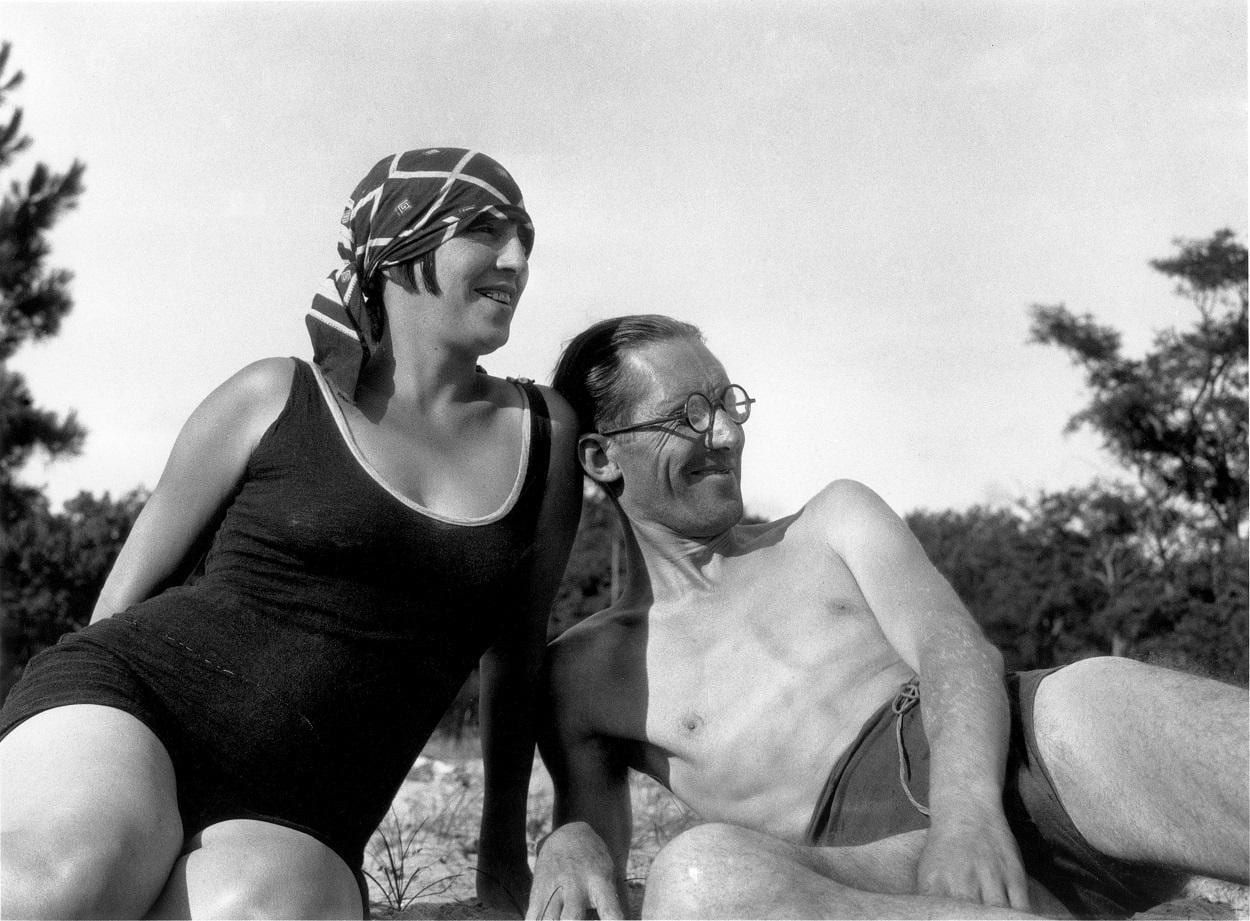
He went back to that village every summer for a decade. He swam, and he watched the oyster boats, and he painted women with heavy arms standing in shallow water, and then he went back to Paris and kept drawing cities that would have flattened places exactly like it.
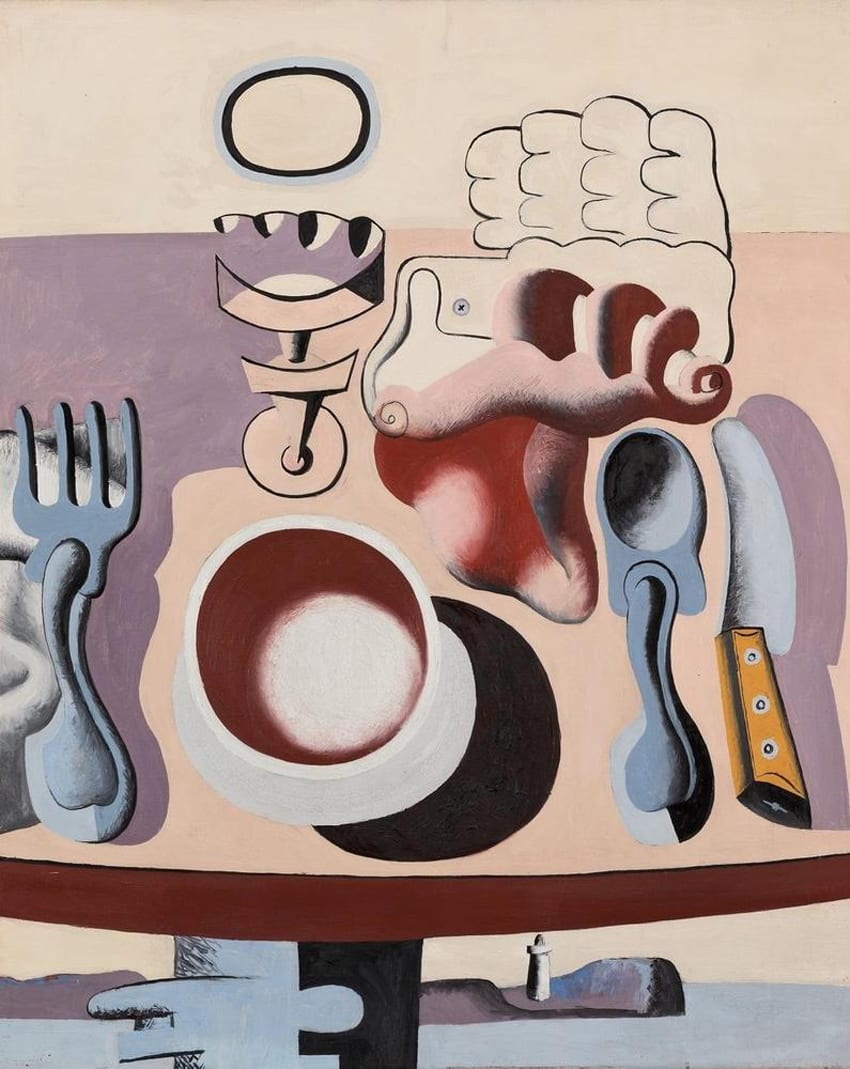
The paintings were gathered up for an exhibition called "Le Corbusier by the Sea," staged at Villa Stenersen in Oslo with Professor Emeritus Tim Benton and the artist Bruno Hubert, covering the years 1926 to 1936 and the summers he spent on the Bassin d'Arcachon, a bay on the southwest coast of France. Yellowtrace, which is where we came across it, frames the show around his "fascination with nature" and the effect it had on him "as both an architect and a painter" (Yellowtrace).
That is the generous reading, and it is the one these shows almost always take: the cold rationalist turns out to have had a soft spot, a sketchbook, a holiday, a human side. Everybody relaxes. The towers are forgiven a little.
We think the generous reading is the less interesting one, and also the less flattering.
He was not conflicted. He was clear.
Read the letter again. That is not a man wavering. That is a man filing a specification. Healthy, calm, to scale, and specifically to human scale, and the thing that destroys it is named out loud as civilisation itself, which in 1932 meant the exact apparatus he was pitching to municipalities. He knew what a good place felt like. He could describe it in one sentence to his mother without a single abstraction in it.
Then he went to work.
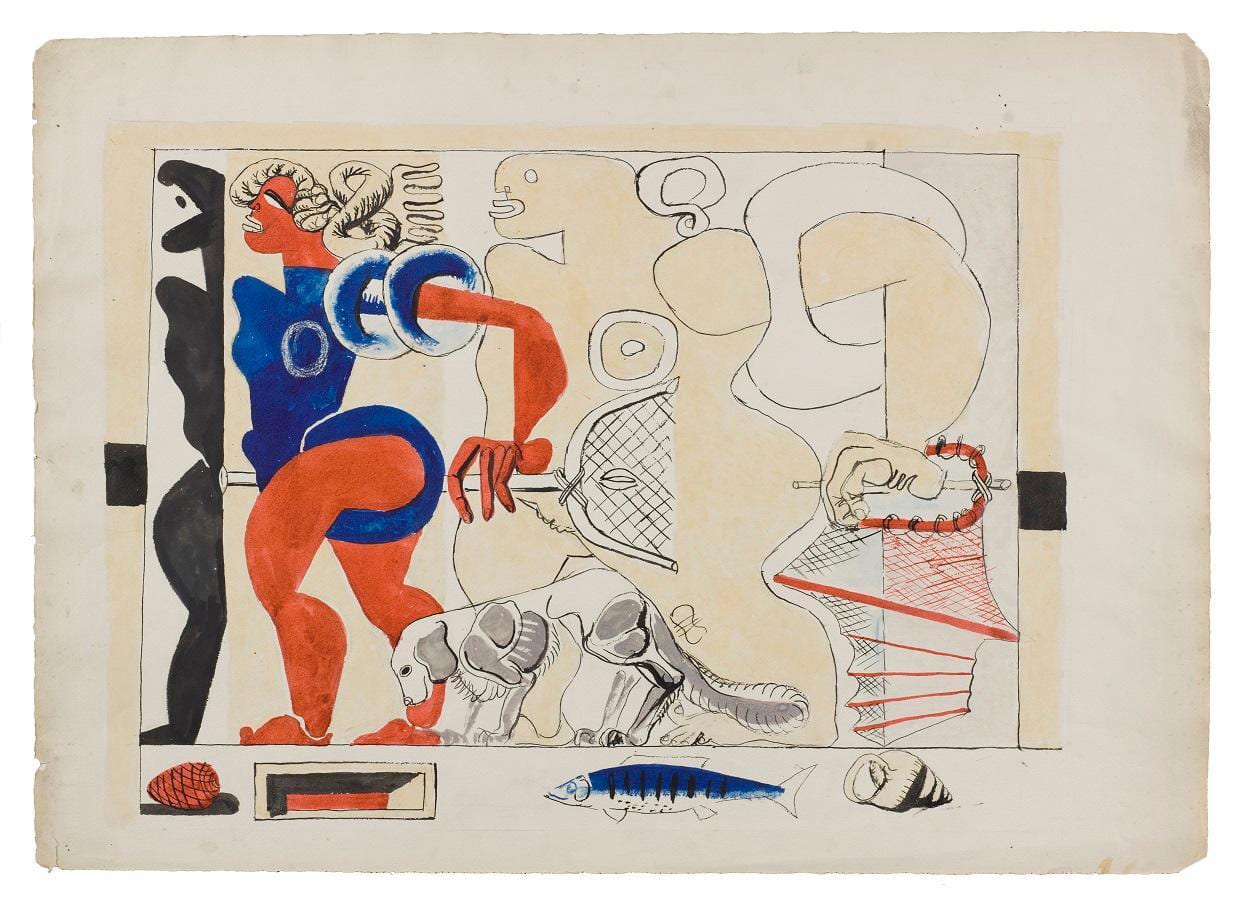
So the paintings are not a hobby, and they are not a contradiction either. They are the brief. Look at what is in them: oyster fishers, three bathers, three women and a dog, a lunch eaten near a lighthouse. Bodies at rest, at the scale of a hut, doing the ordinary things that take up most of a life. There is no circulation diagram anywhere in it. There is no separation of functions. Nobody in those pictures is being efficiently housed.
And then, once, he built it
In 1952, at Roquebrune-Cap-Martin, he put up a log-clad plywood box on the rocks above the Mediterranean. The Cabanon. Something close to three and a half metres on a side, worked out on the Modulor, with a bed and a shelf and a window cut to the view and a toilet behind a curtain. He built it for himself and for Yvonne. He said he could not imagine anything better. He never offered it to a client, never scaled it, never proposed it as policy, and never put it in a manifesto as the answer.
He was his own best client. He was also his only one.
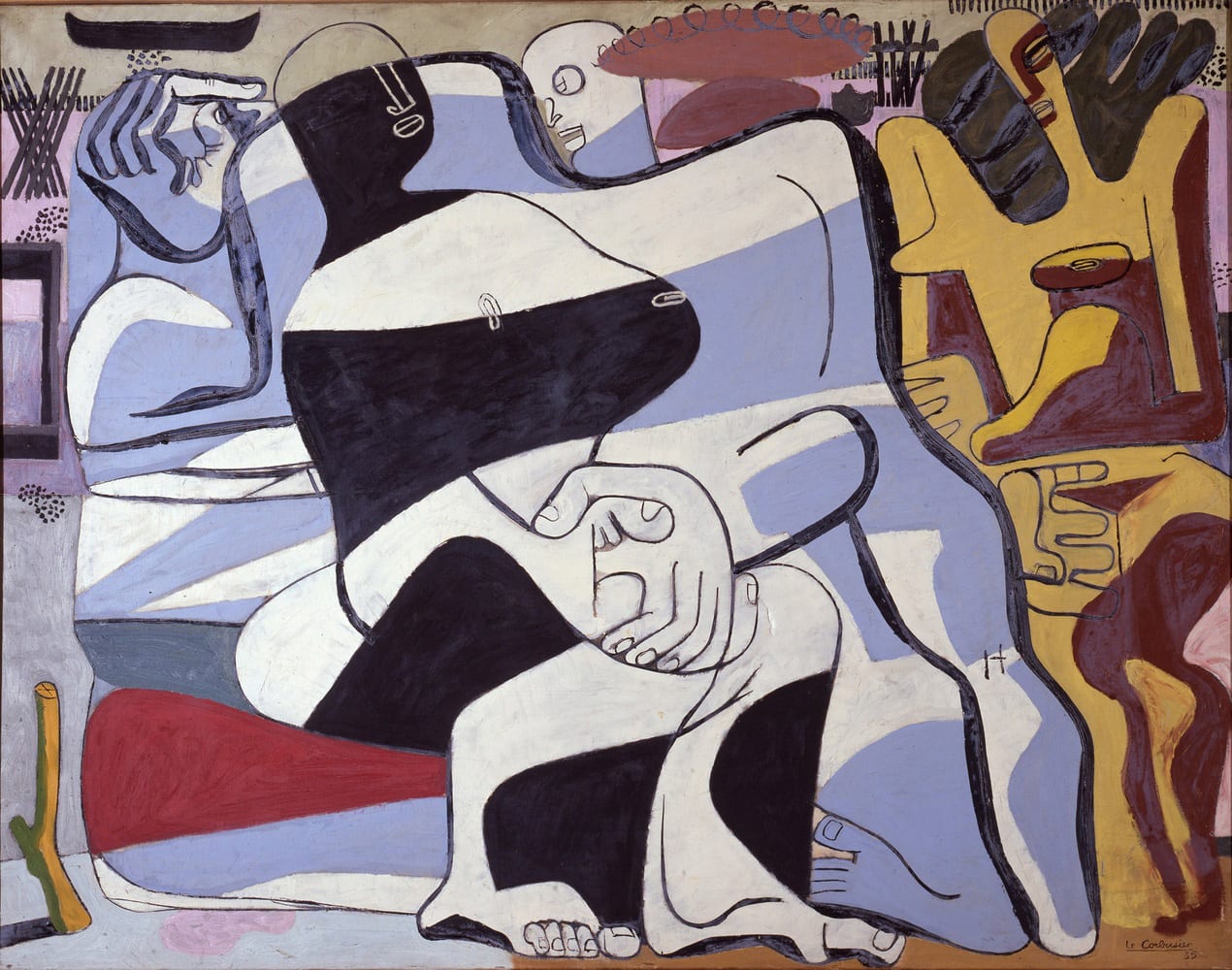
There is a second joke in the venue, and it is a good one. Villa Stenersen was designed by Arne Korsmo and finished in 1939 for Rolf Stenersen, who collected pictures and wanted somewhere to keep them. It is a modernist house built as an instrument for looking at art, which is to say it is one of the rooms Le Corbusier's own writing made possible. The paintings he made in a fishing village, arguing quietly for huts, now hang in the kind of house his arguments produced. Nobody planned that. It is still true.
What we take from it
Every practice keeps a letter to its mother. It is the thing you would build if nobody were paying for it, and it is almost never the thing you are selling, and the distance between the two is the only honest measure of a studio.
We would like to pretend that distance is zero for us. It is not. A plain room is easy to believe in and hard to sell, and the version that gets built has a kitchen island in it because the resale comp down the block has one, and a recessed strip where we wanted a single fixture, and a door lighter than the one we drew because the heavy one came back as a line item nobody wanted to defend. That is the job. The compromise is not the scandal.
The scandal is forgetting which one was the letter.
Le Corbusier never forgot. He kept painting the brief for ten summers and he kept the one building that honoured it for himself, a shack with a view, and he died swimming off the rocks below it. The towers went up elsewhere, at a scale he had been warned about by his own handwriting. People are still living in them.
He told his mother what good looked like. He should have told his clients.
Sources & Credits
- "Le Corbusier's Paintings Exhibited in a Modernist Villa Stenersen in Oslo," Dana Tomic Hughes for Yellowtrace, 31 October 2018. https://www.yellowtrace.com.au/le-corbusier-paintings-villa-stenersen-oslo/
- The quotation from Le Corbusier's 1932 letter to his mother is quoted as printed by Yellowtrace at the link above.
- Exhibition details ("Le Corbusier by the Sea," Villa Stenersen, Oslo, developed with Tim Benton and Bruno Hubert, covering 1926 to 1936) as reported by Yellowtrace at the link above.
- Photography: Pernille Sandberg; paintings reproduced courtesy of the Fondation Le Corbusier / FLC ADAGP; images courtesy of Nasjonalmuseet, via Yellowtrace, https://www.yellowtrace.com.au/le-corbusier-paintings-villa-stenersen-oslo/
- Villa Stenersen (Arne Korsmo, completed 1939, for Rolf Stenersen) and the Cabanon at Roquebrune-Cap-Martin (1952) are drawn from the general record, not from the source article.
No images in this post are Common Projekts photography.