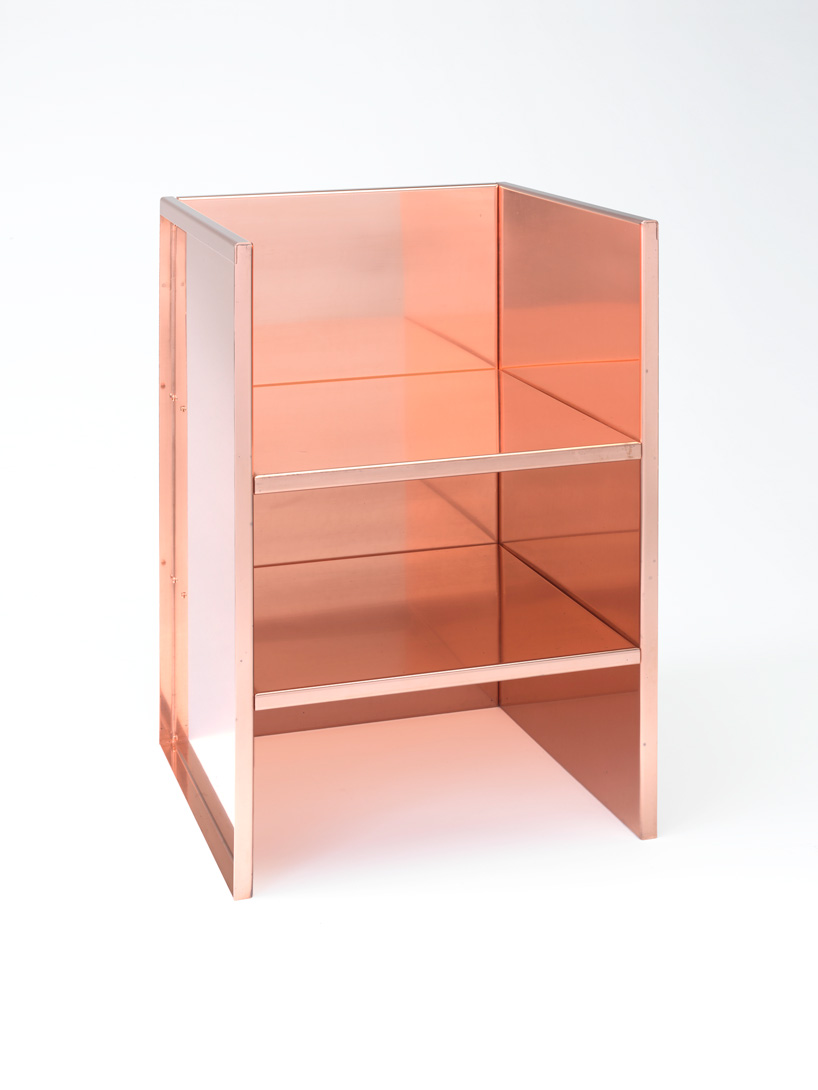
Nobody Sold Him a Table
Donald Judd started making furniture because he could not buy any he could stand. That is the origin, and designboom puts it about as flatly as it can be put: his tables and desks and chairs and beds "emerged as a response to the lack of good, basic furniture he identified at the time" (designboom). No commission. No manufacturer came calling. No brand extension bolted onto the art. A man wanted somewhere to eat and somewhere to sleep and somewhere to set down a lamp, and he went looking, and what was available was bad, so he drew it himself and had it built.
Every architect who has ever drawn a bench because the catalogue did not have one is standing in that same queue.
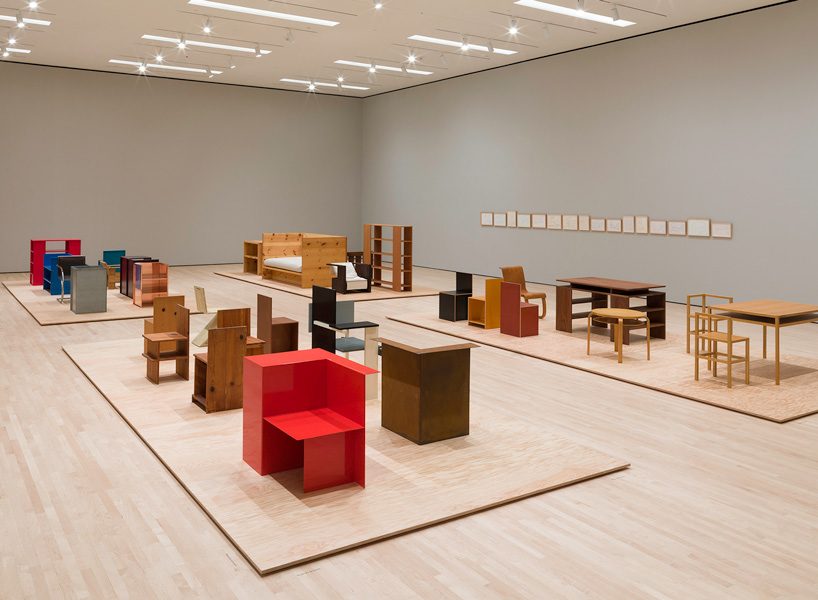
SFMOMA called the show Donald Judd: Specific Furniture, and designboom notes it is titled after his 1964 essay, the one where he argued for a new kind of three-dimensional work freed from the old rules of painting and sculpture (designboom). So the museum took the title of the essay that separated the art from everything else, changed one word, and pointed it at a bed.
Judd was fairly clear, for most of his life, that the furniture was not art. He made it, he used it, he had it produced, and he kept the categories apart on purpose. And he was right, and the reason he was right is not philosophical. It is practical, and any designer who has ever had a piece come back from site knows it.
A painting has no failure mode
A painting cannot be the wrong height for the table beside it. A painting cannot rock on an uneven floor, or be too heavy for the person who has to shift it to sweep underneath, or split at the joint nobody detailed properly in year six, or turn out to be four centimetres too deep for the only wall it was ever going to go on. A painting is never wrong in the way a chair is wrong, which is immediately, and in your own body, and usually in front of other people.
Furniture is the harder discipline. It is judged by a standard that does not care at all what you meant.
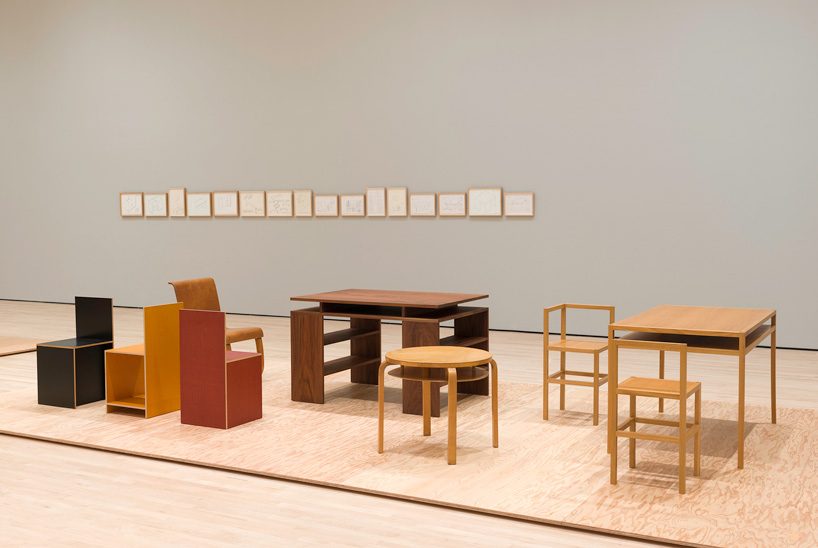
Which is why the most useful room in this exhibition is probably not the one with his own work in it. SFMOMA hung the furniture alongside pieces Judd collected, from Alvar Aalto and Ludwig Mies van der Rohe and Gerrit Rietveld among others, plus photographs of the rooms he actually lived and worked in, including the Judd Foundation building (designboom). designboom describes what he was buying for: furniture that "embodied a material presence or clear intention."
Read that twice, because it is not a style. It is two tests.
Does the object admit what it is made of. And did a person decide something, once, on purpose, and then hold to it.
That is a specification standard. You could write it at the top of an FF&E schedule tomorrow and it would immediately disqualify most of what the reps bring in, not because the pieces are cheap, but because so many of them are undecided: a veneer pretending to be solid, an edge softened so it offends nobody, a finish chosen because it photographs warm. Judd's filter is brutal in the only way that matters, which is that it is easy to apply and hard to argue with.
The beauty in simplicity, and other headlines
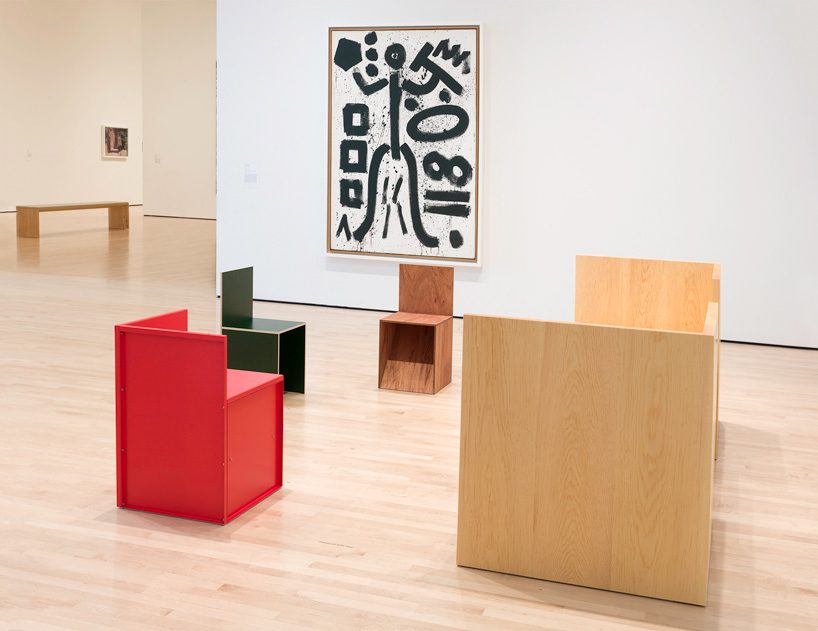
The press language around the show reaches for "the beauty in simplicity," which is the sentence every minimal object gets buried under eventually. It is not wrong so much as useless. Simplicity is an outcome, not a method, and nobody has ever specified their way to it by asking for less.
What Judd did was narrower and more repeatable than beauty. He set a rule about material and then refused to decorate his way out of the consequences. A plywood box in a room is a plywood box in a room. It does not get a nicer name, and it does not get a cladding, and if the proportion is wrong there is nowhere to hide, which is the point and also the risk. He ended up in west Texas, a long way from any showroom, working at a scale where you make the thing or you do without it.
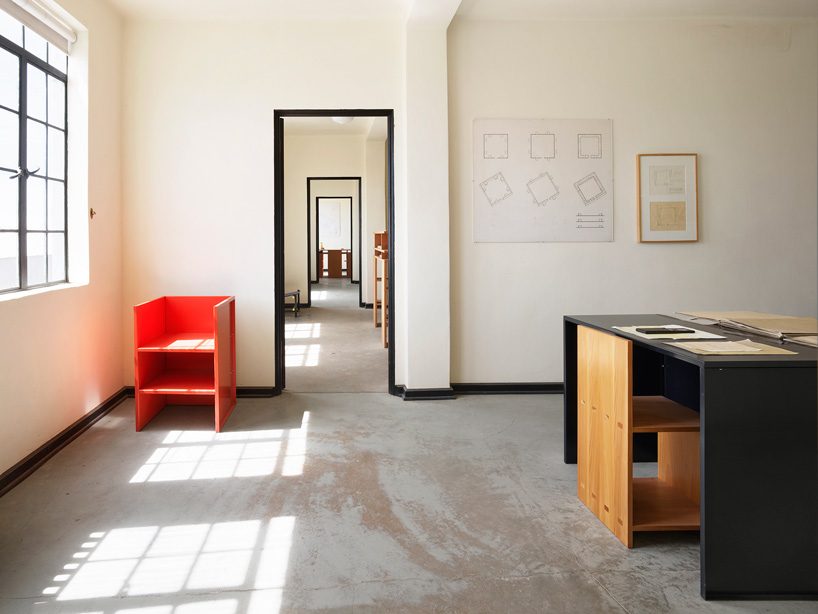
Here is the part we keep coming back to. He was not making a statement about consumption or authorship or the death of the object. He needed a bed. A bed is the most ordinary commission there is, and the most honest, because a bed is a structure you lie unconscious on top of for a third of your life and it either holds or it does not, and nobody photographs it, and nobody praises it, and it does its entire job in the dark while you are not paying attention.
He made the furniture because the alternative was living with bad furniture. That is not a movement. That is just a person with standards and a shop.
The museum can call it art now. He is not available for comment.
Sources & Credits
- "SFMOMA celebrates the beauty in simplicity with 'donald judd: specific furniture' exhibition," sofia lekka angelopoulou for designboom, 23 July 2018. https://www.designboom.com/design/sfmoma-donald-judd-specific-furniture-exhibition-07-23-2018/
- Photography: designboom, via designboom, https://www.designboom.com/design/sfmoma-donald-judd-specific-furniture-exhibition-07-23-2018/ . designboom credits one installation view in its report to Katherine Du Tiel.
Note on dates: designboom dates the source essay to 1964 and gives Judd's dates as 1928 to 1994. This post does not assign dates to individual furniture pieces, which the source does not provide.
No images in this post are Common Projekts photography.