The Room With No Audience
Every other room in a house is specified with a stranger in mind. The kitchen is for the people who stand in it holding a drink while you cook, the living room is for whoever sits down first and judges the sofa, the entry is a handshake, the powder room is a ninety-second performance for guests. Then there is the bedroom, which almost nobody outside the household will ever see, and which therefore gets whatever is left: the frame that came with the apartment, the lamp from the last place, the bedside table bought in a hurry on a Sunday because the books had started stacking on the floor.
Yellowtrace opens a piece on Ellison Studios' new collection with exactly this observation. "The bedroom is usually the last room in the house to get the good furniture," it says, and the collection called The New Bedroom is built on overturning that, on the premise "that comfort is worth designing toward rather than something that turns up by accident once the proportions have been settled" (Yellowtrace). To be straight about it: that article is a Yellowtrace Promotion supported by the brand. The premise is still correct, and worth arguing with.
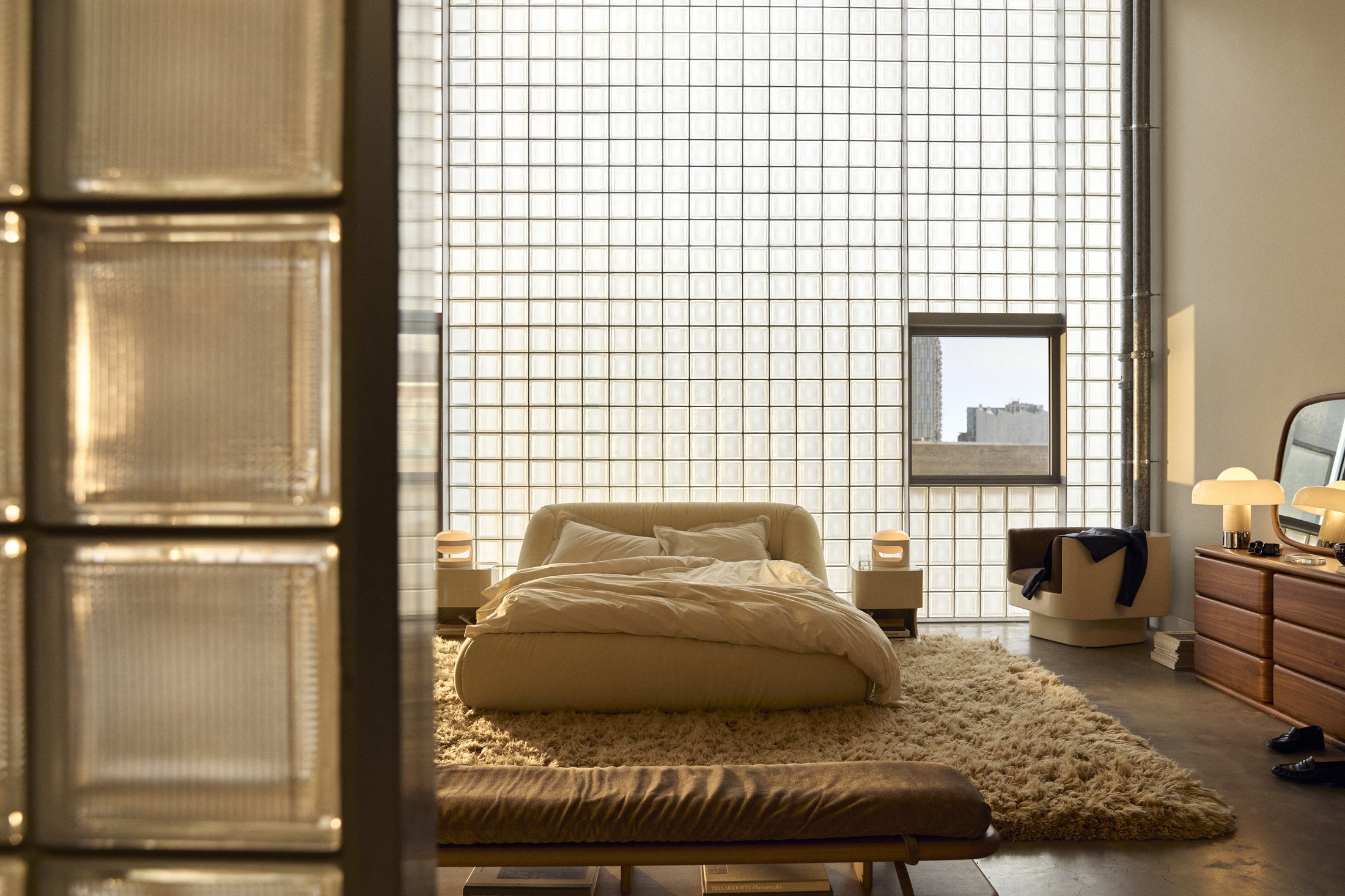
Because the bedroom is the only room where the client is also the sole user, which makes it the one honest test of whether anybody believed the specification or was dressing a set. Whatever gets decided in there is decided for one or two people at eleven at night and again at six in the morning, in the dark, half awake, with no witnesses. That is the hardest brief in a house and it gets the smallest budget.
What the collection is
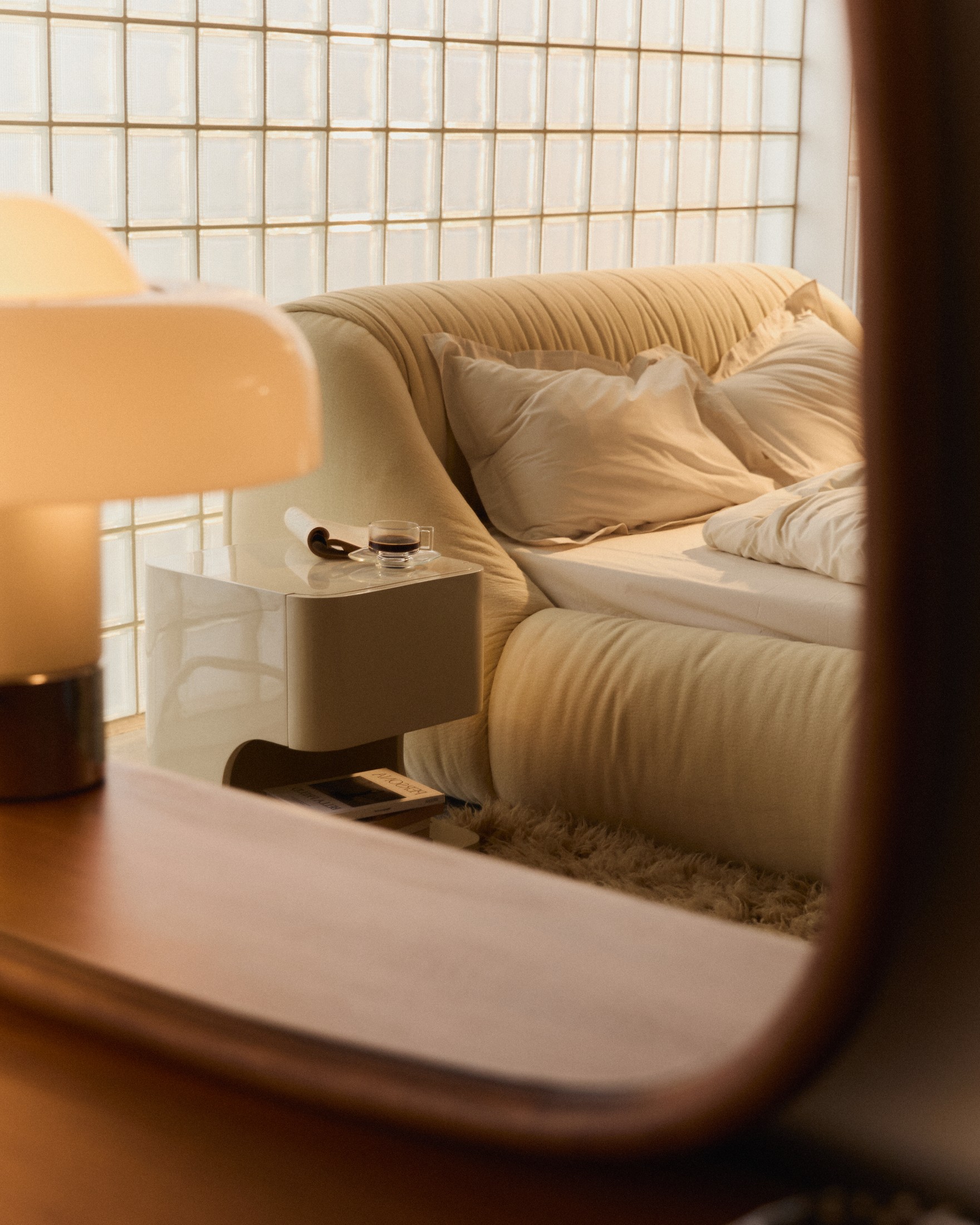
The pieces are worth naming, because they are well made and the thinking is visible. Two upholstered beds carry it: Melt, the soft one, inflated curves with ruching applied by hand, and Rem, a voluminous curved headboard with hand-finished pleats on walnut supports, which Yellowtrace credits with "a touch of '80s glamour." Around them sit the Edie side table in high-gloss lacquer, Notte storage in a walnut stain with a shadow line running front to back, the Nico occasional chair on a polished frame, the Plinto bench in stacked and softly rounded layers of oak, and the Tondo screen, rotating circular forms in oak and walnut (Yellowtrace).
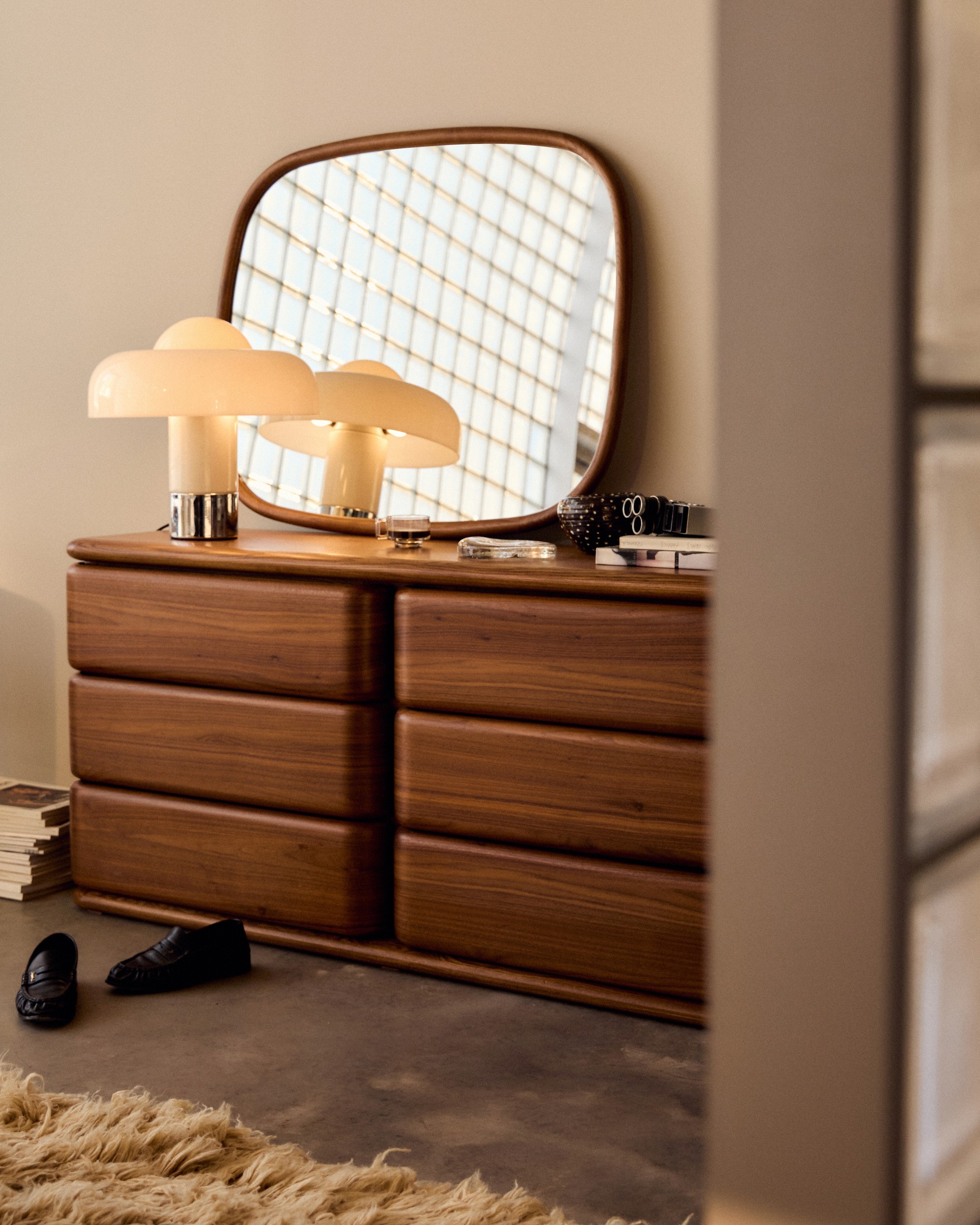
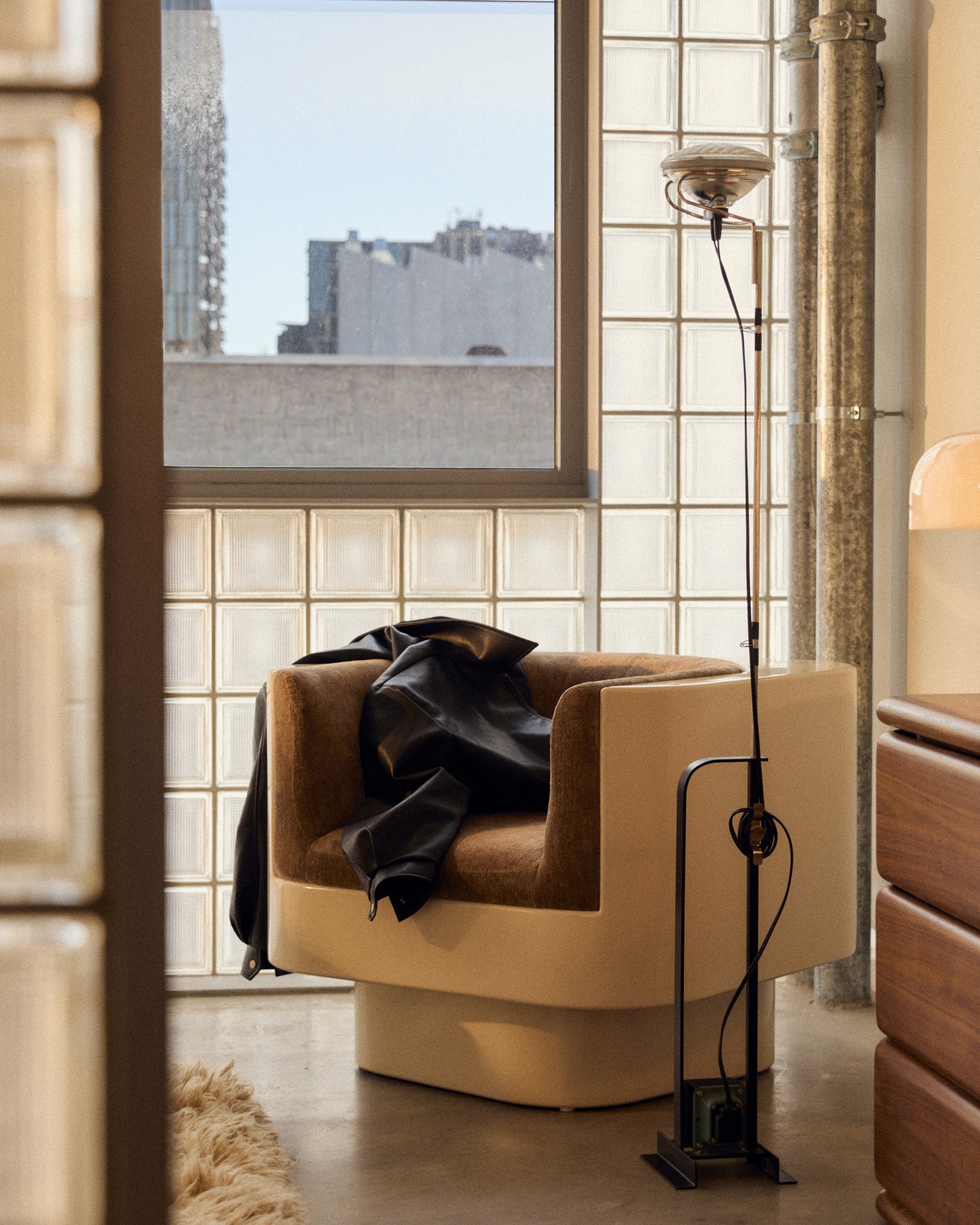
The palette is called Salento Butter, Scala Chalk and Amalfi Tabacco, chosen, we are told, "for the hour between 4 pm and dusk." That is a real observation. Bedrooms are the only rooms most people occupy at both ends of the day and almost never in the middle of it, and a colour that holds at four in the afternoon in October is not the colour you pick off a fan deck under a showroom downlight. Somebody there has stood in a bedroom at the right time of day.
Where we part company
Here is our disagreement, and it is a disagreement about the definition, not about the furniture.
The collection answers comfort with upholstery. Ruching, pleating, gathered fabric, plush seats, inflated curves: comfort applied to a surface. Surfaces do part of the job. But the things that decide whether a bedroom is comfortable are almost all dimensional, and none of them can be bought.
Whether there is a solid wall behind the head of the bed, or a window. Whether you can sit up and see the door. How far it is from the pillow to the switch, and whether you have to put a foot on cold floor to reach it. Which way the door swings. Whether somebody walking down the hall at night can see you. Whether the light off the street lands on the ceiling or on your face. Whether the room has one more square metre than the bed needs, so the bed stops being furniture in a container and becomes a thing in a room. These cost nothing. They are set by a plan, months before anybody thinks about fabric, and once they are wrong no amount of ruching fixes them.
Tadao Ando gets called austere, and the rooms are bare concrete, and people who sleep in them report the opposite of austerity. Not because concrete is cosy. Because the proportions and the light and the sequence of getting there were decided first and decided well, so by the time you are inside, the room has already done the work upholstery is usually hired to do afterwards.
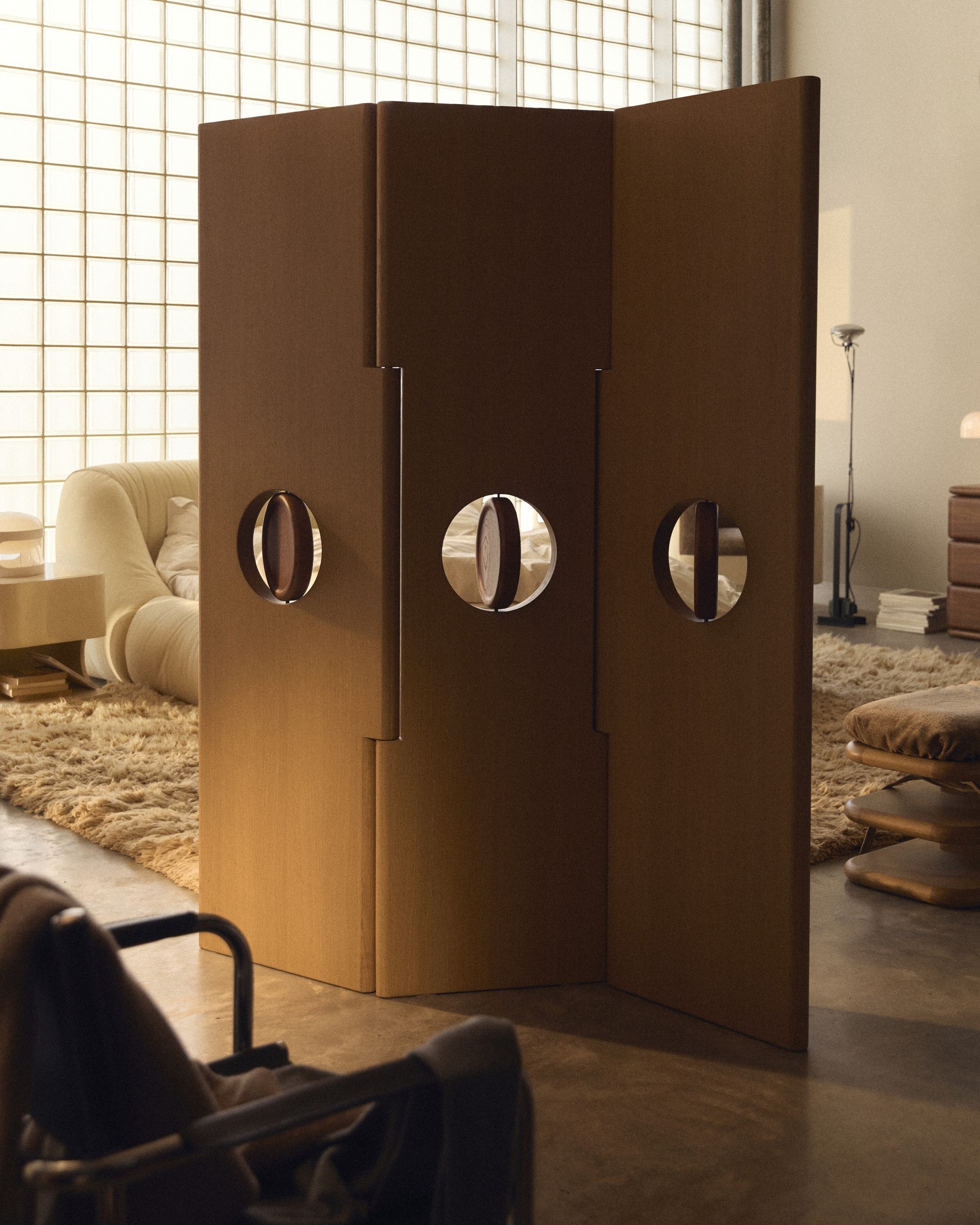
Which is why the Tondo screen is the best thing in this collection, and we suspect it will be the worst seller. A screen is not a finish. It edits sightlines, blocks a view somebody had of you, makes a corner out of a wall that did not have one, and turns one room into a room and an anteroom. It is a plan move sold as an object, which is the only honest way to sell a plan move to somebody who already signed a lease. Every other piece improves what you look at. The screen changes where you can be seen from.
On the '80s note, quickly, because it is not a costume. That decade is the last time the bedroom was widely treated as a designed room rather than a storage problem, and it is a period this firm keeps circling for other reasons: glass block, fat radii, lacquer, mass treated as something you could pad. A lot of it was silly. The part that was not silly was the assumption that a room nobody visits still deserved to be drawn.
So take the beds. They are better than what most people sleep in. But if there is one decision left in the bedroom, spend it on the plan, and if the plan is built and cannot move, buy the screen.
Nobody is coming to see it. That is the point, not the excuse.
Sources & Credits
- "Ellison Studios Gives The Least Public Room In The House Its Best Furniture Yet," Team Yellowtrace, Yellowtrace, 28 September 2026. https://www.yellowtrace.com.au/ellison-studios-the-new-bedroom-collection/ (disclosed by the publisher as a Yellowtrace Promotion supported by Ellison Studios)
- Photography: Yellowtrace, via Yellowtrace, https://www.yellowtrace.com.au/ellison-studios-the-new-bedroom-collection/
No images in this post are Common Projekts photography.