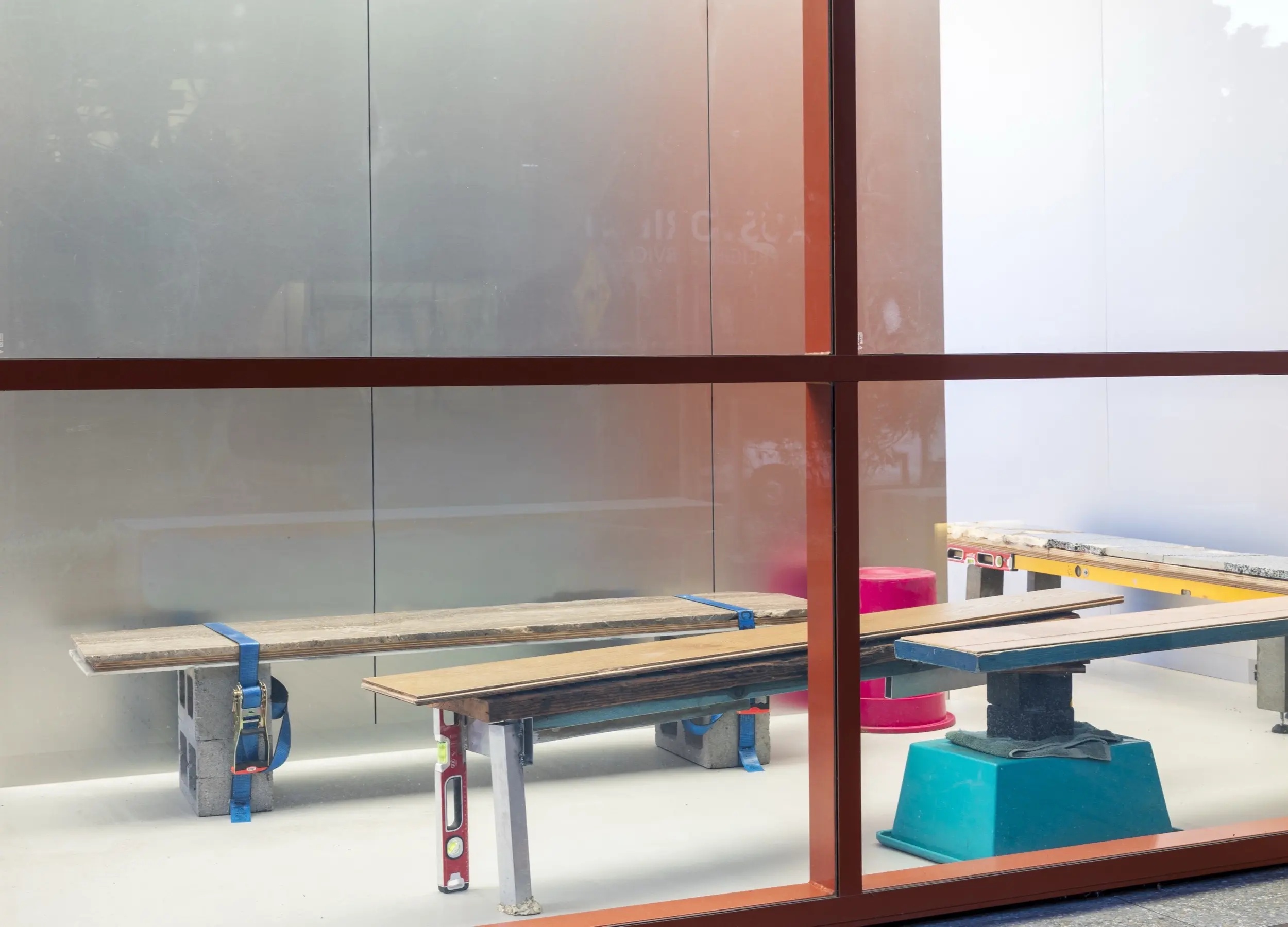
Somewhere outside Sydney a stack of concrete panels sat in a lavender field for forty years. They had been part of the Opera House forecourt, which is to say they had been the ground under a great many feet on a great many evenings, and then they were surplus, and then they were in a field, and the lavender grew up around them and nobody thought about them at all. Concrete is patient about this sort of thing. It has no other choice.
Mike Hewson found them. Hewson is an artist from Aotearoa New Zealand who trained as a civil engineer, and his work, as Est Living describes it, sits between sculpture, public infrastructure and lately furniture. The panels became a table. The table became his first furniture exhibition, at Gallery Twenty Twenty in Sydney, and some of the same material ran through his installation at Sydney Contemporary this month. Madeleine Murdoch interviewed him for Est Living, and he said the thing that separates his salvage from almost everyone else's, without appearing to notice he had said it.
"The materials don't tell you what they want to be straight away, you just have to wait," he told Est Living. "With these, it came down to the simplest possible move: some of the offcuts became legs."
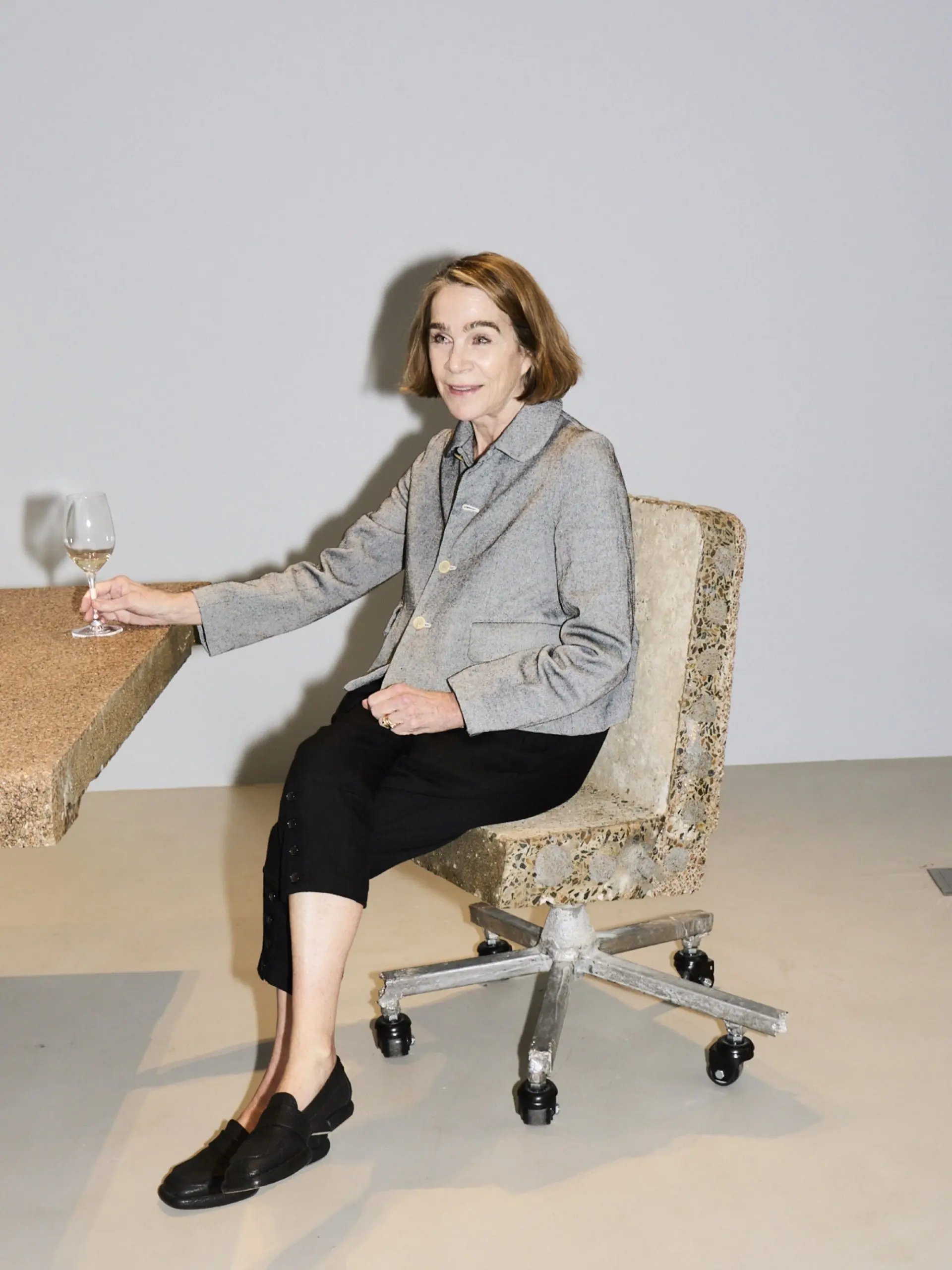
Here is our position, and it is one a lot of people in our trade will not like. Most reclaimed material in buildings is a mood. The barn board on the cafe wall is a mood. The factory brick veneer on the new condo is a mood, and it is a veneer, and the brick is holding up nothing. The word "salvage" has come to mean a finish with a story attached, and the story does the structural work while the material stands around looking weathered. Hewson's offcuts became legs. A leg carries load. Somebody has to know what a panel of forty-year-old concrete of unknown mix and unknown reinforcement will do when you stand a slab on it and then set down a glass. Hewson knows, because that is what a civil engineer is for. The difference between salvage and scrap is a calculation, and the calculation is invisible in the photograph, and it is the whole thing.
The benches came from a scrap pile too. They are made from casting sprues, the channels that carry molten metal into a mould and are normally broken off and melted down. Hewson kept them, he told Est Living, because they "had this amazing form straight off the cast," and he gave them solid bronze feet as a nod to the bronze that was already in the panels. Waste that carries the shape of the process that made it is the oldest honest ornament there is. Paul Rudolph combed his concrete so you could read the formwork. A sprue is formwork that got to keep the metal.
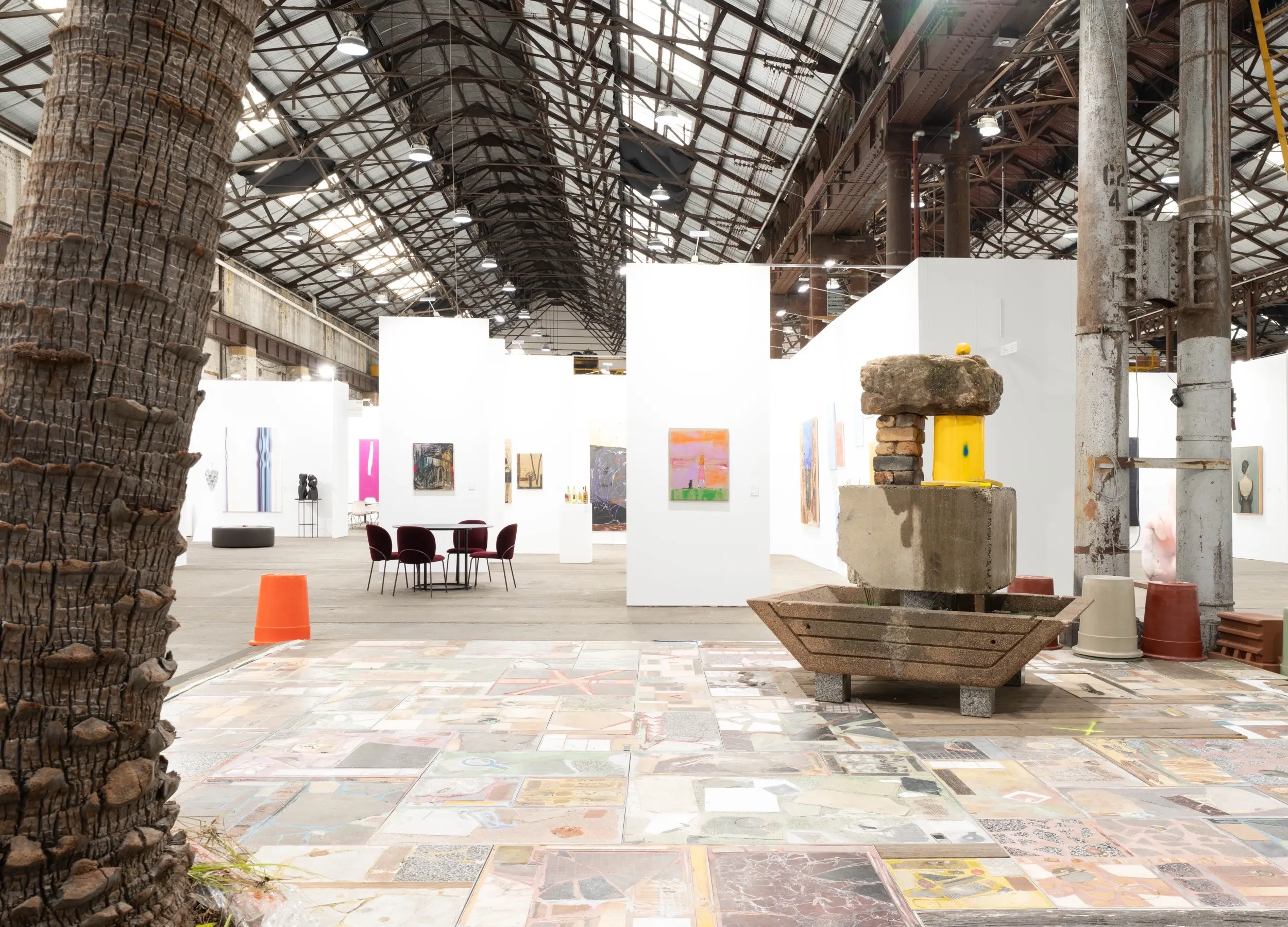
Est Living describes the show as "ancient and almost sci-fi at once," and Hewson says the table looked like something in the British Museum and also something out of Dune. He puts it down to when the panels were made. The Opera House forecourt belongs to the end of the utopian sixties, the last time a public building was allowed to believe in the future without irony, and concrete was the material that belief was poured into. Sixty years on, Hewson notes, people are more interested in exploring the mind than in going to space. So the panels come back to us from a future that did not happen, and we set our drinks on them. That is not a mood either. That is just what happened.
We keep thinking about the lavender. Forty years is longer than most buildings get before someone reclads them. The panels outlasted the plan that ordered them and the crew that poured them and, very likely, the drawings. They did this by being ignored. There is a lesson in there for anyone who specifies a material because it is fashionable, which is that fashion lasts about eleven years and concrete lasts until somebody decides to pay for the demolition.
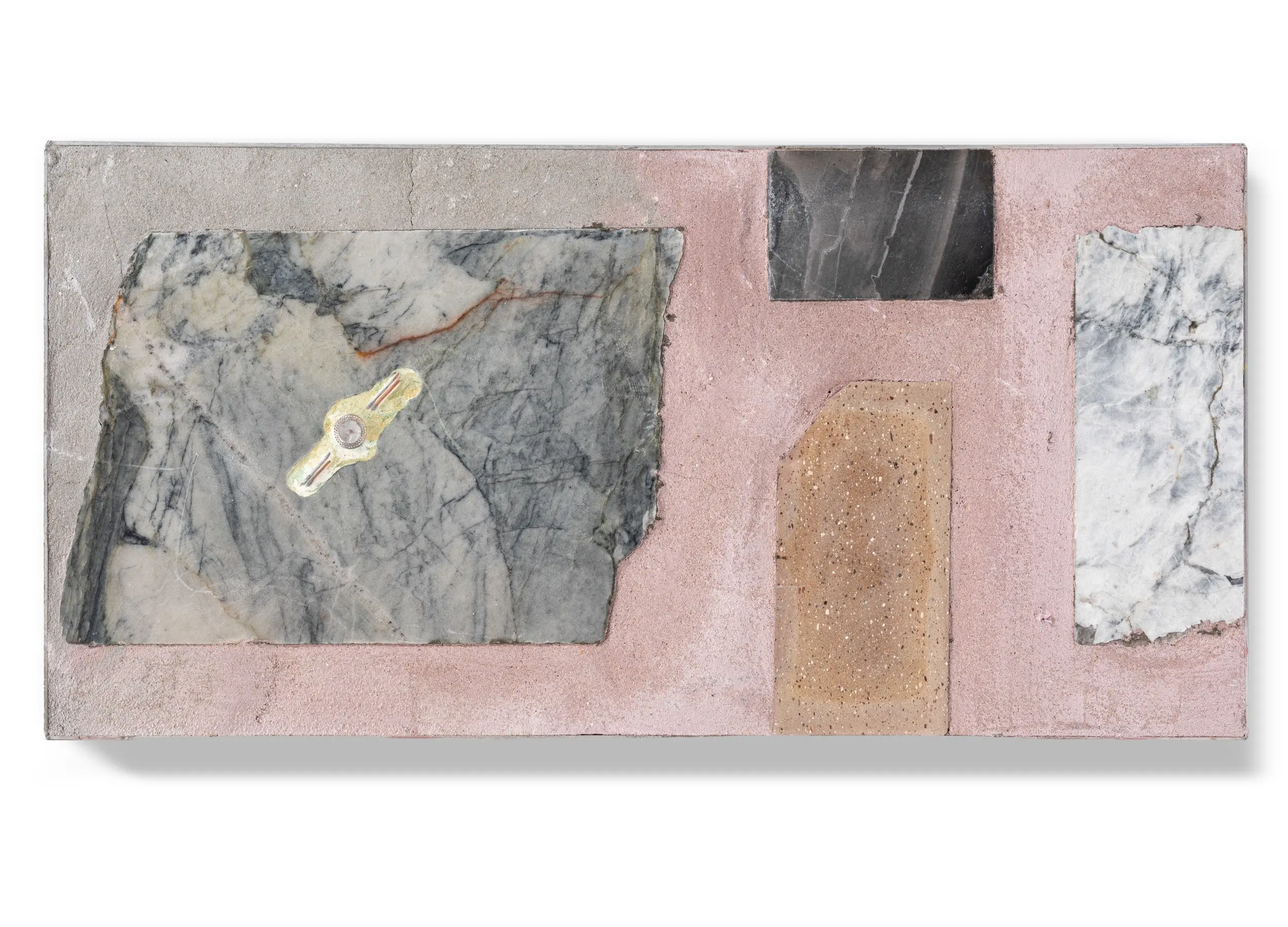
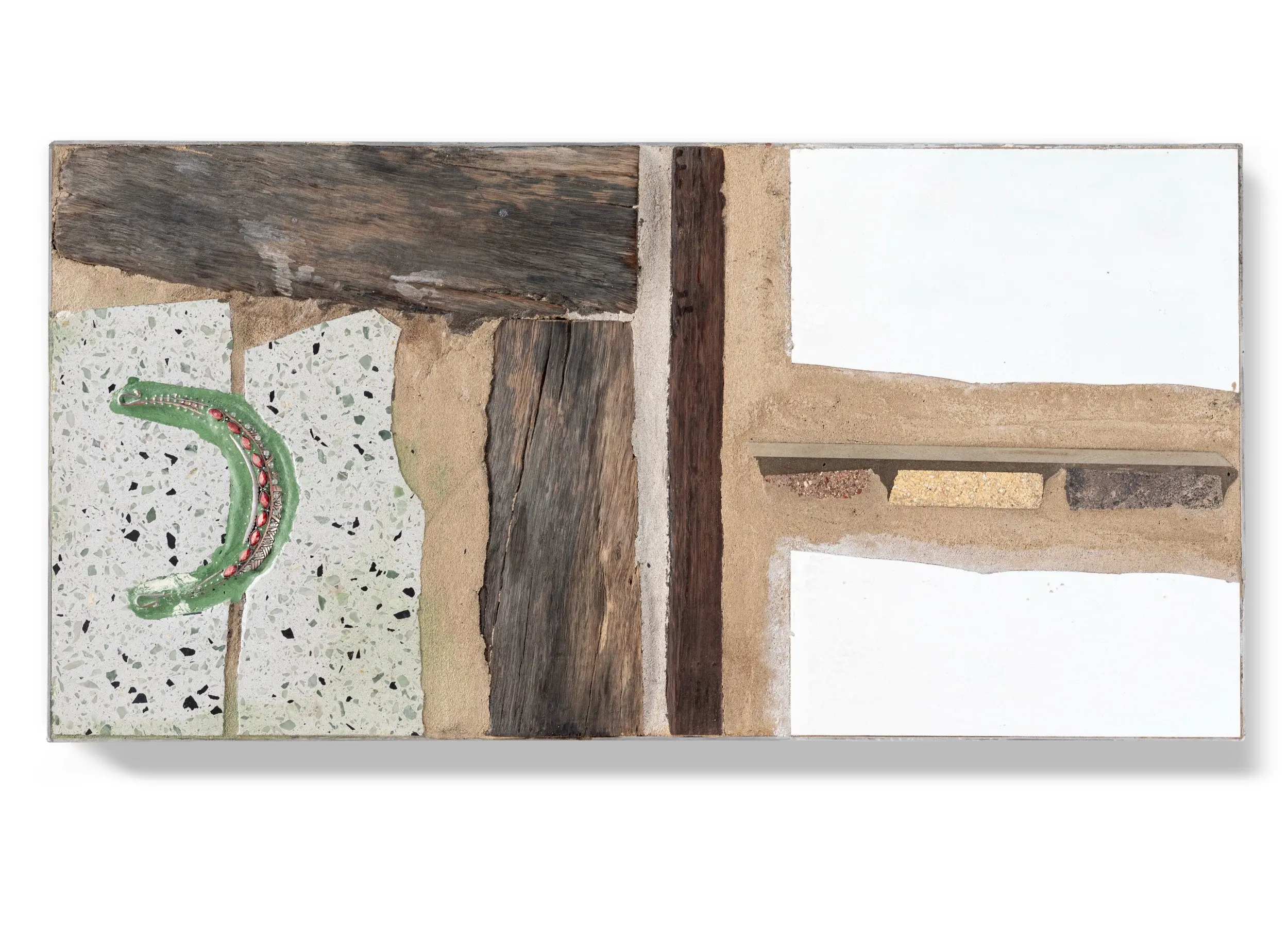
The part of the Est Living conversation that architects should read twice is about the floor. Hewson's Piet pavers, which he showed at Sydney Contemporary, are panels flecked with wood, gold and stone offcuts, fitted together in what he calls the French paving pattern, and he says they can be laid indoors or out and built permanently into a house. They grew out of a modular paving system he made for a public entrance, floor paintings you can stand on, in his words to Est Living. We have spent a decade watching terrazzo come back as printed vinyl, and here is somebody making the real thing from what fell off other jobs and asking whether we would like to specify it. The answer is yes. The follow-up question is who signs the slip-resistance letter, and we suspect Hewson would enjoy that question. A civil engineer who makes art does not get to hide behind either title.
His grandmother ran a gallery in Christchurch in the late sixties, he told Est Living, and spent more energy on other artists than on her own work. His father has nothing to do with art and does small improvised repairs on a country shack, and Hewson looked at them recently and recognised his own sculpture. This is where the work comes from, and it is worth saying plainly: not from a theory of reuse, and not from a sustainability brief, but from a family habit of looking at a thing other people had finished with and seeing a job it could still do.
The forecourt panels held up a city's worth of people on the way to the opera. Now one of them holds up a wine glass. The concrete does not appear to feel demoted. It is still doing what it was poured to do, which is to take a load and keep quiet about it, and it will go on doing that for another forty years in a gallery or a house or a field, and it does not much care which.
Sources & Credits
- Est Living, "Mike Hewson on Salvage, Structure, and His First Furniture Exhibition," interview by Madeleine Murdoch, 10 September 2026. https://estliving.com/mike-hewson-on-salvage-and-structure/
- Photography: courtesy of Mike Hewson, via Est Living, https://estliving.com/mike-hewson-on-salvage-and-structure/
- Exhibition details per Est Living: The Opera House Table at Gallery Twenty Twenty, Sydney, to 8 September 2026; installation at Sydney Contemporary, 3–6 September 2026; solo exhibition with Roslyn Oxley9 Gallery opening February 2027.