In 1980 a twenty-eight-year-old in Porto who had trained as a sculptor, and then given it up for architecture, and then spent his first working years in Álvaro Siza's office learning how a wall meets the ground, opened a studio of his own. The first thing he built was a market. It had a long roof on a colonnade and it stood in Braga, and it was a good building, and within about fifteen years nobody was using it. So the city asked him to come back and do something about it, and what he did was take the roof off.
We will get to the roof. First the prize.
In July of 2025 the Japan Art Association named Eduardo Souto de Moura its architecture laureate for the Praemium Imperiale. The citation, as Dezeen reported it, said he "is known for his belief that 'there is no universal architecture; everything is rooted in its own place', and he consistently creates work that resonates with its time and context" (Dezeen, 15 July 2025). Fourteen years earlier the Pritzker jury had said roughly the same thing at greater length, and the Pritzker chairman noted at the time that this was "the second time in the history of the prize that a Portuguese architect has been chosen. The first was in 1992 when Alvaro Siza was so honored" (Dezeen, 28 March 2011). Two men, one city, one office between them. Portugal is a small country. It builds a lot of wall.
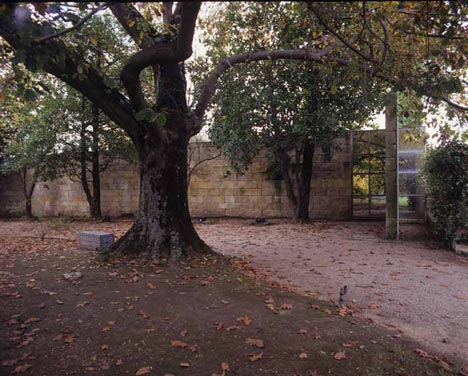
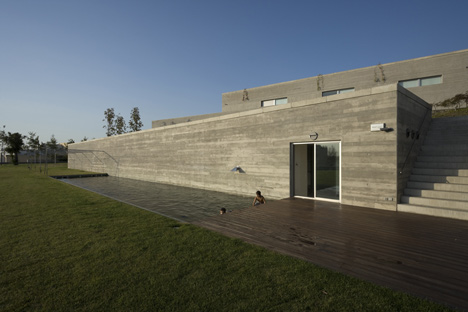
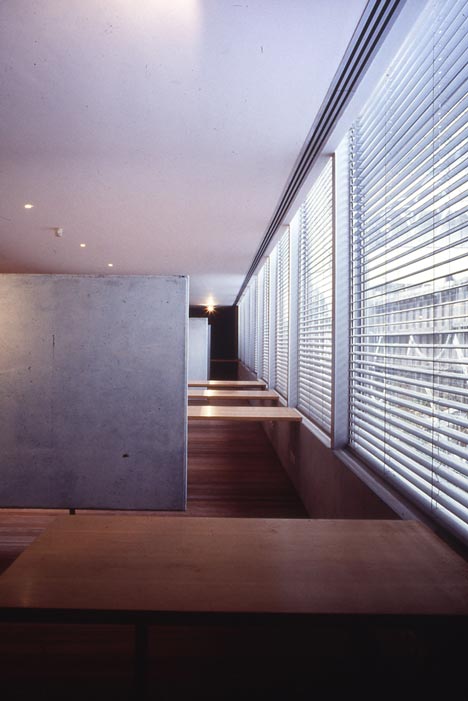
Look at the work from the first decade, the years we keep coming back to on this blog because they are the years the canon was arguing with itself. Casa das Artes in Porto, begun 1981 and finished 1991, ten years for a cultural centre, which is a long time to keep one idea alive. The House in Bom Jesus, Braga, 1989 to 1994. In the Dezeen gallery from the Pritzker year the photographs are almost all by Luis Ferreira Alves and almost all of them are of a wall. A granite wall running past an old tree. A concrete wall holding a lawn up off the ground. A long low interior with the light coming in through a slot along the top and a band of blinds below it and nothing else, no moulding, no ceiling trick, no reason to look up.
This is where the Judd connection matters, and it is not a decoration we are adding. The Pritzker biography, reprinted by Dezeen, credits a meeting with Donald Judd as a turning point for him (Dezeen, 29 March 2011). Judd is on our own list, and for the same reason: he made objects that are only the material they are made of, set down in a place, and the place does the rest. Souto de Moura's early buildings are Judd boxes that you can walk into. A wall is a wall. It is granite because the hills around Porto are granite and the men who lay it have been laying it for four hundred years. It is not granite because granite photographs well, though it does.
Now the roof.
The Braga market, from 1980 to 1984, was his first significant building, and it did what markets do: a long roof, a run of columns, a place to be out of the sun with the produce. Then the shopping habits of a Portuguese city changed, as they changed everywhere in that decade, and the building sat empty. When the commission came to turn it into something else, the architect who had drawn it was still in practice and still young. He could have restored it. He could have fought for it. Instead he stripped the roof off one part and left the colonnade standing open to the weather like the ruin it was becoming anyway, and he converted what remained into a place for a dance school and a small cultural programme. The building he had made at twenty-eight, he unmade at forty-five.
People find this shocking and we do not. If there is no universal architecture, and everything is rooted in its own place, then a building has to answer to its place when the place changes, and the honest answer is sometimes: less of me. An architect who believes his building is more important than the life of the street around it believes in a universal architecture after all, one with his name on it. Souto de Moura took the roof off. That is the belief, tested. Most of us would have failed the test and written a very good essay about it.
Here is the position, since we owe you one. Plainness is not a style you import. Every second young practice now describes its work as quiet, and reduced, and honest to material, and the photographs all look like a Souto de Moura interior from 1991, and almost none of them are rooted in anything but the photographs. The Portuguese lesson runs the other way. The wall is plain because the granite is local and the labour is local and the light is hard and the budget was small, and plainness was what those facts added up to. Start from the facts and you get the wall. Start from the wall and you get a mood board.
A client sends us a picture of a bare concrete room and asks for that, and the true answer is that the room is not available, because it was made from a place and the place is not here. What is available is the method. Sometimes the method produces a bare concrete room. Sometimes it produces plaster and a wooden floor, and the client is disappointed for a month and then not.
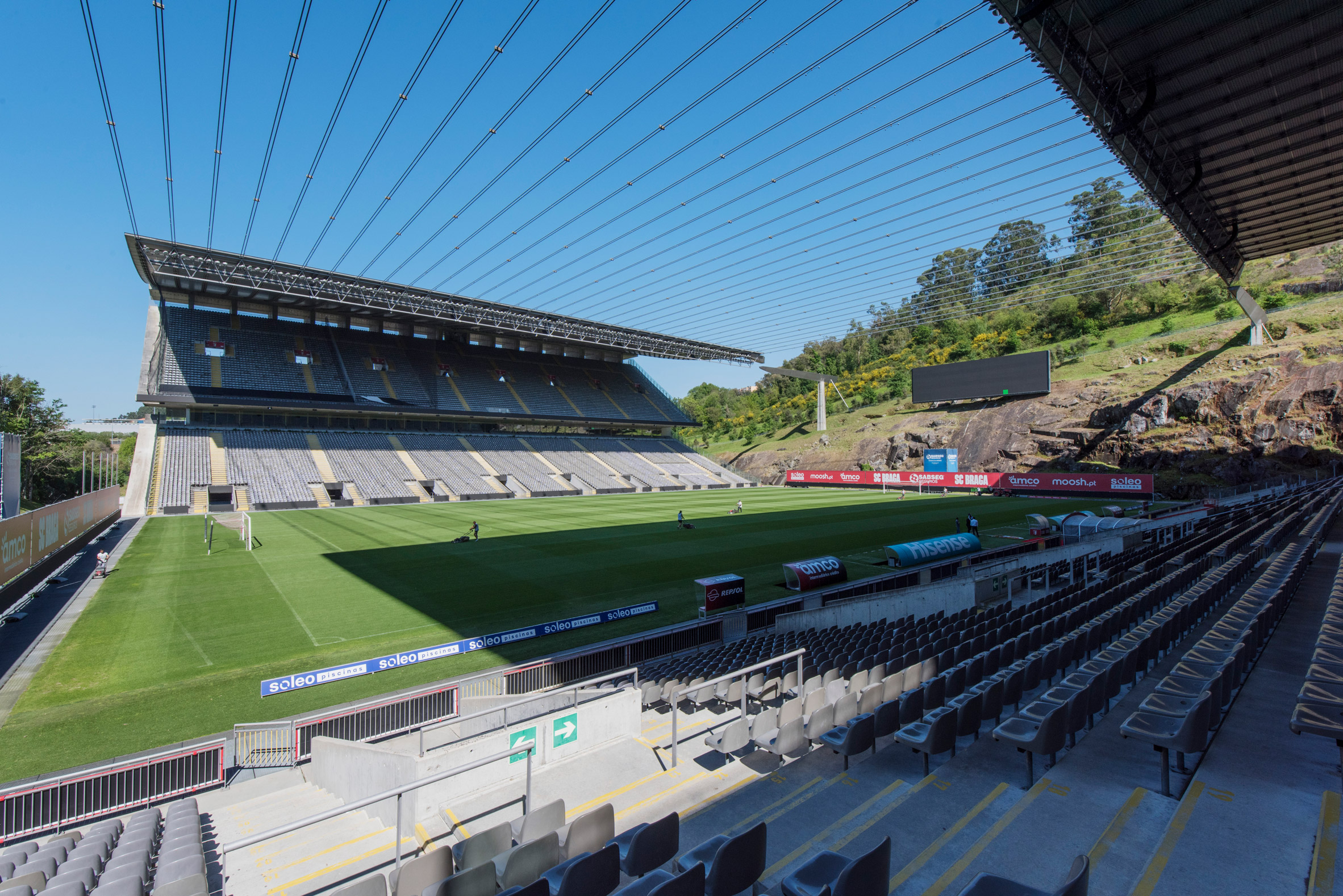
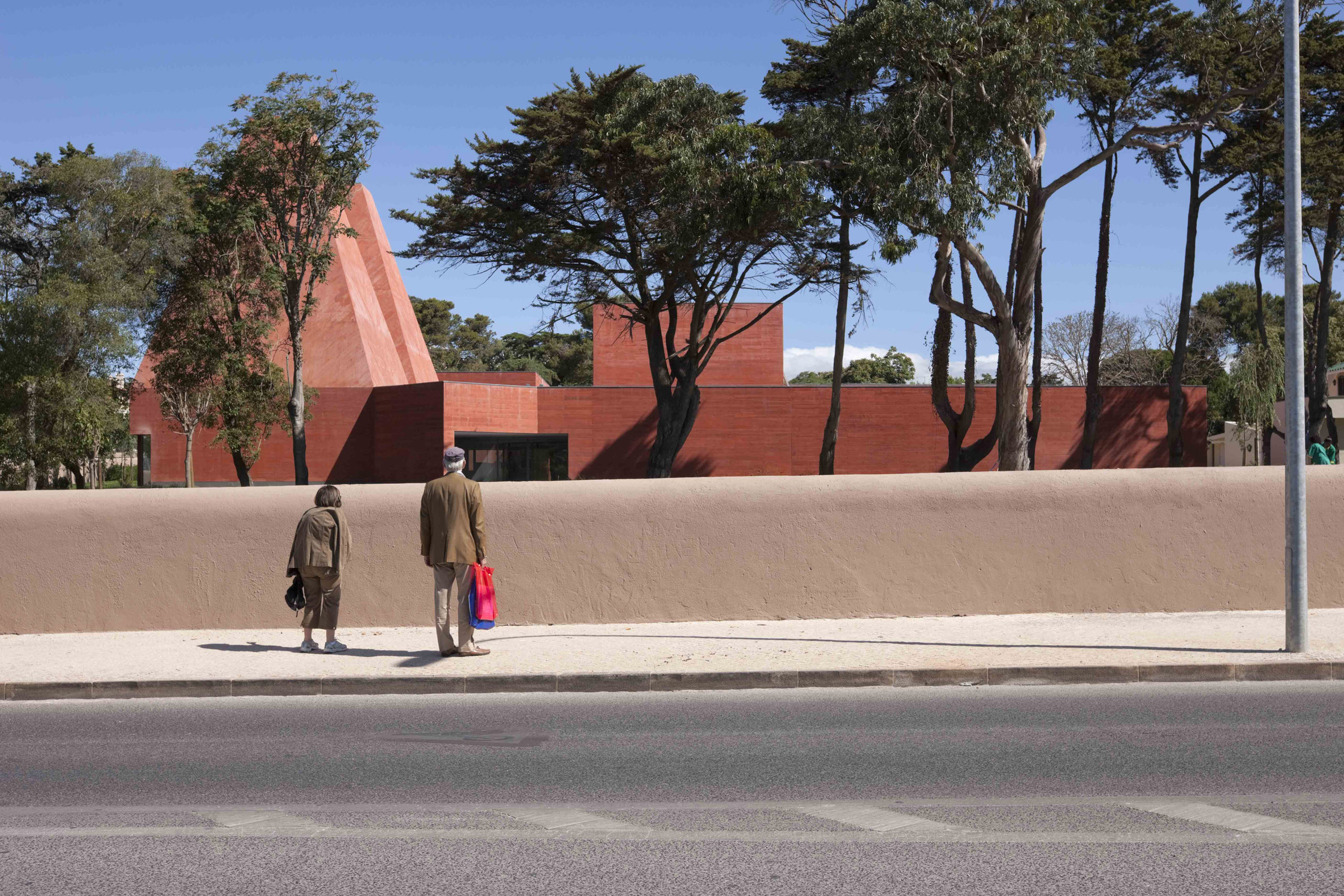
The later work gets bigger and more famous. The Braga stadium of 2003 is cut into the side of a quarry with, as Dezeen puts it, "canopy-style roofs connected by steel springs" (Dezeen, 15 July 2025), and the Paula Rego museum of 2009 is two red concrete pyramids in a pine wood, and both are photographed constantly, and neither is really a departure. They are still walls, doing what the place asked. The stadium has one stand facing rock because the rock was there. The museum is red because the pines are green.
So it goes with buildings that answer to their ground. Some of them last four hundred years and some of them lose their roof at fifteen, and the ground does not mind either way, and the architect, if he is honest, does not get to mind either. Souto de Moura has now been given the two biggest prizes the trade hands out, and the thing both juries praised him for is the thing that once made him dismantle his own work. That is not a contradiction. That is the whole point, and it took the prize committees forty years to say so out loud.
Sources & Credits
- Cajsa Carlson, "Eduardo Souto de Moura wins 2025 Praemium Imperiale for architecture," Dezeen, 15 July 2025. https://www.dezeen.com/2025/07/15/eduardo-souto-de-moura-praemium-imperiale-2025-architecture/
- Rose Etherington, "Key projects by Eduardo Souto de Moura," Dezeen, 29 March 2011. https://www.dezeen.com/2011/03/29/key-projects-by-eduardo-souto-de-moura/
- Marcus Fairs, "Eduardo Souto de Moura wins Pritzker Prize," Dezeen, 28 March 2011. https://www.dezeen.com/2011/03/28/eduardo-souto-de-moura-wins-pritzker-prize/
- Photography: Luis Ferreira Alves (Paula Rego Museum, Casa das Artes, House in Bom Jesus), via Dezeen; Shun Kambe, courtesy the Japan Art Association (Estádio Municipal de Braga), via Dezeen. Source pages as above.
- Note: the account of the Braga market (1980-84) and its later conversion under Souto de Moura's own hand draws on the standard published history of the building, not on the three Dezeen stories. Confirm dates against a monograph before publishing.