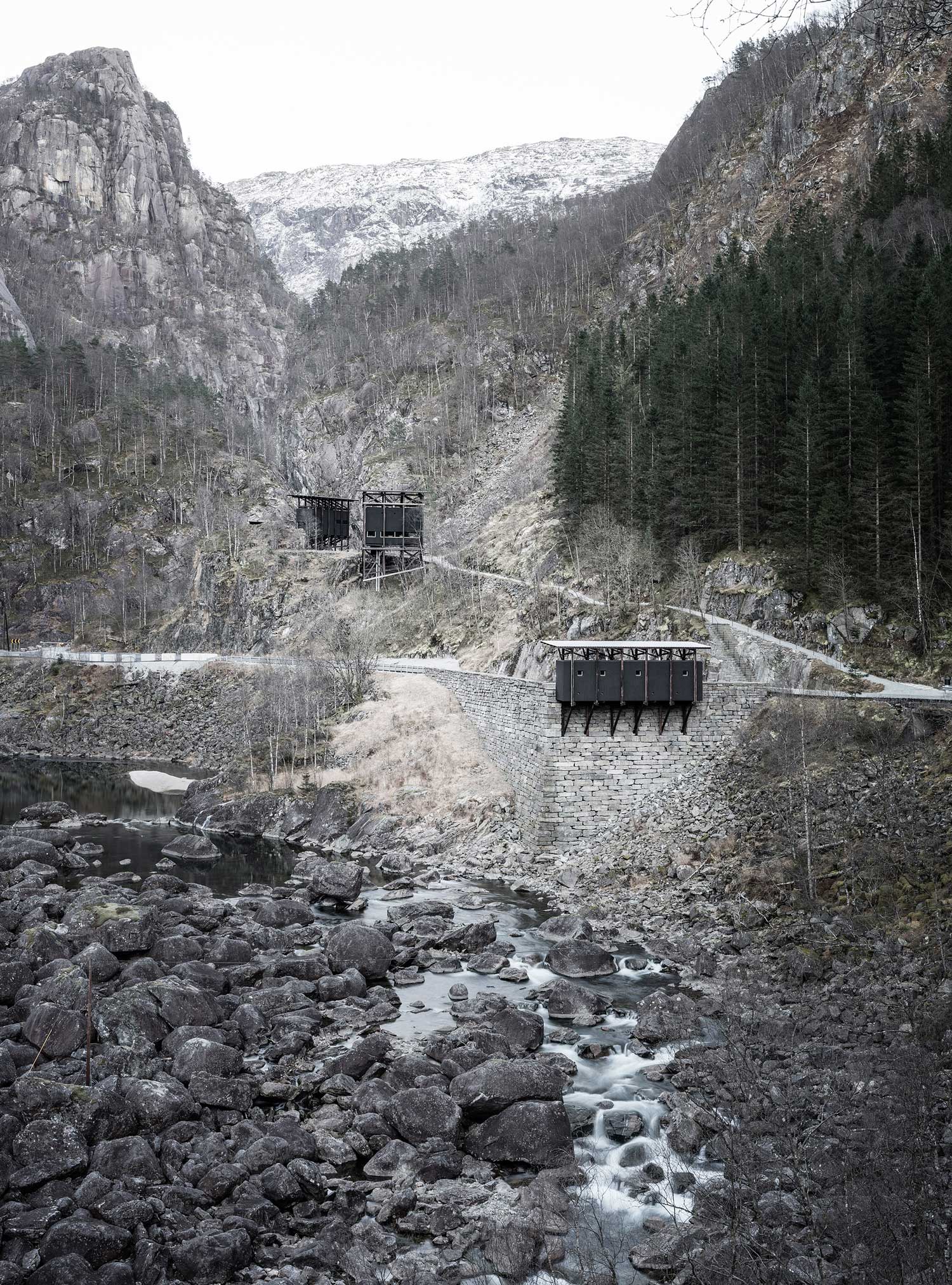
There is a road in the west of Norway that climbs out of the town of Sauda along a gorge, and at one bend of the road, on a shelf of rock above the river, four dark buildings stand on legs. They look like they were built by people who needed to get something done before winter and did not have a crane. That is close to the truth. Between 1881 and 1899 a company dug zinc out of this mountain, and the men who dug it lived up here in the cold and the wet, and then the zinc ran out or the money did, and the men went away. The mountain kept the holes.
In 2016 Peter Zumthor finished a set of buildings for the site. The commission came from the Norwegian public roads authority, which for two decades has been hiring good architects to put rest stops and lookouts and small museums along its scenic routes, on the theory that a country this beautiful should not meet its visitors with a portable toilet. Zumthor's answer at Allmannajuvet was a museum for the mine, a café, a building for the toilets, and the paths and walls to connect them, and every one of them stands on a scaffold of timber posts, and every one of them is dark.
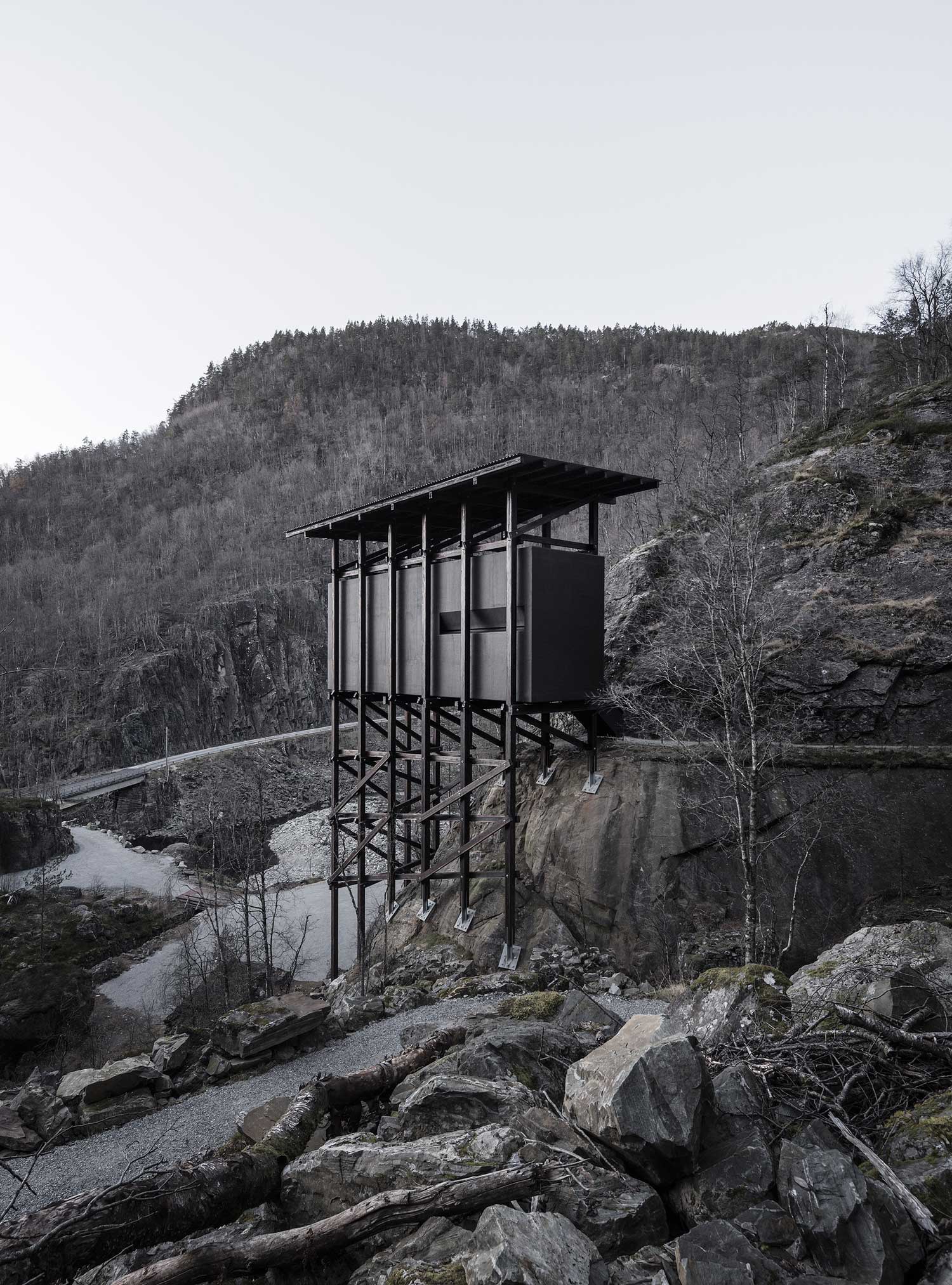
Yellowtrace ran the photographs in 2017 and wrote, fairly, "It's a bleak Norwegian vista," and then, of the buildings, "Both the landscape and the architecture feel isolated. Alone. Almost scary" (Yellowtrace, 13 March 2017). We agree with all of that. Then the text went somewhere else. It said the landmark "was originally offered in memory of the people of Finnmark who were victims of the witchcraft persecutions," and brought in Louise Bourgeois and a historian, and by the end of the paragraph the reader is standing in two places at once.
The second place is real. It is called Steilneset, and it is at Vardø, at the top of the country, where in the 1600s ninety-one people were burned as witches, and in 2011 Zumthor built a long thin hall on a timber frame with a stretched fabric skin, and Bourgeois put a burning chair inside a glass box beside it. Same roads authority. Same architect. Same idea of a dark room on legs in a landscape that does not want you there. It is a thousand miles from Sauda. The magazine put them in the same paragraph, and if you have only seen the pictures, you would too.
We are not here to scold anyone for the mix-up. We are here because the mix-up is the review.
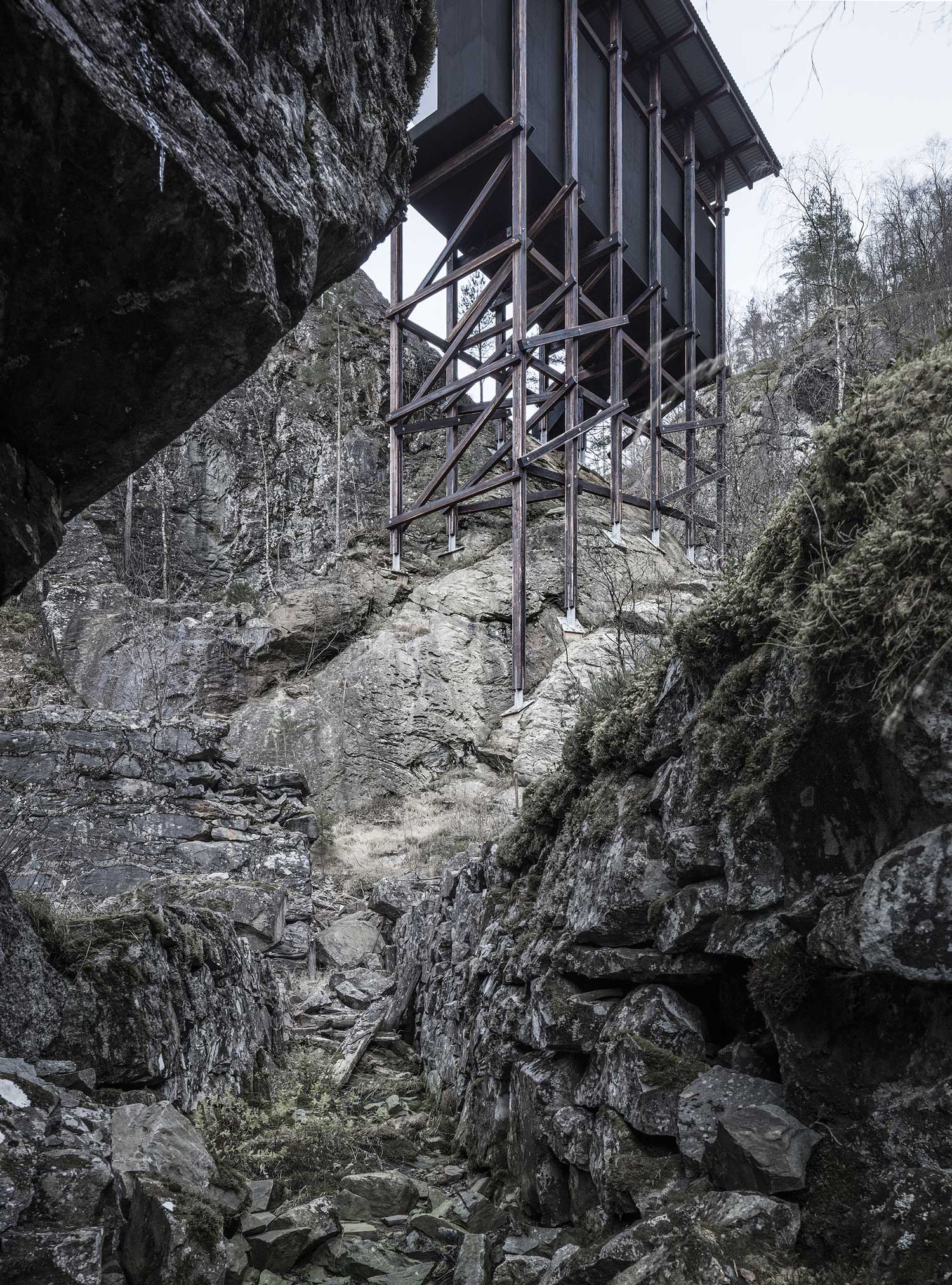
Think about what it means that one architect built the same shed for a zinc mine and for a mass execution, and that nobody can tell from the outside which is which. Most architects would treat those as two briefs, and the memorial would get the sombre building, and the mine would get the cheerful one with a gift shop, and both would be wrong. Zumthor's position, held for forty years in a stone valley in Switzerland, is that the building's job is not to explain the place. The building's job is to put you in the place and get out of the way. A dark room. A slot of a window. The wind on the outside of a thin wall so that you can hear it. After that the place does the rest, and the place at Vardø is a burning, and the place at Sauda is eighteen years of men going into a mountain, and the room is the same because grief and labor both want the same thing from a room, which is to be left alone with the view.
The building does not care. It holds either.
That sounds cold and it is the opposite. Look at the café. It is a black box like the rest of them, and inside it is black too, walls and ceiling and floor, and on the black floor there are plain wooden tables and stools, pale, the only warm thing in the picture, and a long window at bench height, and outside the window the wet grey slope of the gorge. It is, if you have ever been cold and wet on a mountain, exactly the room you were praying for. Nothing about it says museum. Nothing about it says Zumthor. It says: sit down, we have coffee, the mountain is over there.
We have a rule in the office, which we break less often than we used to, that a building for a hard place should be built the way the hard place builds. The miners here put up sheds on posts because the ground was rock and sloped and there was no flat to be had. They tarred what they could and roofed it with whatever was to hand, and in a zinc valley that means zinc. Zumthor's buildings do the same. The posts are timber. The skins are dark and rough. The roofs are the metal that came out of the hill. This is not costume. It is the only way to build on that shelf that does not involve blasting a platform, and the miners knew it, and so does he. The scaffold underneath is the honest part of the building, and he left it in plain view.
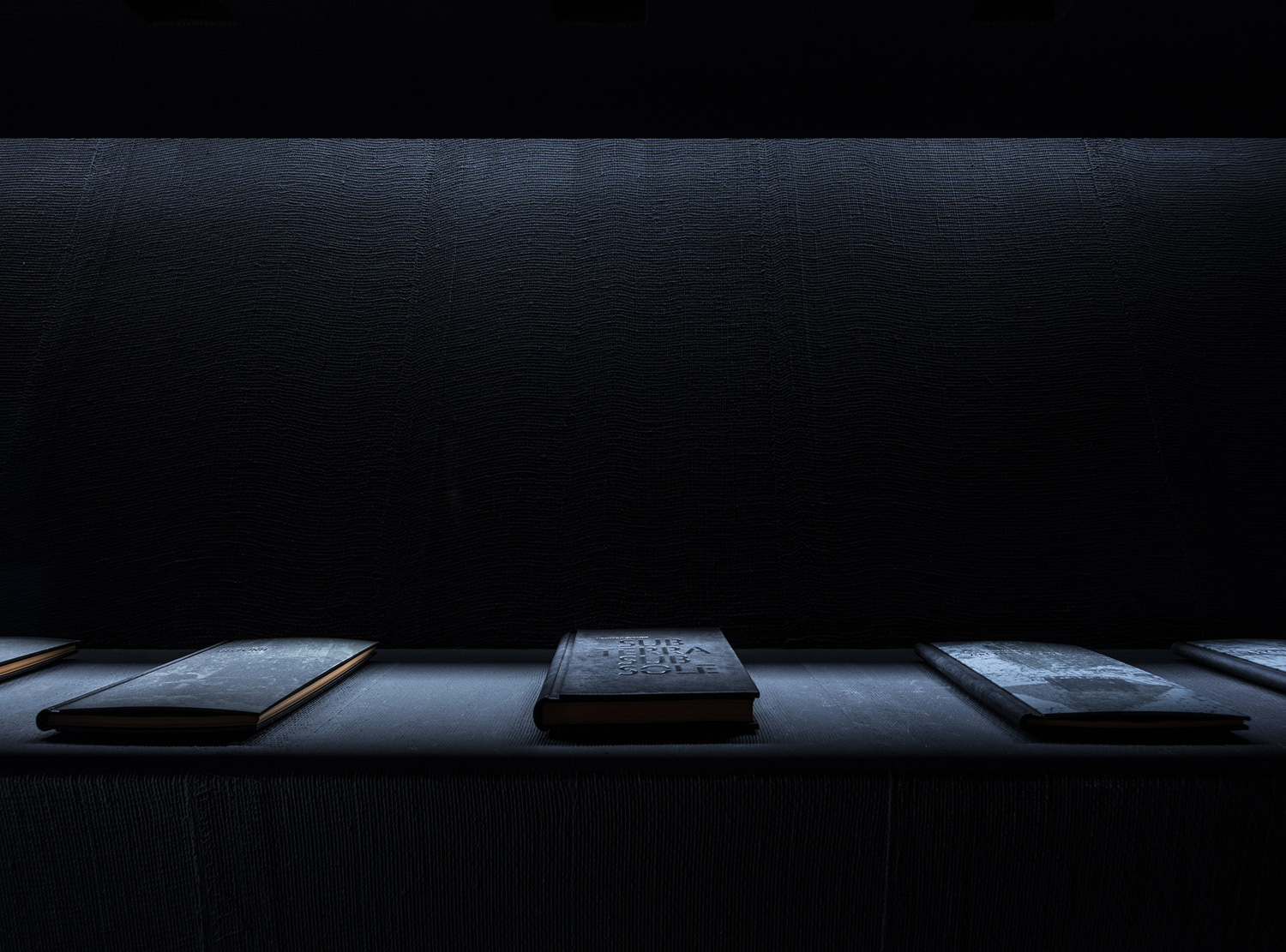
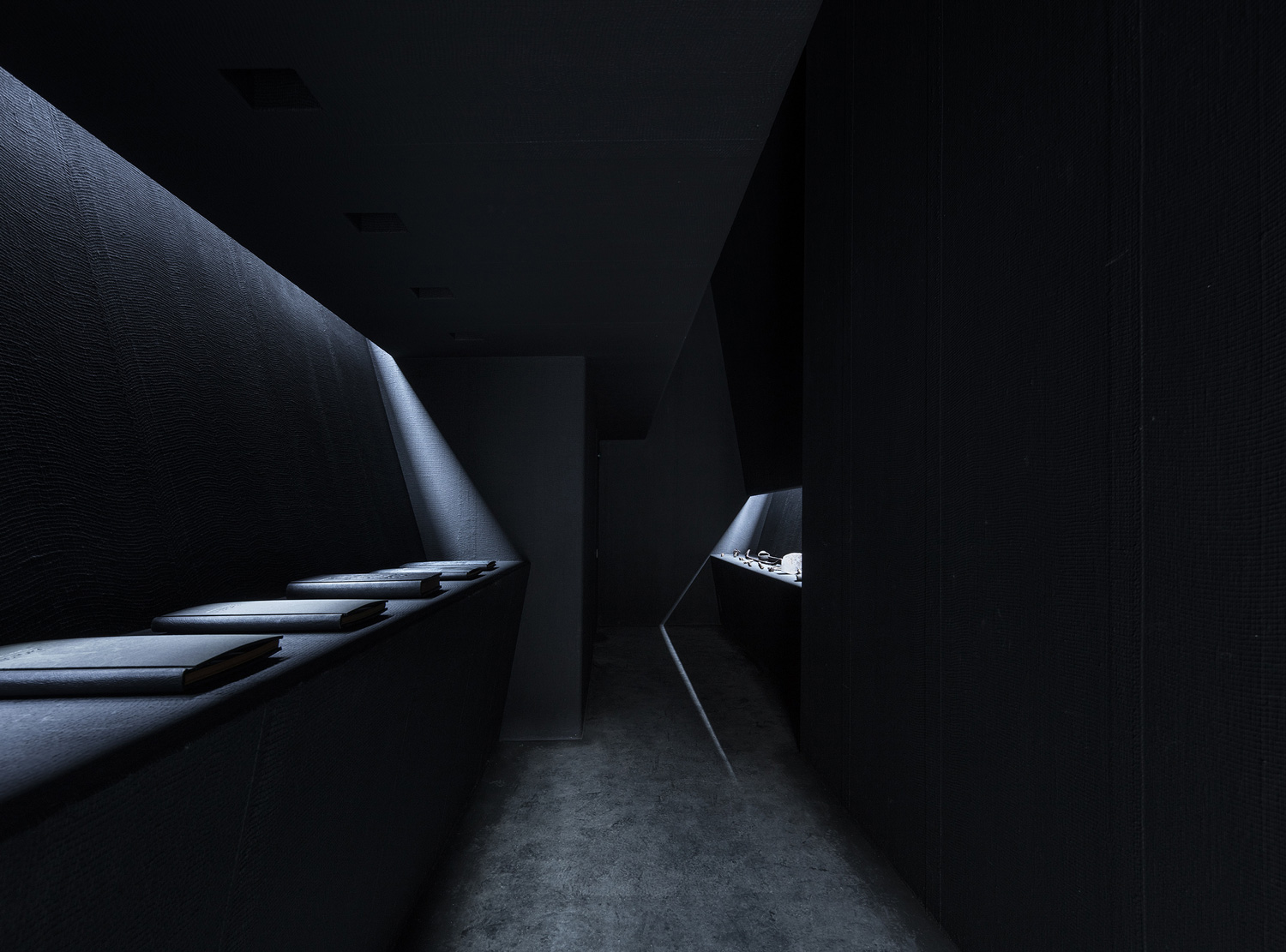
Here is our position, because you are owed one. The last twenty years of museum building have been about the museum telling you what to feel before you get to the object. Ramps that slope you into sorrow. Ceilings that lift for hope. Allmannajuvet does not do this. The museum room is a dark shelf with the mine's tools set out on it, a lamp, a pick, a ledger, and a window, and if you want to know what it was like to work here you look at the tools and then you look out the window at the weather and you work it out yourself, the way the men did. It trusts you. Very few buildings trust you.
So when a magazine looks at this shed and thinks of the other shed, the one for the witches, the mistake is telling you something true about both. Zumthor did not design a mine museum and a memorial. He designed a way of standing in a Norwegian landscape and being small in it, and then he built it twice, at both ends of the country, for two different kinds of dead. The buildings are still up there on their legs. The wind gets at the walls. And still they stand.
Sources & Credits
- "Peter Zumthor's Allmannajuvet Zinc Mine Museum in Sauda, Norway," Yellowtrace, 13 March 2017. https://www.yellowtrace.com.au/peter-zumthor-allmannajuvet-zinc-mine-museum-norway/
- Photography: via Yellowtrace, https://www.yellowtrace.com.au/peter-zumthor-allmannajuvet-zinc-mine-museum-norway/ (photographer not captured in the stored record; confirm and credit before publishing)
- Note: the source text conflates Allmannajuvet with Zumthor's Steilneset Memorial at Vardø (2011, with Louise Bourgeois). The dates, mine years (1881-1899), commissioning body and building programme in this post follow the standard published record of the National Tourist Routes project, not the Yellowtrace text. Verify against the roads authority's own project page before publishing.