Everyone in this business knows the Breuer story. He was in his early twenties at the Bauhaus, he had just bought himself a bicycle, and he looked at the handlebars and understood that steel tube could be bent and would hold, and out of that came the Wassily and the Cesca and most of a century's idea of what a chair is allowed to weigh. It is a good story because it is a story about abstraction. Breuer saw a handlebar and drew a tube.
Fifty-odd years later a student at Kingston Polytechnic named Jasper Morrison heard the same story and did something dumber and, on reflection, harder. He went and bought the handlebars.
"I made the first Handlebar Table at home in January 1982," Morrison told designboom. "I was inspired by Marcel Breuer's idea for a chair made of bent tubular steel, which he had after seeing a pair of racing bicycle handlebars. So I decided to use the handlebars themselves. I made ten of them and sold them for £100 each."
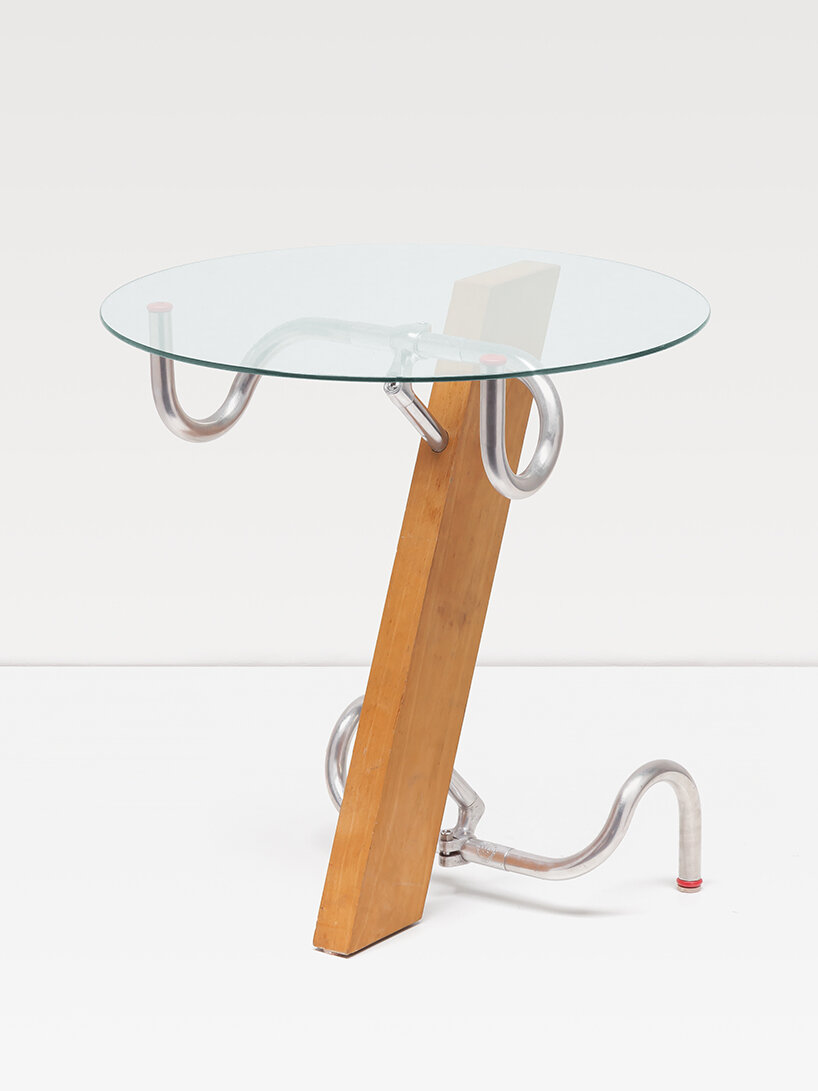
Ten tables. A hundred pounds apiece. Aluminium handlebars, chrome steel connectors, a beechwood support and a sheet of plate glass. That table went back on show in London in September 2022 alongside six other pieces from Morrison's first decade, some of which had not been seen in public for over thirty years, and looked at together they make the most useful argument we have heard in a while about how design actually gets made.
The argument is this. There are two ways to arrive at an object. You can invent the part, or you can find it. Breuer invented. Morrison went shopping. And the second one is not the lazy version of the first.
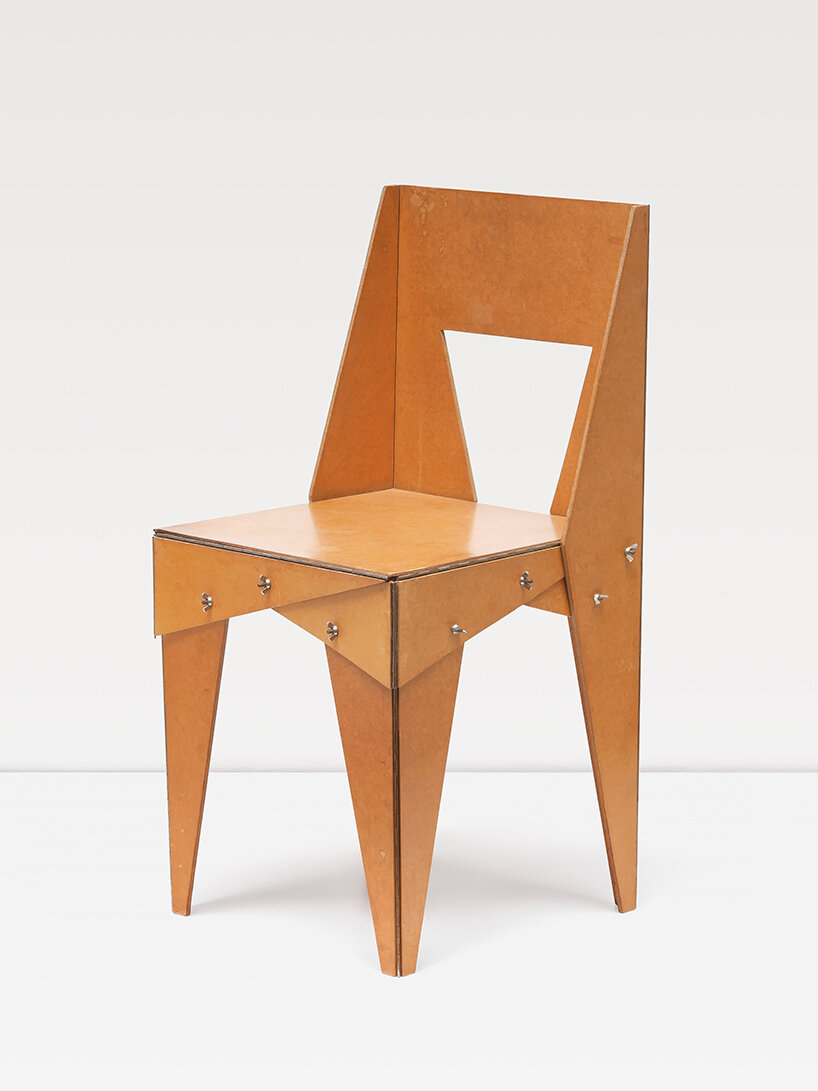
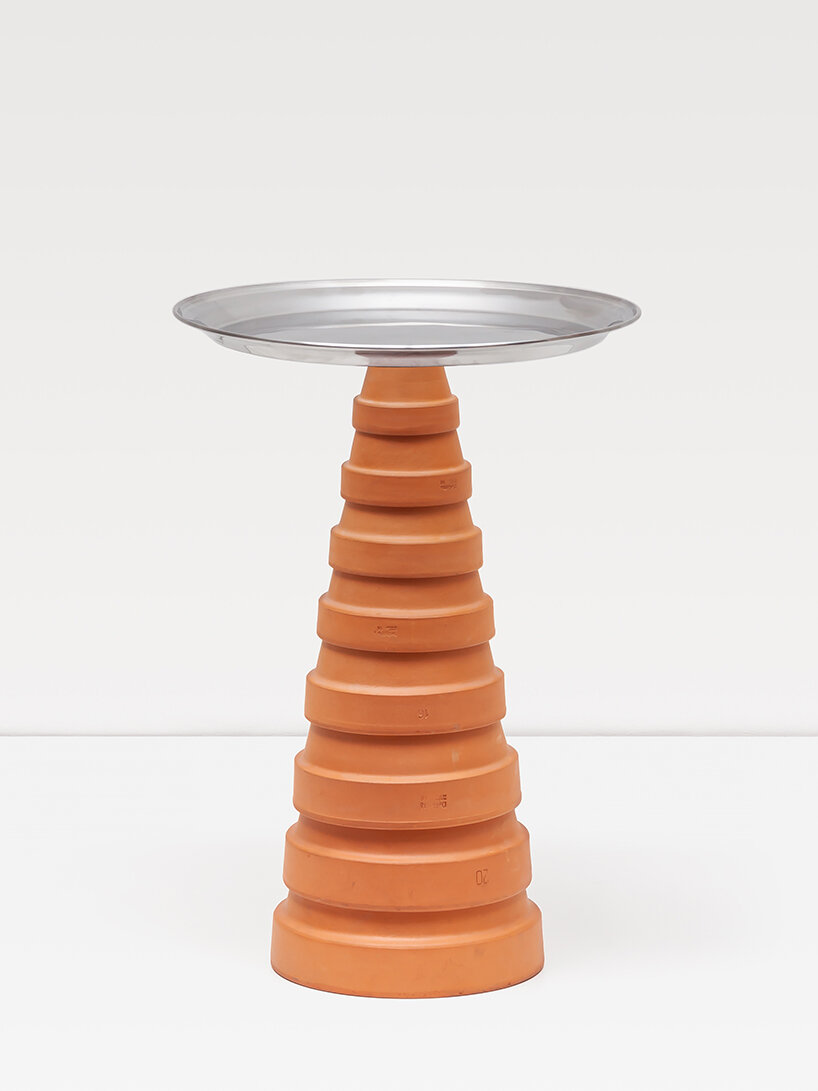
Consider what he actually bought. The Laboratory Light of 1983 is a six-foot laboratory retort stand with a clamp, fitted with a plastic funnel and rubber tubing, assembled from parts he got at a Berlin shop called Werkstatt Chemie, run by chemists who, in his telling, "grew confused and impatient at my visits." The Flowerpot Table came out of walking past a Berlin hardware shop where the pots were stacked by size, and seeing a table base. The Wing-nut Chair of 1985 came out of a visit to a factory that made laundry boxes: "In the factory, four men used four machines to make the boxes at speed. From this, I conceived the idea for a Laundry Box Chair." The Coat Stand of 1987 is a length of spirally wound galvanised air-conditioning duct with two office chair bases pushed into it and wine corks stuck on the open ends.
None of that is invention. All of it is specification, which is a word that sounds like paperwork and is in fact the entire job. A specification is a claim about what exists, what it costs, who makes it, how far it has to travel, and whether it will still be available in eighteen months when the contractor finally calls. Morrison spent his twenties building that knowledge on foot and by car, ferrying finished and unfinished pieces around London, and he was clear at the time about what it bought him.
"Driving around all these little places gives you many ideas," he said. "If you become a producer and designer, your appreciation of manufacturing problems becomes sharper, and your ways of solving the difficulties become more inventive."
Sharper. Not purer. The romance of the studio holds that constraint is the enemy of the idea, and every architect who has ever been told the profile carries a twelve-week lead time knows this is nonsense. Constraint is where the idea comes from. A handlebar is a better table leg than a drawn tube precisely because somebody already solved the bending and the finishing and the tolerances, and solved them at bicycle-industry volumes, and will keep solving them next year whether or not the table sells.
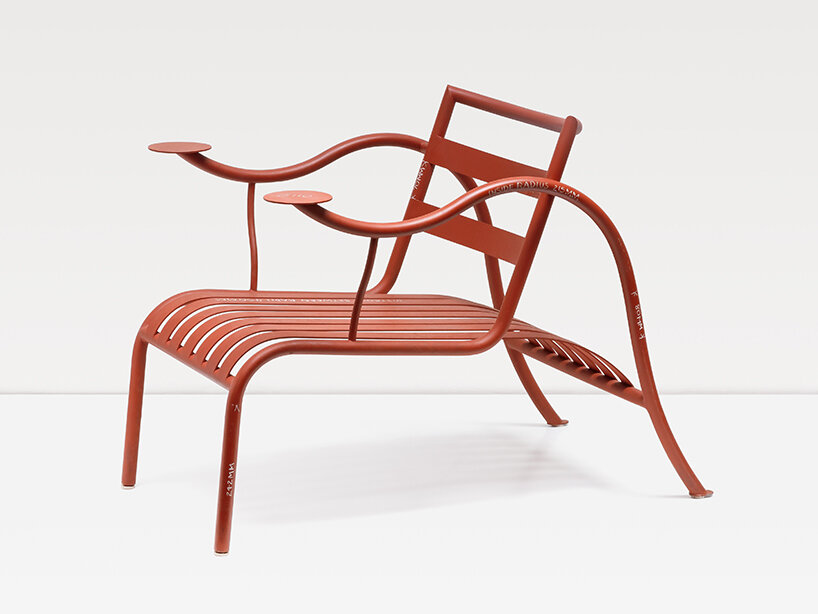
There is one detail in that show we cannot stop thinking about. The first prototype of the Thinking Man's Chair was made in December 1985 by Peter Longfellow, a metalwork technician at the Royal College of Art, working through the school holidays. Morrison sprayed it with a can of red oxide rust-proofing paint, decided it looked too raw, and so wrote the chair's own dimensions onto it in chalk and sealed them with hairspray.
A chair wearing its own drawing. Nothing hidden, nothing quite resolved, the numbers left on the outside where the next person could read them. Cappellini launched it into production at the Milan Fair in September 1988, and by then the chalk was gone, and a curve had been added to the bottom edge of the back slats, and the thing had become furniture instead of evidence. That is what production does, and it is not a tragedy. But the prototype was more honest.
We take this personally, and we should say why. A working practice invents almost nothing. We draw the assembly and we choose the parts, and the parts come out of a catalogue, and the catalogue was written by somebody who spent a career getting a hinge to close quietly. Pretending otherwise is the professional vanity of the drawing. The alternative is not to surrender authorship. It is to admit that authorship lives in the joint, and in the sequence, and in the decision about which four things go together and in what order, and that the four things themselves came from a shop.
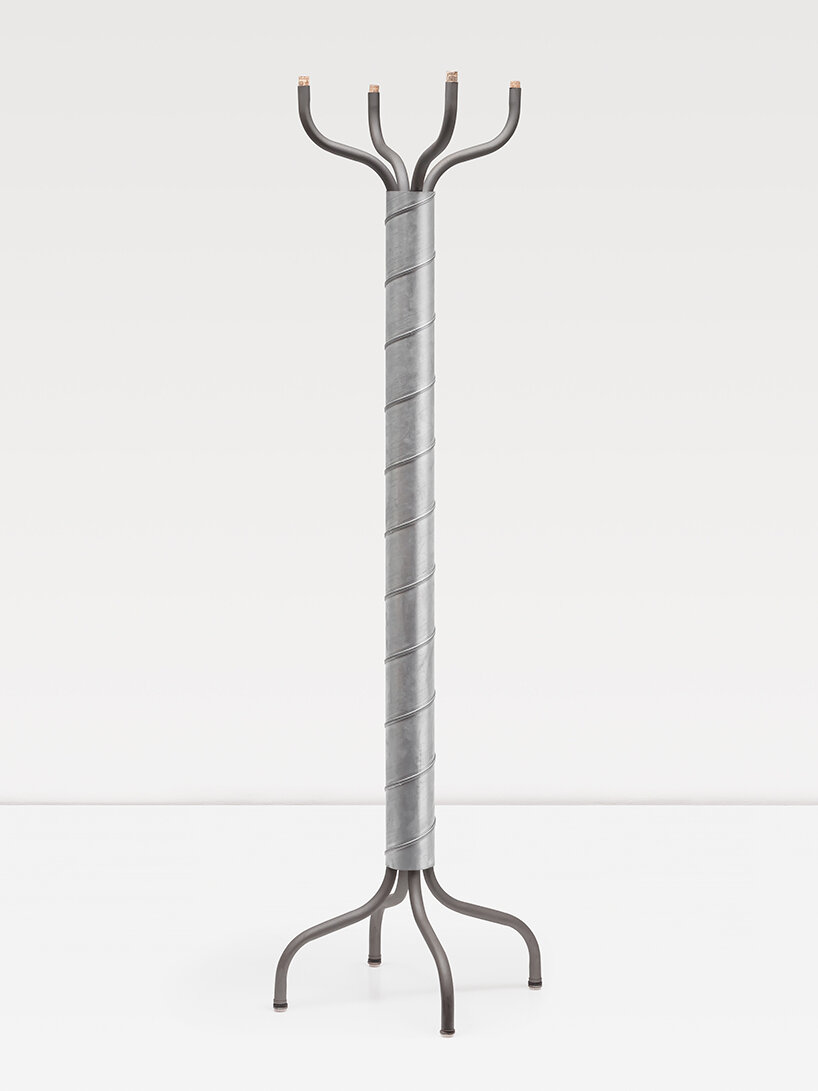
Morrison's first decade runs from 1982 to about 1990, which sits dead centre of the window we keep coming back to: the years when the modernist argument had finished being new and had not yet been embalmed, and a person could still get a metalworker in north London to make five of something. Sheridan Coakley at SCP produced the first professional runs in 1986. Zeev Aram sold five chairs over the following year. Domus noticed him because of a coat stand made from ducting. These are small numbers, and they are the numbers that built the practice.
Breuer looked at a bicycle and saw an idea. Morrison looked at a bicycle and saw a supplier.
Both of them were right. Only one of them had to wait for the truck.
Sources & Credits
- Jasper Morrison quotations and project dates: "in conversation with jasper morrison ahead of his 'early work' exhibition in london," designboom, 18 September 2022. https://www.designboom.com/design/jasper-morrison-early-work-exhibition-london-09-18-2022/
- Exhibition: Early Work, Jasper Morrison Shop, 24b Kingsland Road, London, 20 to 23 September 2022, during London Design Festival 2022.
- Photography: Images courtesy of Jasper Morrison, via designboom. https://www.designboom.com/design/jasper-morrison-early-work-exhibition-london-09-18-2022/