
A designer who spent forty two years inside one company gets remembered for a sentence. Rams ran product design at Braun from 1955 to 1997, and he built radios and shavers and calculators and clocks and a wall shelf that people still bolt into rented apartments sixty years later, and what survived all of it, in the general memory, is six words: as little design as possible. You can buy the six words on a poster. You can find them in the deck of every studio that owns a beige camera. They have been sanded down into a look, which is roughly the opposite of what they were.
Here is the thing the poster leaves out. That phrase is not a description of a finished object. It is an instruction about labor, and it is expensive, and somebody upstairs has to agree to eat the cost.
In the Kinfolk interview reprinted by Yellowtrace, Alex Anderson writes that Rams's quiet, agreeable products come out of "an intense effort" to "return to simplicity," to abandon the designer's ego, and to fight what Rams calls the market's "ruthless exploitation of people's weakness for visual and haptic signals." Read that last clause again. It is not a design principle. It is an accusation, aimed at the people who sign the checks, made by a man who worked for the people who signed the checks. He is saying that his own industry makes money on the fact that a knurled dial feels good under a thumb and that the feeling can be sold in place of a function. He spent four decades refusing to do that inside a company whose competitors were doing it constantly.
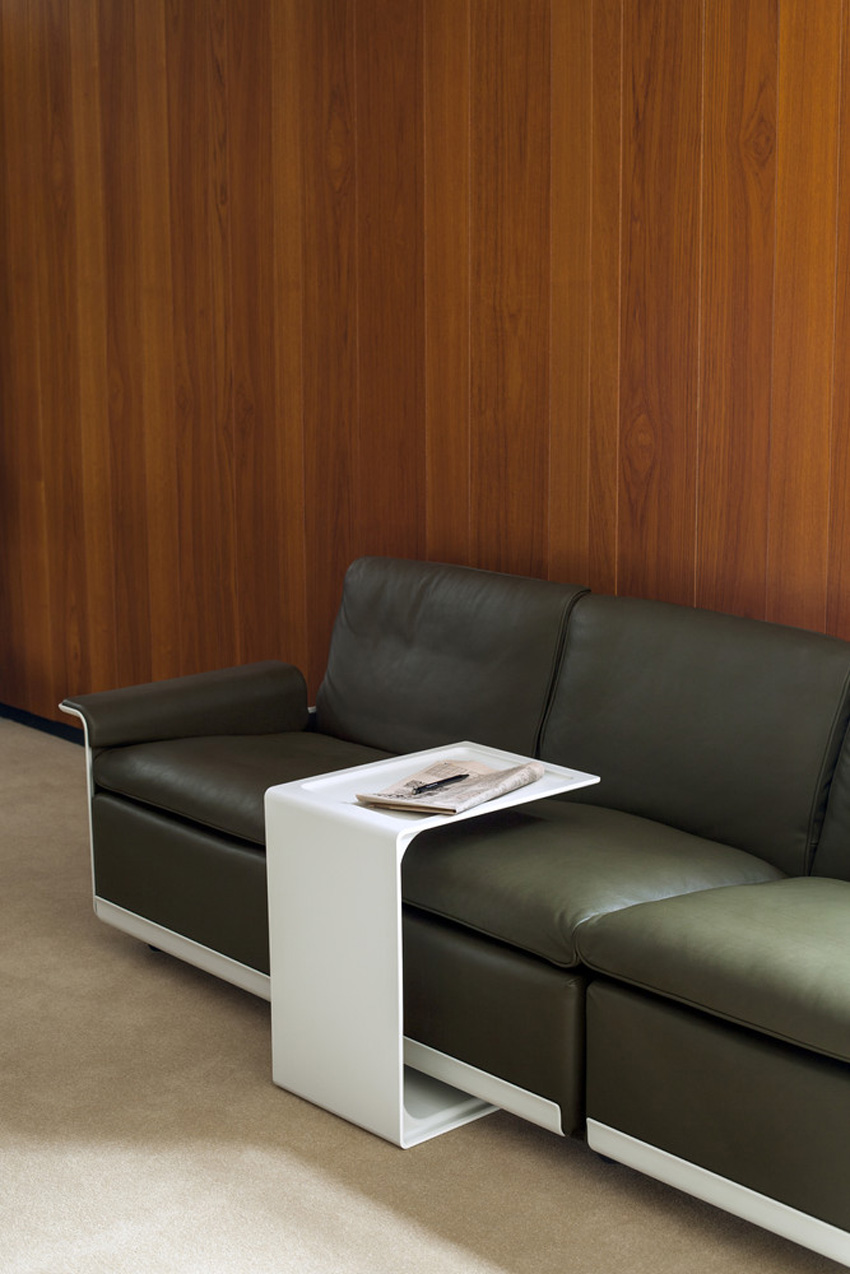
We think about this a lot, specifying interiors, because the same accusation lands on us weekly. A client stands in a showroom and touches two handles. One of them is heavier than it needs to be. The extra mass does nothing except register in the hand as quality, and the hand is not wrong exactly, the hand is just being spoken to in a language that was engineered specifically to talk to it. Rams's ten principles are usually read as a taste. They are closer to a purchasing policy. Good design is unobtrusive. Good design is long lasting. Good design is as little design as possible. Those are not adjectives, they are constraints, and every one of them costs somebody money in the short run and saves somebody else money in the long run, and the two somebodies are almost never the same person.
Which is why we keep circling back to the least romantic fact in the whole story: Braun let him. For forty two years, a corporation with quarterly obligations let a man take things out. It let him ship a product that photographed as less than the competition. It ate the margin on a shelving system engineered so that a part made in 1962 still fits a bracket made this year. Design ethics of the Rams kind are not a personality trait. They are an arrangement between a designer and an institution, and the arrangement is the rare part. The talent is not rare. Go to any design school and you will find twenty people who could draw the SK4. What you will not find is twenty companies who would let them delete the chrome.
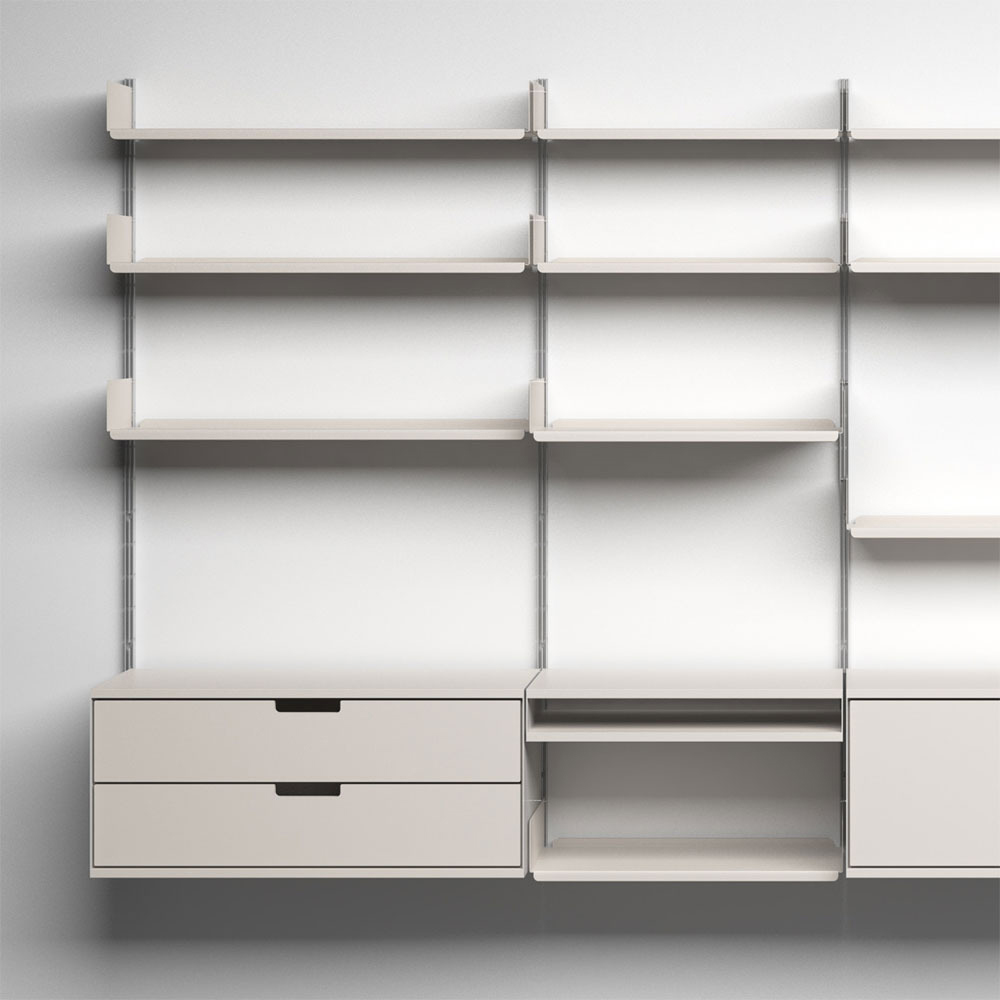
So the borrowing goes wrong in a specific way. Studios take the output and skip the arrangement. They deliver the grey and the sans serif and the flush seam, and then they add eleven of them to a room, because subtraction was never actually the method, restraint was just the finish. You end up with a space that looks like it was disciplined and was in fact only decorated, quietly, in the color of discipline. The wall is beige. The wall does not care.
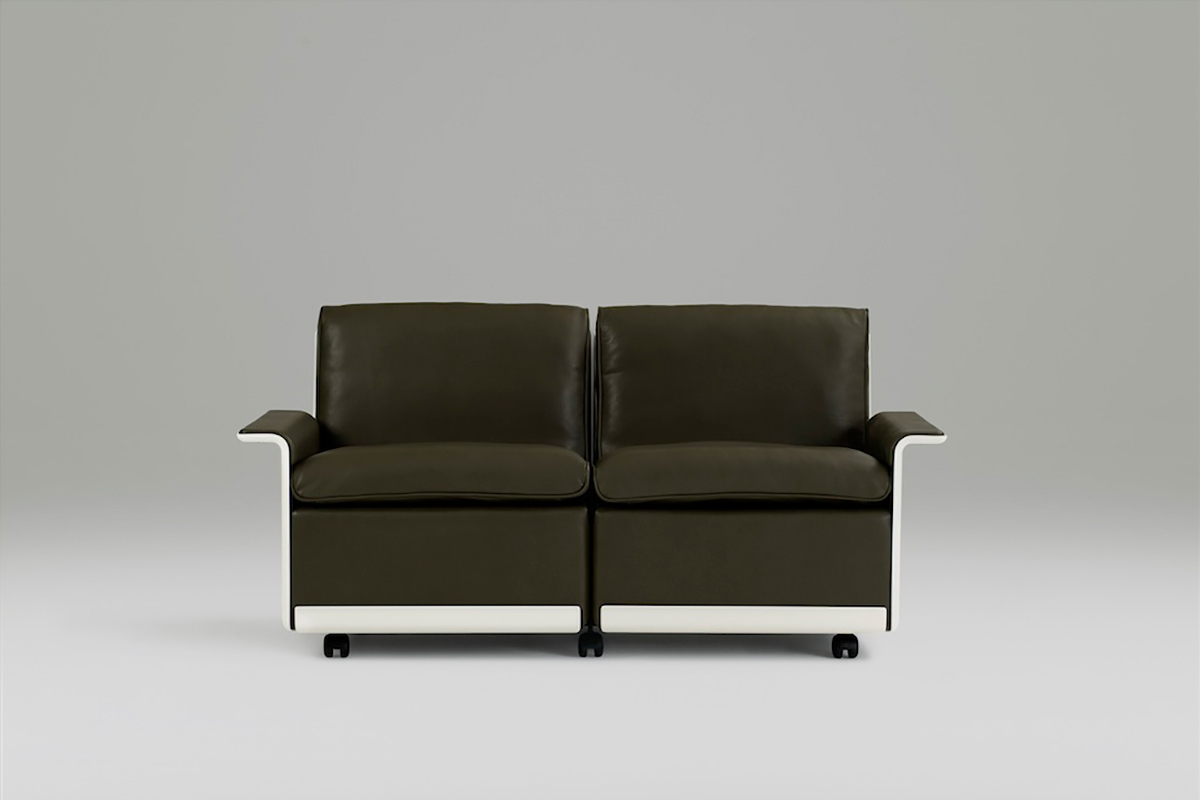
None of which is a complaint about the man. Go look at the 606 shelf. It is a bracket and an upright and a shelf, it has been in production since 1960, and it will hold your books until you die and then hold somebody else's. It solves the problem and then it stops, and stopping turns out to be the hardest instruction in the whole trade, because stopping cannot be photographed and cannot be invoiced and cannot be defended in a meeting where somebody has just asked what else we could do here.
The honest lesson is not aesthetic. It is that a designer with principles needs a client who will fund them, and that most of the great restrained work of the twentieth century has an institution standing just out of frame, absorbing the difference. Rams found one and stayed forty two years. That is the actual achievement. Everything else is a radio.
Sources & Credits
- Alex Anderson, "Interview with Dieter Rams: 'As Little Design as Possible'", Kinfolk, via Yellowtrace: https://www.yellowtrace.com.au/dieter-rams-interview-as-little-design-as-possible/
- Photography: via Yellowtrace, https://www.yellowtrace.com.au/dieter-rams-interview-as-little-design-as-possible/