He Had to Leave Tokyo First
In 1991 a car showroom opened in Setagaya with an Ionic column standing in the middle of it about the size of a grain silo. It sold Mazdas. It was enormous and knowing and very much of its moment, and the moment ended almost immediately, because the Japanese asset bubble was in the process of coming apart and nobody in Tokyo was in the mood any more for a joke that expensive. The architect was thirty-seven. He had opened his own office the year before. For most of the decade that followed, the largest city in the world did not call him, and he went out to small towns instead and worked with whatever timber and stone and paper and labour those towns already had, and he stayed out there long enough to learn something that has since been called a philosophy. It was not a philosophy at first. It was what was available.
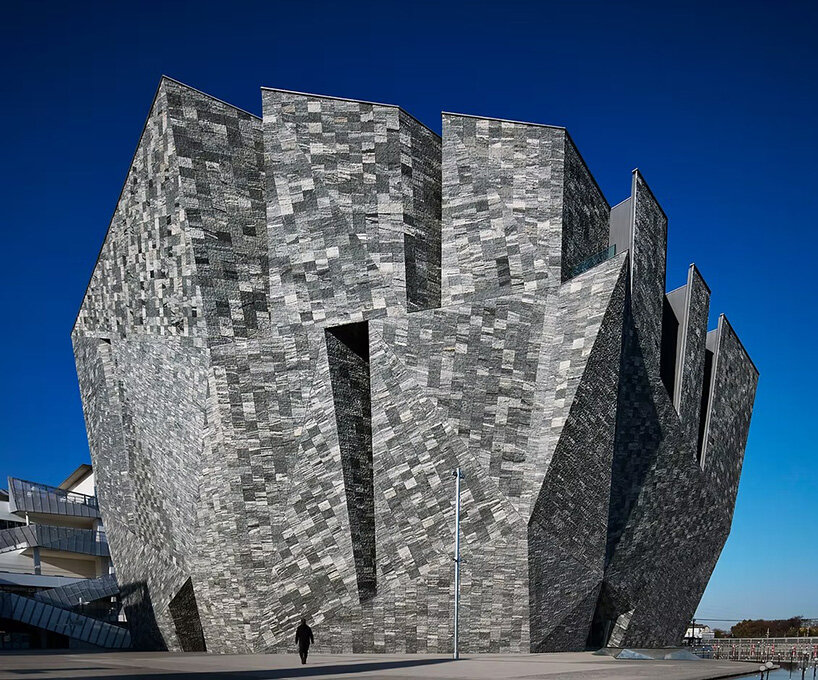
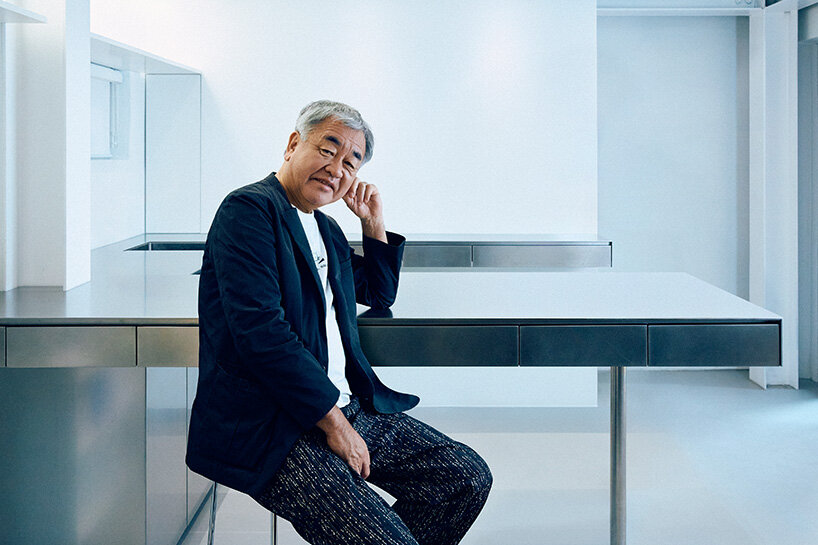
Kengo Kuma will receive the Andrée Putman Lifetime Achievement Award at the 2027 Créateurs Design Awards in Paris, on January 16th, at the Shangri-La. designboom reports that the award recognises a career of more than three decades and his "continued exploration of the relationship between architecture and nature, material, and Japanese tradition" (designboom). He was born in Yokohama in 1954, founded Kengo Kuma & Associates in Tokyo in 1990, and opened a Paris office in 2008. The work now runs from the V&A Dundee to the Japan National Stadium to the Saint-Denis Pleyel station, finished in 2024.
Kuma's own line in the announcement is the good one. "In my design practice, I consider myself a long-distance runner," he says. "I believe the most important thing is to keep running over the long term with a single goal in mind" (designboom).
We would like to sit with that for a second, because it is being read as a line about endurance and we think it is a line about a bad mile. Nobody describes themselves as a long-distance runner when the race has gone well. You say it when you have had a stretch you would rather not discuss and you are explaining, mostly to yourself, why you kept going anyway. The showroom in Setagaya is now a funeral hall, which is the kind of detail that would be too much if you made it up.
What the exile actually taught
Here is the part that matters to a working office, and it is not poetic at all.
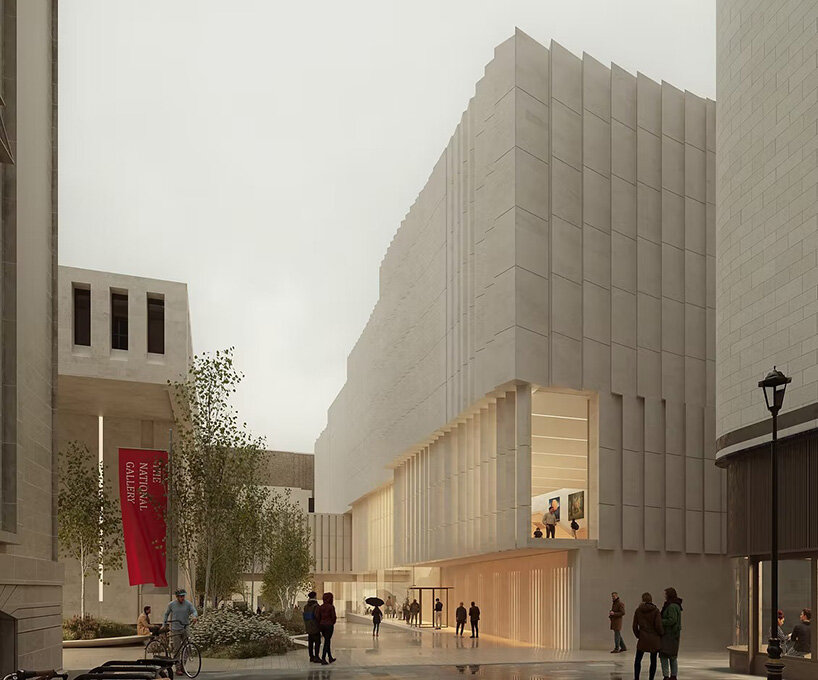
When you work in a small town with a small budget and one joinery shop, you cannot specify a large singular thing. There is no crane for it, no truck that will take it down that road, no fabricator within two hundred kilometres who will quote it, and no one nearby who can fix it in eleven years when it fails. So you make the thing out of many small pieces instead, and the pieces have to be light enough for two people to lift, and repetitive enough that the shop gets faster by the fortieth one, and simple enough that a carpenter who was not on the job can read the assembly and repair it. That is where the louvres came from. That is where the stacked sticks and the woven screens and the shingled stone came from. The vocabulary everyone now calls Kuma's signature started as a logistics answer.
And it is a genuinely good answer, which is why it travelled. A facade of small repeated members can be made by people who live near the site, delivered on ordinary vehicles, installed without exotic plant, and mended one member at a time. Compare that to a single formed panel with a ten year warranty and one factory on another continent. We have specified both. Only one of them can be repaired by a person you can telephone.
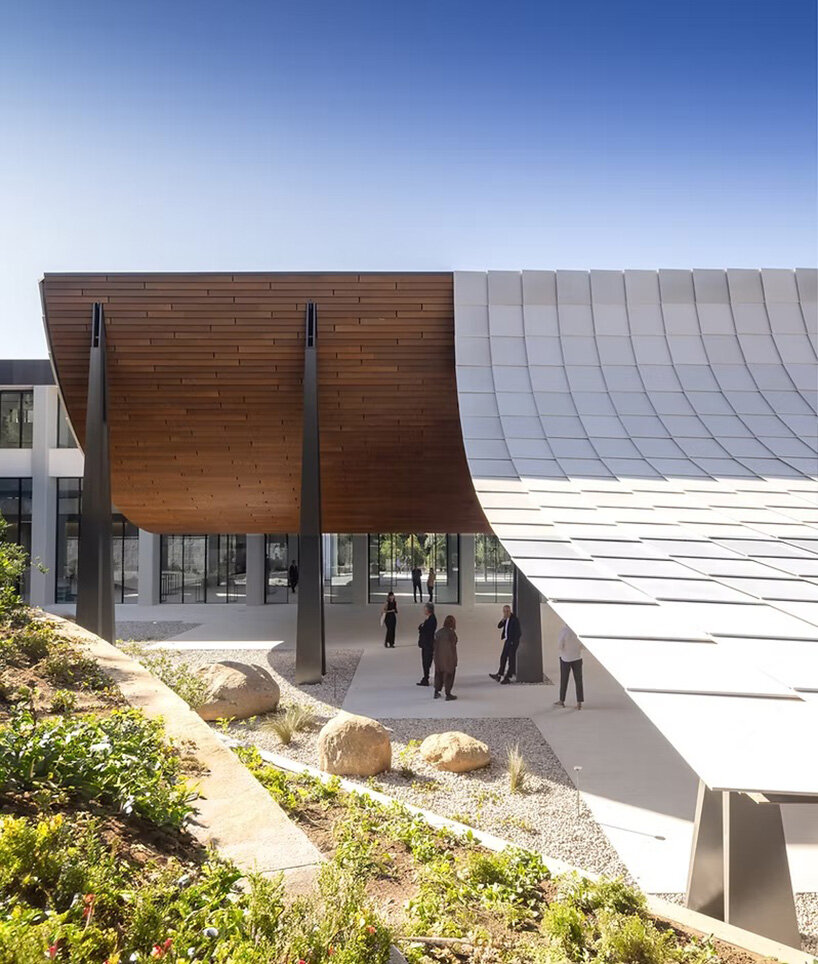
The soft sentence, the one about harmony between humans and nature, is the sentence that gets quoted, and we would gently set it aside. Harmony with nature is not a specification. It cannot be drawn, costed or inspected, and every developer in the world has already signed off on a rendering that claims it. What can be drawn is a 30 by 60 batten at 90 centres in a local cedar with a named finish and a named shop. The second thing produces the first thing. It does not work in the other direction.
The name on the award
It is worth noticing whose award this is. Andrée Putman spent almost her whole career inside other people's buildings. She had surfaces, light, furniture and proportion, and she almost never had structure, and she built a reputation anyway on the discipline that comes from not being allowed to move the walls. Then she spent years putting forgotten modern furniture back into production, which is to say she made her argument by reissuing other people's work rather than by inventing a shape of her own.
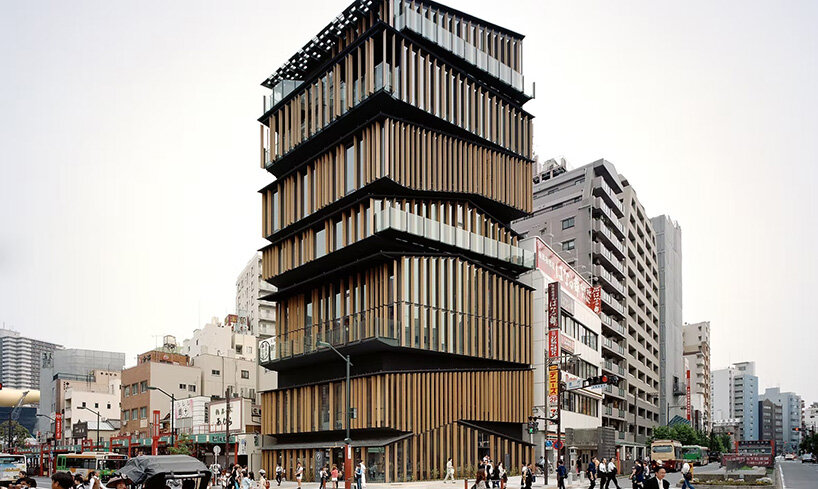
So an award named for a woman who worked with no structure goes to a man whose entire method is making structure behave like a screen. Both of them got good under a restriction. Neither restriction was chosen.
That is the thing we would take from this, and it is not a comfortable lesson to hand a young office. The decade that makes a practice is usually the one it would not have picked. You do the work you can get, in the material that is nearby, with the people who will answer the phone, and if you pay close enough attention while you are doing it, the constraint turns into a method and the method eventually gets called a philosophy and then, thirty-six years after the Ionic column, somebody in Paris gives you a prize for it.
He is still running. The column is still a funeral hall.
Sources & Credits
- "kengo kuma honored with andrée putman lifetime achievement award 2027," thomai tsimpou, designboom, 1 September 2026. https://www.designboom.com/architecture/kengo-kuma-andree-putman-lifetime-achievement-award-2027-createurs-design-awards/
- Photography: designboom, via designboom, https://www.designboom.com/architecture/kengo-kuma-andree-putman-lifetime-achievement-award-2027-createurs-design-awards/
No images in this post are Common Projekts photography.