It Has to Come Apart
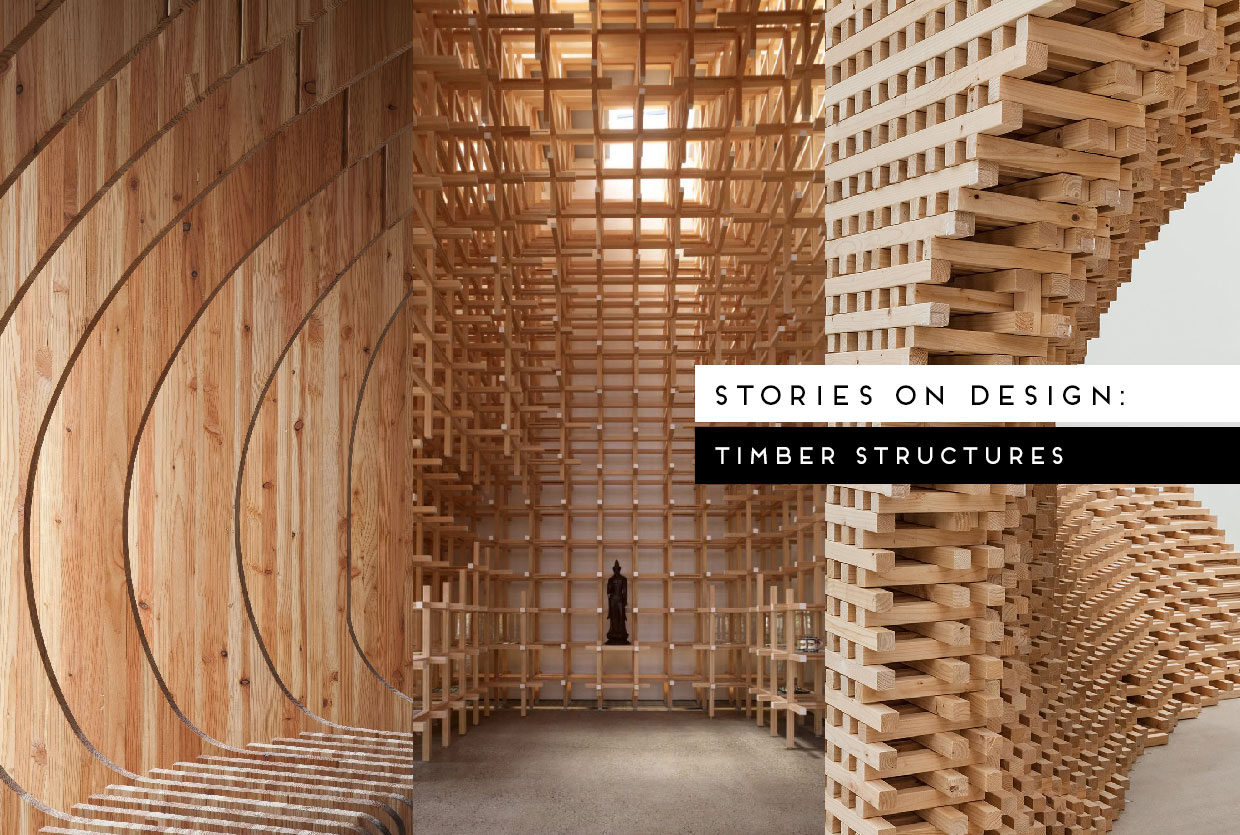
Dana Tomić Hughes opened her Yellowtrace piece on temporary timber structures by admitting she did not know why she found the subject interesting. "The answer is that I honestly do not know," she wrote, before explaining that her Stories category exists as a reference for the moment "you need a killer resource for your next project," or when you are stuck on a wall panelling detail, or a joinery structure, or whatever (Yellowtrace).
We can tell her why it is interesting. A temporary structure has to come apart.
That is the whole thing. It is one sentence in a brief and it reorganises every decision downstream of it. Somebody, on a known date, with a schedule and a truck, is going to arrive and undo this. Which means the connections have to be reversible, and the members have to be liftable by whoever is available, and the sequence has to run backwards as cleanly as it ran forwards, and the parts have to survive being handled twice. Screws instead of glue. Bolts instead of welds. Dry joints instead of wet ones. Numbers written on the timber where somebody will look for them.
Permanent buildings are excused from all of it, and we should be honest about what that permission costs. A building that will stand for eighty years is detailed on the assumption that nobody will ever ask it to be undone, so we glue and we foam and we bed and we seal and we mastic, because those are fast and cheap and they close a gap that would otherwise take a carpenter an hour. Then twenty years pass and somebody does ask. A pipe fails inside a wall. A window is drawn wrong at the head and the sill is rotting. A tenant wants the partition three feet to the left. And the answer is a reciprocating saw, because the assembly was never designed to be opened, only to be finished.
Nobody sets out to build something disposable. It happens by accumulation, one convenient joint at a time, and it happens most often in the parts of the job that are already running late.
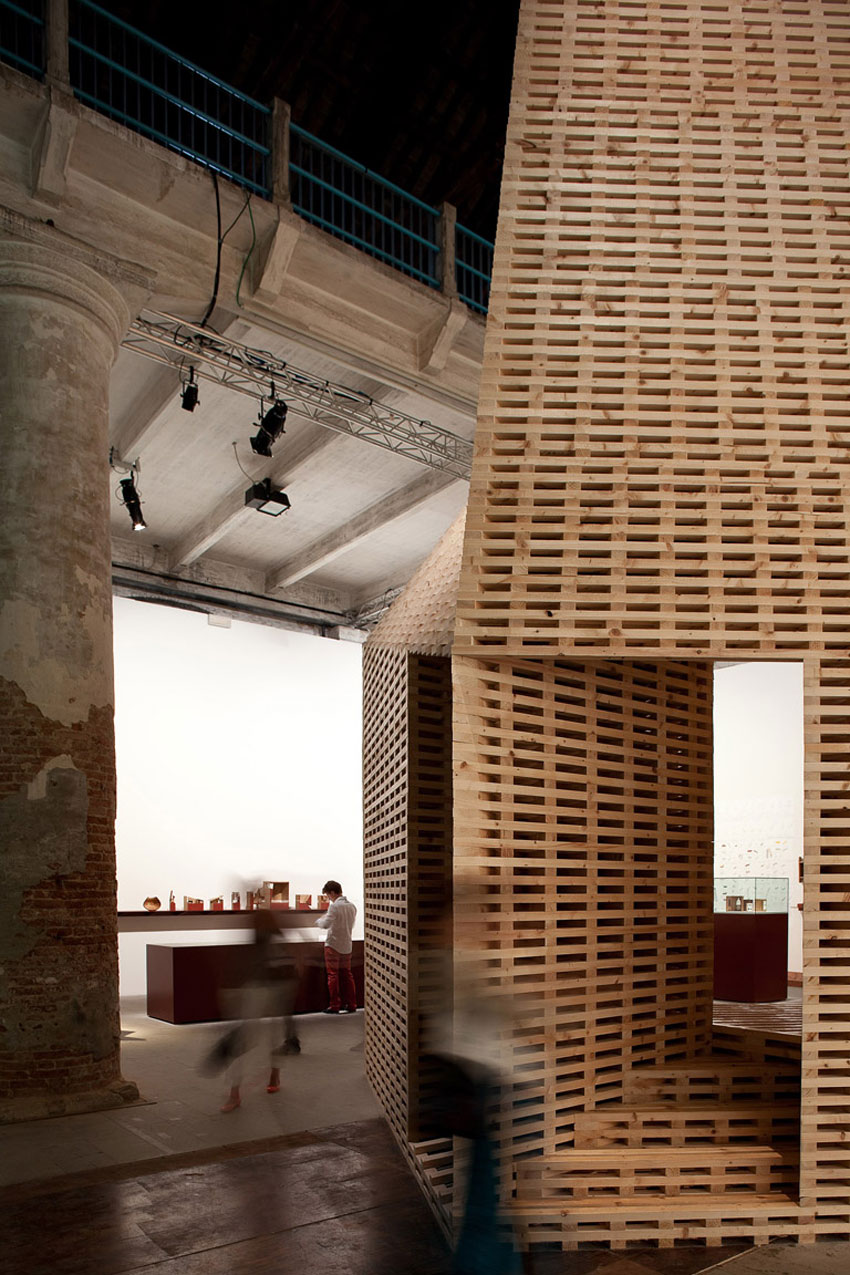
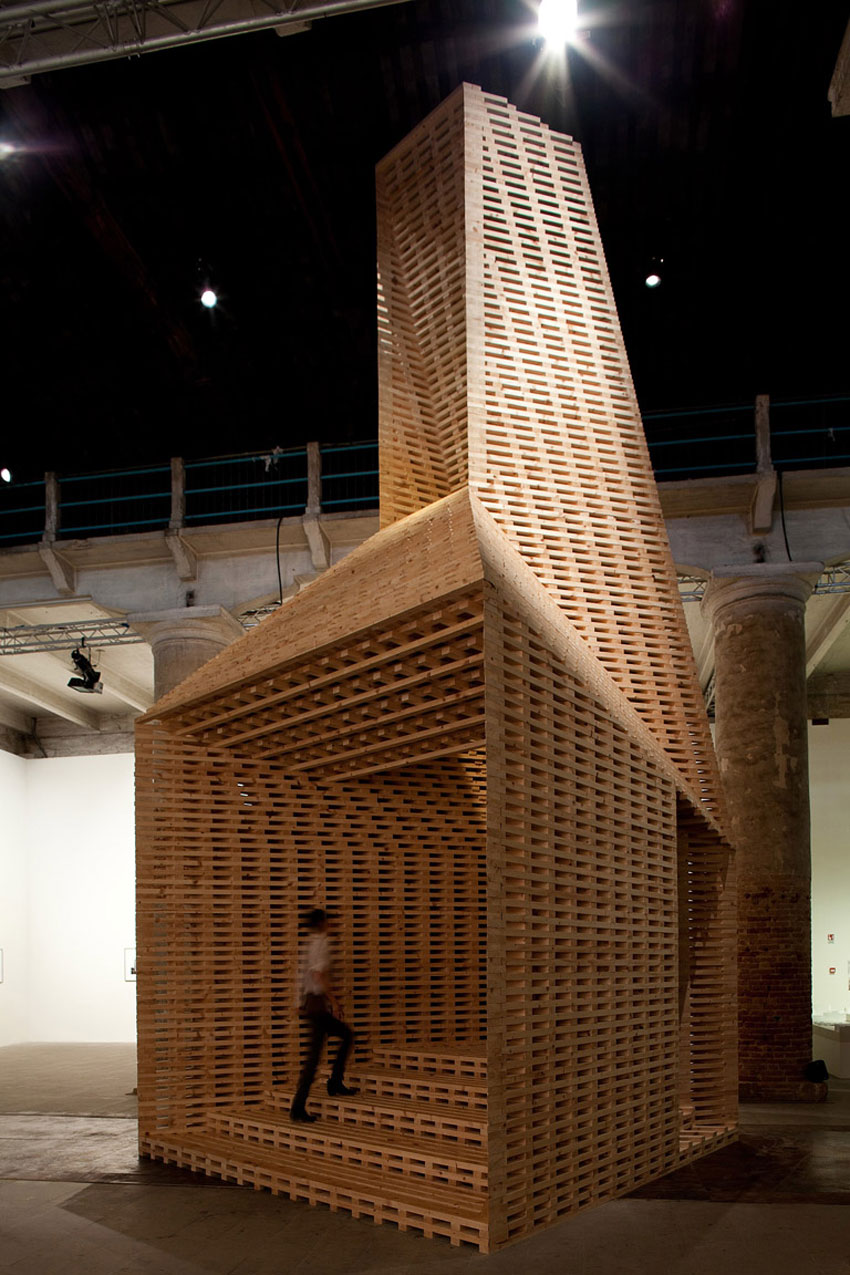
Look at what the pieces in the Yellowtrace set are actually doing. O'Donnell + Tuomey's Vessel, built for the Venice Architecture Biennale in 2012, is a woven basket of repeated timber members, and it is legible as a structure precisely because it could not hide anything. There is no lining. There is no plasterboard coming later to cover the mistake. Every member is at once the structure, the finish, the pattern and the evidence, and the whole thing was made from stock lengths that could be carried into a Venetian arsenal by people, because the site would not accept anything else.
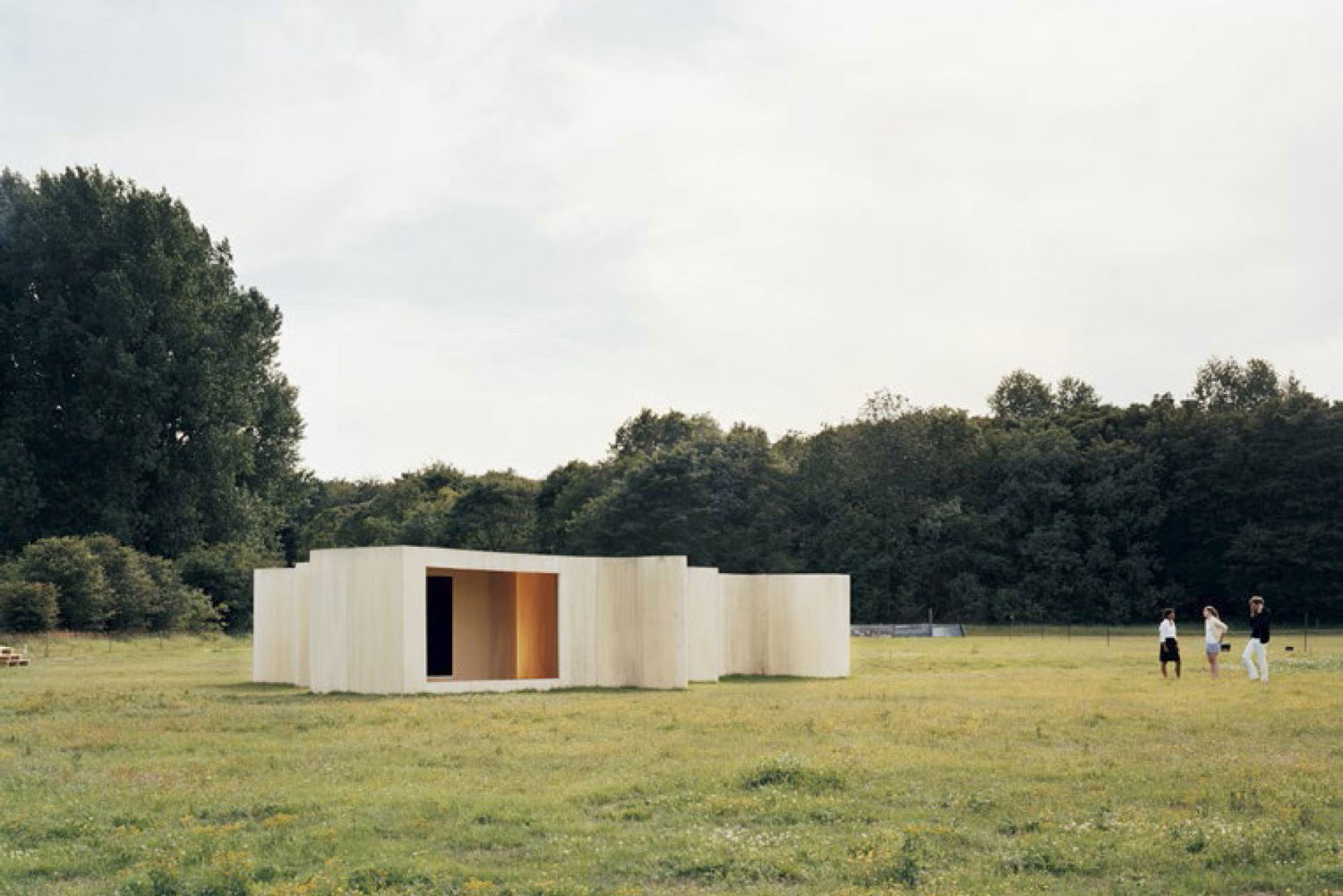
Studio Anne Holtrop's Temporary Museum Lake does the same trick with a different accent: an object that reads as a piece of ground rather than a piece of joinery, and that still had to be delivered, stood up, and eventually removed without leaving much behind.
There is a discipline in that which we would like to see more of in permanent work, and it is not the aesthetic. Plenty of practices have taken the look of the exposed timber connection and applied it to buildings where nothing is demountable at all, which is decoration wearing a work jacket. The transferable part is the question the temporary structure is forced to answer and the permanent building is allowed to dodge: what does it take to get this back into pieces.
Ask it early enough and it changes the specification rather than the appearance. It puts a mechanical fixing where an adhesive would have gone. It makes you pick a bolt spacing you can reach with a normal wrench in a real cavity. It gets services out of the structural zone, because anything buried in structure is a decision your successor has to demolish to reverse. It sends you towards a repeatable member and away from thirty-one bespoke ones, which is also, not coincidentally, the cheaper way to build.
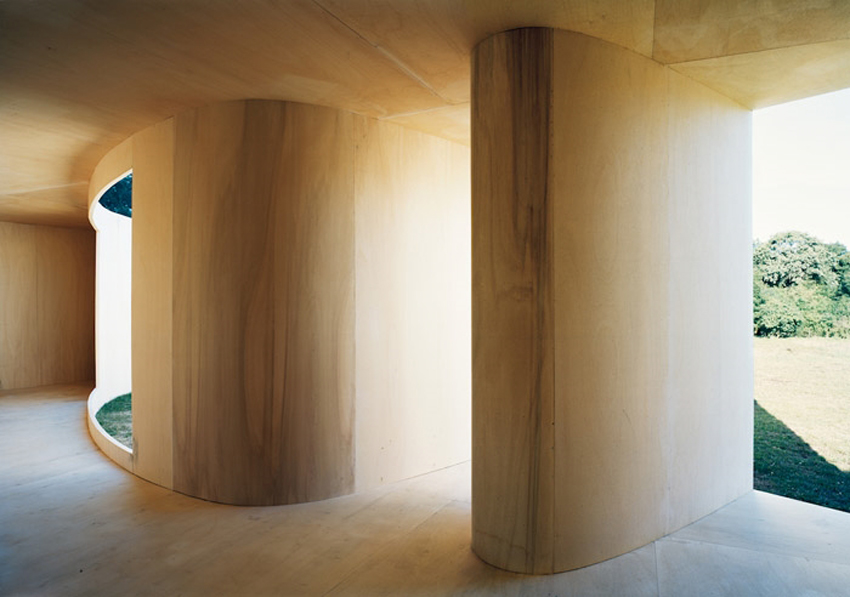
The other reason to pay attention to these things is less philosophical. A temporary structure is the only place most practices ever test an assembly at full scale, in public, on a deadline, and then get to take it apart and look at the parts afterwards. That last step is the rare one. On a normal job you hand the building over and you never see the inside of the wall again for as long as you live. Here you get the joints back in your hands and you can see which ones split, which ones went in easily, which ones the installer quietly modified on site at four in the afternoon because your drawing was optimistic.
That is a free education and almost nobody writes it down. Which brings us back around to Hughes's honest little aside about her bulging reference library, because the reference library is how specification actually happens in a working office. Not from a standard. From the memory of a joint you saw work.
Temporary is not the opposite of durable. Temporary is durable with a witness.
Build the thing that comes apart. Then go and pick up the pieces yourself, and count how many of them you would use again.
Sources & Credits
- Dana Tomić Hughes, "Stories On Design // Temporary Timber Structures," Yellowtrace, 31 May 2016. All quoted material is from this piece.
- Photography: Yellowtrace, via Yellowtrace.
- Projects shown: Vessel by O'Donnell + Tuomey, Venice Architecture Biennale 2012; Temporary Museum Lake by Studio Anne Holtrop.