The Trust Took the Small One
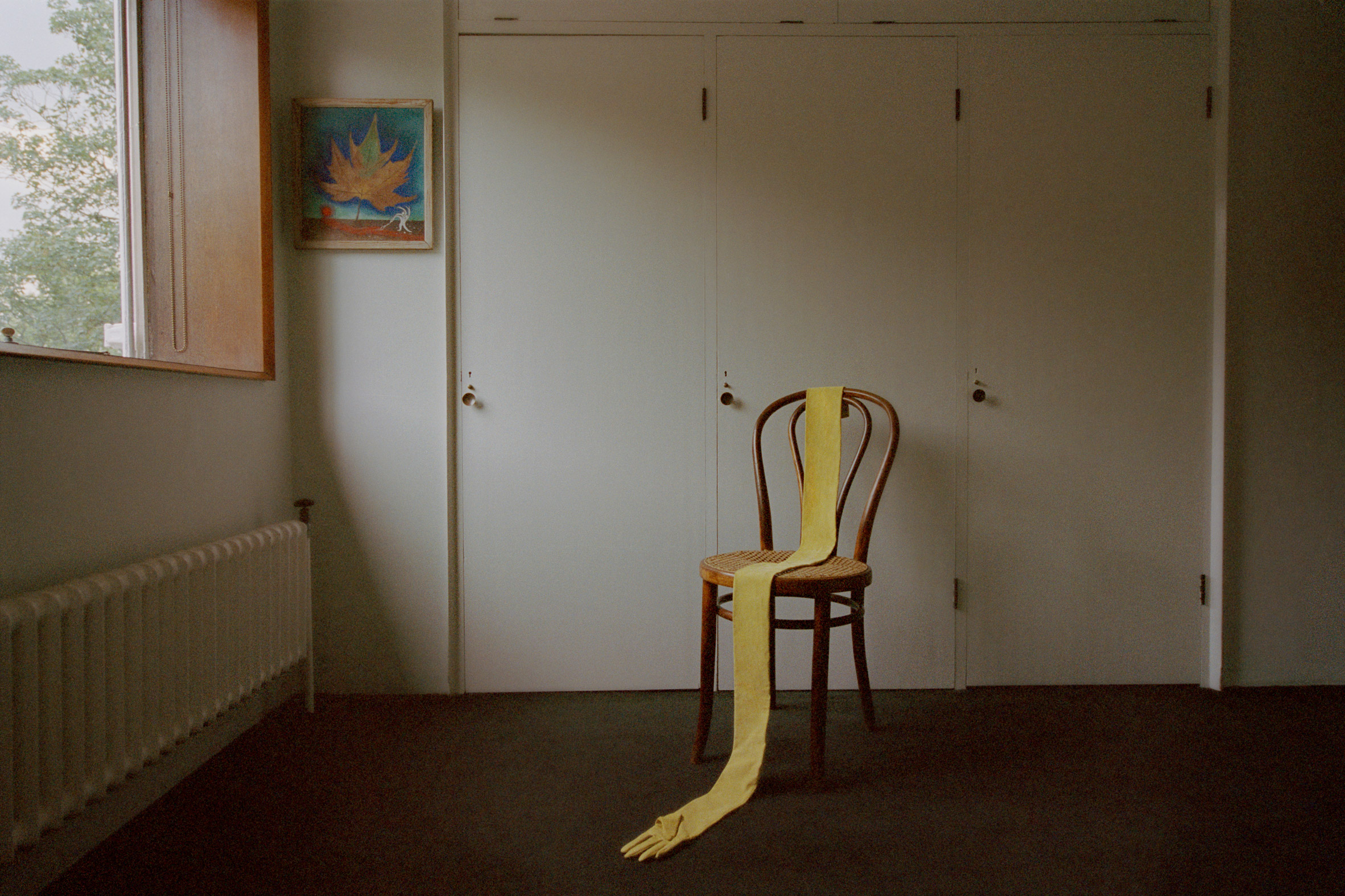
Six designers were invited into a dead architect's house and they brought a felt lamp, an ice-cream cake, an extremely long glove, a fringed dress, a record cover, and a smokey scent.
That is the exhibition. Dezeen reported it in 2018 under the title Ahead of the Curve, curated by Frith Kerr, with work by Ilse Crawford, Gitta Gschwendtner, Roksanda Ilinčić, Lyn Harris, Nina Chakrabarti and Kitty Travers, each responding to a work by one of the six female artists in the collection Ernő Goldfinger and his wife Ursula assembled over a lifetime (Dezeen). Kerr's own contribution, Long Hand, answers a Rita Kernn-Larsen painting called Sycamore Leaf. An extremely long glove, in a house full of surrealists. That is a good joke told quietly, which is the only way to tell one in Hampstead.
But the reason to write about any of this is the building the objects were put inside.
Goldfinger is remembered, when he is remembered at all outside the profession, for tall concrete housing in London. Big slabs. Towers with the service cores pulled off and stood up beside them like a spine set at arm's length from the body. Those buildings spent about forty years being called ugly by people who had never been inside one and by a good number who had, and they are still there, and they are worth more now than anyone predicted in 1980.
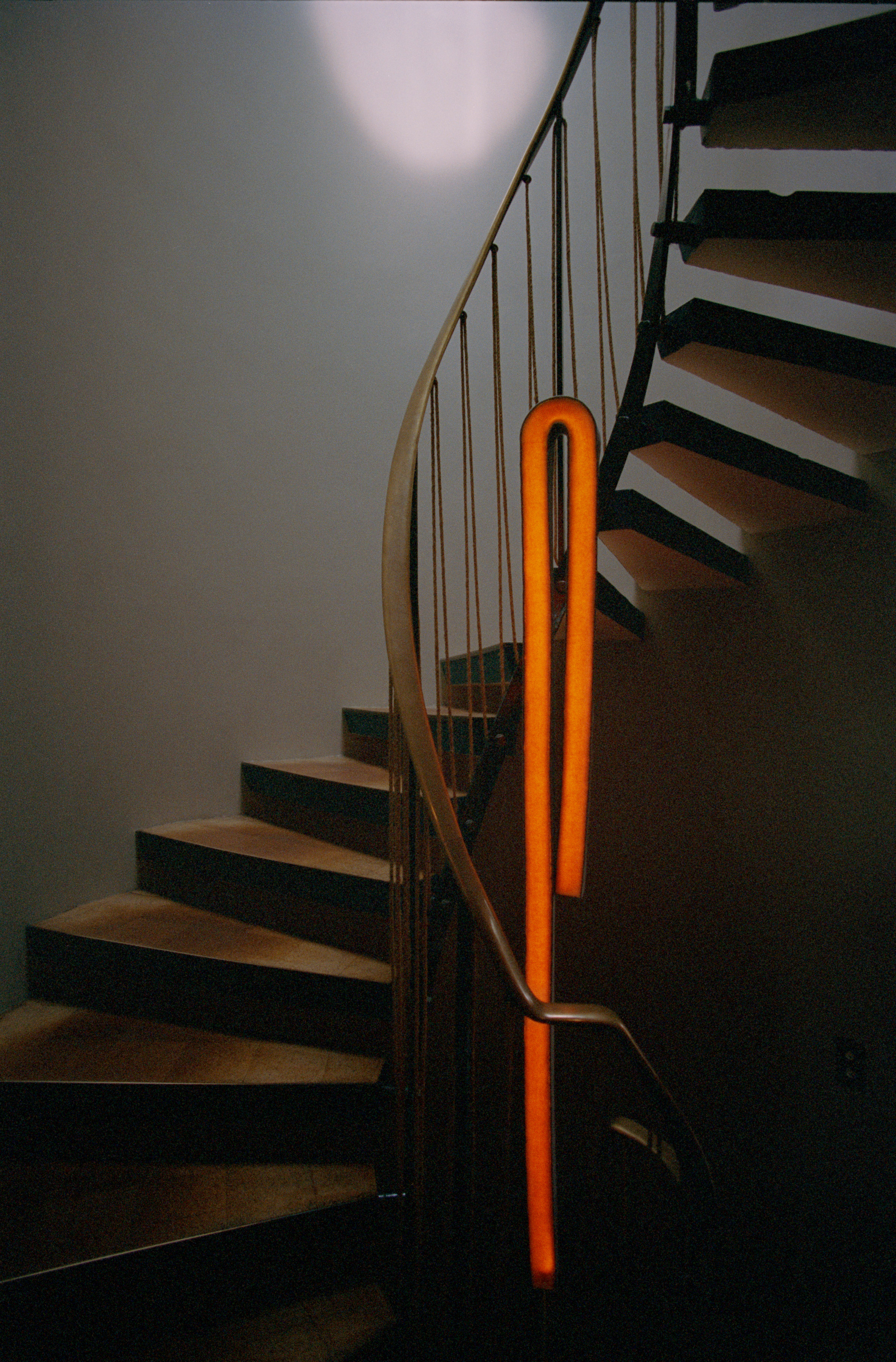
And the same man, per Dezeen's account, designed and built himself a house in the 1930s as one of three terraced houses, and lived in it until 1987, and it is a brick terrace on a Hampstead street with neighbours attached on both sides.
Not a tower. Not a slab. A terrace.
There is a version of this where you call that hypocrisy, and that version is lazy and also wrong. A terrace is not a compromise. A terrace is a party wall shared with a stranger, a fixed street line, a plan you did not get to choose the width of, and a set of constraints as hard as any structural grid. He built into the tightest brief available in the city and then stayed in it for fifty years. That is a man who believed his own arguments enough to live inside them at full scale, in the one building where the client cannot overrule him and the budget is his own money.
Here is the part that should bother us. Goldfinger left the house in 1987. The National Trust opened it to the public in 1996 as the first modern property it ever acquired, again per Dezeen.
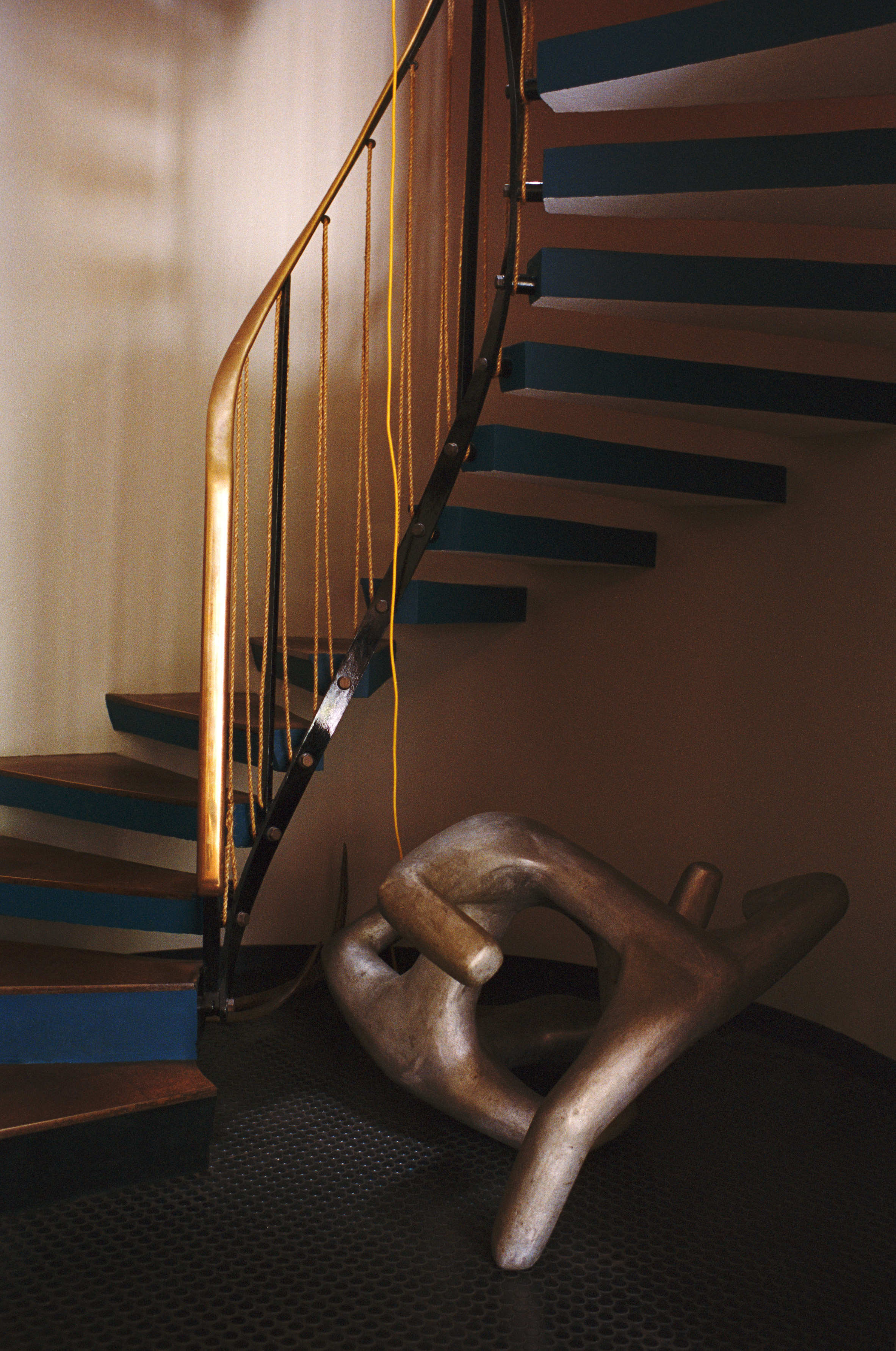
Sit with those nine years. That window, roughly 1987 to 1996, is the exact trough of British opinion on concrete housing. It is the decade when postwar towers were being surveyed for demolition, blamed for crime, blamed for damp, blamed for a social contract they were built to serve and were never funded to maintain. And in the middle of it, the country reached out, picked up the smallest, politest, most brick-faced building the man ever made, and preserved it forever.
We kept the one that looks like a house. We queued up to condemn the ones that looked like an argument. Same architect. Same convictions. Same year, more or less, in the drawing.
This is not a British problem and it is not a 1990s problem. Every preservation committee sitting this year is doing the same sorting. The small work by the difficult architect gets listed, because it is charming and it fits on a postcard and nobody has to defend it at a public meeting. The large work gets a study, and then a maintenance deferral, and then a demolition budget. We are very good at loving a modernist's furniture and their own house. We are bad at loving what they actually spent their careers trying to build, which was housing for people who could not afford Hampstead.
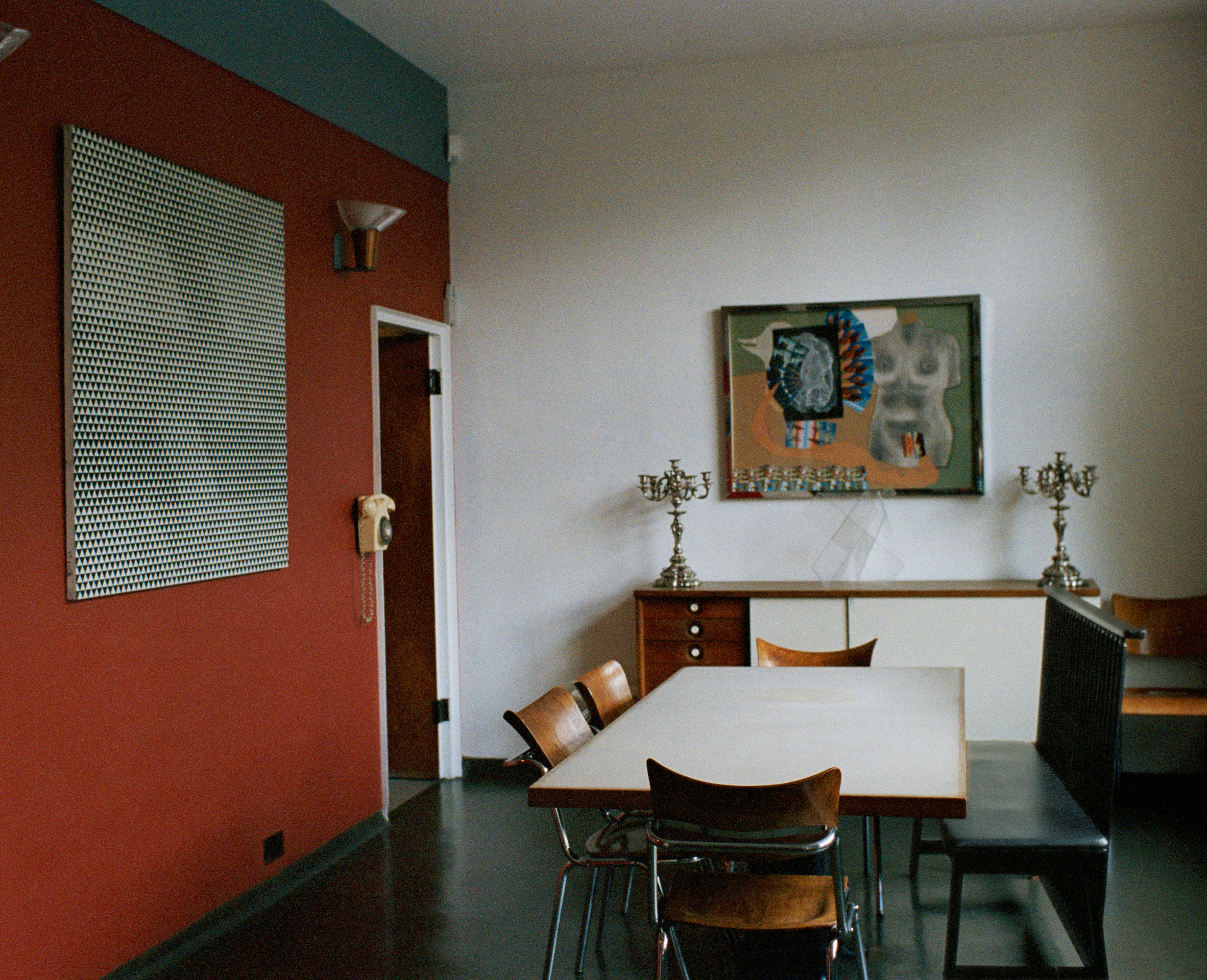
Which brings the exhibition back into focus, because Ahead of the Curve is doing something a plaque never does. The Trust could have kept the rooms as a rational diagram with a rope across the door. Instead six women were let in to argue with the paintings, and the paintings were surrealist, and the collection belonged to a couple who were both in it. A house museum that permits an argument is still a house. One that does not is a vitrine with plumbing.
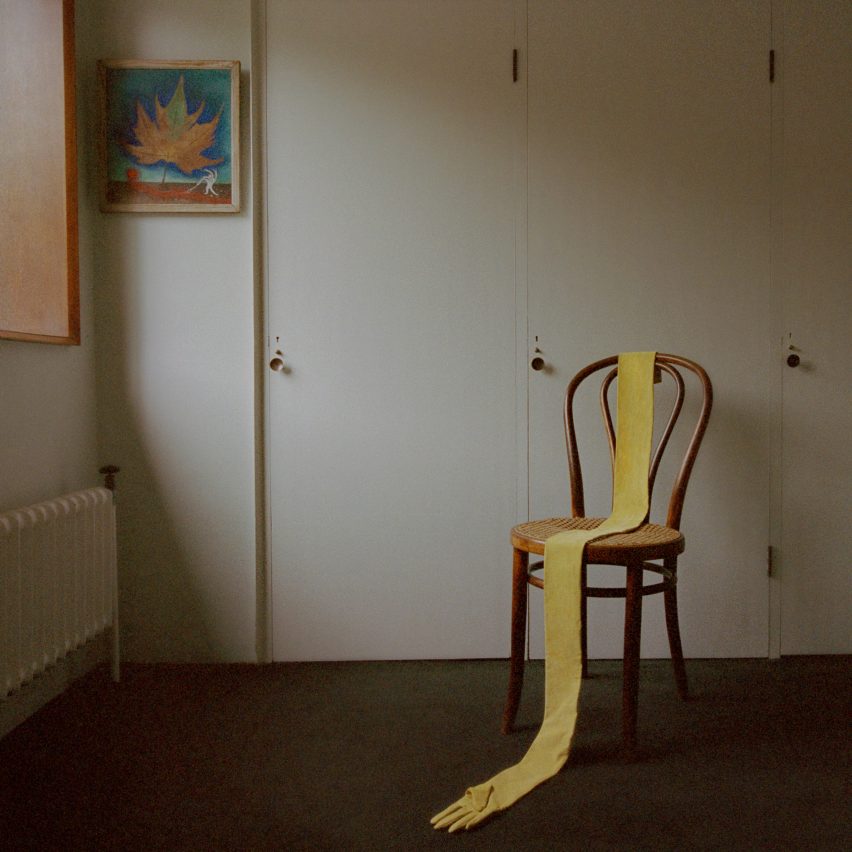
We specify buildings meant to last past the taste that produced them. That is most of the job and it is the part that never photographs. The lesson of 2 Willow Road is not that the small building was better. It is that survival got decided by whether the thing looked like an apology, and the man never apologised for either one.
And still it stands. So do the towers.
Sources & Credits
- Ali Morris, "Six female designers create responses to artworks in Ernö Goldfinger's former home," Dezeen, 28 August 2018. All factual claims about the exhibition, its participants, and the history of 2 Willow Road are drawn from this report.
- Photography: Dezeen, via Dezeen.
- Exhibition: Ahead of the Curve, curated by Frith Kerr, 2 Willow Road, Hampstead, London (National Trust).