Just a Fabricator
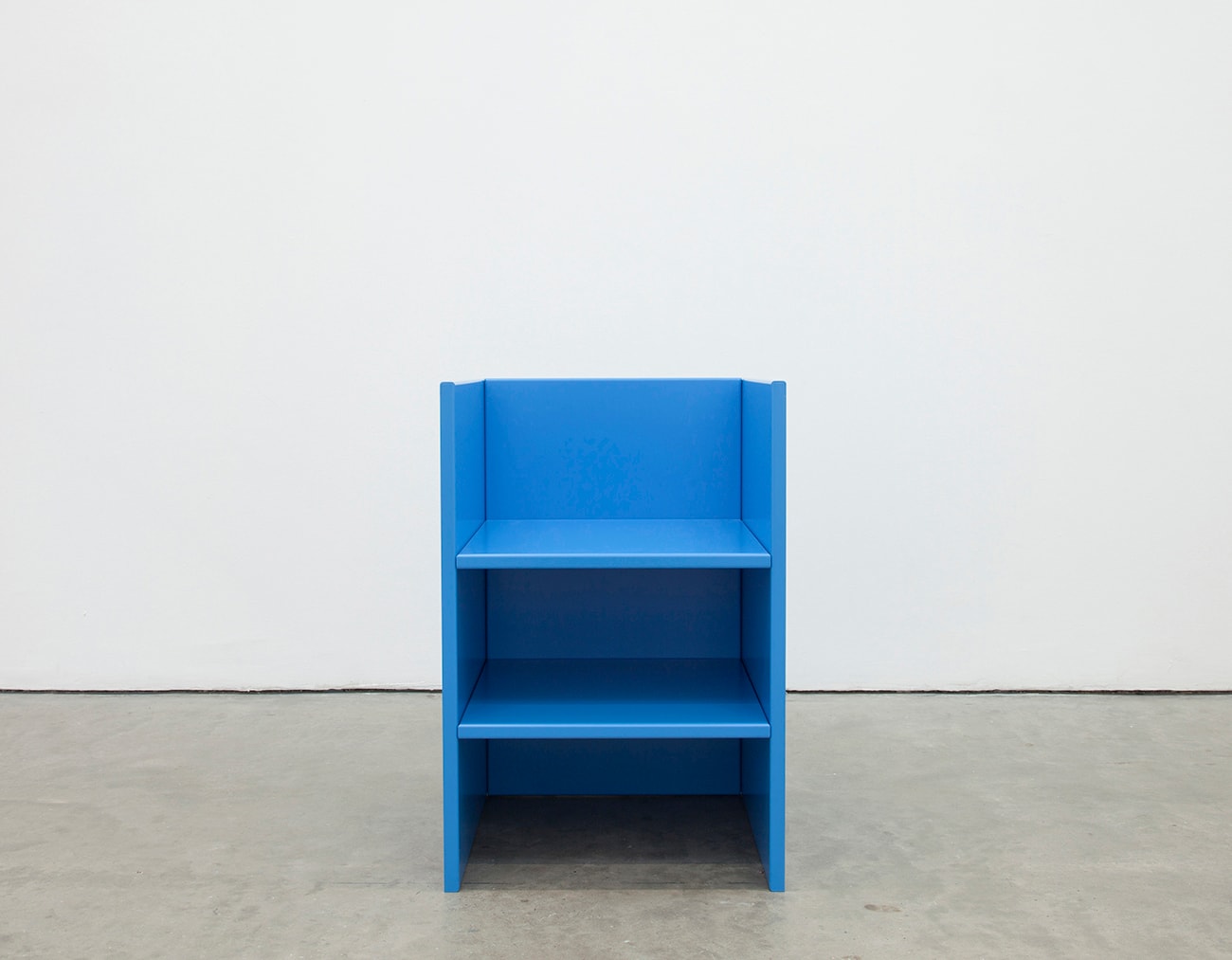
A man is standing at his own Waddington exhibition in 1989, in front of a piece in Cor-ten and purple Plexiglas, and a critic is walking him carefully toward the word sculptor. Judd will not take it. He says the work is three-dimensional, and that it is sculpture only if you define sculpture that way, and that he avoids the word himself because, literally, it is not sculpting. The critic tries again. Are you an artist? Yes. Are you a maker of myths?
"Oh no! No myths. Just a fabricator."
The interview sat in a 1989 book called New York New Art until Sight Unseen turned it up at an antique mall in Nashville and published the transcript in 2016. It is worth reading now because almost everything the design world has done with Judd since is the thing he is refusing on the page. He has become an adjective, attached to plywood boxes and hotel lobbies and, in one memorable lawsuit, to a set of tables that were not his. Here he is declining all of it and asking to be described as a man who has things made.
That word matters more than it looks. A fabricator has a shop, a lead time, a tolerance, and a bill, and gets the drawing back with a note saying the radius you asked for is not something the press brake can do. Calling yourself a fabricator is not modesty. It is a claim about where the work happens, which is not in the statement and not in the catalogue essay but in the moment somebody has to decide how thick the material is.
The best thing in the interview is the part about color, and it is the part nobody quotes. Asked whether he had been adding more color over the previous ten years, Judd answers sideways: "Theoretically I would consider the gray a color, the aluminum or Cor-ten is as much a color as anything else, to me it is all color."
Read that as a specification and it stops being art theory. The mill finish is a color. Anodizing is a color. Oxidation is a color. The gray of a raw aluminium extrusion carries the same weight as a paint number, and treating it as an absence of decision is how a project ends up with a finish schedule full of things nobody chose. You are not picking a palette and then picking materials to receive it. Plaster is a color. Cork is a color. Brick is a color, and it is never one color.
Judd then admits the problem with his own position, which is the part that makes him trustworthy. "I had a conflict between bright color and the nature of the material," he says. "I liked the material a great deal and perhaps color would have to be applied and that's always been a certain conflict." He did not resolve it. He says he does not yet know how to make the bigger printed parts, and that painting the metal was a problem. A man in his sixties, at the top of his field, saying out loud that he has not figured out how to do the thing he most wants to do. There is no manifesto in the room. There is a technical problem and an honest report on it.
Then the critic asks whether he sees himself as part of the history of Modernism, and Judd says: "I know that people keep using the word 'Modernism.' I'm not too sure what that means." Pressed, he gets blunter. "Actually I'm mystified by it." Told that Robert Hughes had called the Eiffel Tower Modernism, he gives an answer that should be carved over the door of every architecture school: "Sounds like talk to me."
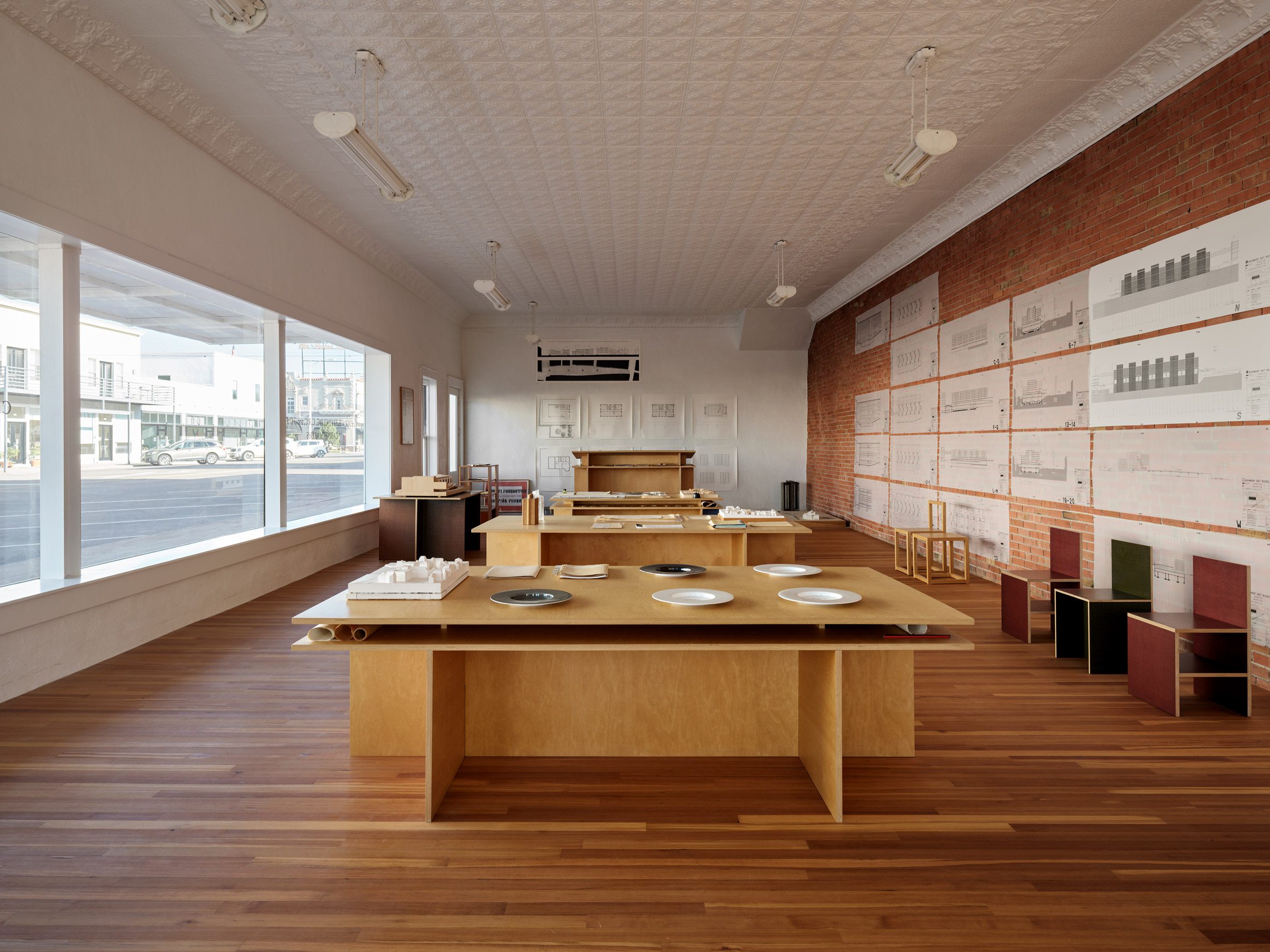
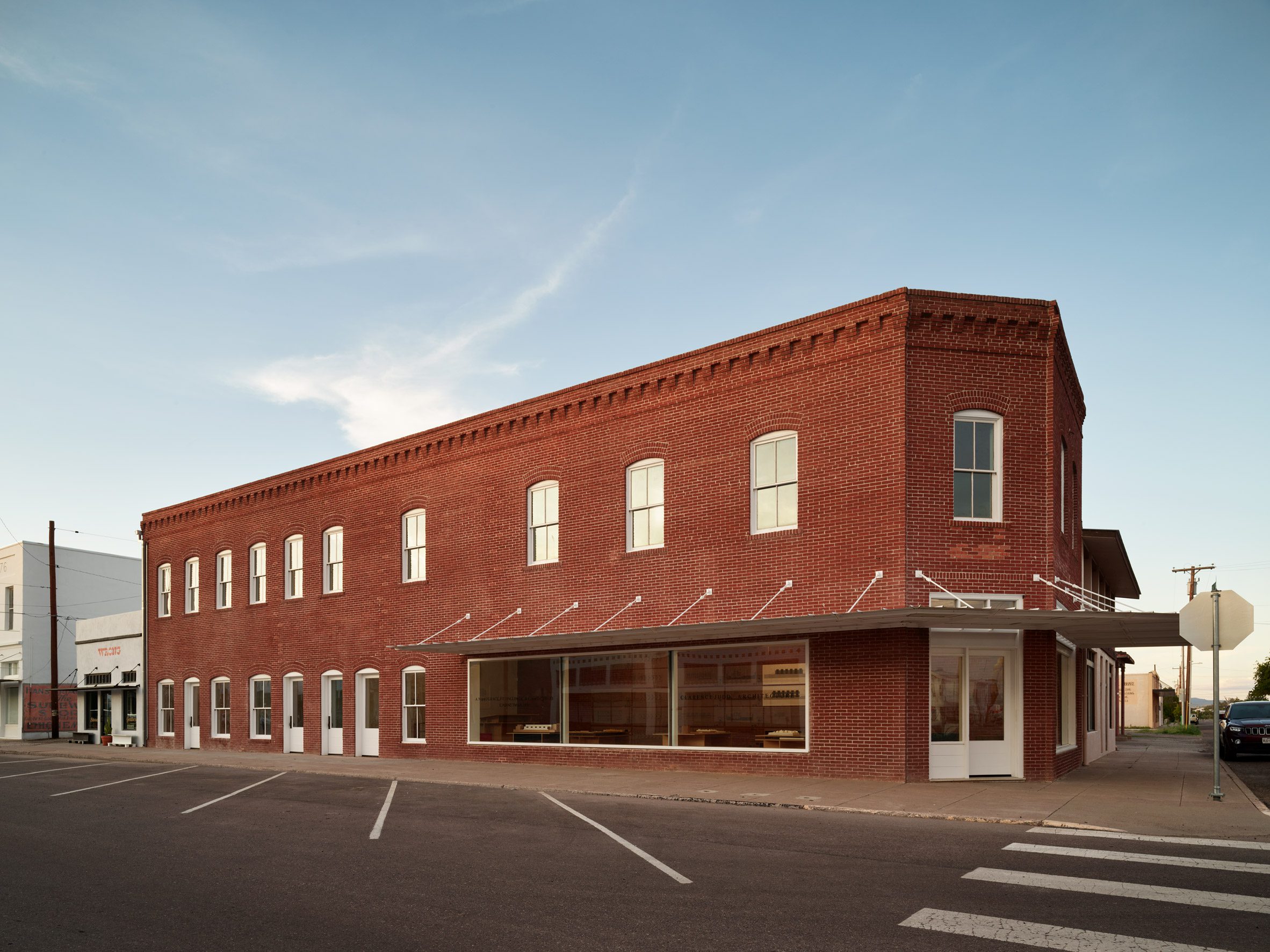
Now go to Marfa. In 1990 Judd bought a two-storey brick building on the main street, put up in 1907 as a boarding house and grocery, and made it his architecture office. He worked there until he died in 1994. Beginning in 2018 the Judd Foundation and Schaum Architects, working earlier as Schaum/Shieh, spent seven years restoring it, through a 2021 fire that took the roof and much of the second floor, and it reopened in September 2025.
What the restoration architects say about the work is remarkable, and it is the same sentence as 1989 in different clothes. "We have learned through this work that strategically not doing something is much more difficult than producing the new," said Troy Schaum. "These are projects in which, if we are successful, our hands as designers will leave little trace." Rosalyne Shieh describes the brickwork being matched to the historic configuration "and the 'raked joint' condition in which Donald Judd had left the project," through mock-ups and sampling.
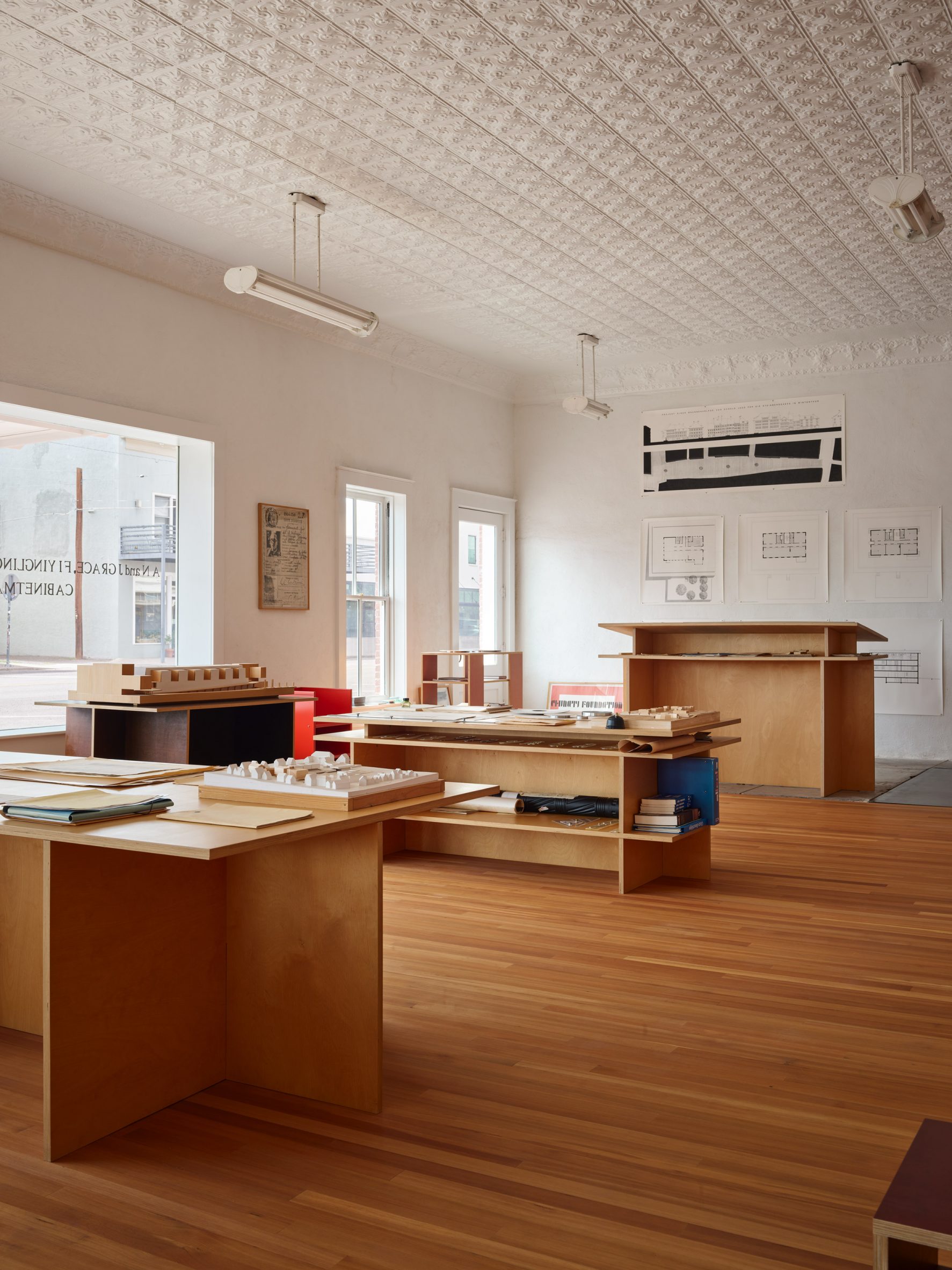
A raked joint. That is the argument. Not the philosophy of minimalism, not the Marfa mystique, not the light. A recessed mortar profile that throws a shadow line and tells you the wall was laid by a person, and a team spending seven years and a fire making sure the new mortar sits back the same distance as the old. That is what Judd meant by fabricator. He was not being humble. He was pointing at the only place the work is real.
The building did not care about any of this. It was a grocery, then an office, then a fire, then a very careful restoration, and upstairs there are bedrooms and a kitchen and a dining room holding furniture by Alvar Aalto, paintings by John Chamberlain, and Judd's own pieces, open to the public for the first time according to designboom. It is the arrangement he described in 1989, talking about his own rooms: an 1800 bench, an Oldenburg, a Chamberlain, a building from 1870, all of it fine. Asked what it meant that they worked together, he gave the least mystical answer available to him. "It means basically that visually there's no conflict. It means a nice space you like to be in winter."
That is the whole ambition, from the man we turned into a movement. A nice space you like to be in winter. Everything else was talk.
Sources & Credits
- Jill Singer, "Two Lost Donald Judd Interviews, Part II: On Color and Defining 'Modernism'," Sight Unseen, 22 August 2016. https://www.sightunseen.com/2016/08/rare-donald-judd-interview-color-and-modernism/ (interview by John Griffiths, from New York New Art, 1989)
- Ellen Eberhardt, "Donald Judd's Architecture Office reopens in Marfa following restoration," Dezeen, 10 September 2025. https://www.dezeen.com/2025/09/10/donald-judd-office-marfa-texas-schaum-shieh-architects/
- Kat Barandy, "interview: donald judd's architecture office in marfa, texas set to reopen this month," designboom, 3 September 2025. https://www.designboom.com/architecture/interview-donald-judd-renovated-office-reopen-marfa-texas-rainer-09-04-2025/
- Photography: via Sight Unseen, https://www.sightunseen.com/2016/08/rare-donald-judd-interview-color-and-modernism/
- Photography: Matthew Millman, via Dezeen, https://www.dezeen.com/2025/09/10/donald-judd-office-marfa-texas-schaum-shieh-architects/