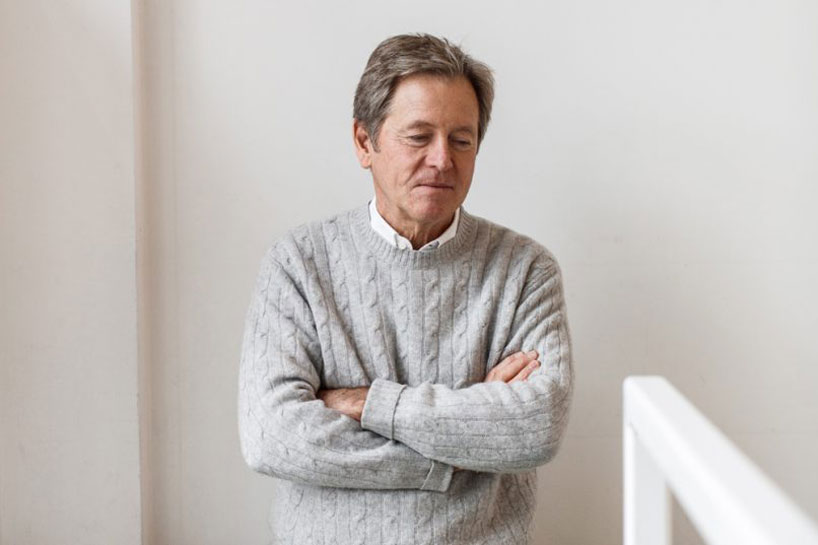
A group of monks looked at a photograph in a magazine and decided it would make a good church.
The photograph was of a shop. John Pawson told the story to designboom in 2019, and he told it flatly, the way a man reports the weather. "the monks said that they saw the calvin klein store, in fact, they saw a photograph of the calvin klein store and they thought, well, that would make a good church," he said. Then he explained why this was less strange than it sounds. "jesus first gave communion on the kitchen table. I mean, to have an altar as a table, I mean alters are tables, it''s not a big leap. the monks wanted something for them and they didn''t care that it was a fashion store."
Everyone tells this as a joke about minimalism, which is to say a joke about how the vocabulary of retail and the vocabulary of prayer had converged so completely by the mid nineties that a religious order could shop for a church in a fashion magazine. That reading is cheap and it is available to anyone. Here is the other one. The monks were not looking at a style. Monks are, professionally, people who have spent their whole adult lives removing things, and they are therefore among the very few readers on earth qualified to look at a photograph of a room and say whether the emptiness in it is real.
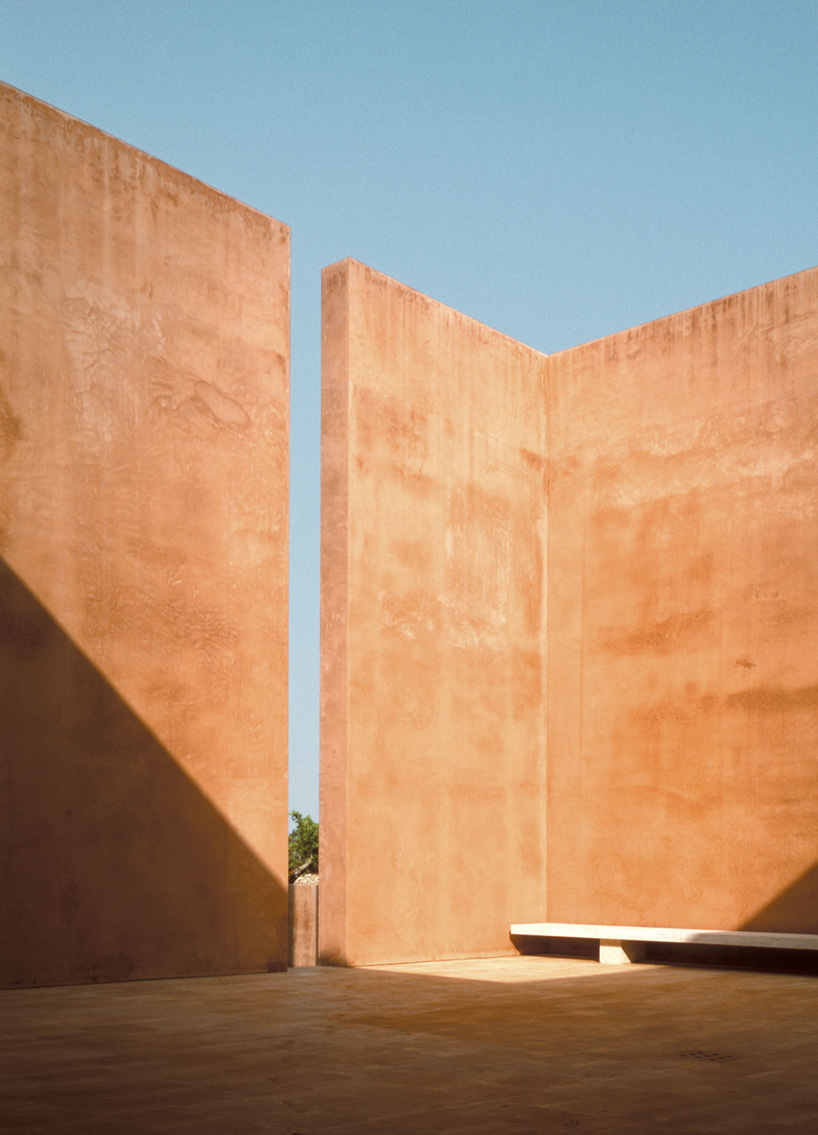
What they saw was a room in which nothing was present that did not have to be present. Pawson has a sentence for this, and it is the most useful sentence in the whole interview, and almost nobody quotes it because it sounds like nothing. Asked to define his philosophy he said he had "always tried to look for clarity, trying to make space through the things that you have to have."
Read that as a specification and not as a manifesto. Make the space out of the things you have to have. That is not an aesthetic position, it is a scope decision, and it is made at the start of a job rather than at the end of one. The structure, the openings, the surfaces required to keep water out and heat in, the fittings a person genuinely uses: those are the material. There is no second pass where the room gets its character added on top, because the character is what happens when the first pass is done properly and then stopped.
This is where the language Pawson built in the 1980s and the language sold under his name ever since come apart, and the split is worth naming plainly, because we live inside the consequences of it.
The reductive room as currently practised is almost never a room with fewer things in it. It is a room with the same number of things, hidden. The skirting is not deleted, it is a shadow gap, which is a plaster stop bead, a specific trade sequence and a joint that telegraphs every movement the building makes. The door has no handle, which means it has a magnetic latch and a push mechanism, and a hinge tolerance that a good carpenter can hold and an ordinary one cannot. The kitchen has no visible appliance, which means every appliance is behind a panel, and the panels are the most expensive joinery on the job, and in twelve years the appliance will be discontinued and the panel will fit nothing. None of this is subtraction. All of it is addition, dressed as restraint, and it costs more, employs more trades, fails in ways that are harder to find, and gets repaired by cutting something open.
Absence and concealment produce roughly the same photograph. They do not produce the same building in year fifteen. A thing that is not there cannot break. A thing that is hidden breaks in private.
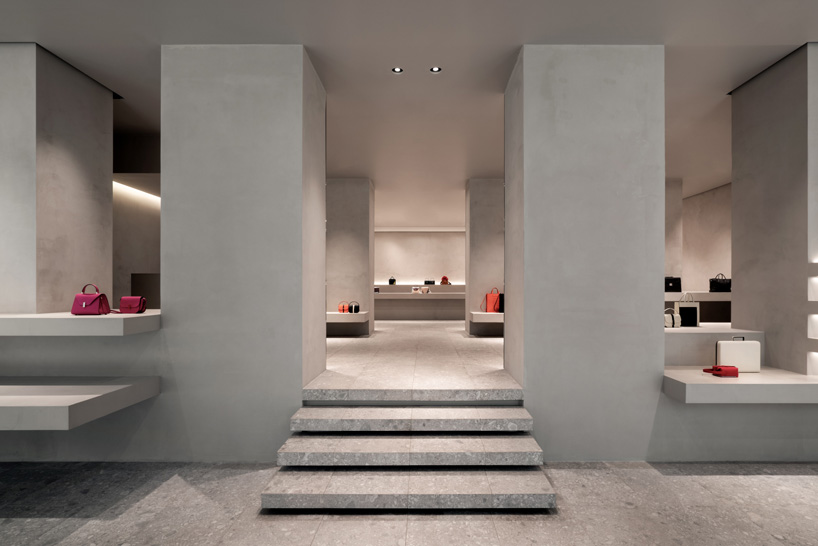
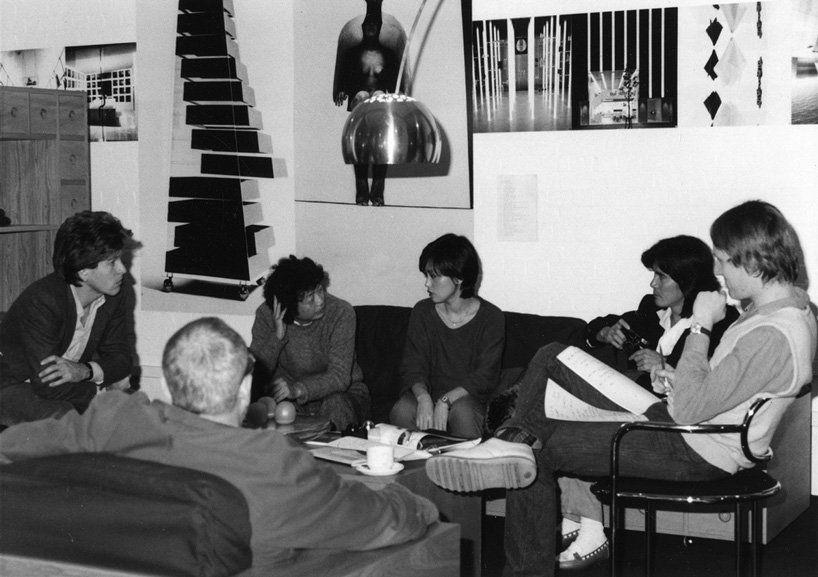
The dates are the tell. Pawson dropped out of architecture school, spent six years in Japan around Shiro Kuramata''s studio where by his own account he did not really work, he "just hung around his office," and founded the practice in 1981. The Van Royen apartment in London ran 1984 to 1986. The Neuendorf house in Mallorca, 1987 to 1989. A cake shop in London, 1987 to 1988. His own house, 1992 to 1994. The store the monks saw, 1993 to 1995. The whole grammar was built in a decade of small jobs on ordinary budgets, before there was a market for it, before there was a word for it, and before anyone had worked out that you could get most of the look by hiding things instead of not having them. That decade is the honest version. Everything since has had the shortcut available.
He is not sentimental about any of it. Asked whether minimalism could be playful, he said no, "because it is it has to hang around for so long." That is a strange, ungrammatical, completely correct answer, and it is a durability argument rather than a taste one. A joke has a shelf life. A wall does not get to have one. And asked where architecture was heading he said "fundamentally nothing''s changed since the romans. if it is still concrete, brick, glass and space, and manipulating space."
We would push back on exactly one thing, gently. There is room for play in a building, it just does not live in the joke. It lives in the slot of light that crosses a floor at four in the afternoon in October and nowhere near that in June, and in a door heavy enough that closing it feels like a decision. Pawson half concedes this himself in the same conversation, allowing that "manipulating light and the variety of the changing of light, movement and water" is where the nuance sits. That is play. It is just play that has to survive a hundred winters, which rules out most of the candidates.
The thing the monks understood, and the thing the market did not, is that an empty room is not a promise of peace. Emptiness is only ever a consequence. You get it by working out what a person in that room actually has to have, and providing that, and having the nerve to stop. What is left is not nothing. It is a wall, and the light on it, and the hour.
The building does not care whether you called it minimal.
Sources & Credits
- John Pawson interview: Kieron Marchese, "john pawson on minimalism and the monks who were inspired by his calvin klein store", designboom, 5 December 2019. All Pawson quotations are from this interview, reproduced in designboom''s lowercase house style.
- Photography: Images courtesy of John Pawson architecture studio, via designboom, https://www.designboom.com/architecture/john-pawson-interview-minimalism-calvin-klein-monks-12-05-2019/