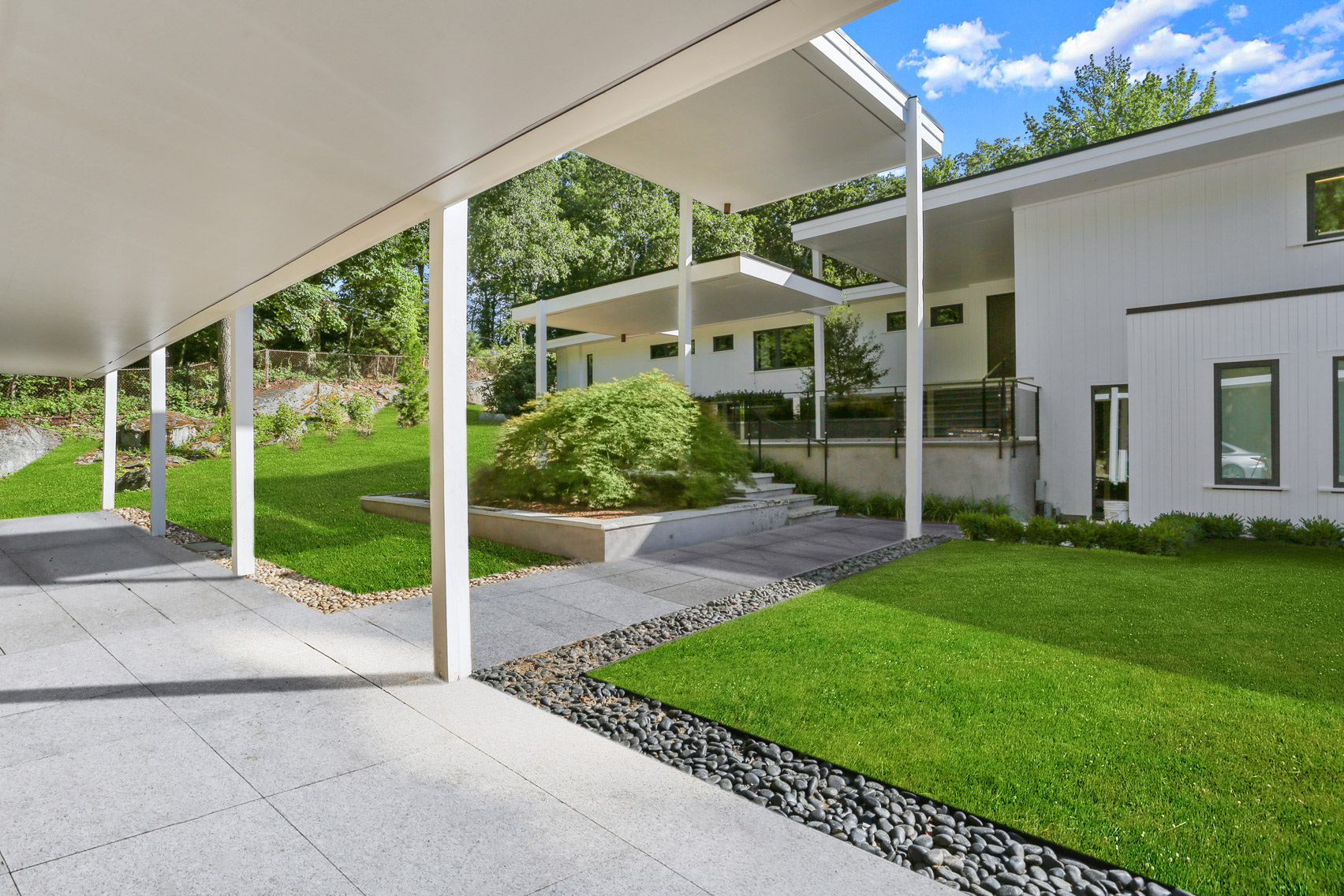
There is a house in Larchmont with a porch on it, and the porch was drawn by a man who by then had been publicly declared finished, and it is still there, and the man is not.
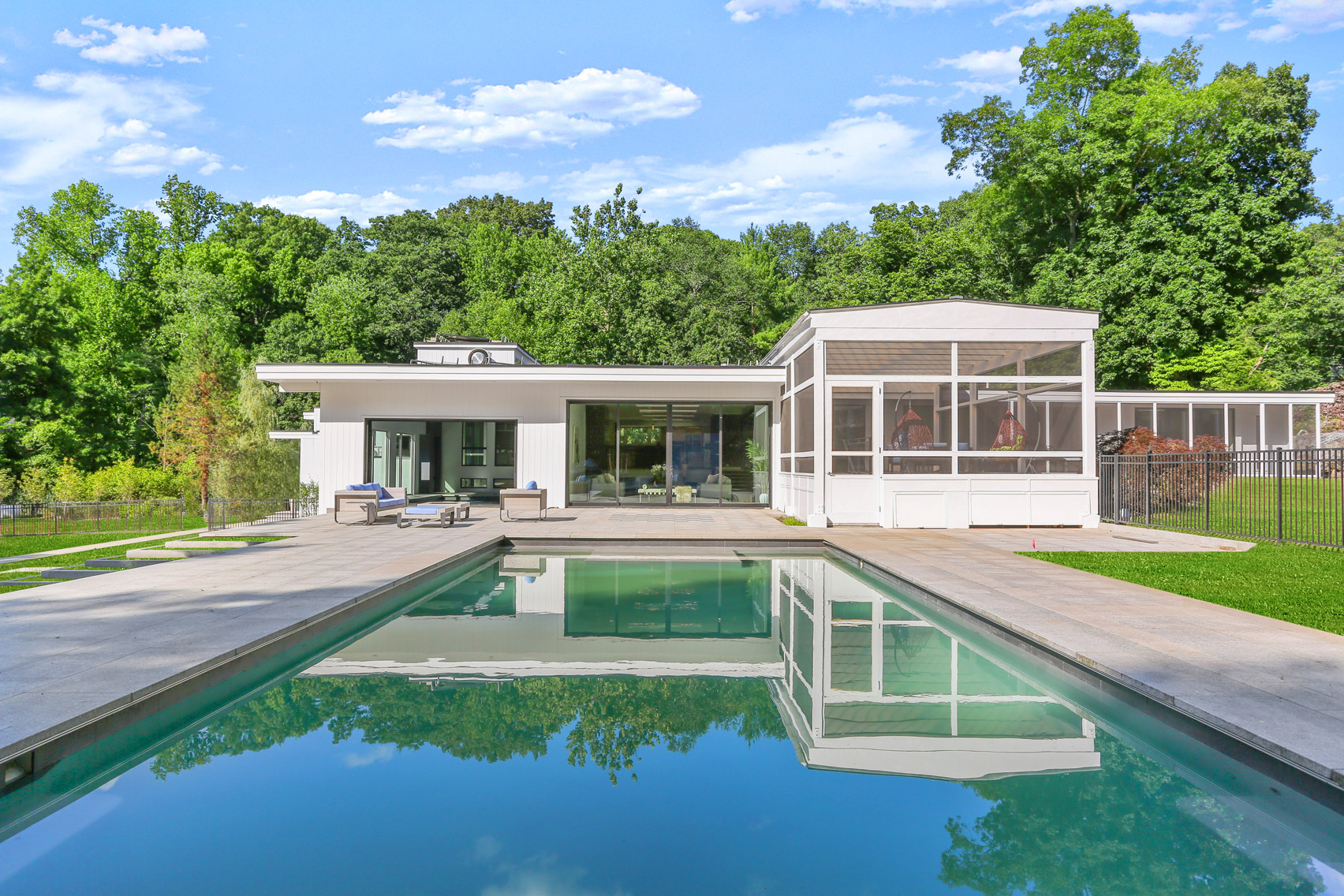
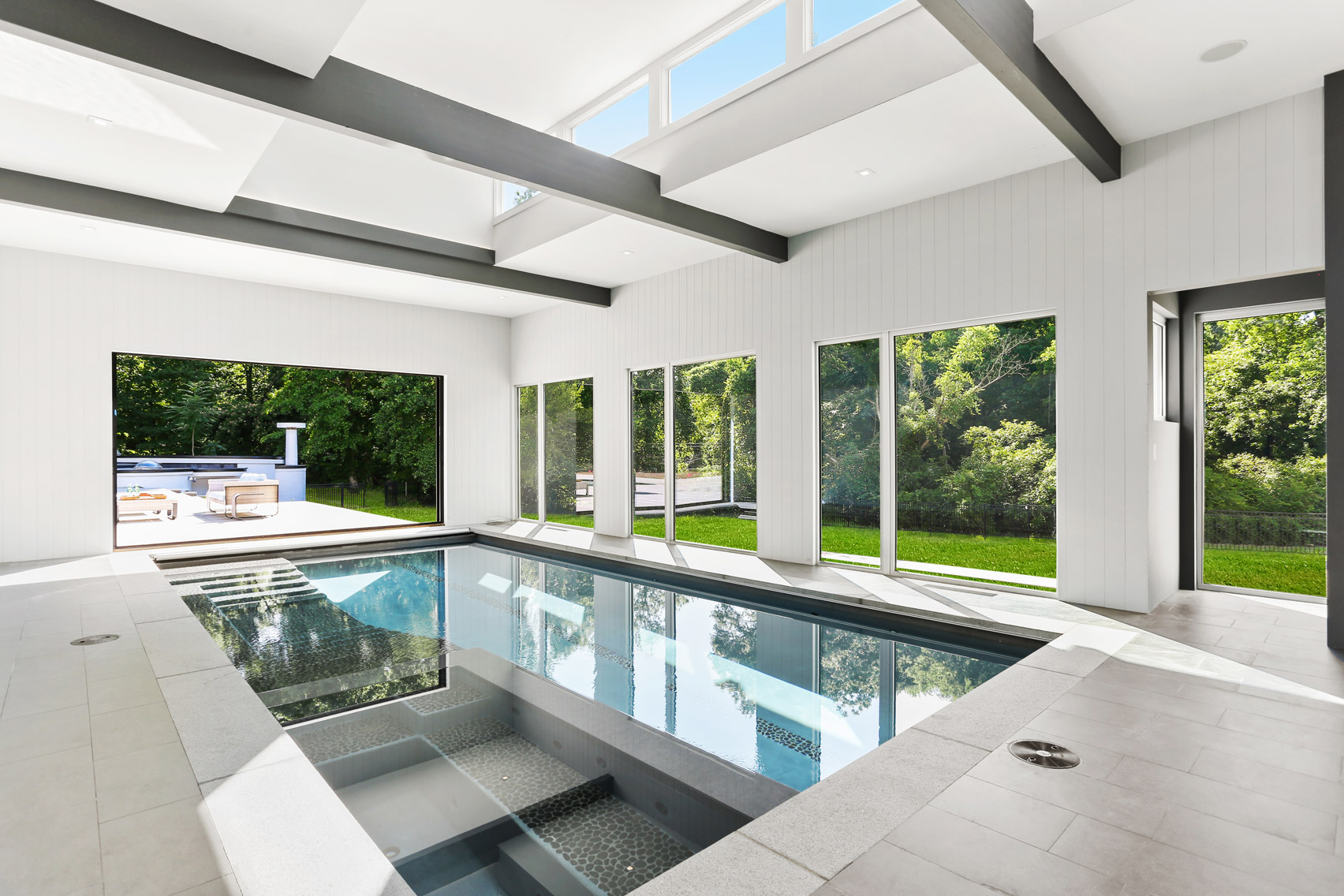
The house is called the Edersheim Residence, or 862 Fenimore depending on who is selling it. It was built in 1958 and it was not built by Paul Rudolph. Rudolph came later, and he came three separate times. Dezeen reported that he altered the house first in 1982, then again in 1989, and again in 1991, adding a pool house, an entrance, a porch, skylights, and a full interior renovation (Dezeen). He got the job because the Edersheims had liked what he did to their Fifth Avenue apartment in the seventies. That is the entire origin story. A couple liked their apartment, so they called the man back, and then they called him back again, and then once more, across nine years, while the rest of the country was deciding he had been a mistake.
Consider what else was happening to Rudolph''s work in those same years. His public concrete was under attack, then under review, then under the machine. Dezeen has covered the demolition of the Burroughs Wellcome building in North Carolina and the demolition of the Shoreline Apartments in Buffalo, where at one point a single remaining resident was the only thing standing between the building and the excavators. The Yale Art and Architecture Building spent decades as the thing everyone pointed at when they wanted a word for architectural arrogance. He died in 1997 with his reputation on the floor.
And through all of it, in a suburb north of the city, he was quietly doing skylights for two people who liked him.
Here is the part worth saying plainly, because the preservation conversation almost never says it. The Rudolphs that survived are not the good ones. They are the owned ones. A government services center belongs to a committee, and a committee has a budget cycle, and a budget cycle eventually produces someone who would rather have a new building than a maintenance line item. A pharmaceutical campus belongs to whoever bought the pharmaceutical company. Public housing belongs, on paper, to the public, which turns out to mean it belongs to nobody willing to fight for it. But a porch in Larchmont belongs to a family, and a family will replace a flashing detail because it is leaking on their kitchen table, not because a landmarks board told them to. Nobody held a referendum on the porch. That is why it is still there.
Which brings us to the way the house was put up for sale, and to the reason we are reading a 2021 story in 2026. The Edersheim Residence was listed on OpenSea, a digital marketplace, with a minimum list price of one Ether, worth about four thousand dollars at the time, with the reserve hidden. The selling team explained the mechanism to Dezeen: "Anyone with a wallet with one ETH in it can make a bid on the architecture. The winning buyer will contact the seller via their real estate attorney." The winning bidder would then need to complete a traditional real-estate transaction to actually own anything.
Read that again. The blockchain was the listing. The lawyer was the sale.
It was 2021 and the tokenised future was going to replace the deed, and here we are, and the deed is fine. The NFT has become a period detail, the way a 1988 fax number on a letterhead is a period detail. The house, meanwhile, was refurbished again in 2020 and is presumably still standing there being a house, with its skylights and its lowered ceilings and its porch, doing the only thing a building has ever been asked to do, which is to keep working after the excitement wears off.
We spend a lot of our week arguing with people about permanence. Everyone wants the durable thing and nobody wants to pay for the boring parts of it, and so the conversation about a building''s future ends up attached to whatever new instrument is available that year: a tax credit, a certification, a token, a designation. All of these are real and some of them help. None of them are what actually saved 862 Fenimore. What saved 862 Fenimore was that somebody liked it enough to call the architect back three times over nine years and then somebody else liked it enough to keep it up. Affection is an unglamorous preservation strategy and it has a far better record than any of the others.
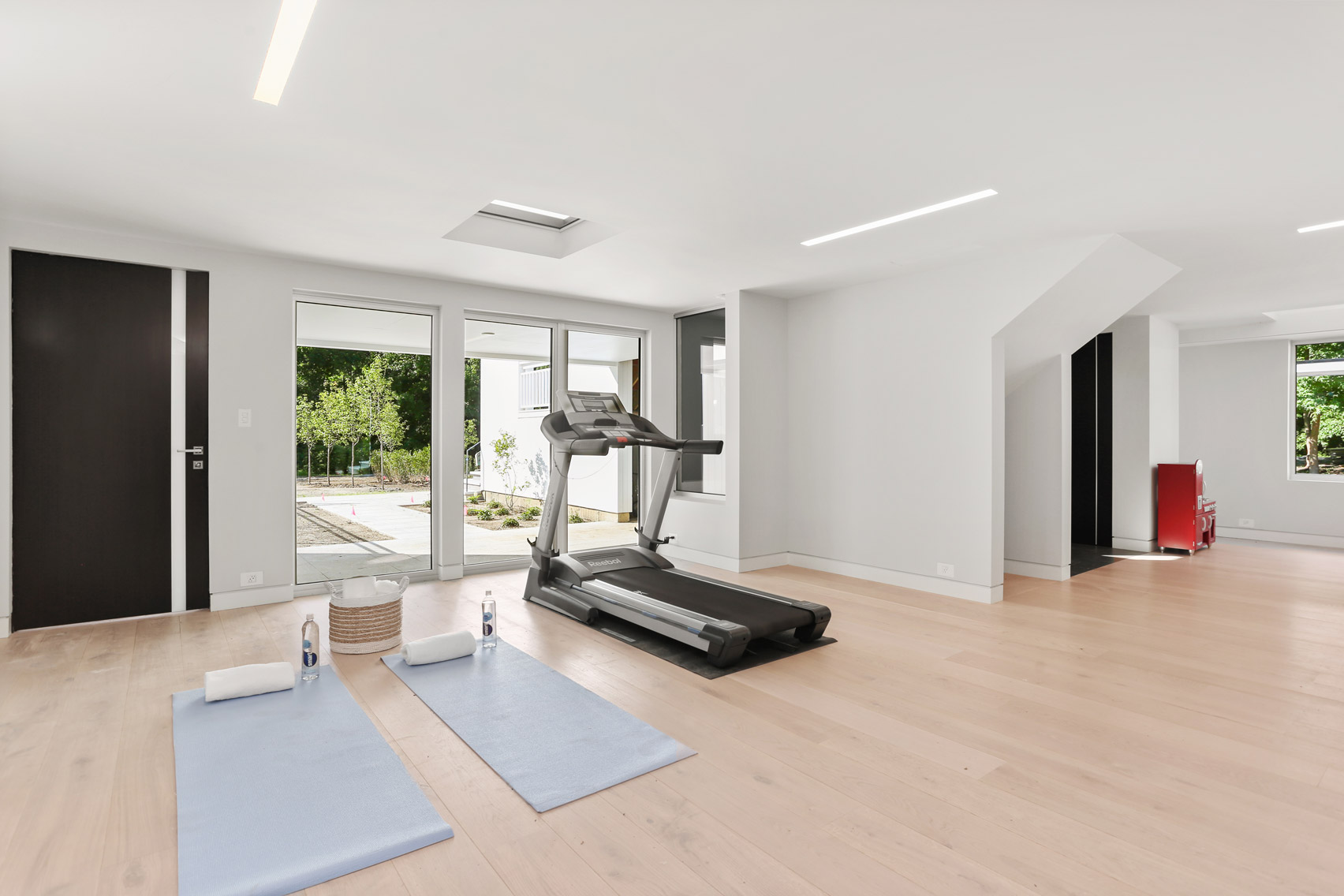
There is a version of Rudolph that architects like to teach, the one who combed concrete into ridges and built a school of architecture that was famously difficult to be a student in. That Rudolph is mostly rubble now. The Rudolph in Larchmont did a pool house. He did an entrance. He solved a family''s circulation problem in 1982 and came back in 1989 when they wanted something else and came back in 1991 when they wanted something else again. It is the least heroic possible use of a great architect, and it is the reason that particular set of his drawings still has a roof over it.
The buildings do not care whether they were bought with cryptocurrency or a cashier''s cheque. They care about the flashing.
Sources & Credits
- India Block, "Paul Rudolph house in New York State up for sale via an NFT," Dezeen, 13 May 2021. https://www.dezeen.com/2021/05/13/paul-rudolph-edersheim-residence-nft/
- "Sole resident prevents demolition of Paul Rudolph''s brutalist housing in Upstate New York," Dezeen. https://www.dezeen.com/2018/01/23/sole-resident-prevents-demolition-paul-rudolph-brutalist-shoreline-apartments-housing-buffalo-upstate-new-york/
- "Demolition of Paul Rudolph''s Burroughs Wellcome building underway," Dezeen. https://www.dezeen.com/2021/01/27/demolition-of-paul-rudolphs-burroughs-wellcome-building-underway-in-north-carolina/
- Photography: Courtesy of 862 Fenimore, via Dezeen, https://www.dezeen.com/2021/05/13/paul-rudolph-edersheim-residence-nft/