It began, by the studio''s own account, at midnight on a building site in the depths of a Melbourne winter, with two designers standing in the wind holding fabric swatches and dog-eared 1980s magazine pages.
est living tells it that way, in Megan Rawson''s words: the site was "bare concrete and scaffolding, more building yard than oasis," and the palms and the pool and the sun-warmed stone were "still only images pinned to a mood board." It is a good and honest opening scene, and it contains the whole problem of working from reference, which is that a reference is a photograph of somebody else''s answer to a question you were not asked.
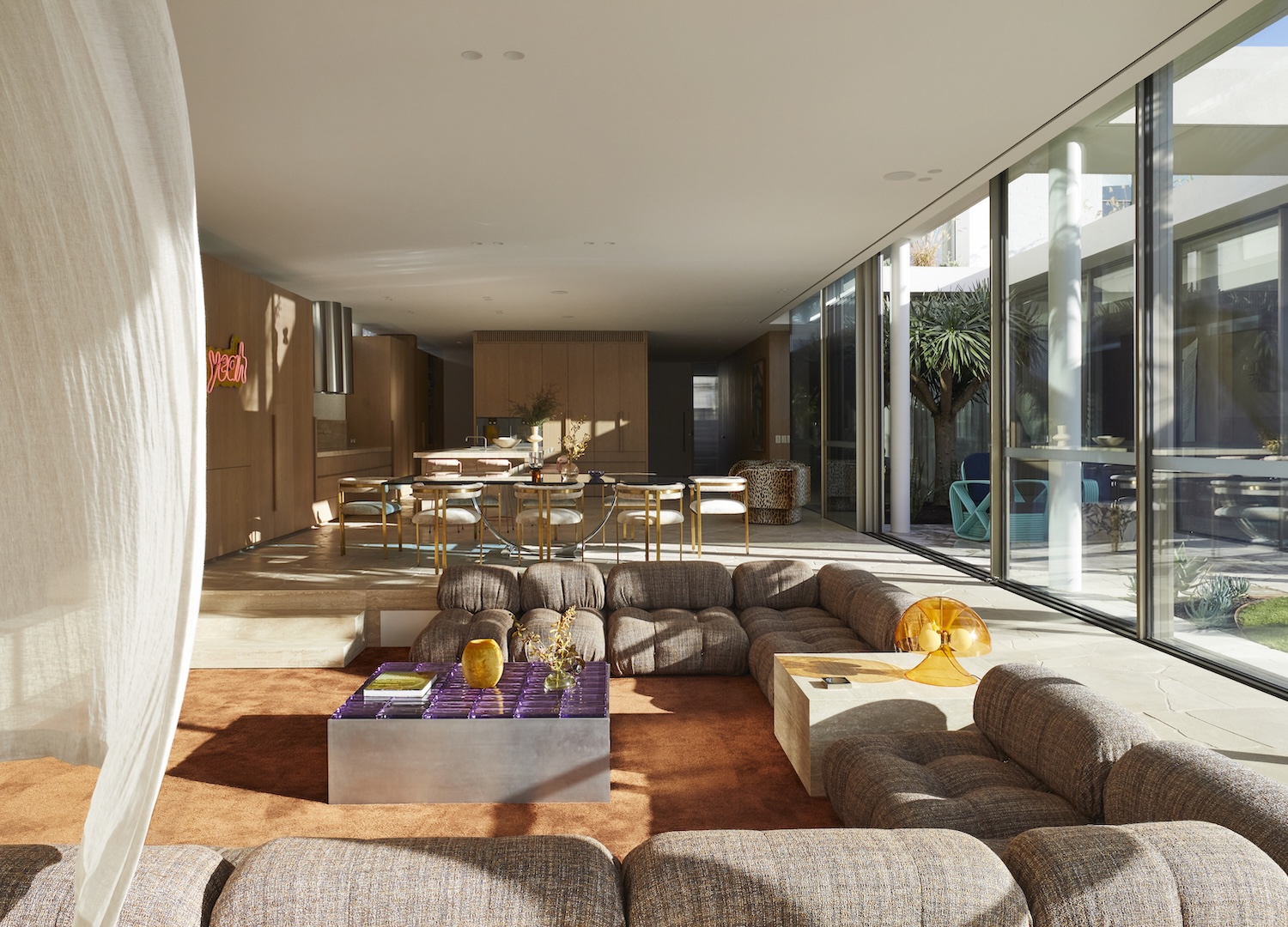
The house is R St., in Bayside Melbourne. Carr Design did the architecture. Studio Stamp, founded by Sophie Gunnersen and Alexis Reid, came in mid build to finish the interiors, working with a client they already knew. The brief, per Gunnersen, was "open, light, bright spaces, bringing the outside in, lush foliage and big open rooms." The reference was Palm Springs.
Palm Springs modernism did not begin as a mood. It began as equipment. That vocabulary was assembled in a desert where summer runs past forty-five degrees and the sky is cloudless most of the year, and every part of the look is doing thermal work. The deep flat overhang exists because the sun is high and violent and has to be intercepted before it reaches glass. The breeze block exists because you want air and shade in the same square metre. The pool is not a lifestyle object, it is evaporative cooling with a lounge chair next to it. Those buildings photograph well as a side effect of being correct.
Ship the pictures anywhere in the world and they arrive perfectly. The reasons stay in the desert.
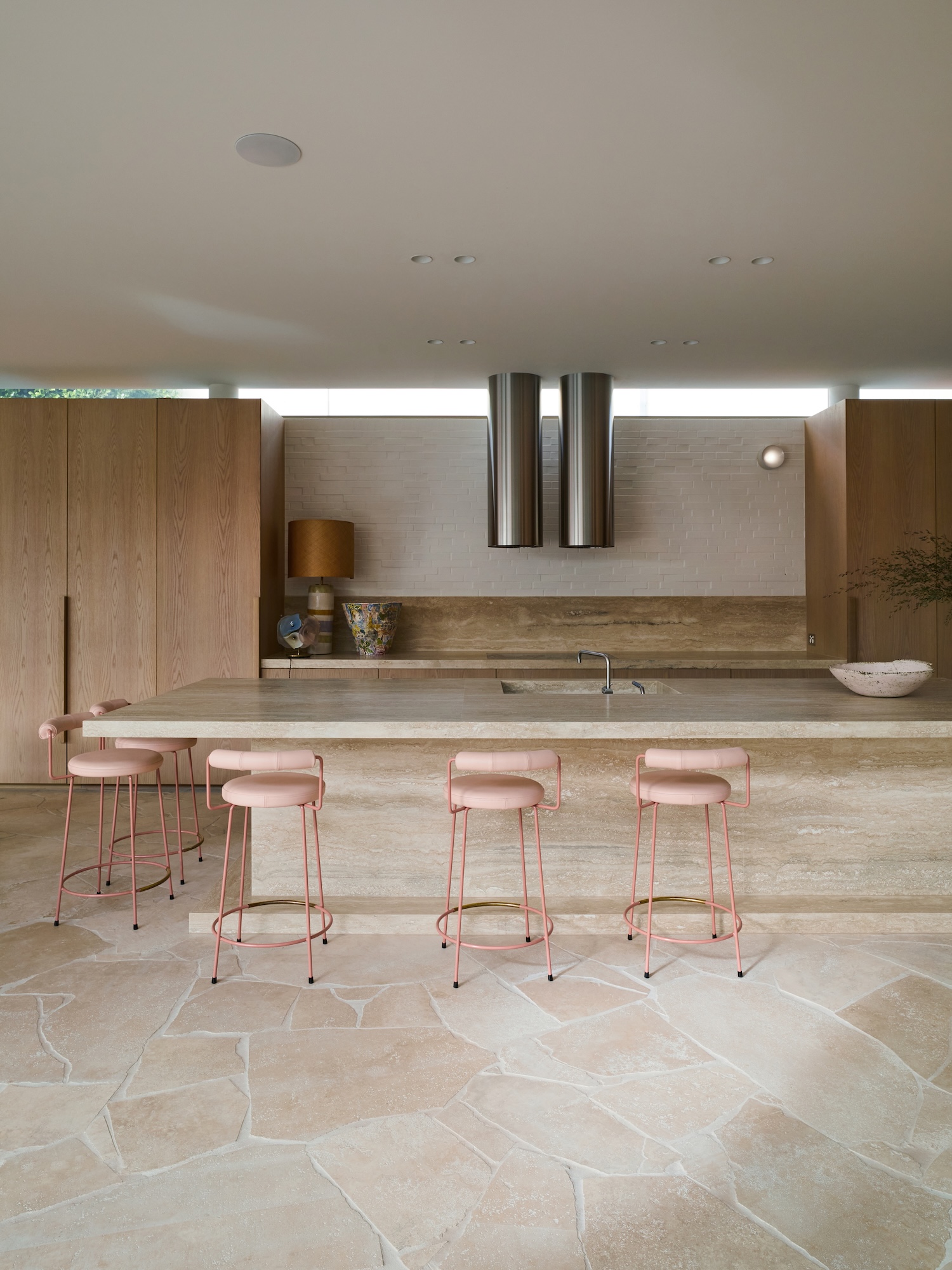
To Studio Stamp''s credit, they say this out loud, which most people working from a mood board never do. "Melbourne''s light is characterised by softer, more diffuse daylight compared to the bright, harsh sun of Palm Springs," Gunnersen told est living, and the consequence was a palette pushed toward the muted and the pastel instead of the saturated, high contrast colour of the original. "The local context acted as both a constraint and an inspiration," she adds.
That is a designer reading a site rather than a magazine, and it is the right instinct, and it is also the smaller half of the story. A palette shift is a response to how the light looks. The harder question is what the light does. Bayside Melbourne gets a cold wet winter off the bay and a handful of savage northerly days in February, and a building that wants to be an oasis there has a different job every three months, whereas the desert house has essentially one job forever. You cannot solve a four-season problem with a one-season image, no matter how good the image is.
Which brings us to the one genuinely Palm Springs move in the whole house, and it is not on the mood board at all.
The pool is north facing. The floor plan bends around it and the living spaces are turned to look at it directly. In the southern hemisphere north is the sun, so that is a plan organised around solar orientation, with the glazing and the outdoor room where the winter light actually is. est living credits the pool and spa to Carr Design, which means the deepest borrowing in the project was made by the architects before the swatches came out, and it arrived as a compass bearing rather than as a picture. That is the piece of desert logic that survived the flight. Everything else made the trip as luggage.
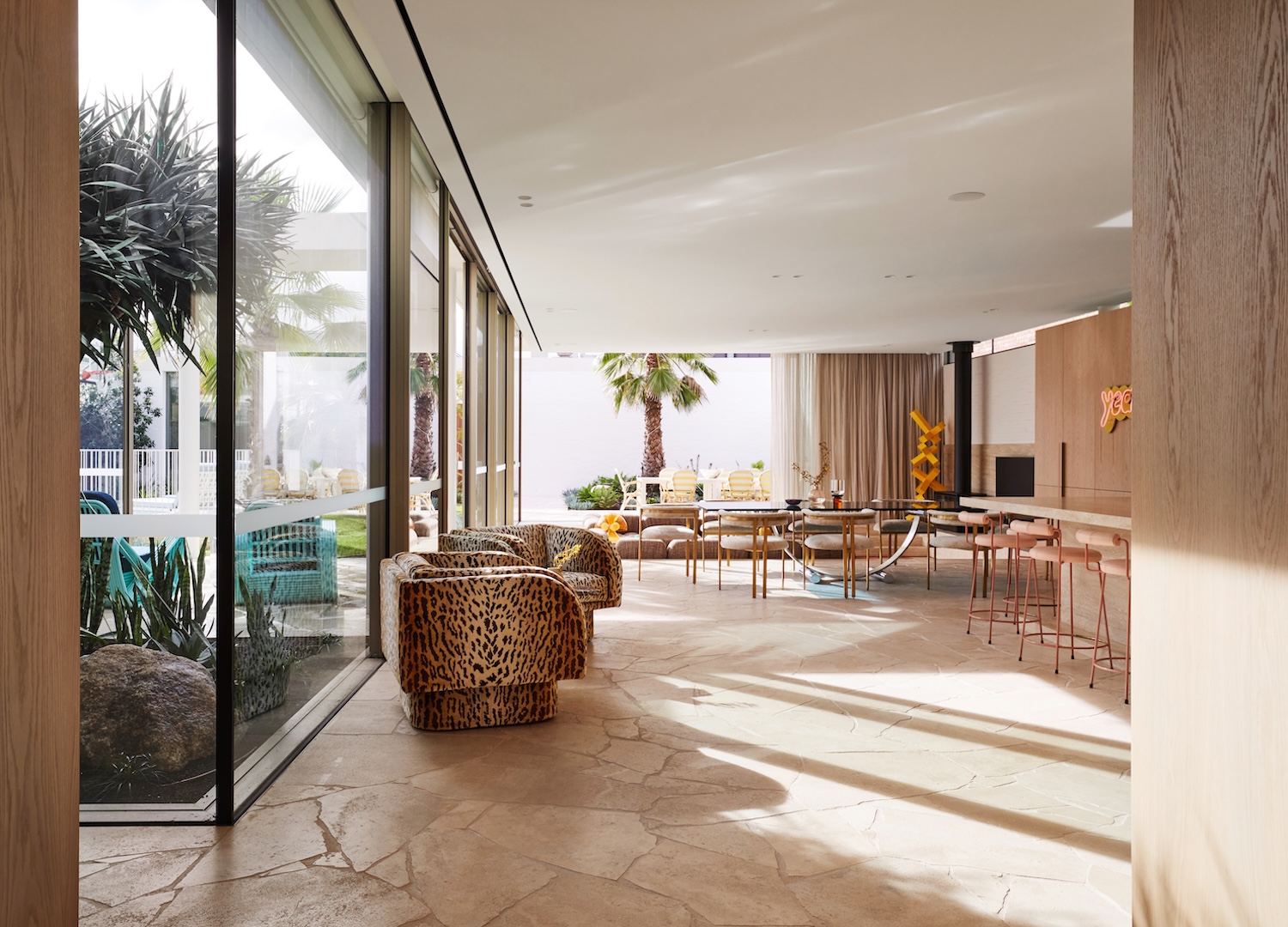
We are not going to pretend the luggage is worthless. Some of it is very good, and the project is honest about what it is doing, which is more than most. Scala travertine crazy paving runs from inside to out and keeps running into the garden, which is a real move and not a decorative one: a continuous ground plane is how you make a room and a terrace behave as one space, and it works in Melbourne as well as it works anywhere. A slatted timber screen filters daylight into strips, which is the cheapest and oldest light instrument there is. High ceilings pull light and air deeper into the plan. Gunnersen says of the glass bricks, simply, "we fell in love with the glass bricks," and there is nothing wrong with that sentence. A glass block wall is a wall that gives you light without giving you a view or a heat gain problem, and people have been in love with it since the 1930s for good reasons on top of the obvious one.
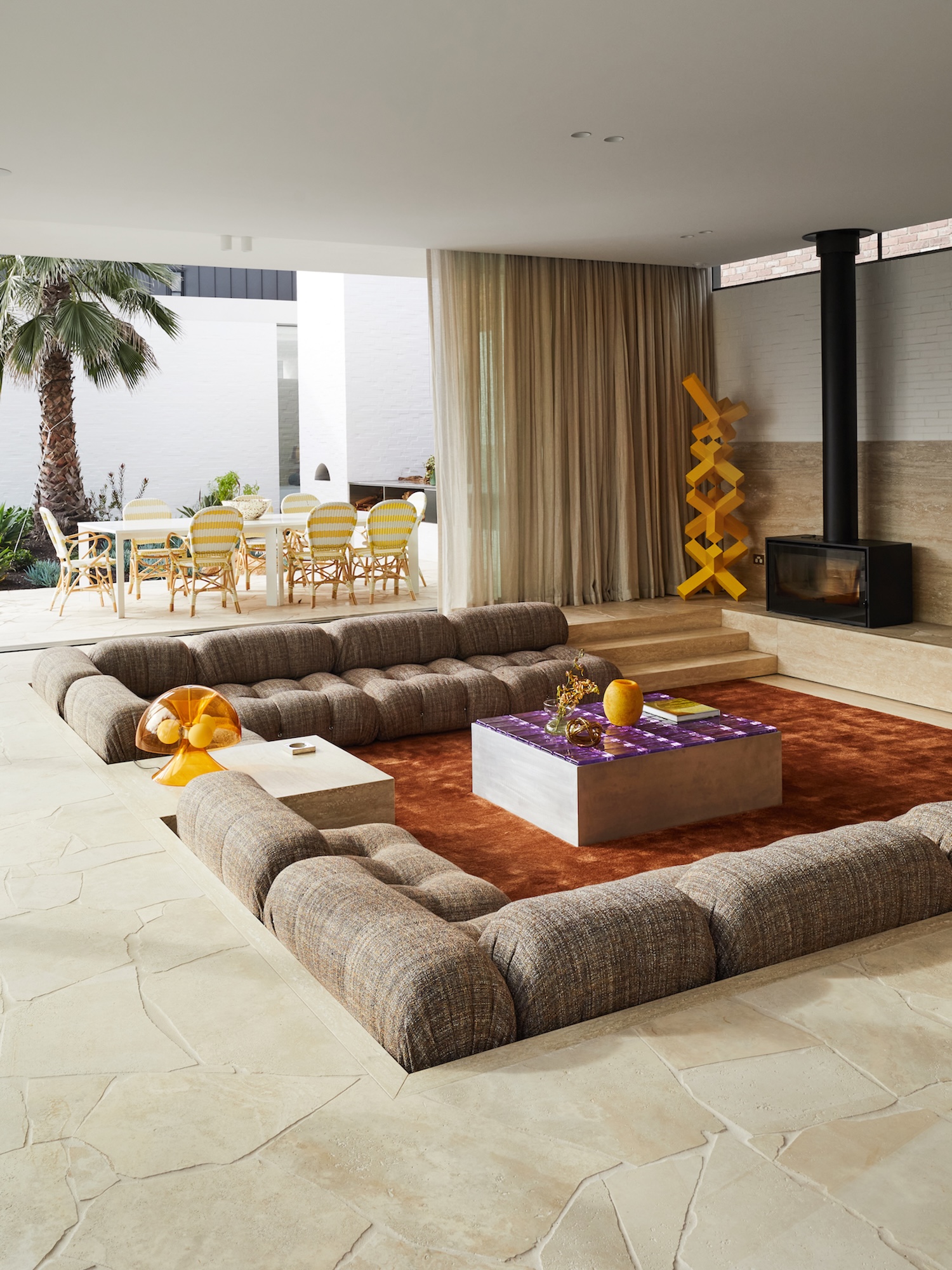
The travertine island, the terrazzo floor, the whitewashed brick, the low Bellini sofa, the pink Campana armchairs: those are chosen for how they look and how they feel, which is a completely legitimate way to choose a thing provided you know that is what you are doing. The failure is never the reference. The failure is forgetting that the reference is a picture of a solution, and buying the picture while assuming you got the solution.
Here is what we would say to anyone standing on a windy site at midnight with somebody else''s decade in their hands. Take the reasons and leave the pictures. Find out what the original was fighting, then find out what your site is fighting, and if the two are not the same fight, keep the geometry and throw out the argument. A borrowed detail that has no job is a costume. A borrowed principle that has a job is just good practice with a longer memory.
The sun in Bayside comes from the north and it comes in low and grey for four months of the year, and it does not know it is supposed to be in the desert. Face the room at it anyway. That part travels.
Sources & Credits
- Megan Rawson, "Studio Stamp Designs a Palm Springs-Inspired Home in Bayside Melbourne", est living, 29 July 2026. All quotations from Sophie Gunnersen, and the description of the site at the outset of the project, are from this article.
- Project credits per est living: Architecture, Carr Design. Interior design, Studio Stamp. Styling, Heather Nette King. Location, Wurundjeri Woi Wurrung Country, Melbourne, Australia.
- Photography: Armelle Habib, via est living, https://estliving.com/r-st-studio-stamp/