Every Box Came With Spare Whistles
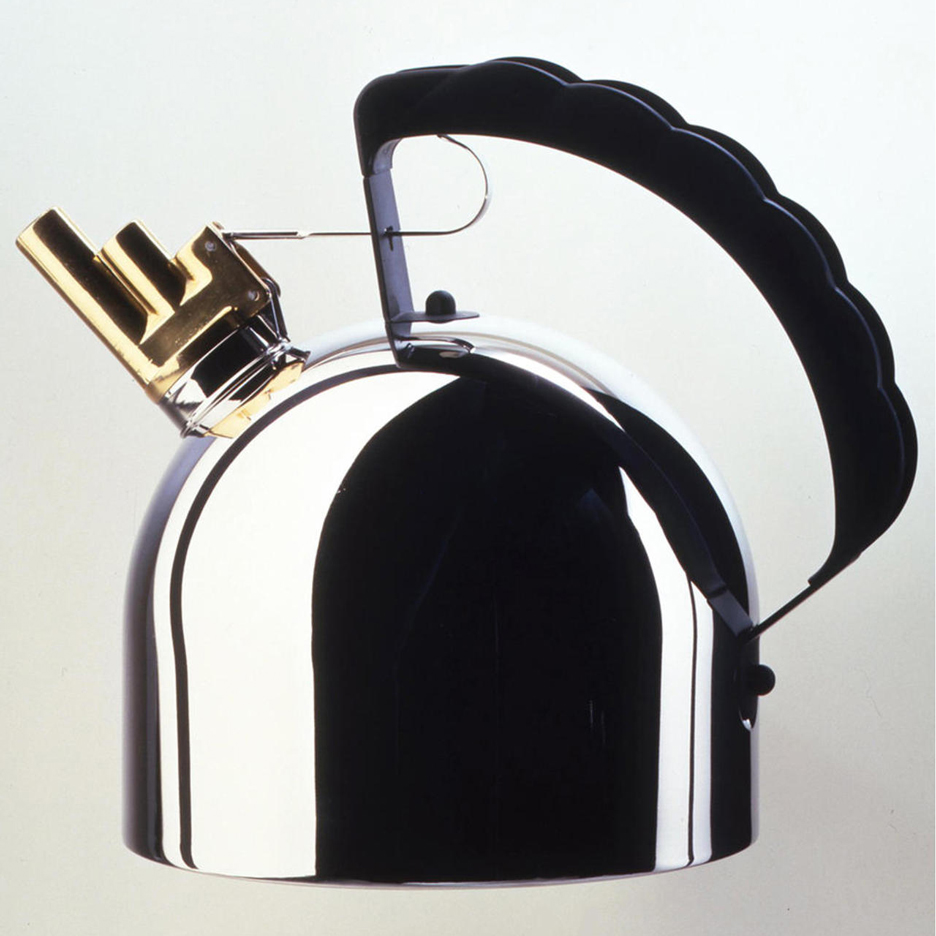
A kettle boils water. That is the entire job, it has been the entire job since somebody first set a metal vessel over a fire, and any competent factory anywhere on earth can do it for eleven dollars. In 1982 Alessi released one that also sang, in two notes at once, because Richard Sapper had told them that boiling water was not enough.
"The idea of Sapper was very clear," Alberto Alessi said years later, in an interview with Dezeen. "He told me: 'I will design a kettle for you, but it's not enough for me to just design a beautiful kettle. I want to design a kettle that can be multi-sensorial. Not only to the eyes, but also to the ears.'"
Consider what that sentence actually commits you to. You can draw a radius. You can draw a wall thickness and a handle profile and the angle at which a spout stops dribbling. You cannot draw a chord. There is no line weight for a chord, no detail callout, no submittal a factory can return stamped and approved. Sapper had written a performance specification that no drawing could carry and no inspector could check, and then he handed it to a housewares company in Crusinallo and went home.
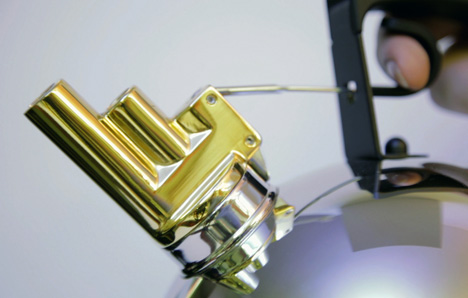
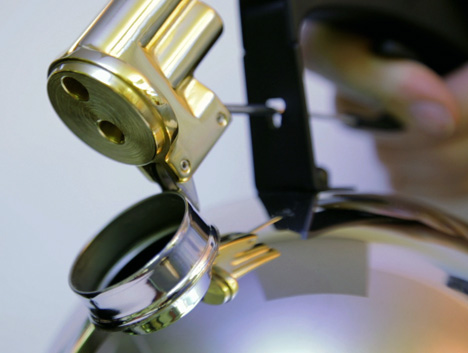
Alessi could not source the part. Not from a supplier, not from a catalogue, not from anyone in the business of making kettles, because nobody in the business of making kettles makes tuned pipes. What broke the problem open was a family errand. One of Sapper's sisters, living in Germany, went and found a craftsman in the Black Forest who produced coristi, the little tuning pipes used to set musical instruments. "After long negotiations with the artisan I succeeded in convincing him to produce two different coristi," Alessi told Dezeen. "One in E and another in C."
So the sound of a kettle on a stove in Milan or Osaka or Cleveland was, at the root of it, one man in a forest in Baden who had spent his life making pipes for orchestras and now had a strange new customer. This is what actually happens when a design demands something the supply chain does not stock. Somebody drives somewhere. Somebody negotiates for a long time with a person who was not looking for the work.
And then it did not quite work, which is the part of this story worth keeping.
"I must confess that this object has some materialistic problems," Alessi admitted in the same interview. "The two coristi, they were not conceived for this purpose, so it may happen, depending on the place you live and the kind of water, after some time they may oxidise and will not sing anymore."
Read that once more, because there is a whole philosophy of building folded into it. The part was borrowed from another trade. The part was never designed to sit in a jet of mineral steam four times a day. The part would corrode, and the rate at which it corroded depended on the water in your particular town, which is to say the design would perform differently in Hamburg than in Houston and there was nothing anybody could do about that from a drawing board. The kettle would keep boiling water perfectly. It would simply, one morning, stop singing.
Most manufacturers would have solved this by deleting the whistle, or by swapping brass for something inert and calling the duller note an improvement, or by writing a warranty exclusion in six-point type. Alessi did the other thing. Alessi put the replacements in the box.
"But in every box we include two additional coristi," he said. "They are very easy to replace."
We think about this a great deal in our own work, because architecture is full of exactly this decision and almost always resolves it the other way. We specify the finish that cannot be repaired instead of the one that can. We detail a joint that no future person will be able to open. We hand over a building with an operations manual nobody will read, and the first thing to fail is usually the thing that made the building feel like anything at all: the closer on the heavy door, the dimming on the one good light, the seal on the window that framed the morning. The structure outlives everyone. The poetry has a service life of about six years and no spare in the box.
Sapper did not pretend his sound was permanent. He priced its impermanence into the package, and by doing that he told the owner something plain and rather generous, which is that this object will need you, and here is the piece, and it takes a minute. That is a different relationship than the one most designed things offer, which is admiration followed by disposal.
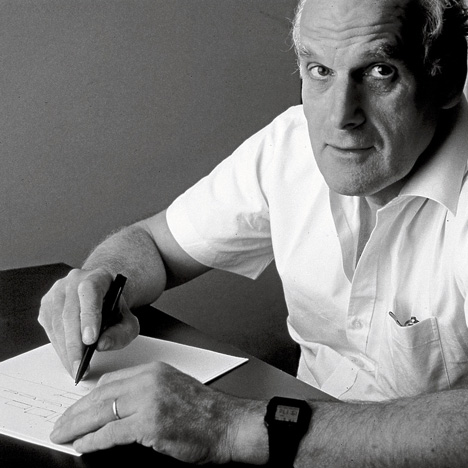
Sapper died on New Year's Eve in 2015, aged 83. Deyan Sudjic, then director of the Design Museum in London, told Dezeen that Sapper "showed that a designer does not need a signature style to be immediately recognisable for his intelligence." The Tizio lamp, the black ThinkPad, the kettle: no family resemblance at all, no house font, nothing you could put in a brand book. What connects them is that each one was solved rather than styled.
The lesson we take is not that buildings should whistle. It is that the most valuable thing a specification can contain is an honest account of how the good part will go. Name the piece that will fail. Say what it costs and where to get it and roughly when. Leave the spare on site in a labelled bag, taped inside the panel door, which we now do, and which nobody has ever complained about.
Forty-four years on, somewhere this morning, a kettle came up to temperature in a kitchen and made a two-note chord that a man in the Black Forest tuned. Somewhere else, one went quiet. That one can be fixed in a minute by anyone who kept the little envelope.
Sources & Credits
- Alberto Alessi interview and all Alessi quotations: "Richard Sapper 'wanted to design a multi-sensorial kettle' for Alessi", Benedict Hobson, Dezeen, 6 July 2014.
- Launch date and product background: "Remembering Richard Sapper: 9091 kettle for Alessi", Dan Howarth, Dezeen, 5 January 2016.
- Deyan Sudjic quotation and biographical detail: "Industrial designer Richard Sapper dies aged 83", Dan Howarth, Dezeen, 4 January 2016.
- Photography: Dezeen, via Dezeen, https://www.dezeen.com/2014/07/06/movie-alberto-alessi-9091-harmonic-kettle-richard-sapper/
- Photography: Dezeen, via Dezeen, https://www.dezeen.com/2016/01/05/remembering-richard-sapper-9091-whistling-kettle-alessi-video/