Nobody Ever Swapped a Capsule
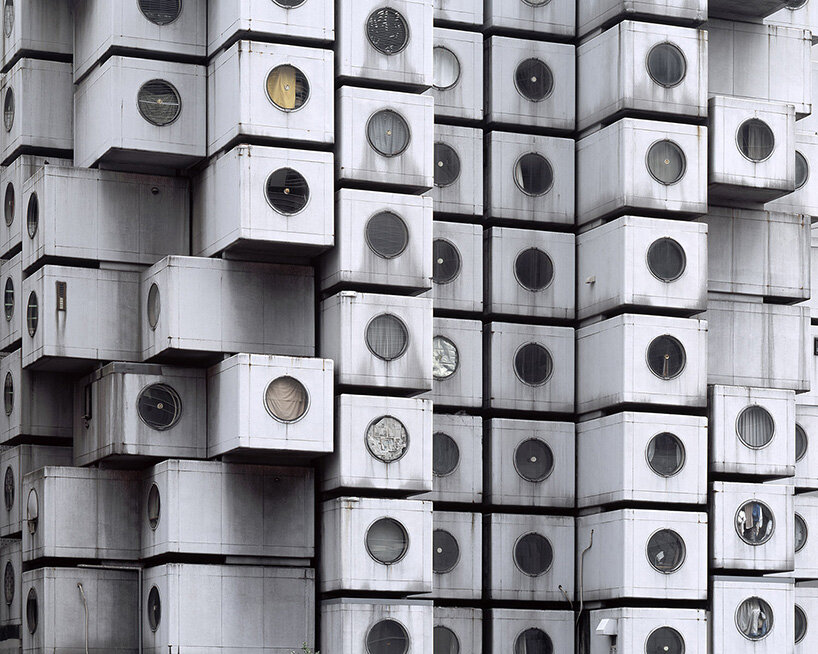
Here is the number that matters, and it is not 140. It is zero.
Kisho Kurokawa finished the Nakagin Capsule Tower in Ginza in 1972, and he did it by hanging 140 prefabricated capsules off two reinforced concrete cores, and the whole argument of the building was that those capsules could come off again. designboom puts the thesis plainly: the tower proposed "a radically different idea of what a home could be: a replaceable part of a larger organism," where "the concrete cores were intended to remain, while the capsules attached to them could eventually be removed and replaced" (designboom). The rooms were bolted on. Four bolts each, more or less, and a crane, and a truck, and in twenty-five years or so you would take the tired one down and put a better one up, and the building would go on being young while its parts aged and were retired like teeth.
In fifty years, not one capsule was ever replaced.
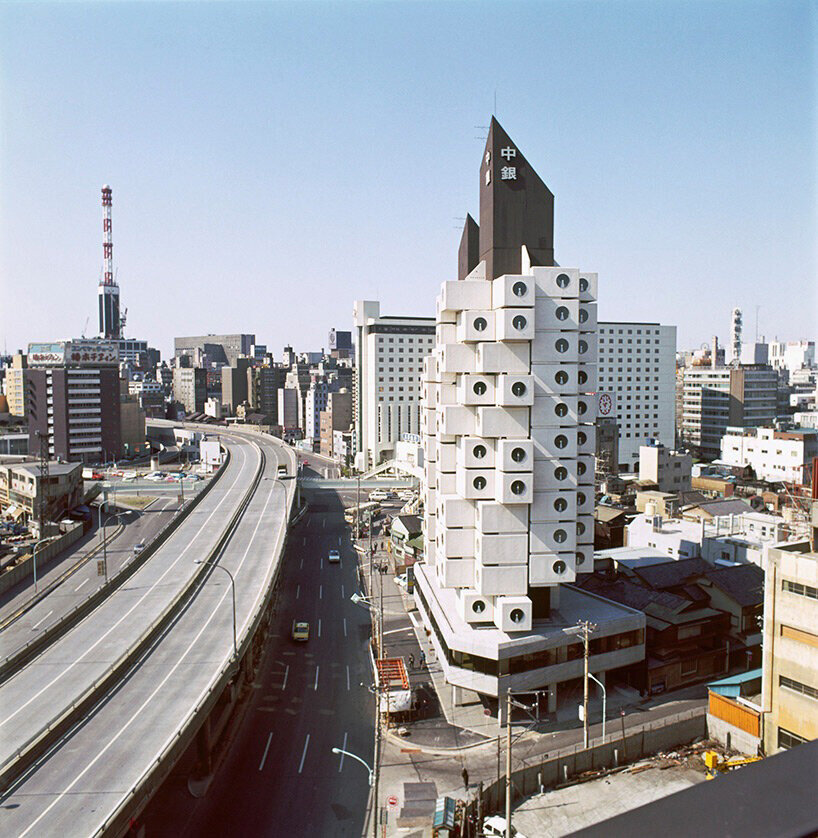
This is usually told as a sad story about Metabolism, the postwar Japanese movement that imagined buildings and cities behaving like organisms, growing and shedding and regenerating. Kenzo Tange stands behind all of it, and Tange is on our wall, and the movement produced some of the most serious thinking anyone has done about a building as a system rather than an object. So the standard eulogy goes: a beautiful idea, too optimistic for the world, defeated by asbestos and rusting steel and Tokyo land values, demolished in 2022 while photographers documented every round window.
We think the standard eulogy is aimed at the wrong target. The capsules did not fail. The bolts did not fail. As far as anyone can tell the connection Kurokawa drew would have worked more or less the way he said it would.
What failed was that each of those 140 capsules belonged to somebody, and swapping one required agreement, and agreement is the one material nobody ever ran a load test on.
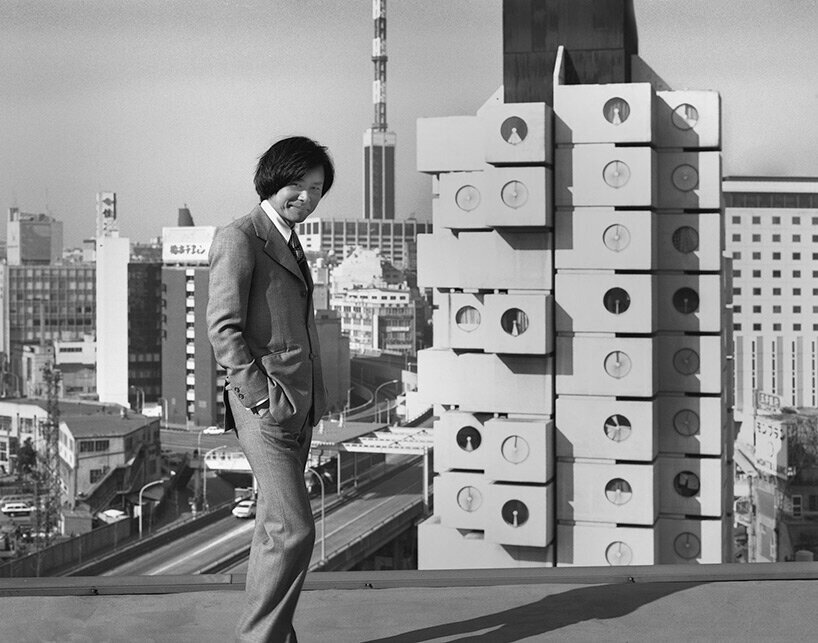
You cannot lift a capsule off a stack without touching the ones below it. You cannot touch the ones below it without the consent of the people who own them, and their insurers, and the body that governs the building, and probably the neighbours across the street who would rather not have a crane over their roof for a fortnight. A unit that is technically replaceable and legally entangled is not replaceable. It is just a room with a good story attached.
We deal with the smaller version of this every week. A client wants to move a bathroom eleven inches. Physically, this is a Tuesday. It is a wet wall, a stack, a slope, a bit of framing, a plumber who has done it four hundred times. Then the alteration agreement comes back from the managing agent, and the board wants an engineer's letter, and the engineer wants a survey, and the survey wants access to the apartment below, and the apartment below is in a trust, and the trustee is in Lisbon. The wall is not the obstacle. The wall never was.
Kurokawa solved the detail. He did not solve the decision, and buildings are made of both.
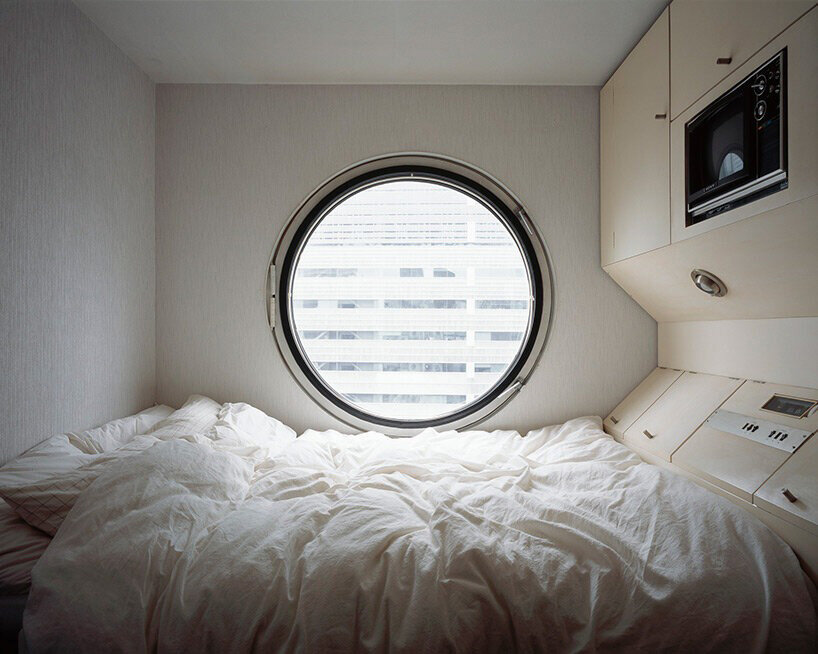
None of which is a reason to sneer at him, and we want to be careful here, because sneering at Nakagin has become a small industry and it is cheap. The man built a tower of tiny rooms with a bed and a desk and a round window looking out at Ginza, and people lived in them, and by every account they loved them and hated them in roughly the proportion that anyone loves and hates the room they live in. A person got up in one of those capsules, in ten square metres, and made coffee, and went to work. That is the whole point of the trade. The rest is theory.
And the theory was right about the thing the twentieth century was worst at. Housing was built as permanence, and permanence has meant that when a building no longer suits anyone, the only available move is to knock it all down and start over, which is the least efficient thing our industry does and the most expensive and by a wide margin the dirtiest. Kurokawa's answer, that a building could shed a part and keep going, is still the correct answer. Everyone doing serious work on circularity and disassembly right now is walking the road he paved and then fell off.

So what would we take into a real project from a tower that is no longer standing.
Design for the smallest unit of authority. Not the smallest unit of construction, which is what everyone means when they say modular. Find out who can actually say yes, alone, without a meeting, and make that the boundary of the replaceable thing. Inside one apartment, one owner says yes, so a demountable partition or a kitchen that unbolts is real. Across a party wall, three parties say yes, so a replaceable facade panel is a fantasy unless the entity that owns the facade also owns the crane. The scale of change a building can absorb is set by its ownership diagram, not by its connection detail.
And when a thing is meant to be replaced, write down who replaces it, and out of whose money, and on what trigger. Nobody did that at Nakagin. Kurokawa drew a twenty-five-year cycle into the architecture, and drew nothing at all into the deed, and the twenty-five-year cycle arrived on schedule and found that it had no one to talk to.
Some of the capsules were saved when the tower came down. They were cut free, restored, and sent to museums, which is a strange fate for a room that was designed to be thrown away, and a fair one. The building finally did the thing it was built to do. It shed a part. It just could not stay standing long enough to enjoy it.
The building does not care. But somebody should have been allowed to decide.
Sources & Credits
- "the nakagin capsule tower and the dream of a home that could change," designboom, 19 August 2026. https://www.designboom.com/architecture/nakagin-capsule-tower-dream-home-change-kisho-kurokawa-tokyo/
- Photography: designboom, via designboom, https://www.designboom.com/architecture/nakagin-capsule-tower-dream-home-change-kisho-kurokawa-tokyo/
- Nakagin Capsule Tower, Kisho Kurokawa, Ginza, Tokyo, completed 1972, demolished 2022.