Out of Production Is Not a Verdict
Dek: Arne Jacobsen drew the Tongue chair in 1955 and nobody could buy one until the late 1980s, when it went on sale and then stopped. The chair was never the variable.
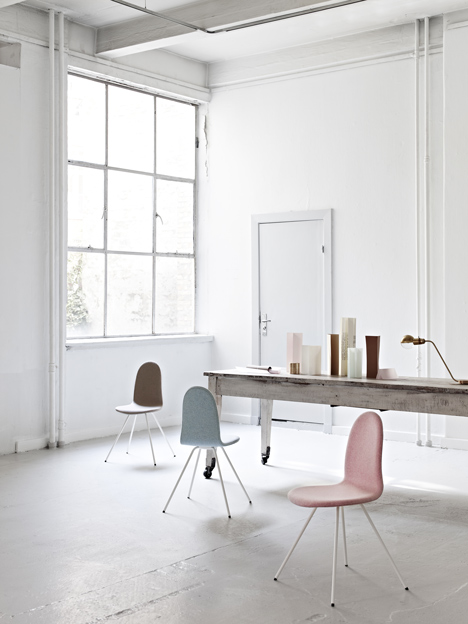
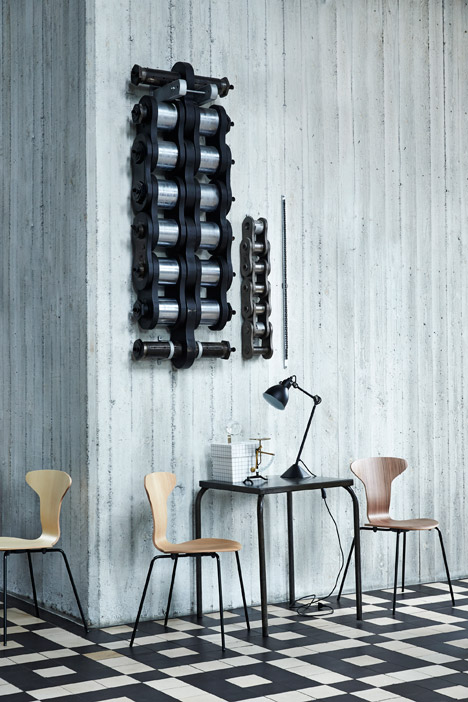
Arne Jacobsen drew the Tongue chair in 1955, for a school, and it sat there. It was the second chair he designed, right after the Ant, and it went into the rooms of his SAS Royal Hotel in Copenhagen with a bar stool version drawn to match, and it never travelled the way the Ant and the Series 7 travelled. Then, according to Dezeen, it "was not produced commercially until the late 1980s and was withdrawn after just a few years" (Dezeen). Do the arithmetic on that. The chair spent about thirty years as a drawing, then roughly four years as something a person could order, then went back to being a drawing, and then in 2013 the Danish brand Howe put it back on the market starting at 486 euros.
Nothing about the chair changed during any of that.
This is the part of the furniture business nobody puts in the monograph. We talk about objects as though they carry their own fate, as though a good design finds its way and a bad one deservedly disappears, and the word we use for the survivors is timeless. Timeless is a word about drawings. It describes a shape holding up under decades of looking, and it says nothing about whether you can get one, because getting one depends on a company deciding to keep the tooling, keep the veneer supplier, keep the jigs, keep the part in a list, and keep answering the phone about it. Availability is not a property of a design. It is a decision somebody makes every few years in a meeting.
The late eighties gave it a window and then closed it
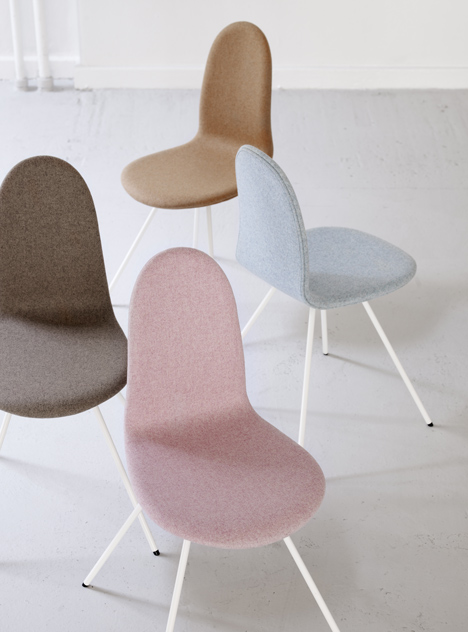
The window matters because of when it opened. The Tongue went into production in the late 1980s, the decade when the industry discovered its own back catalogue was an asset, and reissues started appearing with heritage pages attached, and a great many of them quietly went away again when the heritage page stopped moving units. That is our reading, not Dezeen's, and we hold it loosely. But it fits what happened here: a chair from 1955 arrives late in the eighties, finds no market, and leaves. Twenty-five years later it arrives again and stays, and the only things that changed are the calendar and a sales forecast.
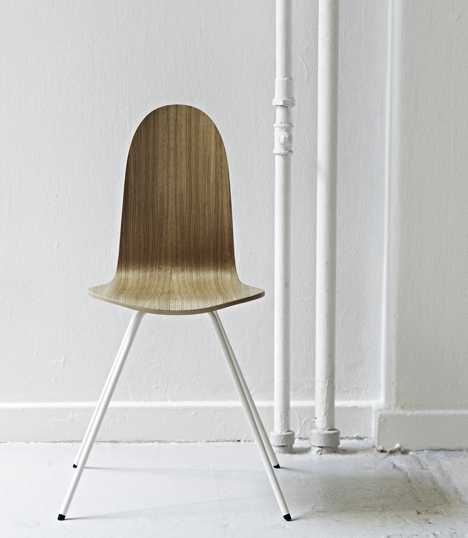
Howe was plain about the second attempt. They "replicated the exact appearance of the original design and reproduced it using contemporary manufacturing techniques to address stability and durability concerns" (Dezeen). Read that carefully. The appearance was reproduced exactly. The construction was not. The reissue is a 1955 silhouette carrying 2013 engineering, which is honest work, and it also means the object you buy is a new chair wearing an old outline.
The one real change was a screw
The companion story is the Munkegaard chair, also called the Mosquito, also drawn in 1955, also for the Munkegaard School in Gentofte just north of Copenhagen, which was finished in 1957 and listed in 1995. Howe brought that one back in 2014 after the Tongue sold. Its sales and marketing manager, Lars Bruntse, said they had "brought a 1950s classic up-to-date, making it greener and tougher than ever before, and making it what is today: a new classic for the 21st century" (Dezeen).
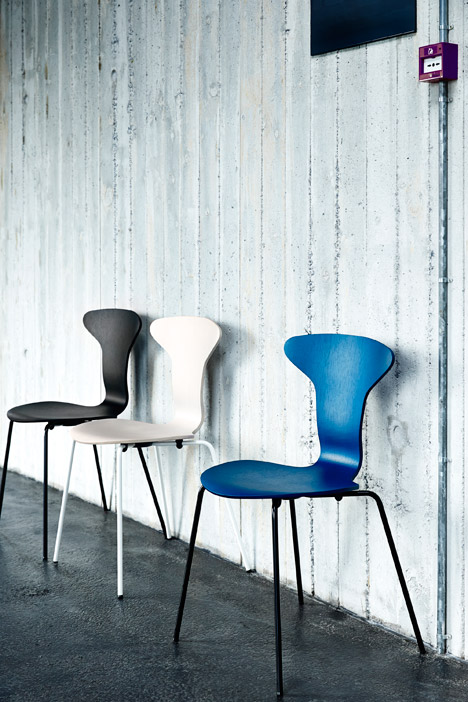
Set the sentence aside and look at what they actually did. Howe changed the design so the wooden seat can be easily disconnected from its frame, for easier recycling. That is the whole green claim, and it is worth more than the paragraph wrapped around it, because it is a real assembly decision with a real consequence at the other end of the object's life. A single piece of curved plywood does the seat and the back, the way the Ant does it, and a metal frame in chrome or powder coat holds it up, and now the two materials come apart with a tool instead of going into a skip fused together. Nobody will photograph that. It is the only part of the relaunch that changes anything in thirty years.
What we actually do with this
We specify furniture for other people's rooms, and the question that keeps us up is not whether a chair is good. We can see that. The question is whether the client can buy two more in year eleven, after somebody drags one across a threshold, because a dining set with six matching chairs and two apologies is a different room than the one we drew. So the durable move is unglamorous and we will keep saying it: order the spares at the same time as the order, write the model number and the veneer code and the frame finish into the closeout documents, and ask the supplier the rude question about how long they intend to make the part. We made the same argument here about VOLA, whose tapware Jacobsen drew in 1968 and whose whole proposition is that the internals stay serviceable. The Tongue chair is the other end of that story. It is what happens when the answer to the rude question is "for about four years, in the late eighties."
And then there is the thing that gets us every time. These were school chairs. They were drawn for children in Gentofte, sized for bodies that would outgrow them within a year or two, pressed out of plywood because plywood was cheap and could be curved and could take a decade of being scraped back from a desk. The building they were drawn for was finished in 1957 and was still standing and important enough to be listed in 1995, by which point the chair itself had already been on sale and taken back off. The room outlasted the furniture by a wide margin. Now the chair sells in several veneers and a range of upholstery running from light pink to cognac, to adults, who will sit in it for eight hours a day and never once think about a hallway in Denmark full of coats.
It is a good chair. It was always a good chair. That was never what was being decided.
Sources & Credits
- "Tongue chair by Arne Jacobsen relaunched by Howe," Alyn Griffiths, Dezeen, 12 August 2013: https://www.dezeen.com/2013/08/12/howe-relaunches-arne-jacobsens-tongue-chair/
- "Arne Jacobsen's Munkegaard chair reintroduced by Howe," Dan Howarth, Dezeen, 17 November 2014: https://www.dezeen.com/2014/11/17/arne-jacobsen-munkegaard-chair-reintroduced-howe/
- Photography: Dezeen, via Dezeen, https://www.dezeen.com/2013/08/12/howe-relaunches-arne-jacobsens-tongue-chair/
- Photography: Dezeen, via Dezeen, https://www.dezeen.com/2014/11/17/arne-jacobsen-munkegaard-chair-reintroduced-howe/