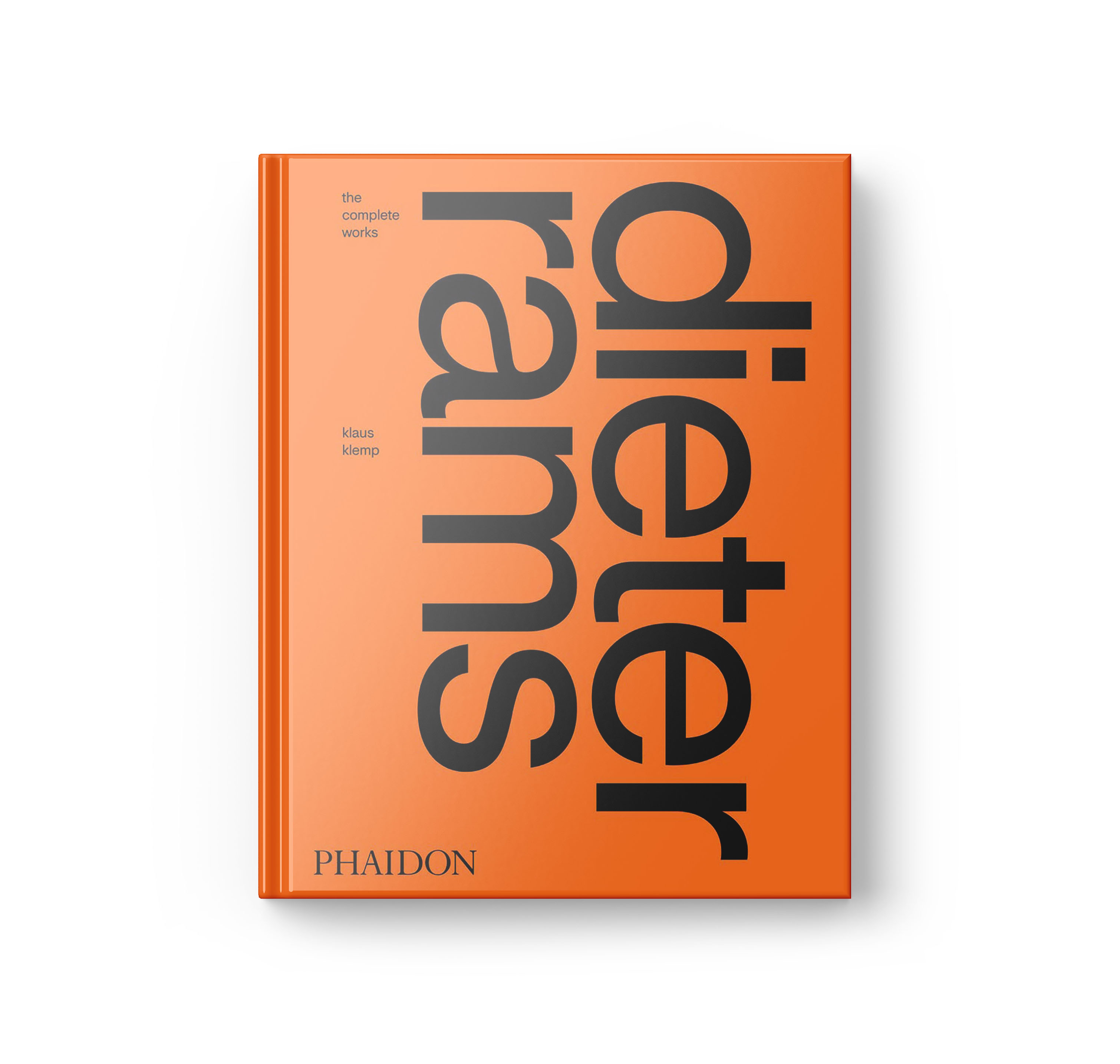
A catalogue raisonne makes obvious sense for a painter. The paintings are singular, they are hanging in known rooms, and a scholar can go and count them. It makes much less sense for a man whose work came off a production line in the hundreds of thousands, got carried home in a cardboard box, got used every morning for years, and then got put out with the rubbish when the drive belt went or the plug standard changed or the person who owned it died and the children did not want a German record player. Phaidon has published one anyway. Dieter Rams: The Complete Works, written by Klaus Klemp with a foreword by Rams, runs 344 pages with around 300 colour illustrations, and the publisher describes it as covering "every product that Rams has designed in his lifetime," made "in close collaboration with Rams himself" (Phaidon). It is a complete works assembled almost entirely out of things you can no longer buy.
Almost.
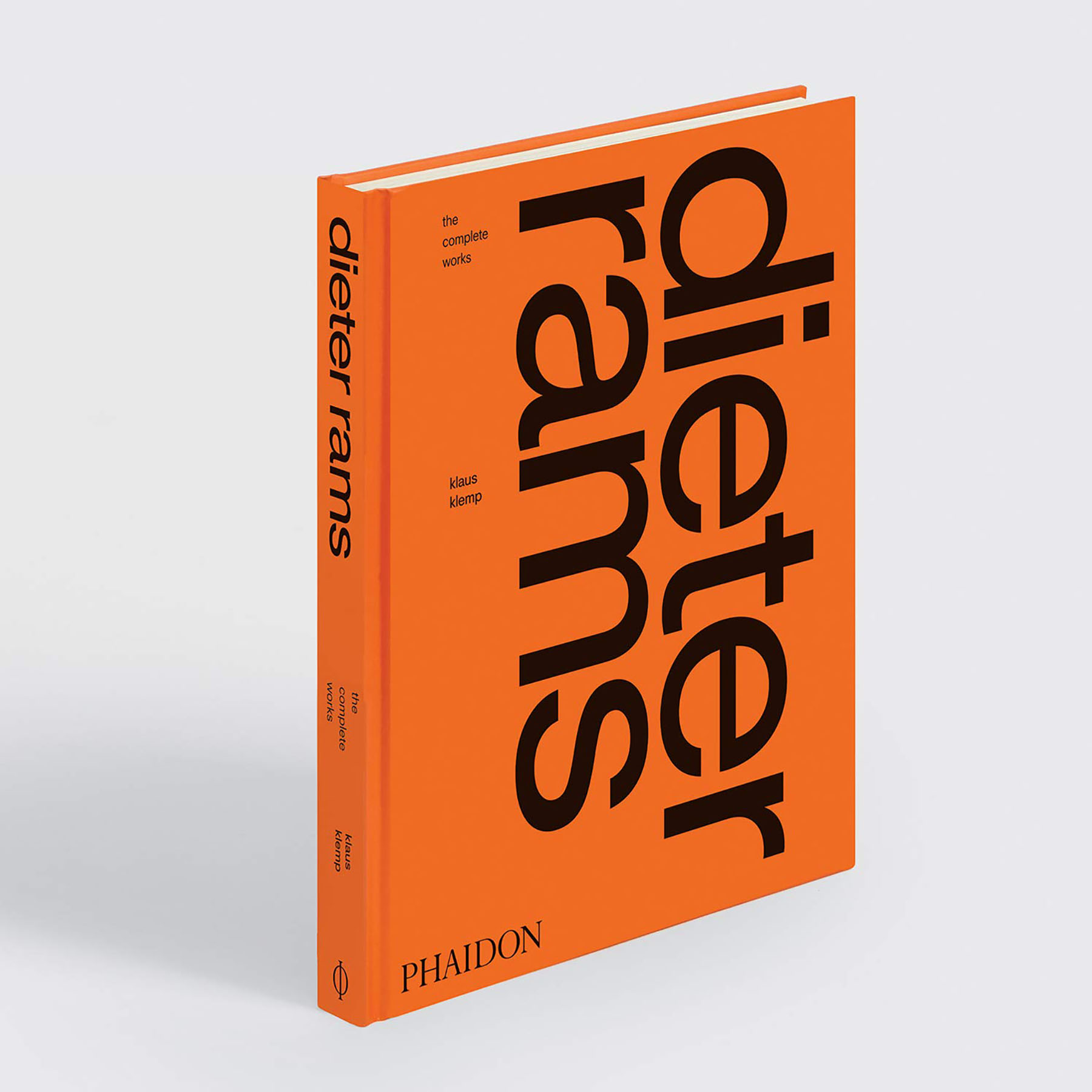
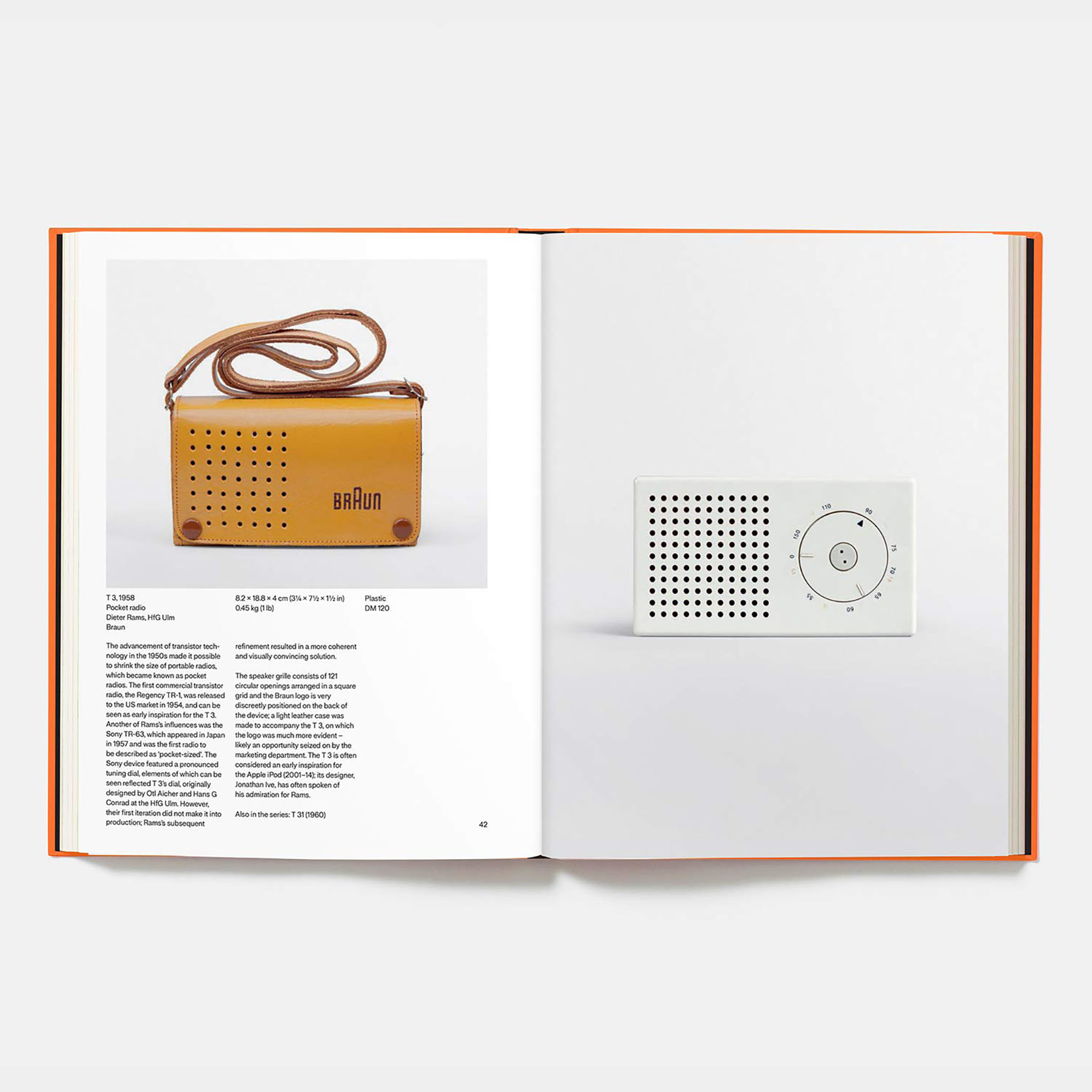
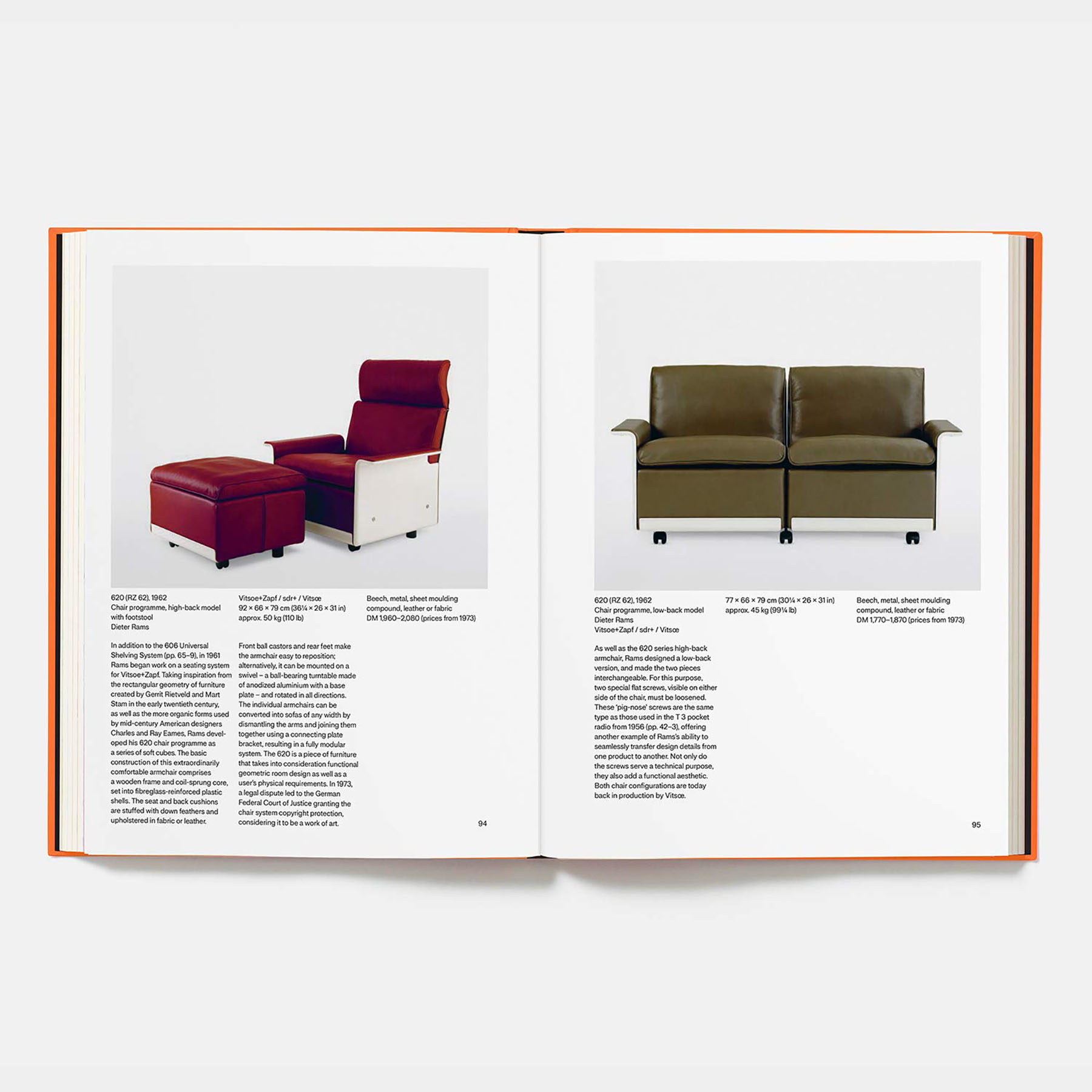
Gessato's write-up of the book picks out the Braun SK 4 record player, the 620 Chair Programme and the Universal Shelving System as the landmarks, alongside the ten principles for good design (Gessato). Two of those three objects are now auction lots. The third is a current product. You can go to Vitsoe this afternoon and order more of the 606 Universal Shelving System, launched in 1960 as the RZ 60 (Vitsoe), and it will arrive, and it will line up with the one your uncle bought.
That is the most interesting fact in the book, and the book is not really about it.
Here is why the shelf is still for sale, taken from Vitsoe's own account of itself. In 1985 a man named Mark Adams saw the 606 at its UK launch, in a London interiors shop called Reflex. In 1986 he met Niels Vitsoe, Dieter Rams and Ingeborg Rams in Frankfurt, and that same year he established Vitsoe UK Ltd. In 1987 Vitsoe UK began manufacturing the shelves itself, in Britain. In 1993, when Niels Vitsoe retired, Adams was invited to become managing director of the German parent company. In 1995 the corporate seat and the production both moved to England, and the German company closed (Vitsoe). Sixty-six years after its launch you can still order another bracket, and the reason is that one man walked into a shop in 1985 and then spent the rest of his working life on somebody else's shelf.
None of that is a principle. Read down the ten and you will find nothing about distribution agreements, nothing about who holds the tooling when a company fails, nothing about whether the person who loves an object enough to keep it in production has a successor lined up. The principles describe the object. The object survived because of a supply chain and one stubborn human being.
This matters for us in a plain way. "Good design is as little design as possible" has been printed on so many mood boards that it now reads, to a great many people, as permission to do less work. It is the opposite instruction. The 606 is an additive system, and its whole premise is that you will come back in nine years and buy two more shelves and a taller track, and the holes will still be where they were. Holding a tolerance across six decades, across different factories and different steel suppliers and a change of country, is not restraint. It is a far harder job than designing a beautiful shelf once, and it is a job with no author, which is exactly why it is not in the book.
Our first influence made the same bet and got the same answer. Marcel Breuer's tubular steel chairs have been built by a succession of different companies since the 1920s, in different countries, under different owners, with the drawings handed along like a lease. The chairs are famous. The chain of people who kept bending the tube is not. Nobody writes the monograph about the factory.
So we should say the uncomfortable half out loud, because it points at us. Common Projekts specifies things every week whose manufacturers will not exist in ten years. We know it, and we specify them anyway, because they are right for the room and because asking a client to bet on a company's survival is a strange thing to put into a drawing set. A hardware line gets discontinued and a door that worked beautifully for eight years becomes a door with no replacement lever. That is not a design failure. It is the ordinary weather of building things. But it does mean that when we reach for a product whose maker has been making it the same way since before we were born, we are not being sentimental about the sixties. We are specifying the only kind of permanence that is actually for sale.
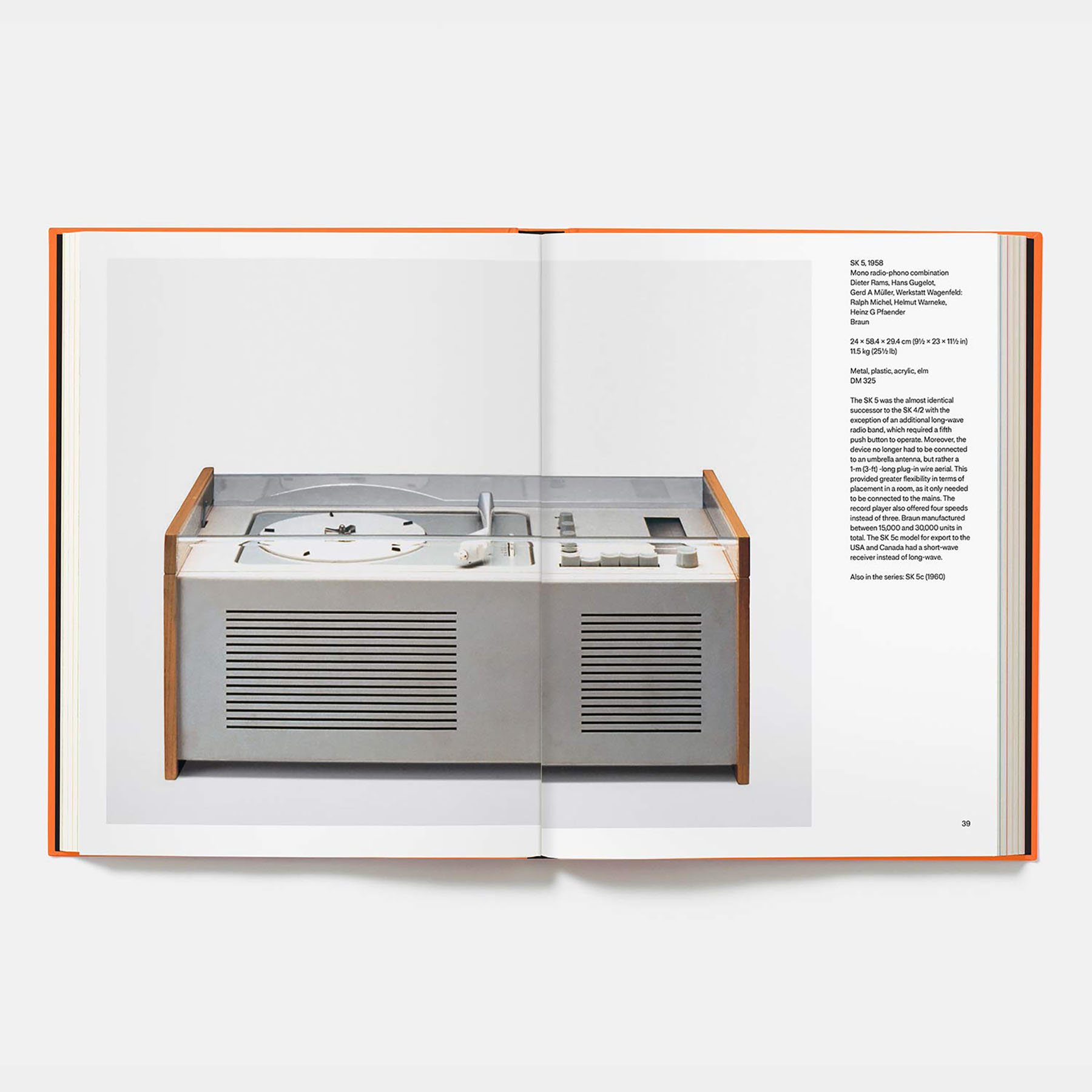
The book is worth having, and it is worth being clear about what it is. It is 344 pages of objects that did their jobs and then went away, which is what objects do, and which is not a tragedy. One of them did not go away. It is a wall-mounted track with brackets hung off it, and it is still being made, now in Royal Leamington Spa, because somebody filed the paperwork in 1986 and then kept showing up.
The shelf does not care. It just takes another bracket.
Sources & Credits
- Klaus Klemp, Dieter Rams: The Complete Works, Phaidon. Publisher's description and specifications: phaidon.com
- "Dieter Rams: The Complete Works," Gessato, 12 October 2020: gessato.com
- Vitsoe company history, including the 1960 launch of the 606 and the 1985 to 1995 milestones: vitsoe.com
- Photography: Photographs (c) Phaidon, via Gessato, https://www.gessato.com/dieter-rams-complete-works/