The Bolts Came Out in 1950
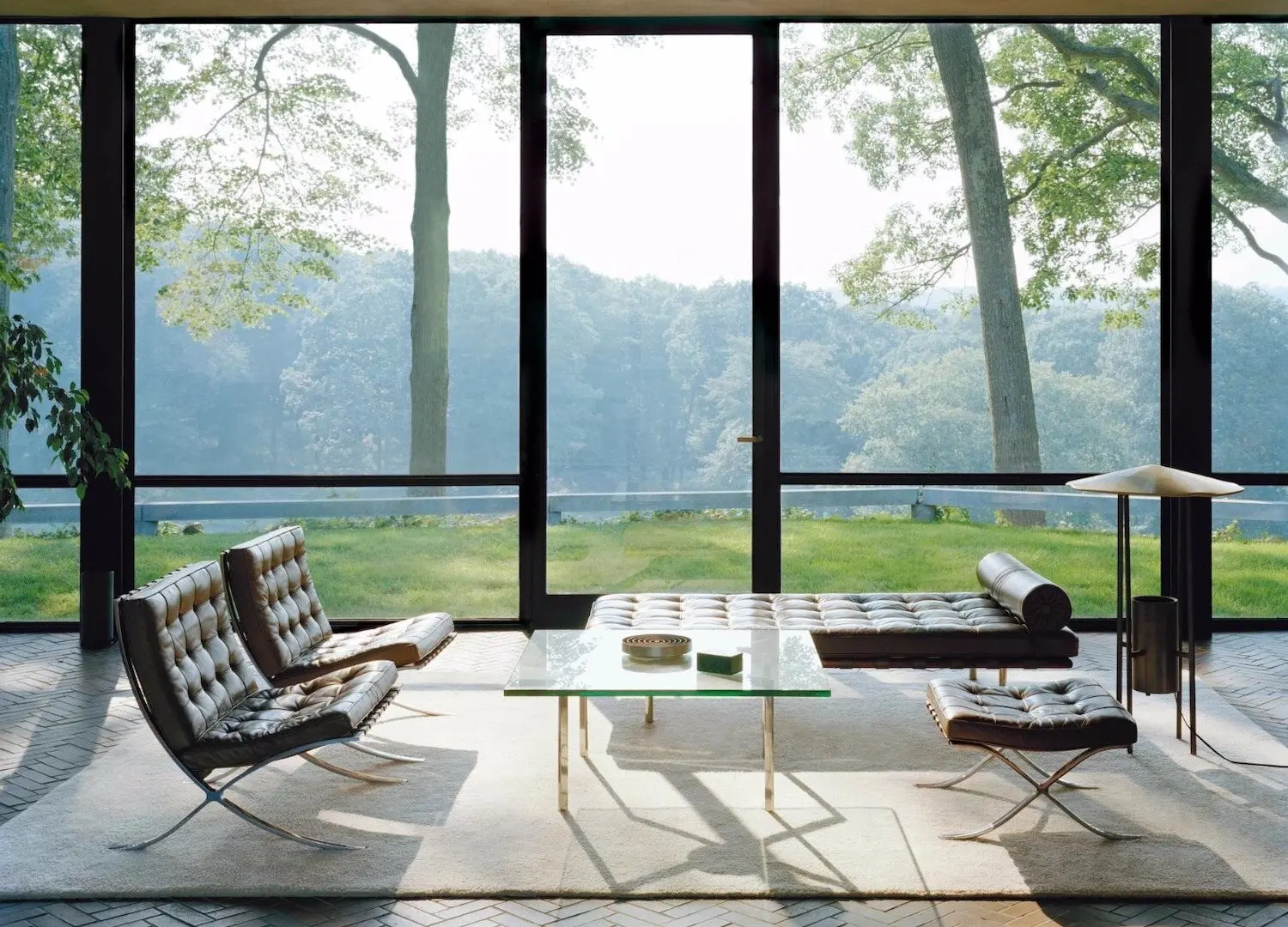
Est Living has been running a series called ICON, and the entry on the Barcelona Chair does something most writing about that chair does not do, which is name both of the people who made it. "Designed for the German pavilion at the International Exposition 1929 in Barcelona, its co-designer, architect Lilly Reich, is often left out of the credits," Stephen Crafti writes, and then adds, in what may be the most useful sentence anyone has written about this object: "So, if you only take away one fact from this story, it's an important one to acknowledge!" (Est Living).
Fine. Take the fact. We want to add a second one, because there is a piece of this chair's history that gets left out even more reliably than Reich does, and it is the piece that explains why the thing looks the way it looks.
The chair you have seen is not the 1929 chair.
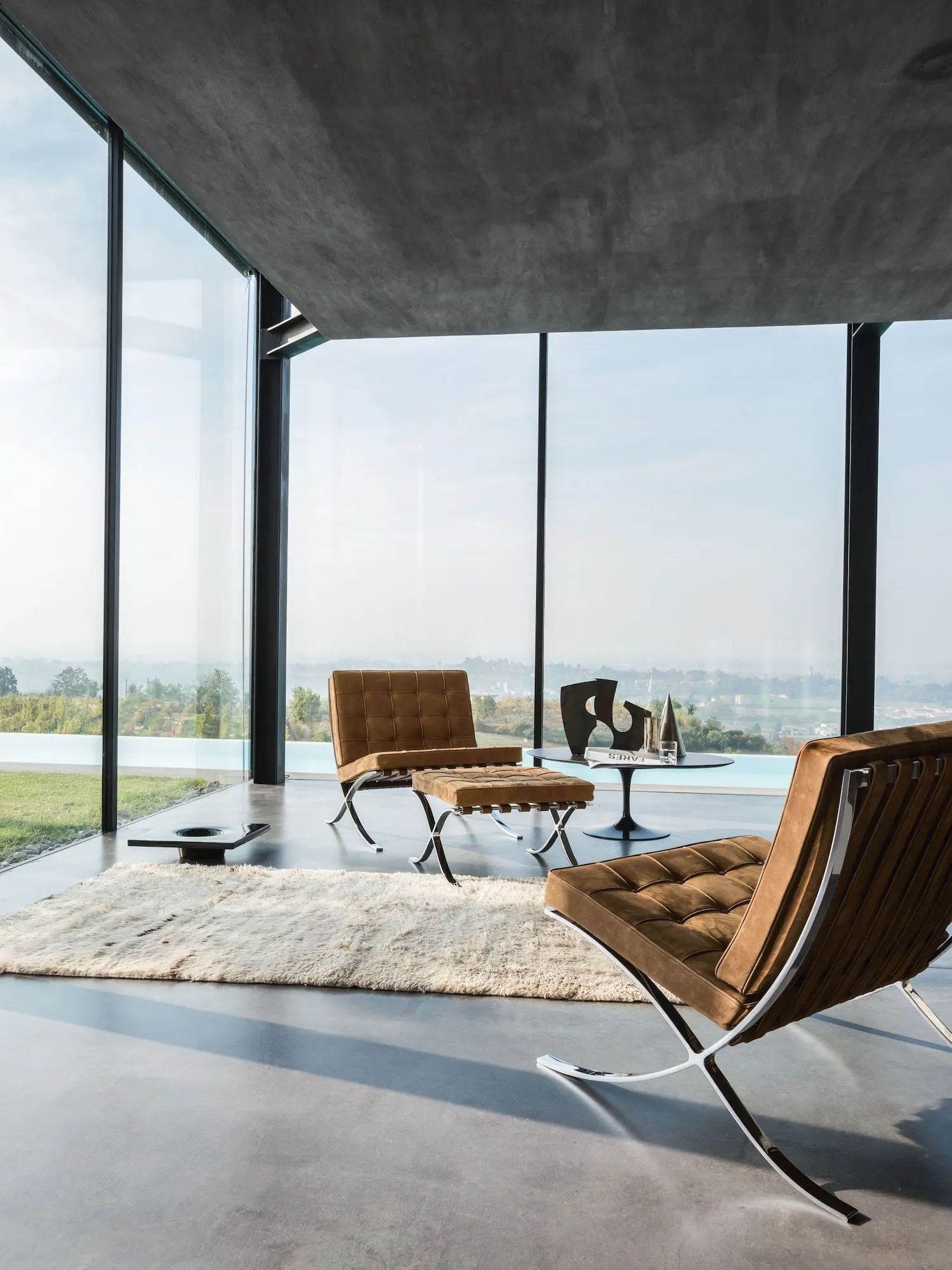
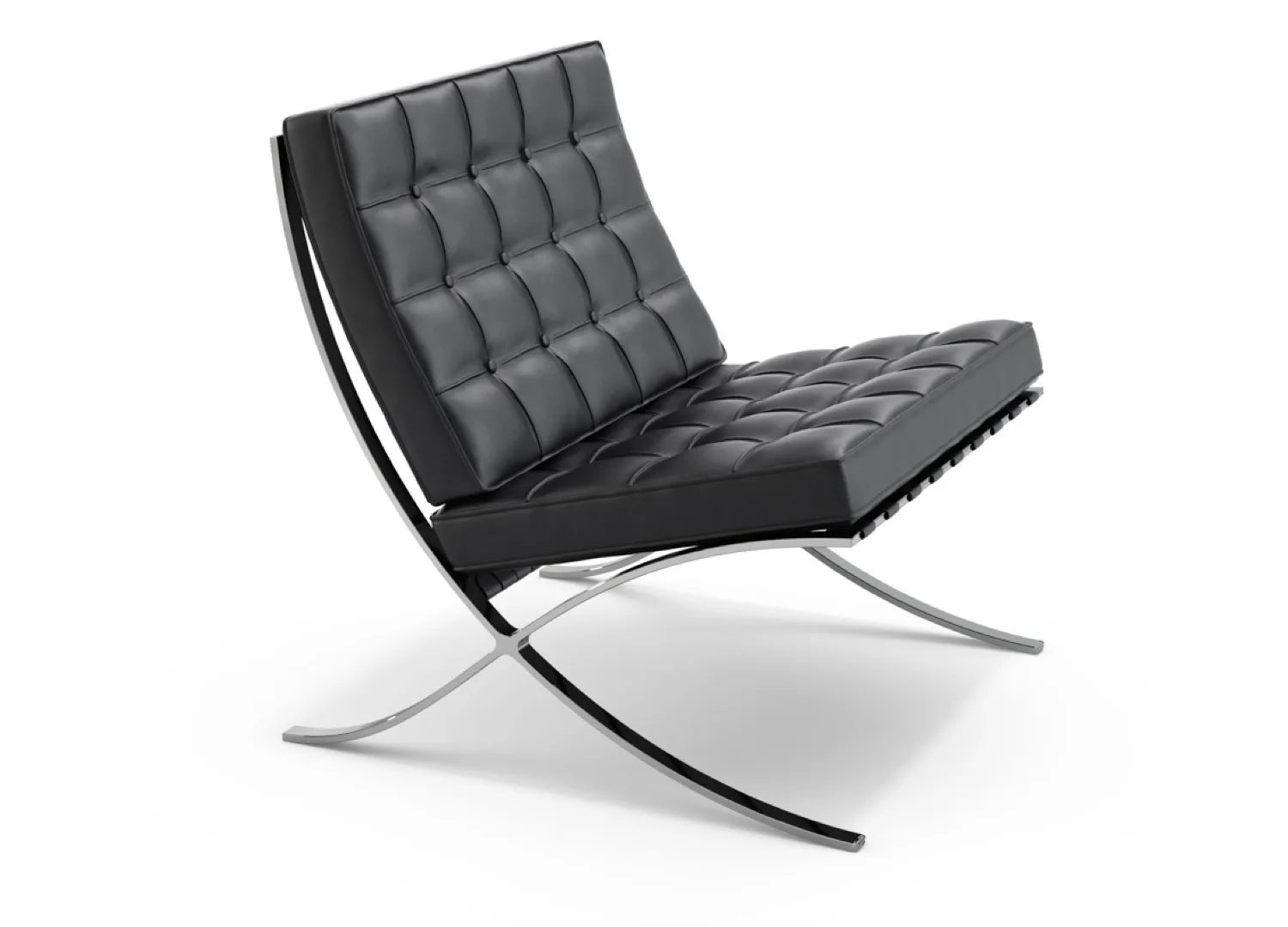
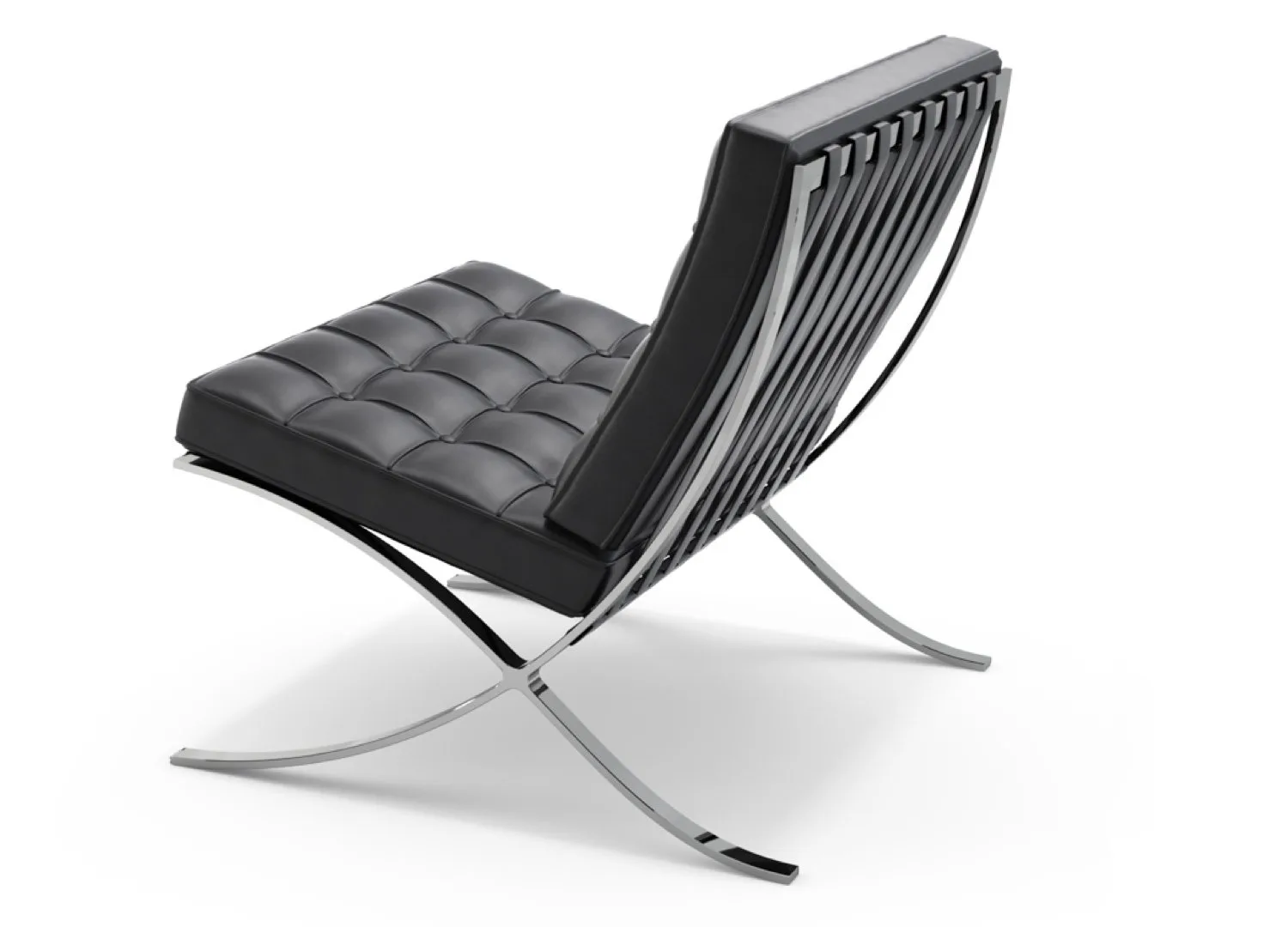
The 1929 frame was chrome-plated steel and it was bolted together. Two crossing curves, a set of fasteners, an assembly. You could see how it went together if you got down and looked, and you could take it apart, and if a piece failed you could replace the piece. That is a legible object. Then in 1950 the frame was redrawn for large-scale production and made in stainless steel formed from a single seamless piece, no screws, and the visible joint went away. What Knoll produces now is a hand-buffed stainless frame, and the finish work is done by a person with an abrasive and an opinion, and the reason the curve reads as one continuous gesture is that somebody stood there and made it read that way.
So the icon is a fabrication decision. It was drawn by two architects for a pavilion of limestone blade walls and a roof that appeared to float, and it was made permanently beautiful twenty-one years later by a manufacturing engineer nobody can name.
We are not complaining. The seamless frame is better looking than the bolted one and we would spec it tomorrow. But we would like the trade written down, because we make the identical trade on almost every job and hardly anybody says it out loud.
Delete a joint and three things happen at once. The object gets quieter, which is what you wanted. The labour moves out of assembly and into finishing, which usually costs more and always takes longer, and the cost lands on a different trade than the one you were negotiating with. And the repair strategy dies, because a bolted thing can be unbolted and a welded, ground and buffed thing can only be replaced or refinished by somebody with the same abrasive and the same opinion, who may not be alive.
That is a mitred stone counter. That is a monolithic plaster ceiling with no reveal at the wall. That is a seamless solid-surface basin, and a flush door with no architrave, and a shadow gap that has to run true for eleven feet because there is nothing to hide behind. Every one of those is a bolt taken out of a chair. We draw them because they are right, and we should keep drawing them, and we should also stop pretending the reason they cost what they cost is greed on the fabricator's side. It is the finishing hour. It was always the finishing hour.
There is one more thing in the Est Living piece worth holding onto. Some people, Crafti notes, trace the shape back to a Roman magistrate's stool. Maybe. What we notice is that the chair is described as "opulent but modern," which is the sort of phrase that gets used to sell it, and which is also, unusually, true. The buttoned leather is genuinely luxurious. The frame is genuinely reductive. The two halves of that sentence are pulling in opposite directions and the chair survives on the tension, and that is a harder thing to design than either purity or plush.
Which returns us to the credit. Lilly Reich ran interiors and exhibition design at a moment when the profession had decided that the architect owned the building and the object inside it belonged to whoever signed the building, and so a chair made by two people arrived in history with one name on it. We work in an office. We know exactly how a drawing gets made and how many hands are on it before it goes out, and we know that the name on the sheet is a convention and not a description of labour. The convention is convenient and it is not accurate and it never was.
The chair is ninety-seven years old and it is still in production, and it is still expensive, and somewhere right now a person is running an abrasive along a stainless curve so that a bolt you have never seen stays invisible. That is the object. Not the drawing. The hour.
Sources & Credits
- Stephen Crafti, "The ICON | Barcelona Chair," Est Living. All quoted material is from this piece.
- Frame history (bolted chrome-plated steel in 1929, redrawn in 1950 as a single seamless stainless section without screws, current hand-buffed production frame) per MillerKnoll and Wikipedia.
- Photography: Est Living, via Est Living.
- Object: Barcelona Chair, designed 1929 by Ludwig Mies van der Rohe and Lilly Reich for the German Pavilion, International Exposition, Barcelona. Produced by Knoll.