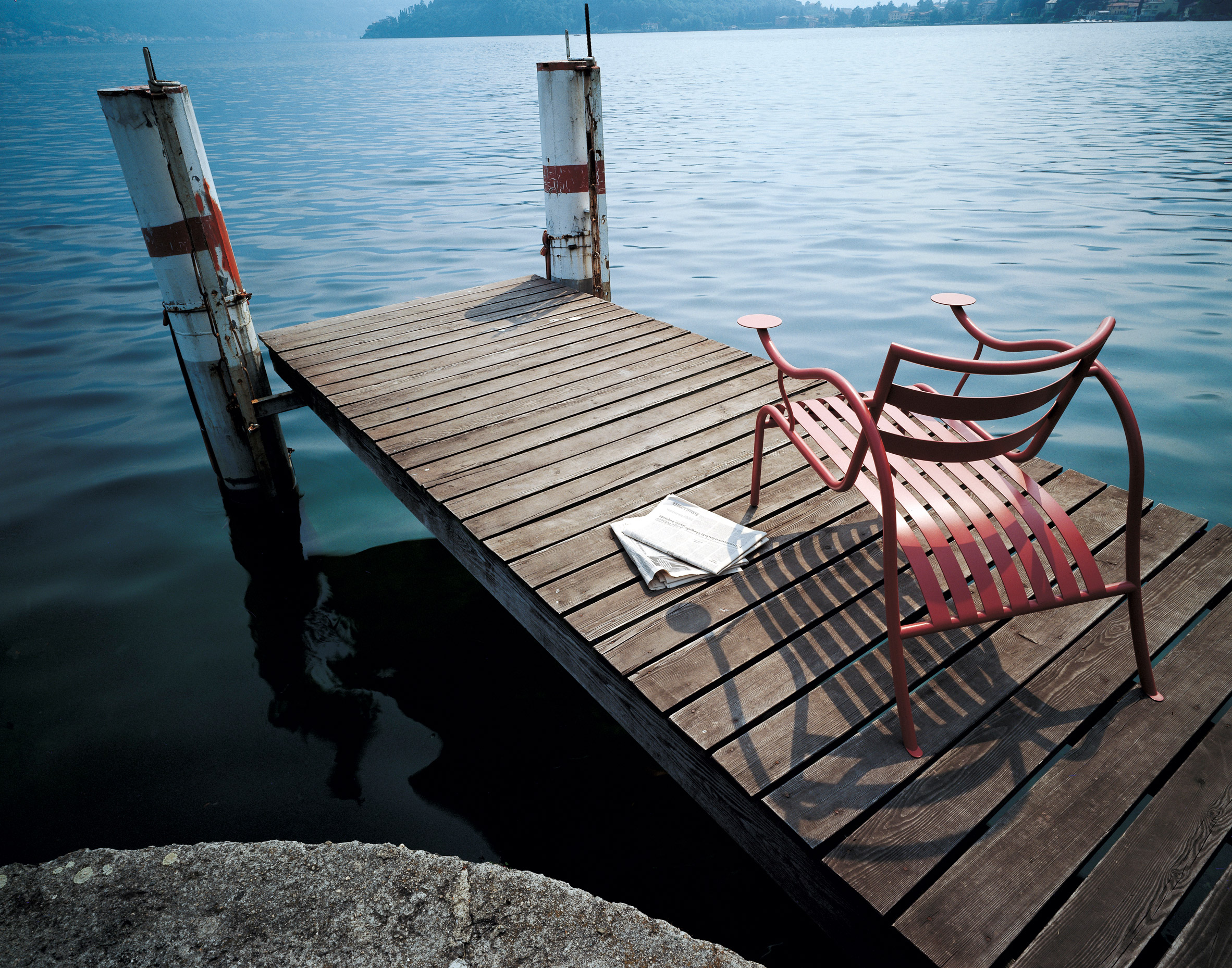
Somewhere in London in the middle of the 1980s a young designer found an old chair that had lost its seat, and instead of throwing it out or fixing it he looked at what was left, which was a frame, and a frame is a drawing of where the weight goes. He went home and modelled a new chair out of a packet of pipe cleaners. Dezeen tells the story plainly in its 2016 report on the Tate Modern display: the Thinking Man's Chair "is based on an antique chair that was missing its seat, and was modelled using a packet of pipe cleaners." It was 1986. Jasper Morrison had just founded his Office for Design. Two years later Giulio Cappellini put the thing into production in lacquered metal, and it became, per Dezeen's account of their thirty-year partnership, "the first commercial commission of Morrison's career."
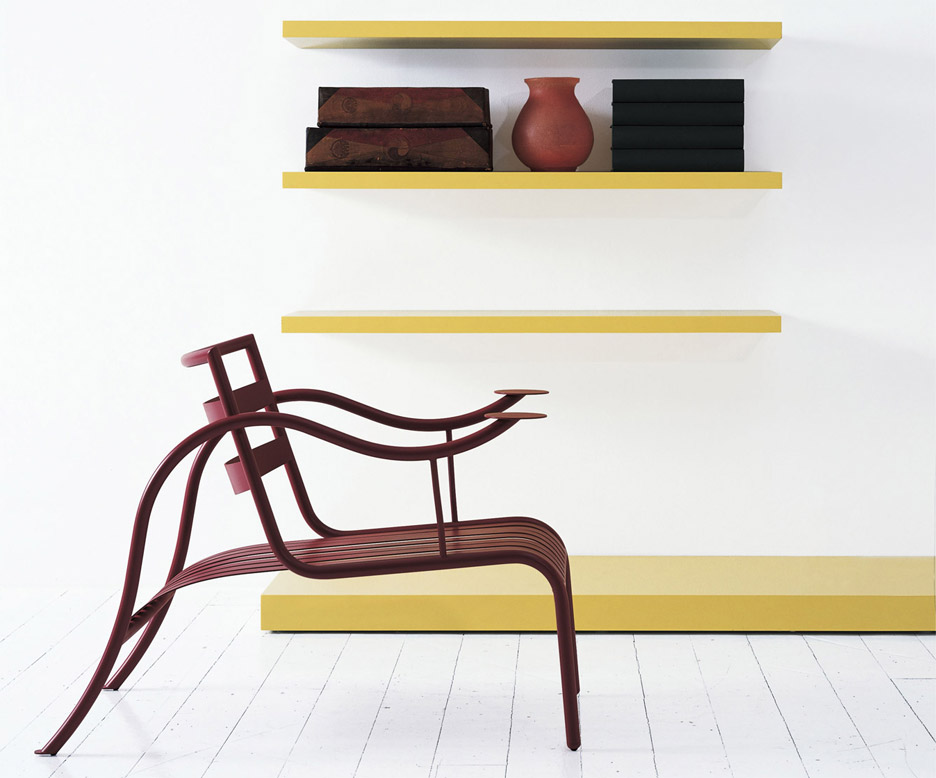
Here is the part that interests us. Morrison is the man who later told the world that design is at its best when it is "super normal," and who has spent four decades making objects whose whole ambition is to disappear into the day. A kettle. A door handle. A bus stop. And the first thing he sold was a red steel armchair with its arms swept out like the handlebars of a bicycle that has decided to become a sculpture, with little round trays for a glass welded to the ends. It is not a quiet object. Nobody walks past it.
We do not think this is a contradiction. We think it is the method, shown once at full volume so you could see it.
Take the missing seat seriously. A chair with no seat is a chair reduced to its structure, to the frame and the four points where it meets the floor and the two places where a body will lean. Everything soft has been removed, and what remains is the honest part: the load path. Morrison drew that first. The tubes of the Thinking Man's Chair go where the forces go, and the loops and returns that look decorative are there because a bent tube is stiffer than a straight one and a closed loop is stiffer than an open end. The pipe cleaners were not a whimsy. They were the cheapest way to draw in three dimensions with a material that behaves, roughly, like tube. He was building a full-scale idea at desk scale, and any architect who has bent a paper clip into a section during a meeting knows exactly what he was doing.
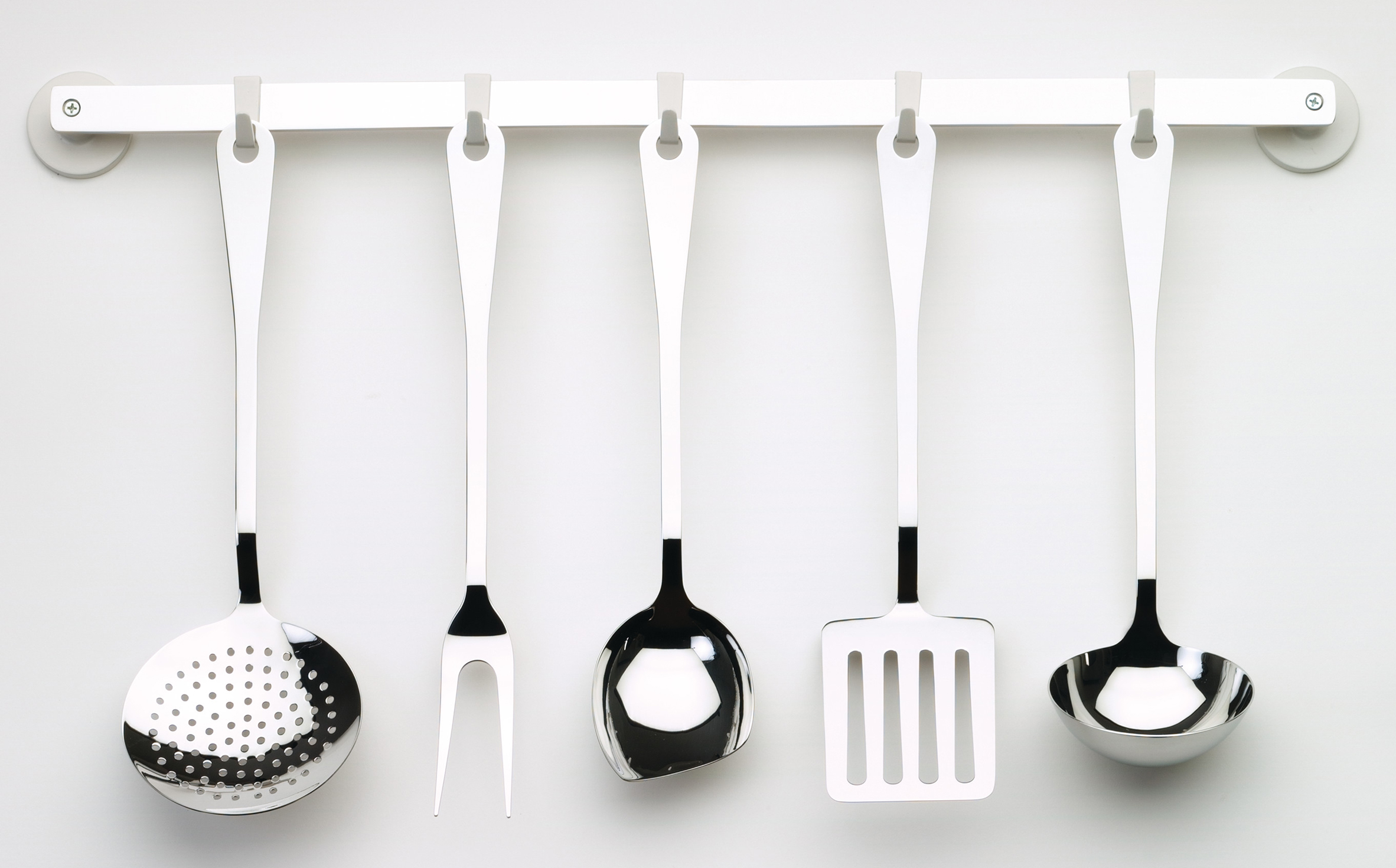
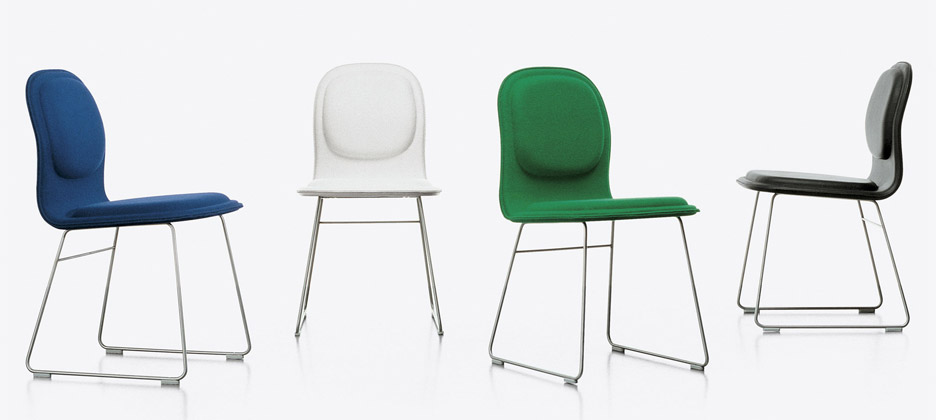
Then he spent the next thirty-five years taking the volume down. The Hi-Pad chair for Cappellini in 1999 is a seat and a back and almost nothing else. The Utensil family for Alessi, which the Tate also hung on its wall, is five kitchen tools that look like the drawings of kitchen tools. The story people tell about Morrison is that he was always this quiet. The Tate display, titled Thingness, goes back to 1984 and says otherwise. He learned quiet. He earned it with a loud chair that taught him where the weight goes, and once he knew that he did not need the flourish any more.
Cappellini himself put it well, and a little wistfully, in the Dezeen interview: "You can see the spirit of Jasper but you can also see the spirit of Cappellini, which is a little bit eclectic." That is a manufacturer admitting that the first chair belonged to the brand as much as to the designer. The eclectic part is Cappellini. The frame is Morrison. Over three decades the Cappellini part receded and the Morrison part stayed.
We have a professional interest in this because it is the same arc as a building, only run in reverse. A house begins loud. The client arrives with a folder of images and a list of rooms and a feeling about a staircase, and the first sketches carry all of it, and the drawings are full of gesture. Then the engineer comes, and the budget comes, and the building department comes, and one by one the gestures that were not carrying anything get taken out, and if you have done the job right what is left is the frame with the seat back on it, and it looks inevitable, and nobody can see how much work it took to arrive at nothing. The difference is that Morrison did the removing on purpose, across a career, instead of having it done to him across a schedule.
There is a lesson here for the way we specify furniture, and it is not "buy Morrison," though you could do worse. It is that a piece of furniture should be judged with its seat off. Look at the frame. Ask where the load goes and whether the material was chosen because it carries that load or because it photographs well. A great many chairs sold today are the pipe cleaners with the upholstery already on, drawn from the outside in, and they are comfortable for a year and then the frame, which nobody thought about, tells you what it was made of. The Thinking Man's Chair has been in production since 1988. It has never had a seat to fail.
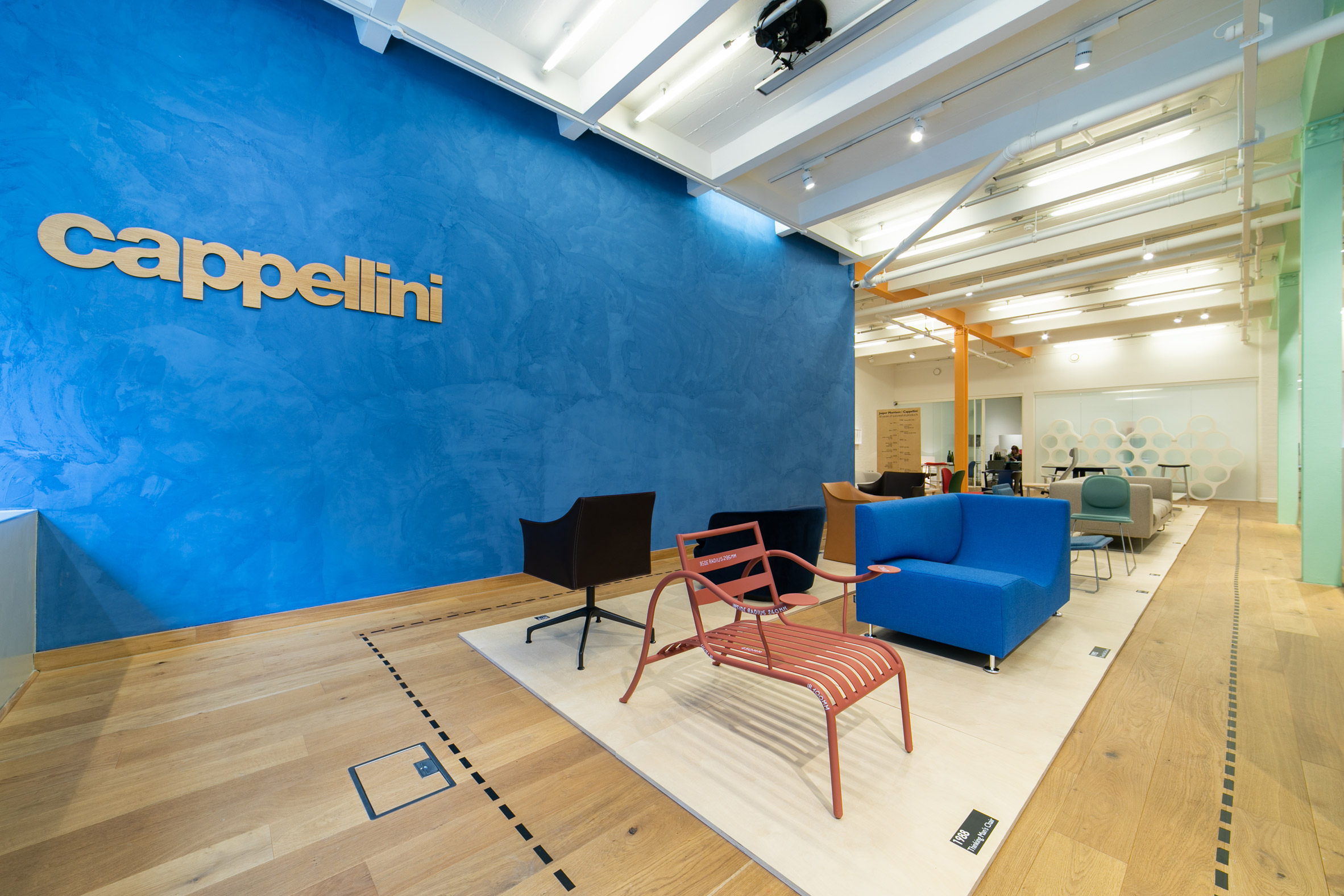
Morrison told Dezeen in 2024 that he is still working on, "as usual, several chair projects." Of course he is. He has been drawing the same chair since 1986, taking one thing off it each time, waiting to see how little it needs. The first one is still red, and still loud, and still standing in the Tate with the story of the missing seat written on the wall beside it, which is the right place for it. Every quiet object has a loud one in its past. Most designers hide theirs. He hung his in a museum.
Sources & Credits
- Emma Tucker, "Tate Modern's Switch House opens display dedicated to Jasper Morrison," Dezeen, 27 August 2016. https://www.dezeen.com/2016/08/27/tate-modern-switch-house-display-jasper-morrison-london/
- Katie de Klee, "Guilio Cappellini reflects on 30 years of furniture designs with Jasper Morrison," Dezeen, 29 December 2018. https://www.dezeen.com/2018/12/29/cappellini-jasper-morrison-furniture/
- Harry Cruttenden, "Designer Jasper Morrison shares his five favourite 'super normal' projects," Dezeen, 17 April 2024. https://www.dezeen.com/2024/04/17/jasper-morrison-dezeen-awards-2024/
- Hero photography: Cappellini, via Dezeen, https://www.dezeen.com/2018/12/29/cappellini-jasper-morrison-furniture/
- Body photography: Tate Modern and Cappellini, via Dezeen, at the two article links above.