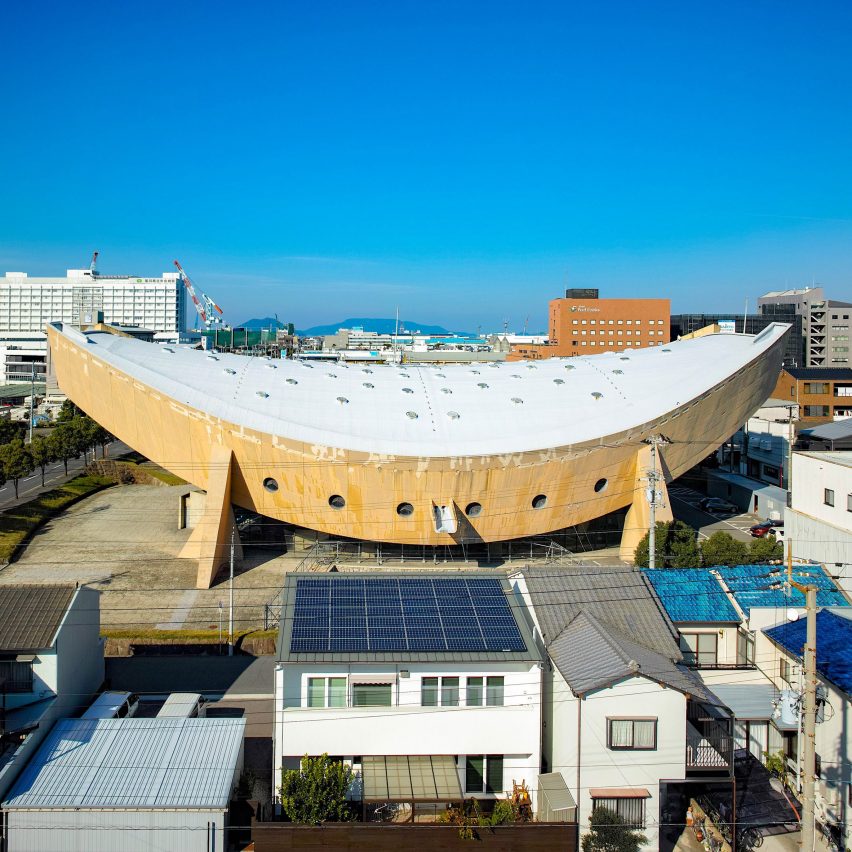
A roof leaked. That is the whole beginning of it. In 2014, fifty years after it opened, water came through the roof of the Kagawa Prefectural Gymnasium in Takamatsu and damaged the ceiling boards, and the building was closed, and it has been closed ever since, and in the twelve years since then almost everything anybody has said about it has been about aesthetics and heritage and Japanese postwar modernism, when the actual event was a roof, and water, and a repair that nobody scheduled.
The building is by Kenzo Tange. It went up between 1961 and 1964, in the run-up to the Tokyo Olympics, and ArchDaily describes it as a prototype for the Yoyogi National Gymnasium that followed it, which is to say that the great swooping thing everyone knows was rehearsed here first, in a prefectural city on the Seto Inland Sea, for local people to play basketball in. The roof curves up. The concrete is ribbed. The plan is long and it sits near the water, and the whole assembly reads as a hull, or a sail, depending on where you stand, which is why everybody calls it the Boat Gymnasium and has for sixty years.
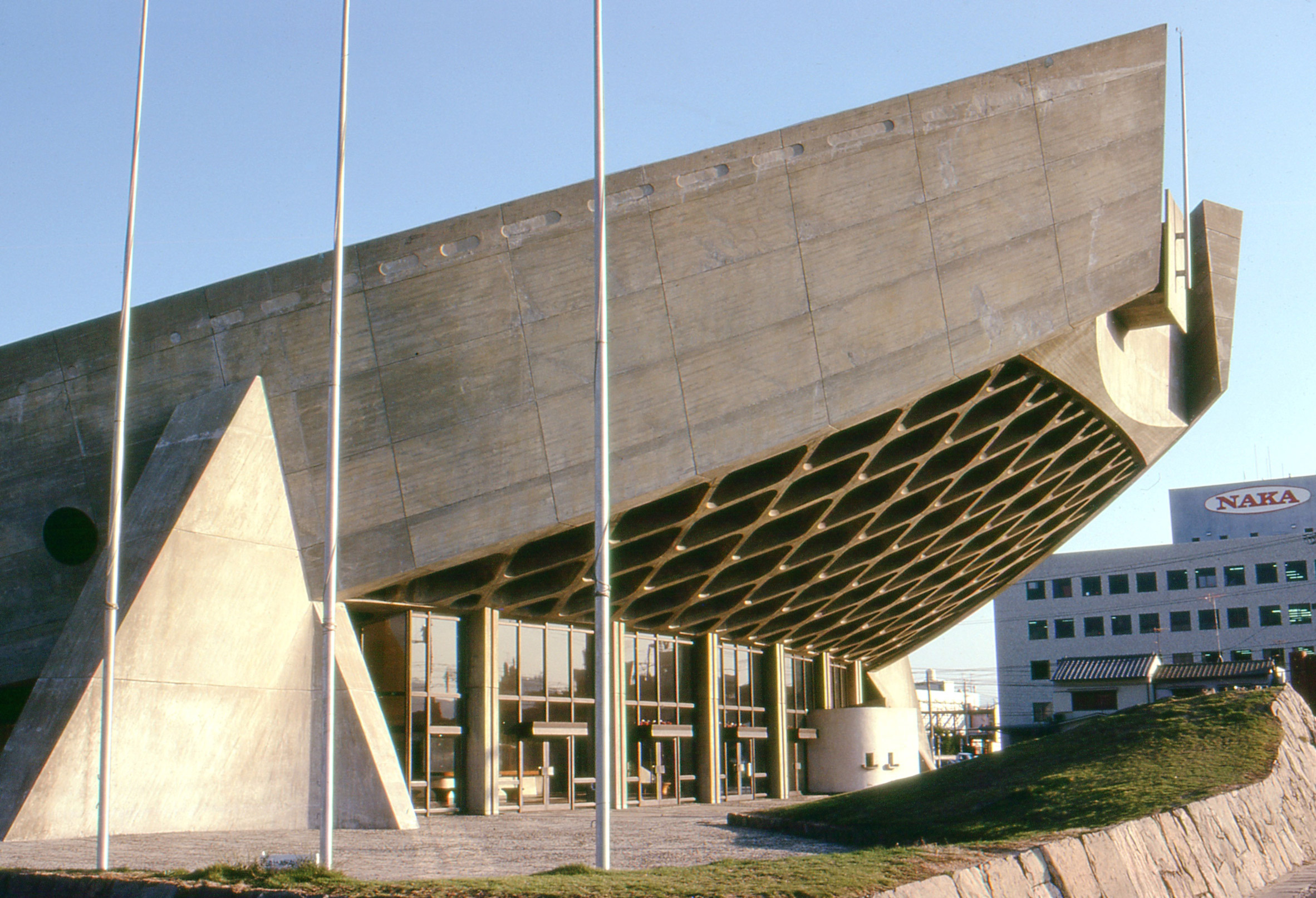
Now the arithmetic. In February 2025 the prefectural assembly approved a budget of roughly one billion yen for demolition work, according to ArchDaily. That is public money, appropriated to produce an empty lot. Five months later, on 18 July, a private body called the Former Kagawa Prefectural Gymnasium Regeneration Committee submitted a letter of intent to buy the building, seismically reinforce it, and run it as a hotel and cultural venue, using no public funds at all. Two business models were floated. One is a hotel with a book lounge. The other is a hotel in the whole structure. On 7 August the prefecture announced competitive bidding for a demolition contractor anyway, with the work expected to run into 2027, and a citizen petition to stop it has passed 27,000 signatures.
So one side has offered to pay to keep the building and the other side has budgeted to pay to remove it, and the side spending money to remove it is winning. Whatever you think about the architecture, that is a strange sentence to have to write.
We spend a lot of our working life inside this problem, in the least glamorous part of it. Construction administration is mostly the management of small failures. A flashing detail that was value-engineered in 2019 lets water past in 2024. A sealant joint with a fifteen year life gets inspected in year twenty two. The membrane on a low-slope roof is the single cheapest thing to replace on schedule and the single most expensive thing to replace late, because late means the deck, and the deck means the structure, and the structure means the number gets big enough that somebody starts using the word "unviable." Nobody photographs a roof replacement. Nobody cuts a ribbon on one. There is no press release for the day the caulking got done, and there is a very good press release for the day the new arena opens, and every public body on earth knows this.
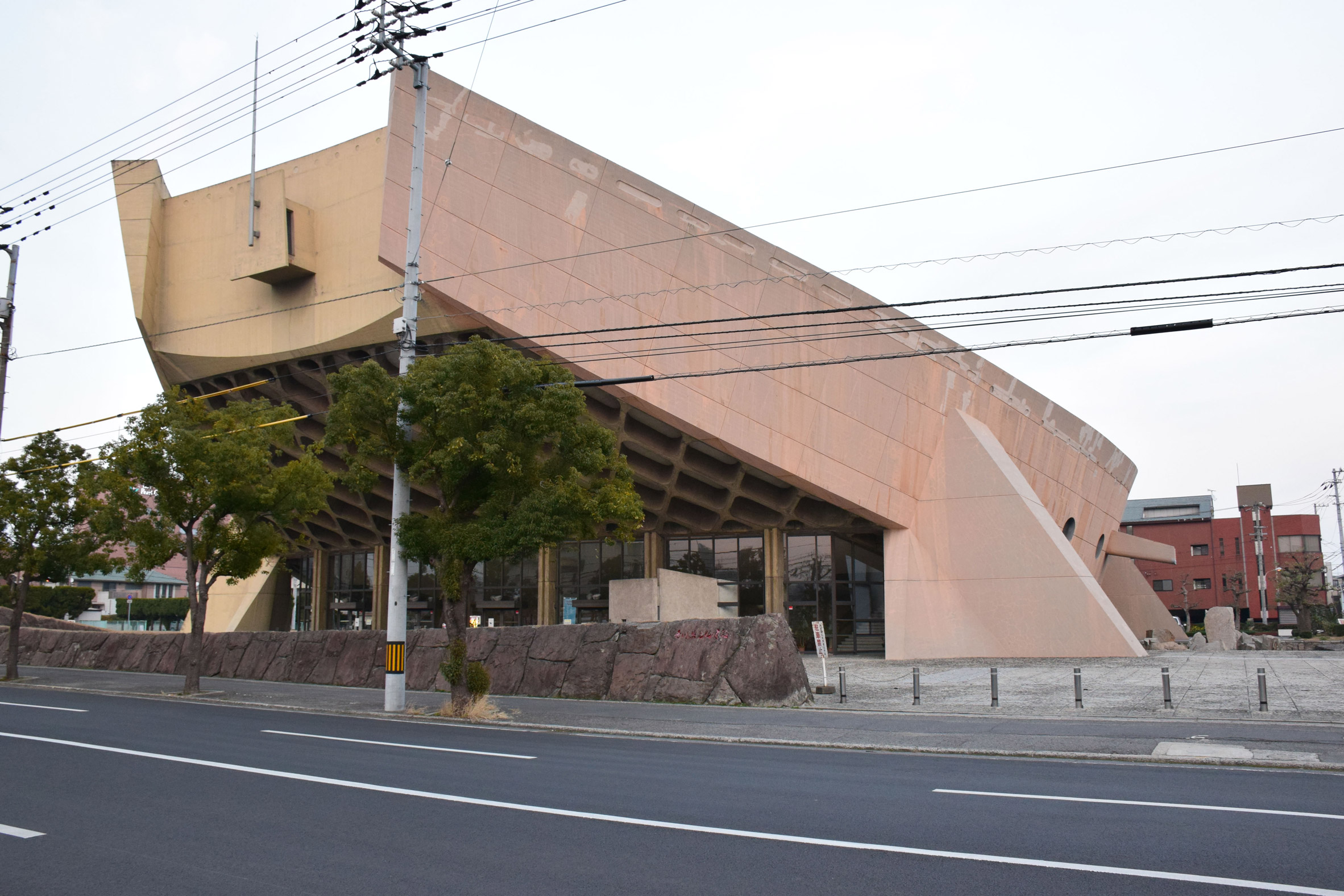
Which is how a masterwork ends up filed under safety concerns. Once a building sits empty for a decade, the retrofit number stops being a maintenance figure and becomes a capital project, and a capital project has to compete with schools and roads, and it loses, and the loss gets explained afterward as a judgment about the building. It is not a judgment about the building. It is a judgment about twelve years of nobody being obliged to open the door.
The people who actually used it understand this better than the people writing about it. When the demolition was first confirmed, the Takamatsu architect Noriyuki Kawanishi told Dezeen that the news had made many people "very sad and angry," and added: "I feel very sad when I imagine the loss of this building that was a part of my daily life." Not a part of the canon. A part of his daily life. He had been going since he was a child. That is the register the argument should be conducted in, and it almost never is, because heritage language has a way of turning a place people swam and shouted in into an artifact with a plaque, and an artifact is much easier to remove than a habit.
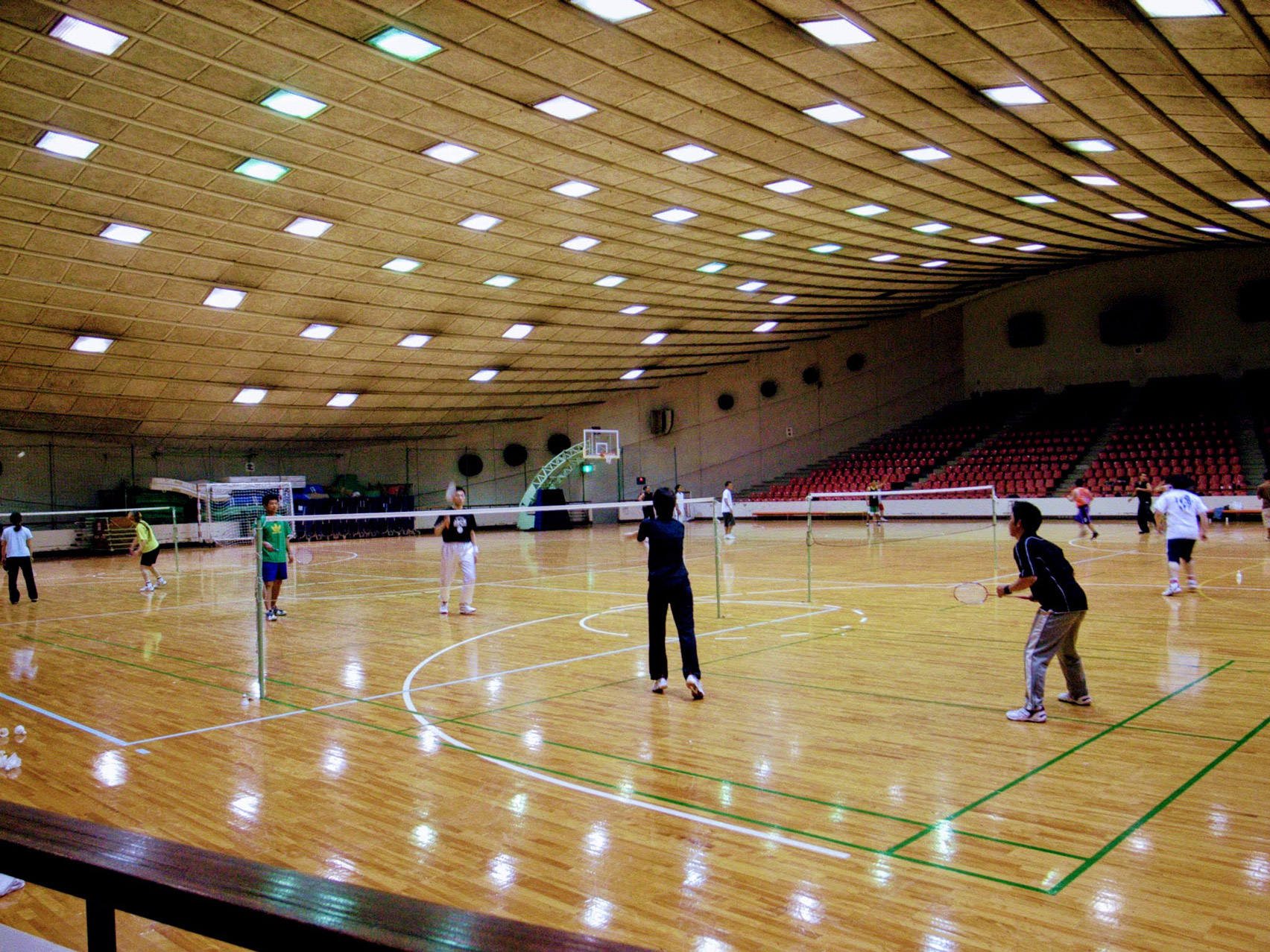
We are not going to pretend the seismic work is trivial. It is 1964 concrete on a fault-prone island and the numbers have moved since, and a private operator taking that on is taking on real risk. But somebody offered to take it on. That offer is the news. A hotel is not a noble use, and it does not need to be. Buildings survive by being useful to somebody with an incentive to keep the roof watertight, and that has always been the case, and the ones we now call untouchable are mostly the ones that stayed occupied.
There is a version of this that ends well. There is also a version where the bidding closes and the ribbed concrete comes down through 2027 and Takamatsu gets a flat site and a study for something new. As of this writing the building is still there. It is empty, and it is leaking, and it has outlasted twelve years of decisions not to fix it.
And still it stands.
Sources & Credits
- Dezeen, "Kenzo Tange's modernist gymnasium set to be demolished", 21 February 2023: https://www.dezeen.com/2023/02/21/kenzo-tange-kagawa-prefectural-gymnasium-demolition/
- Antonia Piñeiro, "Citizen-Led Campaign Proposes New Use for Kenzo Tange's Kagawa Gymnasium, Facing Demolition", ArchDaily, 15 August 2025: https://www.archdaily.com/1033155/citizen-led-campaign-proposes-new-use-for-kenzo-tanges-kagawa-gymnasium-facing-demolition
- Photography: via Dezeen, https://www.dezeen.com/2023/02/21/kenzo-tange-kagawa-prefectural-gymnasium-demolition/