The Sofa Bed Is Ashamed of Itself
Everyone has sat on one. The sofa bed is the piece of furniture that lies to you twice, once as a sofa, where you can feel the mechanism through the cushion like a wire in bread, and once as a bed, where you sleep on a mattress the thickness of a good sandwich over a lattice of steel that finds your hip bone by morning. It is bad at both jobs and it is designed to be, because it was drawn by someone who was embarrassed by half of what it does. The bed is hidden. The hiding is the whole design brief. And the guest lies awake at two in the morning listening to the radiator, thinking about the frame under the mattress, which is exactly the thought the designer was hoping to prevent.
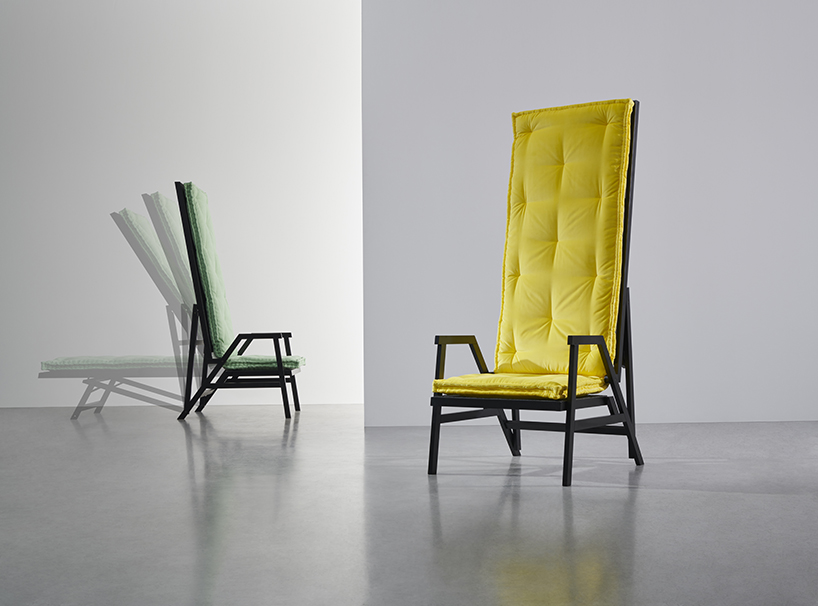
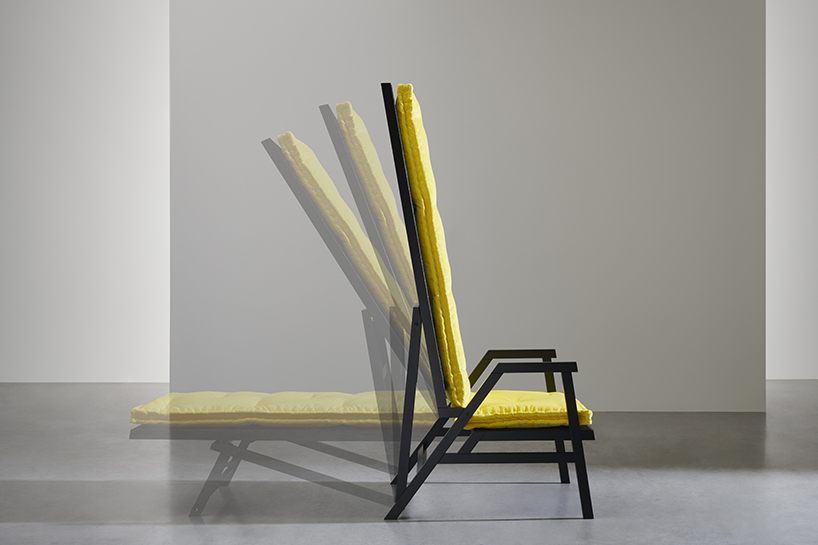
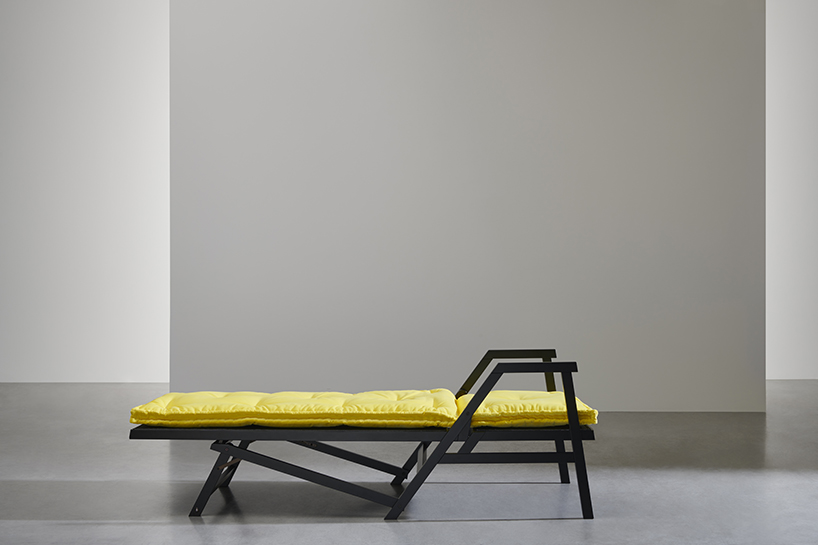
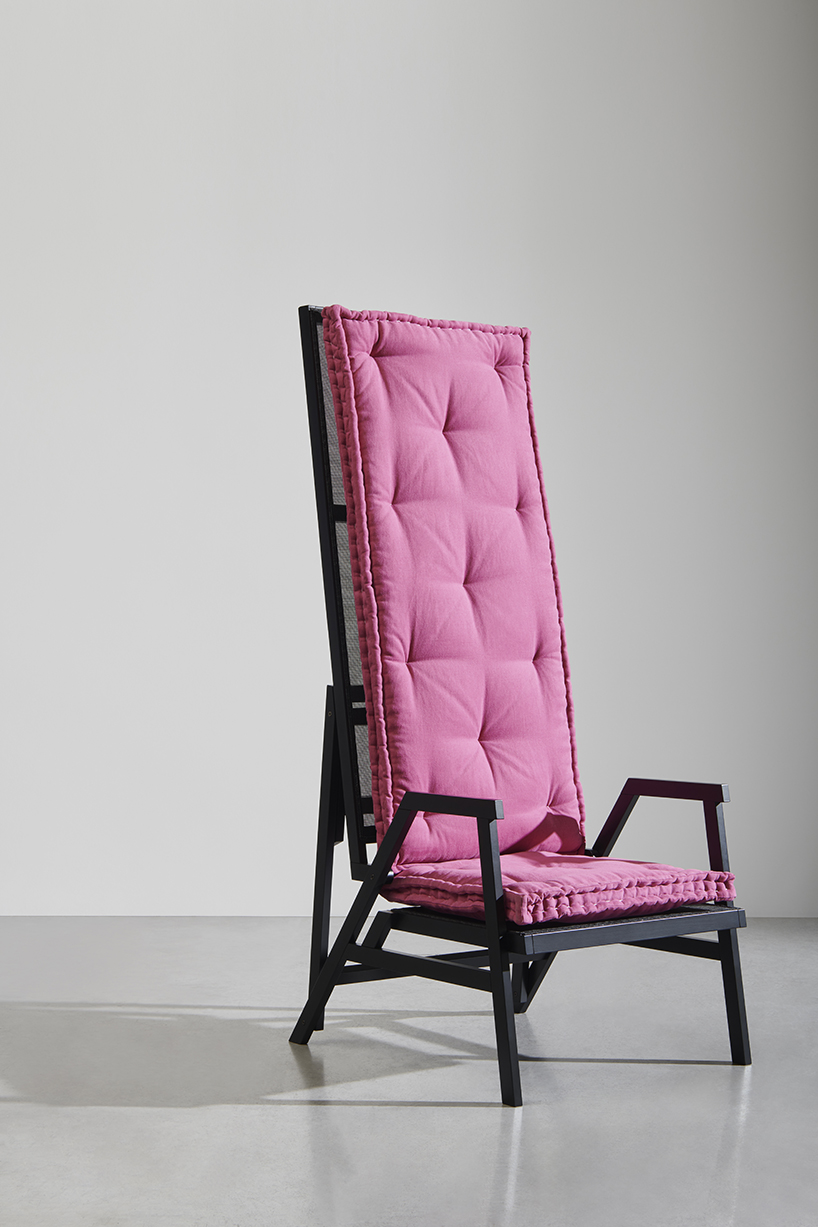
Then there is Polet. designboom reported the reissue plainly: Italian company Twils "present a new edition of the armchair-cum-bed designed by achille castiglioni in 1992," shown at Milan Design Week alongside Moon, a small armchair by Matteo Ragni. An armchair that becomes a bed. On paper it is the same compromised object as every other convertible in the world.
It is not, and the reason is worth more than the furniture.
Achille Castiglioni spent a career refusing to start from nothing. In 1957 he and his brother Pier Giacomo bolted a tractor seat to a curved steel band and called it Mezzadro, and put a bicycle saddle on a rounded base and called it Sella, and in 1962 they took a car headlight and made it a floor lamp and called it Toio. He was famous in Milan for a drawer of anonymous objects he would hand to students without explanation, waiting to see whether they could work out what a thing was for by looking at it. The method underneath all of that is simple and it is rarer than it sounds: he believed an object usually already exists somewhere, doing another job, and that the designer's work is to notice it.
So consider what a convertible actually asks of a designer with that habit of mind. Everyone else approaches the armchair-bed as a chair with a bed smuggled inside it, and the smuggling generates every compromise: the thin mattress, the felt mechanism, the hinge that bites, the fabric chosen to disguise a seam. The object is ashamed of its second life, so it hides it, and hiding it is what ruins both shapes. Castiglioni had spent thirty-five years building furniture out of things that already had a prior life and had never once hidden it. The tractor seat stays a tractor seat. The headlight stays a headlight. You are meant to see it. That is the pleasure.
Which makes 1992 the interesting number here. He was seventy-four. He had been designing since before the war ended, he had outlived his brother and collaborator by twenty-four years, and he could have spent that decade doing what the eighties had taught everybody to do, which was to draw a shape, name it after a Greek letter, and let a magazine photograph it against a coloured wall. Instead he took on the least glamorous problem in the catalogue. Convertible seating is the furniture equivalent of a wet basement. It is where the real constraint lives, and there is no prize for solving it, and the people who need it solved are almost never the people the design press is writing for.
They are, however, the people we design for constantly. In a small apartment the convertible is not a product category, it is a nightly negotiation. Somebody's living room becomes somebody's bedroom at eleven and turns back at seven, and the furniture is the only thing arbitrating. A room that changes shape twice a day is not a compromised room. It is an honest one, and most rooms in most cities have always worked this way, and the pretending is done entirely by the furniture.
We will say the unfashionable part. A convertible object is more architecturally serious than a fixed one, because it has to survive being wrong. A fixed chair only has to be correct in the position the photographer found. A convertible has to work in two conditions, and it has to make the transition between them without a tool, without instructions, and without the person doing it feeling like a warehouse worker. That is a harder brief than most buildings carry, and it is judged in a showroom by people who sit down once.
There is a version of this argument that turns sentimental, so here is the flat end of it. A reissue is not a resurrection. Twils has put a thirty-four-year-old design back into production because it can be sold now, and that is a commercial decision, and commercial decisions are how most good objects survive at all. The romance is optional. The evidence is not. An object drawn in 1992 by a man in his seventies has outlasted every convertible sofa designed since, and it did that by declining to be ashamed of the second shape.
The bed was never the embarrassment. The hiding was.
Sources & Credits
- "achille castiglioni's 'polet' armchair/bed gets a re-edit at milan design week 2021," designboom, 22 September 2021. <https://www.designboom.com/design/achille-castiglioni-polet-armchair-bed-milan-design-week-2021-09-22-2021/>
- Quoted description of the reissue and the 1992 design date from the designboom report at the link above. Moon, the accompanying armchair, is by Matteo Ragni, per the same report.
- Photography: via designboom, <https://www.designboom.com/design/achille-castiglioni-polet-armchair-bed-milan-design-week-2021-09-22-2021/>
- Mezzadro, Sella and Toio are works by Achille and Pier Giacomo Castiglioni, dated 1957, 1957 and 1962 respectively, and are referenced here as context rather than drawn from the source article.